 Looking to plan an AFV centered vacation in the USA? Tank photographer extraordinaire Paul Hannah has put together some excellent tools for doing so. Over at the AFV Register site, you can download a series of files listing AFV locations, including GPS Exchange Format, Google Earth and Excel. The Google Earth files are particularly fun for those looking to kill some time checking out vehicles on display around the country.
The files are available for download at the AFV Register Page.
Paul Hannah’s photo galleries can be viewed here.

 A paperback reprint of Tanks of the Great War, 1914-1918 by
  Saudi Arabia has requested to buy General Dynamics Land Systems-made M1A2S Abrams tanks and M88A1/A2 Heavy Equipment Recovery Combat Utility Lift Evacuation System (Hercules) Armored Recovery Vehicles (ARV) in a foreign military sale worth approximately $1.15 billion, according to a Defense Security Cooperation Agency statement Tuesday.
 The Panzer II was Germany’s first cannon-armed tank in the post World War I era. Designed and initially produced under the code name of 100-horsepower Farm Tractor, owing to the restrictions of the Treaty of Versailles, the Panzer II remained in production, and in the field, well after it had been surpassed by better engineered, more heavily armed and armored vehicles, and indeed played a key part in the early victories achieved by the Blitzkrieg.
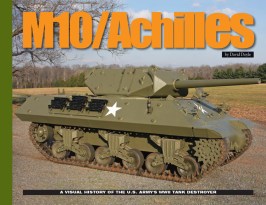 In late 1941 the concept of a separate tank destroyer force began to jell. This force would be armed with specialized weapons. While the army’s primary antitank weapons of the late 1930s were 37mm towed anti-tank guns, these were soon deemed to be inadequate against enemy armor. Accordingly, the quest for larger weapons began, as did the desire for a self-propelled antitank gun, or Gun Motor Carriage. The initial efforts, which involved adapting 3/4-ton, Dodge trucks to mount antitank weapons (the M6, née WC-55), which were intended as interim and training vehicles. In the same manner, half-tracks were fitted with cannon, yielding the M3 75mm Gun Motor Carriage. But, the quest was on to create a specialized and ideal tank destroyer, utilizing a tank chassis as the basis.
 Armor for the Ages website has created a new page and photo gallery for the Japanese Type 95 Ha-Go light tank that is kept at the National Armor and Cavalry Museum collection at Fort Benning GA. This particular vehicle was one of two captured by the U.S. Army’s 40th Infantry Division in the Philippines in 1945. It was brought back to the US and resided in California for a while before being transferred to the Patton Museum. A more complete history of the vehicle can be

 WASHINGTON – Poland is interested in teaming with Germany and France on a new tank production, an industrial tie-up that could boost the local defense sectors of all three nations. Polish Defense Minister Antoni Macierewicz told Defense News in a July 22 interview that his nation is focused on developing closer industrial ties with European nations as a way to grow its local industry. Macierewicz highlighted a number of programs, including discussions with the two NATO powers on a ground vehicle.
 Nicaragua has received a batch of Russian T-72B1 main battle tanks (MBT), according to a source in the Russian defense industry. “About 20 T-72B1 MBTs were delivered to Nicaragua in June 2016. The remaining tanks are supposed to be supplied by the year-end. The Latin American country is planned to receive a total of 50 T-72B1 tanks,” the source said. He added that the T-72B1 MBTs would likely be issued to the mechanized infantry brigade named after General Augusto Sandino. The unit is stationed near the country`s capital, Managua. “The tanks will significantly beef up the Nicaraguan Armed Forces` combat capabilities,” the source emphasized.
 Algeria is reinforcing its land forces with the acquisition of 67 T-90 tanks from its traditional arms supplier, Russia, a purchase that many observers see as a response to the Moroccan order of 200 US Abrams tanks. Part of a 200 T-90 order concluded in 2014, the delivery of the 67 tanks took place in July, a Russian military industry source told TASS news agency.
 WASHINGTON: One of the Army’s most successful weapons programs is now under fire over safety shortfalls. The Automatic Fire Extinguisher System (AFES) in the upgraded M109A7 Paladin artillery vehicle “did not protect the entire howitzer crew compartment during fire survivability testing,” the Department of Defense Inspector General reports today. DoD IG says this safety system must be fixed before the vehicle is fielded and potentially faces enemy fire.
 On the second day of Operation Bagration, June 25th, 1944, the Red Army took the Bogushevsk settlement, located between Vitebsk and Orsha. As a result, the Germans lost a vital stronghold. Soviet command sent Major-General N.S. Oslikov’s motorized cavalry group into the breach. The group was tasked with developing the Red Army’s offensive towards Senno and Lepel, with the eventual exit to Berezina river.
 The Czechoslovakian industry received a number of advanced military technologies after the end of the Second World War as the result of German orders, but their inheritance didn’t end here. A large amount of formerly German tanks were left in the country. Even though Czechoslovakia preferred Soviet tanks and SPGs, nobody was going to say refuse the wealth of German vehicles. As a result, the country ended up with a colourful tank park, including domestic pre-war LT vz.35 and LT vz.38, British Cromwells and Challengers, Soviet T-34-85s and IS-2s, and many German vehicles, including the StuG 40.
 On June 23rd, 1944, a mad steamroller entered the territory of Belarus. Thundering westward at a speed of twenty kilometers per day, it crushed and ground up German forces in its way. In mere days, Army Group Center was reduced into pitiful shreds. The demolition of German forces was unprecedented, to the point where the Western Allies were doubting Soviet reports. The only solution was to gather up foreign correspondents and hold the famous prisoner of war march. 19 German generals and 45,000 soldiers and officers became a convincing confirmation of the Red Army’s success. But where did this skepticism come from?
 American tank building fell behind those of other nations during the interbellum period, but rapidly closed the gap. In May of 1940, mass production of the Light Tank M2A4 began, a tank that caught up to other members of its class, and surpassed them in speed and armament. At the same time, the Americans realized that the war in Europe will last a long time, and tanks and guns grow obsolete quickly. This was the trigger that resulted in the Light Tank M3, the first American tank to result in more than a thousand mass produced vehicles.
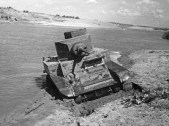 The USSR was the second country, after Great Britain, to receive tanks from the United States. Among them were M3 light tanks. According to American data, 1336 tanks of this type were sent to the USSR, a quarter of the overall volume of Light Tank M3 production. Out of all tanks sent, 440 (including M3A1 tanks) were lost during transport. Domestic literature often calls the M3 weakly armoured and poorly armed. This evaluation is surprising, especially when you compare the tank to the Soviet T-70. In order to truly evaluate the American tank in the Soviet Union, we must consult archive documents.
 The Kiev Offensive Operation was not going smoothly for the Red Army. After penetrating the first line of enemy defenses, Soviet forces traveled 5-12 km, encountered German reserves, and started losing momentum. Nevertheless, on the second day of battles, November 4th, 1943, it was already clear that the Germans will not hold the city. The enemy started withdrawing westward. The Red Army attempted to prevent this, encircling the enemy and cutting their supply lines. The city of Fastov, some 70 kilometers south-west of Kiev, was among key positions that had to be captured for this plan to work. Tankers from P.S. Rybalko’s 3rd Guards Army hit the city.
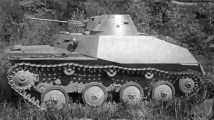 75 year passed on Sunday July 17th 2016 since the decision to produce the T-30 small tank. This tank remained in obscurity for a number of reasons. Born at a time of difficult for its country, it was overshadows by its “older brother”, the T-40, and “younger brother”, the T-60. In addition, the tank was indexed T-60 for some time, complicating the process of figuring out what tank is mentioned in reports. Lost among almost 6000 “real” T-60s, this tank played an important role on the battlefield in the fall and winter of 1941.
 The history of the T-60 tank is atypical for Soviet tank building. The tank was accepted into service before even the first blueprint was prepared, and thousand of units were ordered immediately at three factories. Even though the final results were a lot more humble, more than 5500 completed vehicles is a very impressive number. Remaining in production for just under a year, from September 1941 to July 1942, the T-60 became the most numerous small tank in history. These vehicles appeared on the front lines during the most heated part of the Battle for Moscow, and made a noticeable contribution to the war during its most difficult point. On July 20th, 2016, the T-60 turned 75 years old.
 Tank and AFV News