Book Alert: The Armored Campaign In Normandy June – August 1944

51eZJF8nJmL._SX324_BO1,204,203,200_Earlier this month Casemate publishing released a new book by Stephen Napier titled “The Armored Campaign in Normandy.” This is a hardcover book of 384 pages. As far as we can tell, this is Mr. Napier’s first book on the topic of WW2 armor history. Based on the publishers description, this book casts a rather critical eye on both Allied leadership and Allied armor in the Normandy campaign, focusing on operations Epsom, Goodwood, Cobra and Totalize. Expect to see a review of this book here next month, we are curious to see how this book compares to John Buckley’s 2004 book “British Armour in the Normandy Campaign.

Publishers Description:

Beginning with the D-day landings, this is a brutally frank appraisal of the planned use and actual results of the deployment of armour by both German and Allied commanders in the major tank battles of the Normandy campaign including operations Epsom, Goodwood, Cobra and Totalize. The Armoured Campaign in Normandy is a critique of Montgomery’s plans to seize territory and break out and describes how they failed in the face of German resistance. It details the poor planning and mistakes of British senior commanders and how the German Army’s convoluted chain of command contributed to their own defeat; these were decisions taken which cost the lives of the tank crews of both sides ordered to carry them out. Official reports, war diaries, after action reports, letters, regimental histories, memoirs of generals and recollections of tank men are used to tell the inside story of the campaign from an armour point of view to give a different but detailed perspective of the Normandy campaign from the men who fought in it.

Book Alert: Mobility, Shock and Firepower: The Emergence of the U.S. Army’s Armor Branch, 1917-1945

51S16MJjknL._SX346_BO1,204,203,200_Typically our “Book Alert” posts are about books that have yet to be released.  This book alert is a little different, this is a book that was released a few years back but is available for free download.  For those interested in the history of the US Armor branch from 1917 – 1945, this book by Robert S. Cameron will be a welcome addition to their PDF library.

Download the book here.

Publishers Description:

CMH Pub 30-23-1. Army Historical Series. Captures the multifaceted development of the Armored Force from its inauspicious beginnings in World War 1 to its fully mature, operational status at the close of World War 2. Provides an excellent case study in force transformation. Gives attention to training maneuvers conducted in the interwar period. Source material includes reports, memorandums, and correspondence of the majors, lieutenant colonels, and colonels associated with armored development since World War I. First published in 2008.

Book Alert: Polish Armor of the Blitzkrieg

A new addition in the popular Osprey Publishing New Vanguard series has been announced, “Polish Armor of the Blitzkrieg” by Jamie Prenatt.  This volume is illustrated by Henry Morshead and as per the New Vanguard format, it is 48 pages in color glossy softcover.  Mr. Prenatt appears to be a relatively new author as far as books on tanks and AVFs.

Publishers description:

51rAR439fnL._SX369_BO1,204,203,200_The Polish army during the Blitzkrieg conjures up tragic images of infantry and dashing, but ineffective and ultimately doomed cavalry charges. In actuality the Poles, in the midst of a large-scale re-armament program, had up to 600 armored vehicles available at the time of the German attack, as well as a number of newer and better designs in various stages of development. Facing the inventors of the ‘Lightning War’, who attacked in great numbers, on multiple fronts and with total mastery of the air, the Polish armored formations were up against it. But outdated equipment, doctrine and enormous odds did not stop these units from fighting with bravery and determination before being finally overwhelmed. This volume is a complete technical study of the machines that formed the backbone of Poland’s defenses on the ground, using never-before-seen photographs and a comprehensive design and developmental history that reveal a full picture of Poland’s armored forces in the context of their greatest challenge.

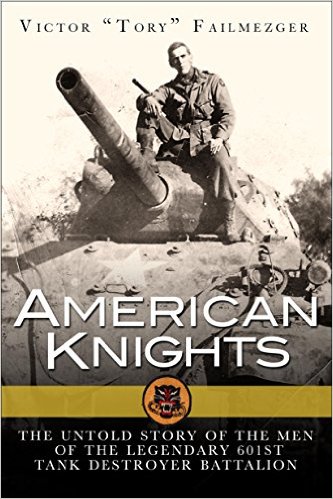
Book Alert: American Knights: The Untold Story of the Men of the 601st Tank Destroyer Battalion

512xXC4vaGL._SX331_BO1,204,203,200_Osprey Publishing is listing a Sept. 22 release date for their upcoming book American Knights: The Untold Story of the Men of the 601st Tank Destroyer Battalion.  Written by Victor Failmezger, this 352 page hardcover book examines the history of the 601st Tank Destroyer Battalion, the very first unit converted into a TD unit during WW2.  The 601st first saw combat at Kasserine Pass and El Guettar.  Later the unit fought in Italy, being part of the assault at Anzio.  Later, the 601st was part of the landings in Southern France and ended the war occupying Hitler’s retreat in Berchtesgaden Bavaria.  Failmezger is a retired US Naval Officer and this book appears to be his first.

Publishers Description:

An unmissable white-knuckle ride from the Kasserine pass to Anzio, Operation Dragoon to the final attacks on the Third Reich, this is the gripping story of the men and machines that took on Nazi Germany’s best. This book not only reveals the technical details and origins of the 601st Tank Destroyer Battalion, it places the reader on the front lines of the European war.

As the war swung in the favor of the Allies, it became clear that no final defeat of the Third Reich would be possible until the armored monsters of the Panzerwaffe were defeated. But who would, or even could, take on the mighty Tigers and Panthers, just a handful of whom could stop entire formations in their tracks? The answer lay with the formation of a new type of unit, the Tank Destroyer Batallion. This is the story of the men and machines who made up the very first Tank Destroyer Batallion, the 601st, from their unique training and formation, to the final, desperate battles in the heart of Nazi Germany. Packed with rare material, letters, diaries and unpupublished photographs, this is an intense and intimate chronicle of the men who fought the Panzers in an astonishing 10 campaigns and 546 days of lethal combat. Re-live the excitement and terror of battling the best the Wehrmacht and SS had to offer, in every major campaign in the West.

Book Alert: Osprey Publishing 3 for 2 special

osprey saleOsprey Publishing is running a 3 for the price of 2 special on all books at their online store.  For those looking to add to their collection of New Vanguard or Duel series books, this would be a good opportunity to save a little money.  We have not been paid by Osprey to promote this sale, we just thought our readers might like to know about it.

Ken Estes on Tiger II at Carrousel

Over at the Tanknet forum, author and researcher Ken Estes recently posted about getting to examine the Tiger II tank at the Musee des Blindes in Saumur.  He was there for their annual Carrousel, an event that includes a public exhibition of some of their historic AFV’s.  Mr. Estes posted some brief observations on the Tiger II along with a few photos. Since the Tiger and Tiger II are such popular vehicles, we figured people would be interested in his comments.

Estes tiger IIIt’s surprisingly roomy inside, if you forget about the 70 rds of 88mm that were stowed in the hull sides forward of the engine compartment to the driver’s compartment, plus up to 22 more in the turret bustle. Tiger I had no main gun ammo in the turret and apparently the crews did not like to store rounds in the Tiger II turret, but the whole thing was an ammo box, and only the turret ammo would have been handy for loading. Perhaps because there is not a turret basket, there is much room for everybody but the gunner. I could stand fully upright in the loader and commander positions.

Gunner and driver controls were OK, and I don’t know why the British found the manual traversing wheel awkward projecting into the gunner’s lap. Interestingly, there is a second manual traverse located in front of the loader, so he could add his energy as well to the traversing load. They should have had this in other tanks as well, especially heavies. My eyes popped out when I saw the 8 speed transmission shifting lever, but it is apparently as easy to drive as the earlier Tiger. Many controls are redundant, for instance braking is via foot pedals and the usual levers; must help a lot for panic stops.

So well engineered I’d say, at first impression, but of course it’s hopelessly underpowered and overtaxed by terrain limitations for which the suspension could not handle. As with the M103, it likely represented the limits of automotive engineering of its day.

Mr Estes noted that he took an extensive number of pictures of the vehicle which will be used for a book to be published in 2017.  He has authored several books on Tanks and AFVs, including Marines Under Armor, Tanks on the Beaches, M103 Heavy Tank (New Vanguard) and US Marine Corps tnak Crewman 1941-45 (Warrior).

While we were not able to find any videos yet of the 2015 Carrousel, here are some clips of the 2014 Carrousel, including the Tiger II tank (video 2).

[Read more…]

From the Vault: The Fighting Tanks since 1916

Today we present “The Fighting Tanks Since 1916” written by Ralph Jones, George Rarey, and Robert Icks.  This book was published in 1933 and represents the most complete examination of the topic up to that point.  The book was reprinted in 1969, copies of the reprint can be found from online book vendors at relatively reasonable prices.  Fortunately, the book is also available for reading on the Hathitrust digital library website.  For those that would like to give it a look, click on the image below.

fighting tanks since 1916

Books best avoided: Steel Steeds Christie

31AdPdFN25L._SL500_BO1,204,203,200_Lately I have been thinking a good deal about the role of Walter J. Christie in pre-WWII tank development.  As I have been attempting to assemble as much information concerning Christie as I can, I discovered that in the mid 1980’s, Christie’s son Edward wrote a short book about his father’s career called “Steel Steeds Christie.”  This book was published by a vanity press and is now quite rare and expensive.  Fortunately, ARMOR magazine featured a review of this book back in the Jan-Feb 1986 issue.  The review, by retired Col, Leo D. Johns, is quite negative, prompting a number of replies from both Edward Christie defending his book, and other readers posting even harsher reviews than the original one by Col, Johns.  I have reprinted the original review below as well as the various letters to the editor concerning the book.  I have provided these letters in part as a warning to anyone thinking about shelling out the dough to purchase a copy of this rare book, but primarily because I think these letters are really quite entertaining.

[Read more…]

Book Alert: Huns on Wheels

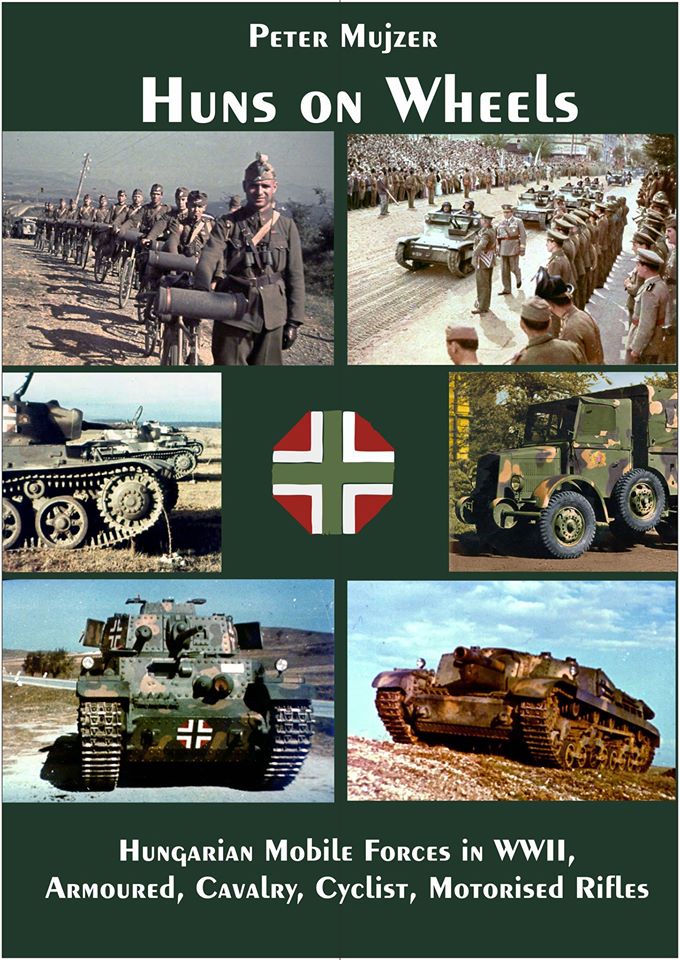
10999361_1580549845526448_6657401214891285569_oFor those wanting to learn more about Hungarian mobile forces in WWII, a new hardcover book on the topic was released earlier this month.  Titled “Huns on Wheels: Hungarian Mobile Forces in WWII”, this is a self-published work by author Peter Mujzer.  The book is described as A4 hardbound format, with 264 pages containing 385 black and white original photos, AFV scale drawings, 14 maps, 34 Order of Battle lists, and 16 pages of colour references for armored vehicles’ profiles and uniforms drawings.  The book is available directly from the author who has a facebook page for the book, or he can be contacted at hunsonwheels@yahoo.com.

New Issue of ARMOR released

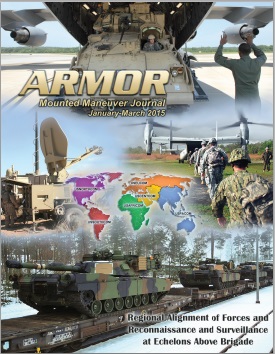
armor issue coverEarlier this week the January-March 2015 issue of ARMOR was released in PDF format.  The cover story for this issue has the rather scintillating title of “Regional Alignment of Forces and Reconnaissance and Surveillance at Echelons Above Brigade.”  The casual AFV enthusiast will probably not find much to catch their eye in this issue, although the article “The Tank is Dead! Long Live the Tank!’ (pg 121-127) may be worthwhile for those with an interest in future US tank development.

Download the issue here.