Atlas Obscura: Sherman tank retrieved from Sea

article-0-1FF75A4400000578-318_964x672The website Atlas Obscura has made a post about a Sherman tank that was retrieved from the Atlantic ocean sea floor by a team of Russian sailors in July of 2014.  This story was originally reported by the Daily Mail and other news sources two years ago, so this is old news.  However, we thought it was interesting enough that it was worth posting, particularly since this site was not in existence when this story was fresh.

This particular Sherman tank came from the SS Thomas Donaldson, a Liberty ship sunk by German U-boat in March of 1945 off the short of Kildin Island.  The U-boat attack disabled the ships engines and the captain ordered most of the crew off the ship while a skeleton crew remained in the hopes that the ship could be towed to shore.  However, the ship sank just a half mile from Kilden island, under 55 meters of water.  The tank was retrieved by the Russian Northern Fleet as part of a naval exercise.  The tank, as well as other items retrieved from the sunken transport were said to be delivered to Severomorsk, the main administrative base of the Russian Northern Fleet.  While it is somewhat hard to tell exactly what type of Sherman tank was retrieved from the wreck, it clearly has the 76mm gun turret and welded hull.  This narrows it down to either M4A2 or M4A3, and since this was being sent as aid to the Red Army, we will guess it’s a M4A2 since that was the model the Soviets  preferred due to it having diesel engines.

The Atlas Obscura post links to a photo gallery at The Sherman Tank Site.  The Sherman Tank Site was temporarily hosted as a page here at Tank and AFV News.com before moving to its own URL, where it has grown substantially.   The Sherman Tank site can be viewed here. 

article-0-1FF759D000000578-260_964x724

From the Vault: Steam power for tanks

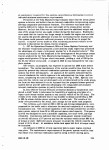
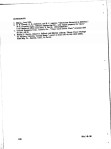
Our recent editorial lambasting the Fox Trot Alpha article on the Civil War Tank got us thinking about steam power and tanks. While steam is certainly not the ideal way to propel a tank, it has been looked at a number of times, and as recently as the 1960’s.  The document “Engine-Transmission Power Plants for Tactical Vehicles” by the Research Analysis Corporation from 1967 includes a chapter on steam power for military vehicles.  It’s a relatively short chapter but it makes for interesting reading.  We have reposted it below as individual images, or it can be downloaded as a PDF file  here: Steam engine tanks.

Photo of the Day: Tiger with Machine Guns

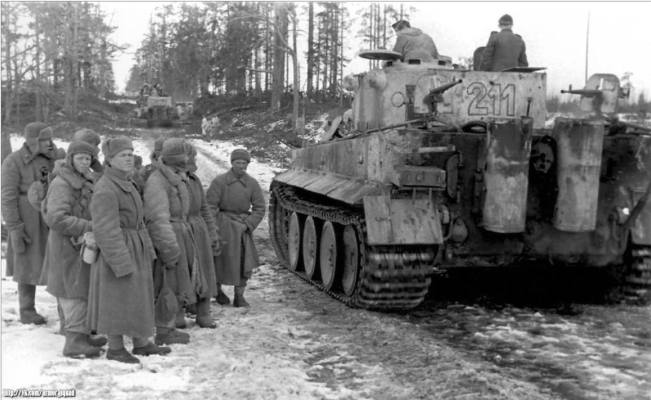
This photo has been making the rounds at some of the military history forums.  A German WW2 Tiger tank with two captured Soviet machine guns mounted on the rear engine deck.

13640871_1176640359064654_4481624075468824910_o


Editorial: Rebutting a Civil War tank article

It’s been quite a while since I wrote an editorial. I generally use the limited time I have to devote to this site looking for quality content from around the net to share rather than writing editorials and inflicting my opinion upon my readers. However, every once in a while I feel the need to put words to (digital) paper and have my say. Every morning I wake up and plop down in front of the computer. One of the first things I do is a google news search of “tank” to see what pops up. Today the top result is an article that irritated me so much I felt compelled to respond. The piece in question is the rather absurdly titled Foxtrot Alpha article “Why Were There No Tanks In The Civil War?” Normally I would not bother with something so obviously stupid, but since it comes up so high in the google search, I assume many people are reading it and at least some are taking it seriously.

Let’s start off by taking a quick look at the claims made by the author of this piece of fantastical nonsense. His main contention is that during the US Civil War, there existed both the need for, and the technical means to construct some sort of armored vehicle similar to a tank. As to the need for a Civil War tank, he cites the Siege of Petersburg, a battle that is generally said to have foreshadowed the trench warfare of World War I. We will put that aside momentarily and first focus on the author’s contention that the technology existed to make a tank possible in the 1860s. We shall summarize these in bullet point form:

[Read more…]

Photo of the Day

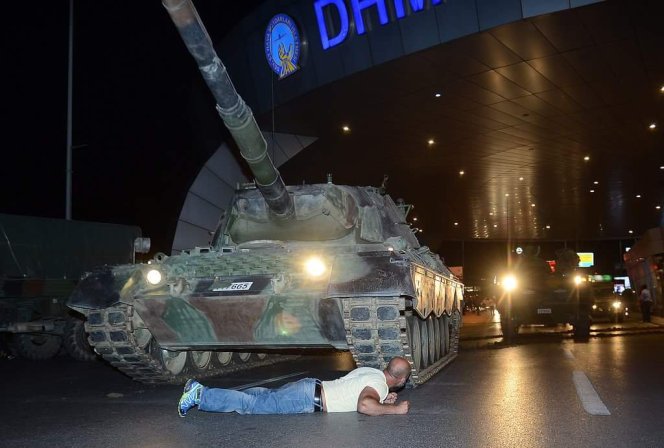
Today’s photo of the day comes from the recent unsuccessful military coup in Turkey.  We are not sure if this photo shows an example of extreme bravery or extreme foolishness.  Perhaps a mix of both.  Regardless, it’s a nice shot of a Turkish army Leopard I tank.

vgeI-a-tNuA

Book Alert: Bradley vs BMP: Desert Storm 1991

A new entry in the Osprey Duel series is due for release on July 19. Bradley vs BMP: Desert Storm 1991 (Duel) by Mike Guardia looks at this somewhat lopsided match-up from the 1991 Persian Gulf war.  This is Mr. Guardia’s first entry in the Duel series, although he has written some other titles for Osprey, as well as books for other publishers.  This new book follows the familiar format of the Duel series, being 80 pages in length and features illustrations by Alan Gilliland.
Publishers Description:

In the mid-1960s, the Soviet Union unveiled the BMP, the first true infantry fighting vehicle. A revolutionary design, the BMP marked a significant departure from the traditional armoured personnel carrier, with a lower silhouette and heavier armament than rival APCs. One of the most fearsome light-armoured vehicles of its day, it caused great consternation on the other side of the Iron Curtain as the Americans scrambled to design a machine to rival the BMP. The result was the M2/M3 Bradley. These Cold War icons first clashed – not on the plains of Europe, but in southern Iraq during the Gulf War of 1991. Featuring specially commissioned full-colour artwork, this is the absorbing story of the origins, development and combat performance of the BMP and Bradley, culminating in the bloody battles of the Gulf War.

This book available from Amazon here.

From the Vault: The Ram and Tank Production in Canada, 1939-1945

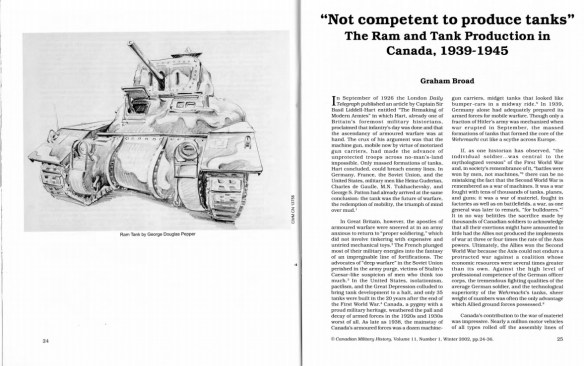
ram tank article

From the pages of Canadian Military History comes an article on the role Canada played in WW2 tank production and design.  “Not compentent to produce tanks” the Ram and Tank Production in Canada, 1939-1945 by Grahm Broad is a ten page long examination of the topic.  Aside from repeating some of the well worn myths about German tank superiority (a Panther is worth five Shermans!), it’s worth a read.

Download the PDF here.

Book Alert: Tank Action: An Armoured Troop Commander’s War 1944–45

According to Amazon, the Kindle edition of the new book Tank Action: An Armoured Troop Commander’s War 1944-45 by Captain David Render (2016-06-16) by David Render has been released. From what we can tell, print copies of the book have been released in the UK but not yet in the US.  This is a pretty substantial memoir, coming in at 320 pages.  According to the Amazon listing David Render is one of the very last surviving Second World War tank troop commanders to have participated in the D-Day landing and the entirety of the subsequent fighting in the Allies campaign to liberate Europe in 1944 and 1945.

Publishers Description:

A gripping account of the Second World War, from the perspective of a young tank commander.

In 1944 the average life expectancy of a newly commissioned tank troop officer in Normandy was estimated as being less than two weeks. David Render was a nineteen-year-old second lieutenant fresh from Sandhurst when he was sent to France to join a veteran armoured unit that had already spent years fighting with the Desert Rats in North Africa. Joining the Sherwood Rangers Yeomanry five days after the D-Day landings, the combat-hardened men he was sent to command did not expect him to last long. However, in the following weeks of ferocious fighting in Normandy, in which more than 90 per cent of his fellow tank commanders became casualties, his ability to emerge unscathed from countless combat engagements defied expectations and earned him his squadron’s nickname of the ‘Inevitable Mr Render’.

In Tank Action David Render tells his remarkable story, spanning every major episode of the last year of the Second World War in Western Europe, from the invasion of Normandy to the fall of Germany. Ultimately it is a story of survival, comradeship and the ability to stand up and be counted as a leader in combat.


Photo of the Day: Tanks in Central Park

This photo showed up in a thread over at the missing-lynx forum.  It comes from a WW2 US newsreel about a war bonds event in Central Park.  Video here.  A M6 Heavy Tank and a German Tiger!

Jdy7Gvf.png

Tank Chats #23 Hornsby Tractor

In the 23rd Tank Chat, David Fletcher takes a look at the Hornsby Tractor. The Hornsby Tractor was the first tracked vehicle in service with the British Army. They were designed to tow artillery.  The Museum’s example is still running and is the oldest vehicle in the collection.