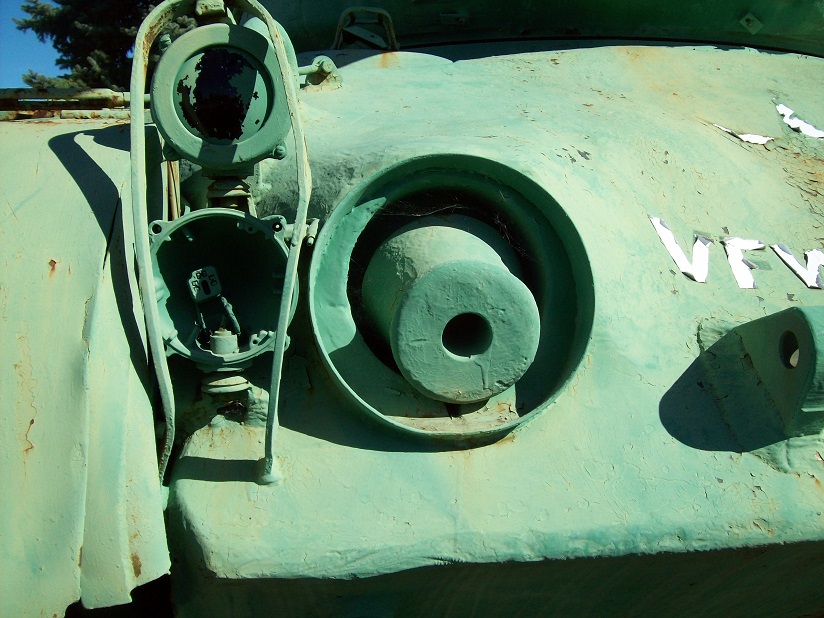
 One of the unique characteristics of WW2 era tanks is the hull machine gunner position. This crew position was assigned a variety of names in different armies, being referred to as the assistant driver, radio operator, or bow gunner to name a few. A large majority of the tanks designed and used during the war had this position as part of their crew layout, although it quickly disappeared from tank design in the post war period.
In the 1920’s and early 1930’s, tank design was still in its formative stages and vehicle crew and component layout varied dramatically. However, by the late 30’s a consensus starts to emerge in regards to crew layout. In Germany, the Panzer III and IV established the layout that would be most common during the war, a five man crew with three in the turret and two in the hull, a driver and the hull machine gunner. The Soviet Union, USA, Czechoslovokia and Japan also adopted the hull gunner concept, although their early war tanks typically had two men in the turret (T-34, M2 and M3 light tank, LT vz 35 and 38, Type 97). The two major exceptions to the move toward bow gunners were the United Kingdom and France. French tank design was fairly unique, relying primarily on smaller vehicles with 2 man crews (Renault and Hotchkiss infantry tanks) or larger tanks such as the Somua S35 or Char B1 Bis which had a radio operator position but did not give him a machine gun to operate. British pre-war tank design varied. The Matilda II (A12) infantry tank had a very modern crew layout of driver in the hull and three in the turret. On the other hand, the Cruiser Mk I introduced into service in 1939 had two hull machine gunners, each with his own turret!

 Tank and AFV News