According to Amazon, a new book on the German Maus tank is available as of today. Published by Schiffer Military History and authored by Michael Frohlich,Kampfpanzer Maus: The Porsche Type 205 Super-Heavy Tank
Publishers Description:
In 1944 the Maus giant battle tank, weighing almost 190 tons, was supposed to help turn the Wehrmacht’s fortunes of war on the Eastern Front. Just two prototypes of this monster were delivered, for its undeniable advantages―tremendous firepower and virtually impenetrable armor―were outweighed by the disadvantages of its slowness, excessive use of materials in construction, and fuel consumption so high that it was, by that time, far beyond the Germans’ ability to supply. With this volume, Michael Fröhlich continues the legendary Spielberger series and delves into one of the most curious military vehicles produced by Germany―the Maus super-heavy tank. For the first time, this book tells the complete story of this vehicle, including its inner workings, accompanied by many previously unpublished illustrations. But that is not all: the book includes another novelty, the complete operating instructions for the tank’s crew!

Kampfpanzer Maus: The Porsche Type 205 Super-Heavy Tank is available from Amazon here.
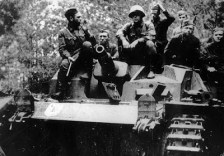 At the start of the Great Patriotic War, Soviet military intelligence and the GAU had a very approximate idea about the types and characteristics of German tanks. This deficiency led to an overestimation of the possibilities of German armour and the launch of the KV-3, 4, and 5 programs in March of 1941. Even information on real German tanks was sparse. Intelligence missed the increase of the front armour of PzIII and PzIV tanks to 50 mm and use of 50 mm guns. This lack of information had to be made up for in the most reliable way during the war: studying trophies. Among the vehicles that were glossed over by Soviet intelligence was the StuG assault gun.
 By noon of the first day of the Sandomierz-Silesian Offensive Operation, Soviet infantry penetrated the first line of German defenses and hit the second. Quickly realizing the situation, Marshall Konev, the commander of the 1st Ukrainian Front, played the ace up his sleeve: several hundred tanks and SPGs. Thanks to them, Soviet forces were ready to assault the second line by the second half of January 12th, 1945.
 The history of the Pz.Kpfw. Maus is still full of blank spots, despite the popularity of the subject. The beginning of the tank’s development from March of 1942 to 1943 is the least studied area. During this time, the project indexed Typ 205 radically changed. Essentially, the only constants were the index and the idea of using an electric transmission. Thanks to new publications and archive research, it is now possible to remove the veil of mystery from many parts of the project.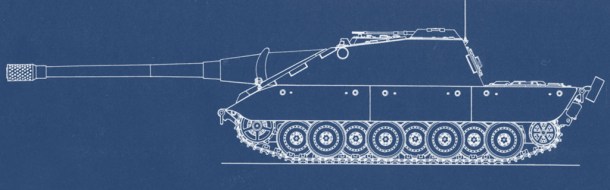

 Tank and AFV News