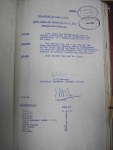
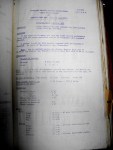
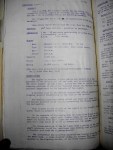
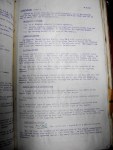
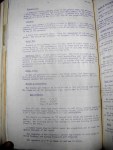
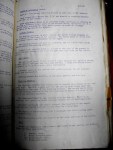
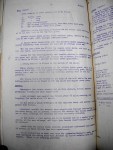
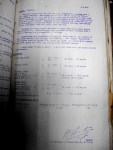
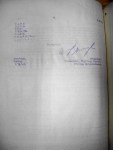
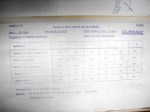
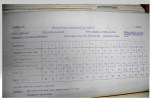
We recently received images of a document by the British Department of Tank Design from early 1943 showing the results of tests they performed on a captured German Panzer II. The goal of the tests were to obtain information on the reliability and performance of the German tank, which was captured in Libya. The report notes that the tank had been put through a good bit of use before being captured, with the odometer showing over 7000 miles. Despite the condition of the vehicle, the report notes that “the machine behaved extremely well and little serious mechanical trouble was experienced.” This is an eleven page document, the individual pages can be viewed in the image gallery below.
 differs from previous entries in the Visual History Series in that it is a 168 page hardcover.
 The Panzer II was Germany’s first cannon-armed tank in the post World War I era. Designed and initially produced under the code name of 100-horsepower Farm Tractor, owing to the restrictions of the Treaty of Versailles, the Panzer II remained in production, and in the field, well after it had been surpassed by better engineered, more heavily armed and armored vehicles, and indeed played a key part in the early victories achieved by the Blitzkrieg.
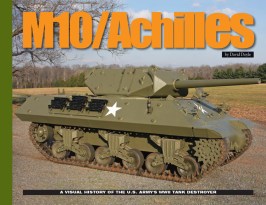 In late 1941 the concept of a separate tank destroyer force began to jell. This force would be armed with specialized weapons. While the army’s primary antitank weapons of the late 1930s were 37mm towed anti-tank guns, these were soon deemed to be inadequate against enemy armor. Accordingly, the quest for larger weapons began, as did the desire for a self-propelled antitank gun, or Gun Motor Carriage. The initial efforts, which involved adapting 3/4-ton, Dodge trucks to mount antitank weapons (the M6, née WC-55), which were intended as interim and training vehicles. In the same manner, half-tracks were fitted with cannon, yielding the M3 75mm Gun Motor Carriage. But, the quest was on to create a specialized and ideal tank destroyer, utilizing a tank chassis as the basis.
 Tank and AFV News