Bundeswehr receives first production-standard Puma AIFV

PumaJane’s is reporting that the German Army has received their first batch of production standard Puma Armored Infantry Fighting Vehicles at a ceremony at the Unterluss Proving Ground on June 23.  Produced by Projekt System & Management GmbH (PSM), the Bundeswehr plans to take delivery of 350 Puma AIFVs by 2020, a number reduced from the original plan for 405.   According to the article, the total value of the Puma contract is now EUR4.3 billion (USD4.9 billion) including additional equipment.

The Puma AIFV is the replacement for the current Rheinmetall Landsysteme Marder 1 IFV, which entered service with the Bundeswehr in 1971, although it has been constantly upgraded since then, the latest version being the Marder 1A5 developed for deployment to Afghanistan.  The Puma has already undergone a number of major design changes, including modifications to the hull that included adding an additional road wheel either side for improved mobility.

Full article here.

Rebooting graveyard tanks in Ukraine

Ukraine Today has posted a video of T-64 tanks being renovated at “a secret depot in the city of Kharkiv.”  The video is fairly short and contains some inaccuracies (128mm gun?) but still, it’s worth watching for the footage of the refurbished tanks and the repair facilities.

Sherman tank on display at Pittsburgh Heinz History Center

CBS Pittsburgh is reporting on a M4A3E8 Sherman tank which has been put on display outside of the Pittsburgh Heinz History Center as part of their “World War II – We Can Do It” exhibit.  This particular tank belongs to a local amateur military historian named John Tippins who loaned the tank for the exhibit.  Click on the image below to go to the video.

Sherman tank Heinz museum

David Lister on last Sherman vs Pz IV battle

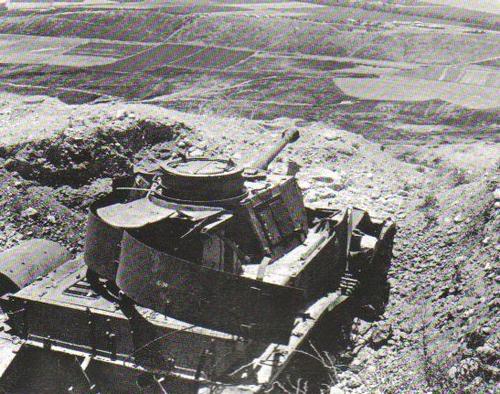
PWgV4UpOver at Overlord’s Blog, researcher David Lister has posted a short piece on the last battle involving M4 Sherman tanks and Pz IV tanks.  While many people might guess that 1945 was the last time these two vehicles faced off against each other, Lister points out that the final confrontation of these two metal warriors was far later than that, occurring during the 1967 “Six Day War” between Israel and her Arab neighbors.

After their defeat in the Israeli War of Independence and the following years the Syrians brought in advisers to help train their army. These were predominantly German ex-soldiers. These advisers convinced the Syrians they needed more armour. So the Syrians went shopping and from about 1959 they started to acquire Panzer IV’s, Stug IIIG’s, a handful of Jagdpanzer IV’s and even the odd Hummel. The tanks seem to have been sourced from both Czechoslovakia and France, although some may have come from Spain as well. They saw action on the Golan heights during the War over Water. However when the Israelis deployed Centurions the old German tanks were forced back. The Syrians then started to receive Russian support, such as T-34/85’s and T54’s. From then on the tanks remained in positions on the Golan heights.

Full article available at Overlord’s Blog.

From the Vault: Tank Analysis by Joseph Williams 1974

williamsA while back someone asked us to dig up an article from a 1974 issue of ARMOR by Joseph Williams on US post war tank design.  With the help of an internet friend, we were able to obtain a copy.

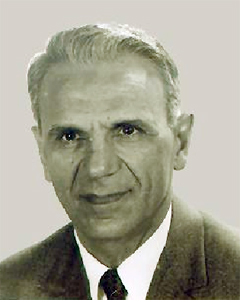
Joseph Williams is one of those names that should be well known to tank and AFV aficionados but is not.  As we have pointed out in past posts, the former Soviet Union did a far better job of publicly recognizing their prominent tank designers than the Western democracies tended to do.  Fortunately, there is a short biography dedicated to Mr. Williams on the US Army Ordnance “Hall of Fame” page.

Mr. Joseph Williams entered Government service at Aberdeen Proving Ground in July 1941 as a designer and project engineer.

In a very short time, he became one of the Army’s pioneers in design and analytical disciplines which are now the basic framework for scientific approach and methodology of combat vehicle design and development. Mr. Williams played a key role in the initial concepts of prototype tanks leading to the medium tank M26. He was also responsible for the conception and execution of the first postwar tank design, Model T37/M41 light tank, featuring such innovations as a single driver, quick removable powerplant, scientifically developed ballistic shape, and concentric gun recoil system.

Mr. Williams was a driving force in the initiation and development of new tank building blocks. He designed the T42/M47 gun and turret assembly, including fire control selection and installation and development of ballistic and casting sections.

He also conceived and performed most of the preliminary design and analytical work for the M103 heavy tank. He then designed the T48/M48 tank, which was later produced in large quantities and is the main battle tank for many foreign countries.

Versions of this tank are currently being modernized in the US Army and are a vital part of the tank inventory. He was a driving force in the development of the M551 and the M60A2 tanks, in both a direct-responsibility role and as a consultant.

Through his international interests and affiliations and his vast knowledge of tanks, he also played a major role in the United States/Federal Republic of Germany tank development program, a precedent-setting international endeavor. During the last 10 years of his career, Mr. Williams was recognized internationally as an outstanding leader in the design and development of combat vehicles.

That is a pretty impressive resume to say the least.  In the gallery below we present Mr. Williams’ 1974 article from ARMOR magazine on “Tank Analysis.”

More posts later today

We apologize for the lack of posts here the last couple days.  The editor is suffering from a nasty bought of the flu.  Expect to see some posts later today assuming the headache medication does what’s it’s supposed to.

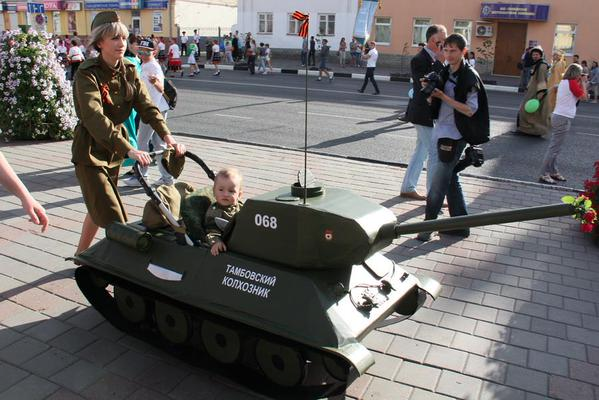
In the meantime, enjoy this amusing picture from Twitter.

CHZrB0SWgAAr6Le (1)

Indian Army announces new armored vehicle platform

arjun questionThe Tribune of India is reporting that the Indian Army has announced that it plans to replace its existing fleet of Russian origin battle tanks with a family of modular armored-fighting vehicles yet to be developed.  At present the T-72 and the T-90, both procured from Russia and assembled in India, are the mainstay of the Indian Armoured Corps. The T-72 has undergone several upgrades to enhance their capability. The T-90 began entering service in the last decades.  According to a statement from the Indian Army “The Indian Army is planning to design and develop a new generation, state-of-the-art combat vehicle platform for populating its armoured fighting vehicle fleet in the coming decade. This vehicle, which will be called the future ready combat vehicle (FRCV), will form the base platform for the main battle tank which is planned to replace the existing T-72 tanks in the Armoured Corps.”  The article states that this new platform is planned for induction by 2025-27, and will include a number of variants, such as bridge-layers, anti-mine trawlers, command posts, armoured ambulances, engineer vehicles, self-propelled gun platforms and recovery vehicles.  This announcement is does not bode well for the future of the indigenous Arjun tank, which has been plagued by a number of issues and which the Indian Army says does not meet their future needs.

Full article here.

From the Vault: Armor of the Future circa 1960

picture coverLooking back at what previous generations predicted the future might hold can often be amusing.  Books, films and TV of the past often present version of the future that are considerably more fantastic than what actually came to be.  Military thinkers are not immune to this trend either, as today’s article shows.  We present “Armor of the Future” by Major Raymond J. Astor, published originally in the Sep-Oct 1960 issue of ARMOR.  In the article, the author uses as his starting point a quote from General Bruce C. Clarke on future tank requirements.

“We know exactly what we want.  Take the single item of the tank: our requirements are simple.  We want a fast, hightly mobile, fully armored, lightweight vehicle.  It must be able to swim, cross any terrain, and climb 30 degree hills.  It must be air-transportable.  It must have a simple but powerful engine requiring little or no maintenance.  The operation range should be several hundred miles.  We would also like to to be invisible.”

One would assume that General Clarke was speaking tongue in cheek when he made these comments, however the author of the article takes them at face value!

” This requirement could be approached and perhaps fulfilled completely if the United States were willing to assign the necessary scientific resources of the nation to the problem.  Let us examine the problem and determine how this could be achieved.”

Looking back, this claim seems to contain more than a hint of hubris.  Perhaps it is not surprising considering the unbridled optimism concerning technology that was the style in 1950’s America.

Video: T-54 “Centurion” OPFOR vehicles

This video appeared on youtube few days ago.  It shows Soviet T-54 tanks modified to appear as British Centurion tanks for training purposes.

T-34/85 Walker Bulldog

Two days ago this video of a T-34/85 modified to look like an M41 Walker Bulldog appeared on youtube.  We have no idea why this vismod was created or what it was used for.  It is somewhat unusual, since the M41 Bulldog is not a particularly rare or unusual tank.  In many films, M41 tanks were used as stand-ins for other tanks.