Patton Versus the Panzers: The Battle of Arracourt, September 1944
Author: Steven Zaloga
Publisher: Stackpole Books, August 2016
Hardcover: 288 pages


While popular media fixate on the heavy armor and powerful gun of the Panther tank, in every other regard the German Panzer Brigades came up short against US Armor, lacking artillery, reconnaissance units, air support, recovery and repair capability, logistical support, trained crew, fuel and other basic supplies. And of course, the Panzer Brigades were also handicapped by being assigned unrealistic mission orders from the Fuhrer himself. This all becomes abundantly clear as the German attacks detailed in the book consistently fail to achieve even their initial goals, let alone the audacious goals assigned to them by Hitler.
The book contains a rather sizable appendices, containing some interesting essays. There is a section with short biographies of the various officers involved in the battle, as well as a chapter on Patton’s various command vehicles. An essay from 1946 by 4th Armored Division veteran Albin Irzyk in defense of the Sherman tank makes for interesting reading. Irzyk is featured in several of the TV documentaries on the battle of Arracourt and the Sherman tank, his thoughts on the topic usually limited to short clips. Getting to read his thoughts on the matter in a longer, uninterrupted format gives some valuable context to his TV documentary appearances. Also featured in the appendices is a short essay on the role (or more accurately, the lack of a role) that the infamous Tiger I tank played against the US forces in the ETO. This is included in response to the popular conception that Tiger tanks were regularly encountered by US forces. The reality was that the US Army in Western Europe very seldom encountered the famous Tiger I tank. This is in contrast to the British, who encountered a number of Tiger I tanks during the Normandy campaign.
For those with an interest in WW2 armor and the role it played in the Fall of 1944 in Western Europe, this book will be a welcome addition to your collection.
 PORTLAND — After a lengthy investigation, authorities still don’t know what caused a massive explosion that killed two men inside a vintage military tank.


 A new entry in the long running Panzerwrecks series is available. Written by Lee Archer and Kamen Nevenkin and illustrated by Felipe Rodna, the 20th entry in the series takes a look at the Eastern front, specifically at panzers destroyed by the Red Air Force around Lake Balaton in Hungry late in the war. This book is available for order at the

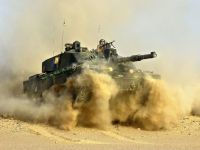 London — Lockheed Martin UK is to team with Israel’s Elbit Systems in its bid to secure a deal to update the British Army’s aging fleet of Challenger main battle tanks. The two companies revealed their collaboration pact just 24 hours ahead of the closing date for the submission of industry proposals to undertake the assessment phase on a program which could see up to 227 tanks updated at a cost of £624 million ($816 million). The requirement has attracted the attention of some of the leading companies in the western armored-vehicles sector.
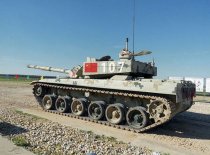 China’s People’s Liberation Army (PLA) is likely to use the Type 96B main battle tank (MBT) as the pillar of its tank fleet, replacing most of its older models, the China Daily newspaper quoted military analysts as saying on 10 August. Gao Zhuo, a Shanghai-based military observer who is in close contact with the PLA, told the paper that the “excellent capabilities of the Type 96B qualify it to be the backbone of China’s tank force”. “The Type 96B is the strongest variant of the Type 96 family and is truly an advanced, third-generation MBT,” said Gao, adding that the PLA will use it to replace obsolescent tank models such as the Type 59 and Type 69.
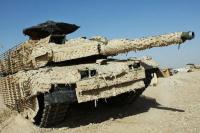 LINKOPING, Sweden, Aug. 11 (UPI) — Saab is to design, develop and deliver vehicle electronics to Germany’s Krauss-Maffei Wegmann Gmbh for use in Leopard 2 tanks for the Swedish military. Krauss-Maffei Wegmann is a primary supplier of the Leopard 2 tank to Sweden, which designates the tank as the Stridsvagn 122. The $15.29 million order for the electronic systems and accessories includes provision of training and documentation and will allow tanks using the electronics to be integrated with the Swedish Battalion Combat Management System.
 Want to follow Tank and AFV News.com on Facebook? Now you can! For the past couple weeks, we have been posting our website updates onto the
 Tank and AFV News