Here is an assortment of recent news stories pertaining to WWI tanks. Click on the title to view the full article.
Blue Mountain Gazette – An exhumed WWI tank, the Sydney commander and Sir Donald Bradman
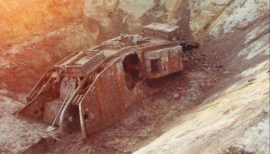 Start digging up history and you never quite know what you might unearth. Not infrequently wartime aircraft have been discovered, often with the remains of airmen still strapped inside. But only one First World War tank has been exhumed from the battlefields of northern France. With the Battle of the Somme at a stalemate, more than 340 tanks were positioned against the German forces at Cambrai in November 1917. It was an attempt to smash through enemy lines. Some 35 tanks were in D Company under the command of a Sydneysider, of which 10 were “knocked out” including one in which five of the eight crew died.
Heraldscotland – How Scotland created the tank … and how the tank was turned on Scotland
 One hundred years ago this week tanks made their first appearance on the battlefield and the face of modern warfare was changed for ever. They were large and unwieldy machines only capable of travelling at two miles per hour but as trench-crossing and barbed-wire crushing leviathans they were hailed as wonder weapons. Confirmation of the weapon’s abilities was provided by British commander-in-chief Sir Douglas Haig who immediately ordered 1000 further tanks putting the British armaments industry into overdrive with 90% of their armour plating being supplied by Scottish firms.
The Telegraph – How First World War PoWs betrayed details of the first mass tank attack in history
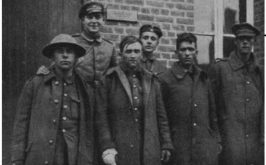 Organised amid the utmost secrecy the assault on the French village of Flesquières should have been a key element in the first mass tank attack in history. But the plan went awry when the attack was ambushed by the Germans, who managed to delay the British advance. For years historians struggled to explain why the enemy had obtained enough detail of the operation to rush reinforcements to Flesquières ahead of the planned assault Only now – nearly 100 years on – can it be revealed that the German high command was given notice of the attack by a group of captured British soldiers.
News.com.au – Battle of Bullecourt: Search to find missing tanks that led to Digger disaster
 A team of British and Australian war veterans will lead an archaeological expedition in France next year in what will be the first major dig of the Battle of Bullecourt in almost 100 years. The move aims to solve the mystery of the fate of a dozen British tanks that were deployed to support the 1917 assault of the German line by the Australian 4th Division but disappeared – leading to the slaughter of the Diggers in one of the biggest defeats of the Great War. News Corp Australia has learned the French government has granted the British Ministry of Defence an extraordinary permit to conduct an exploratory survey next month of the ill-fated battlefield in northern France. Further access will be sought for a full dig to take place in early 2017, coinciding with the centenary of the battle.
 JSC UralVagonZavod, manufacturer of the new Russian tanks T-14 based on the multipurpose platform Armata kicked off supplies of the combat vehicles to the Russian Army, reported the company’s director general Oleg Sienko on Sept 8 at the Army-2016 military exhibition. “Indeed, we do confirm that supplies have started. Totally, we are to produce 2,300 tanks of this kind for the Russian army”, Sienko told to RIA Novosti. “Speaking of the new contract, everything is up to the customer, the defense ministry. We just prepare manufacturing facilities”, he added.
 Hyundai Rotem is expecting to commence production of 600 6×6 KW1 and 8×8 wheeled armoured vehicles (WAVs) for the Republic of Korea Army (RoKA) from 2018 at a rate of about 100 vehicles each year, the company said. These will be designated K806 and K808 in RoKA service, respectively. Speaking to IHS Jane’sat the DX Korea 2016 exhibition in Goyang city, South Korea, principal research engineer at Hyundai Rotem’s research and development centre Shin Yong-Cheol said the company expects a firm order from the South Korean government by October, which will call for a batch of 16 low-rate initial production vehicles to be delivered to the RoKA for field trials scheduled to last till the end of 2017.
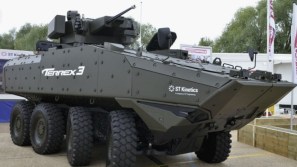 Contenders for the British Army’s Mechanised Infantry Vehicle (MIV) requirement were out in force at Defence Vehicle Dynamics (DVD) 2016 at Millbrook Proving Ground on 7 and 8 September. MIV will be an 8×8 procured off-the-shelf and fitted with a minimum number of UK sourced sub-systems such as remote weapon station, communications, battle management system and seating. According to David Russell, MIV Team Leader “MIV is now in the concept phase” and with “the team building up rapidly”.
 General Dynamics Land Systems UK (GDLS UK) has confirmed that it will commence manned firing trials of the Scout – Specialist Vehicle Ajax in early 2017. This follows a series of unmanned firing trials at a range in Wales that were carried out between July and August this year. Lockheed Martin UK developed the Ajax’s turret under subcontract. Three prototype turrets were completed and will be followed by 245 production turrets. The turret is armed with a CTAI 40 mm Case Telescoped Armament System, a 7.62 mm co-axial machine gun (MG), a Kongsberg Protector remote weapon station (RWS) that can be armed with a 7.62 or 12.7 mm MG or a 40 mm automatic grenade launcher, and banks of electrically operated grenade launchers.
 The Russian Federation may regain T-80U main battle tanks (MBT) and BMP-3 infantry fighting vehicles (IFV) supplied to the Republic of Korea (ROK) in the 1990s and in the 2000s towards state debt payments. “Moscow is planning to regain the T-80U MBTs and BMP-3 IFVs delivered to Seoul in the 1990s towards state debt payments. The taking of the relevant decision dates back to 2005.” An official from Russian defense industry was quoted as saying by Tass Defence Friday. We have recently conducted the technical assessment of the vehicles and drafted a proposal to the authorities of the ROK. The proposal was delivered to the South Korean side on September three.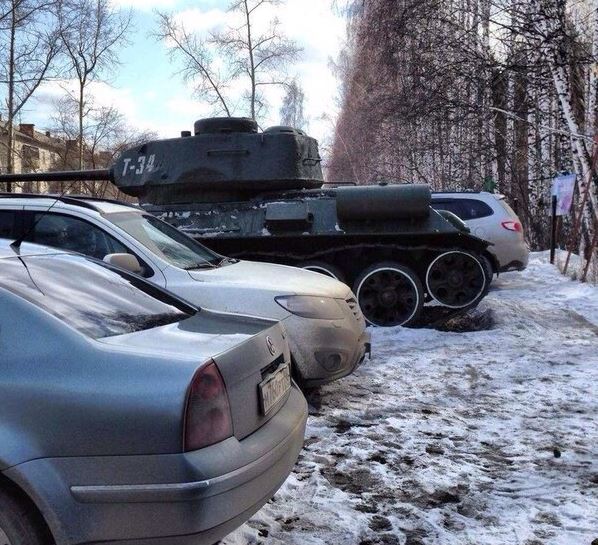

 The Evening Telegraph has


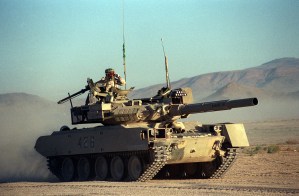 In 1979, the Army responded by opening the National Training Center at Fort Irwin, around 100 miles northeast of Los Angeles. The sprawling desert environment gave troops the space to use tanks, howitzers and other heavy weapons in big, conventional exercises.

 Tank and AFV News