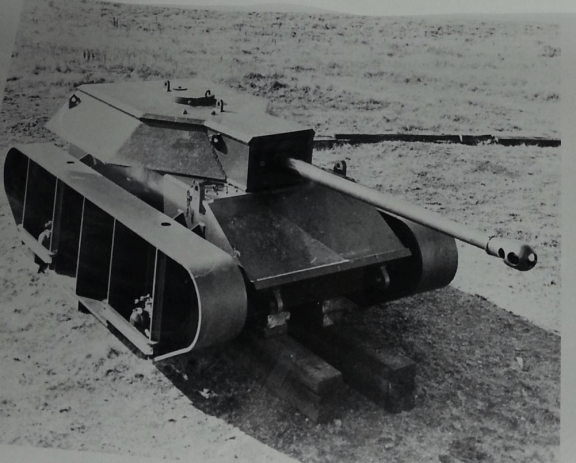
Today’s POTD comes from the facebook feed of Friends of the Tank Museum. This is a picture of a testbed built as part of a British program to test the impact of a tank being dropped by aircraft with a parachute. The tests showed that the hull took considerable damage from the drop. As the other pictures in the post show, this mock-up later ended up on a range as a target and is presumed to have been scrapped at some point. View the entire photo gallery at the facebook page for Friends of the Tank Museum.
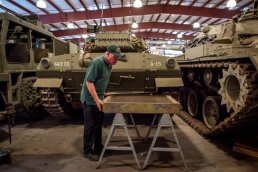 OLD BETHPAGE, N.Y. — The well-being of the intimidating fleet of tanks, cannons and jeeps at the Museum of American Armor on Long Island is held securely in the greasy hands of Mark Renton. Mr. Renton is the museum director, though the title might be slightly lofty. After all, he is the museum’s only salaried employee and he cares little for paperwork or administrating.
 . This book is a follow-up to last years book
  . For those familiar with the WWI book, this new book follows the same format, although with a slightly higher page count (280) than the previous book. This is a well illustrated book, with photos, drawing or charts on every page accompanying the text. These books are both published in association with the Tank Museum at Bovington. Author David Fletcher served for many years as the Museum historian and is widely regarded as one of the most knowledgeable researchers on the topic of British armor.
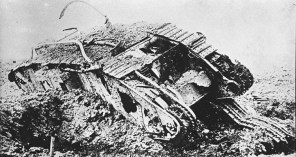 In August 22 of 1917, the British Mark IV tank named “Fray Bentos” experienced the longest tank action of the war, being caught in battle for 60 hours. Commanded by Donald Richardson, a wholesale grocer who named the tank after a brand of canned meat, this tank became trapped near enemy lines during the Third Battle of Ypres. Despite almost all the crew being wounded, they were able to fight off repeated attacks by German forces. Eventually, with the crew out of water, they decided to risk an escape, running back to British lines. Remarkably, during the entire period of the action, only one crew member was killed. The crew of the Fray Bentos would be awarded for their bravery, becoming the most highly decorated tank crew of the war.
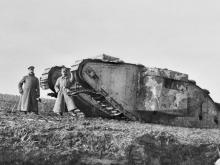 The first major archaeological dig in 100 years at the site of one of Australia’s biggest military defeats has turned up a “missing” British tank that Aussies long thought had fled the Bullecourt battleground due to cowardice.
 Tank and AFV News