The Armor Journal “Walkarounds”

For those who are looking for reference photos of various tanks and armored vehicles on display, we recommend the “Walkarounds” section of the website for The Armor Journal (TAJ) Magazine.  This online gallery includes pictures of 16 different tanks, 13 different self propelled guns as well as some towed artillery and some miscellaneous vehicles.  Included in the gallery are some rather rare vehicles such as the IS-7, Object 279 and the Mark VIII Liberty.  If you enjoy the gallery, be sure to check out the first three issues of TAJ which feature a variety of articles and photos of modern and historic armor.

Click the image below to go to the gallery.

Walkaround tanks

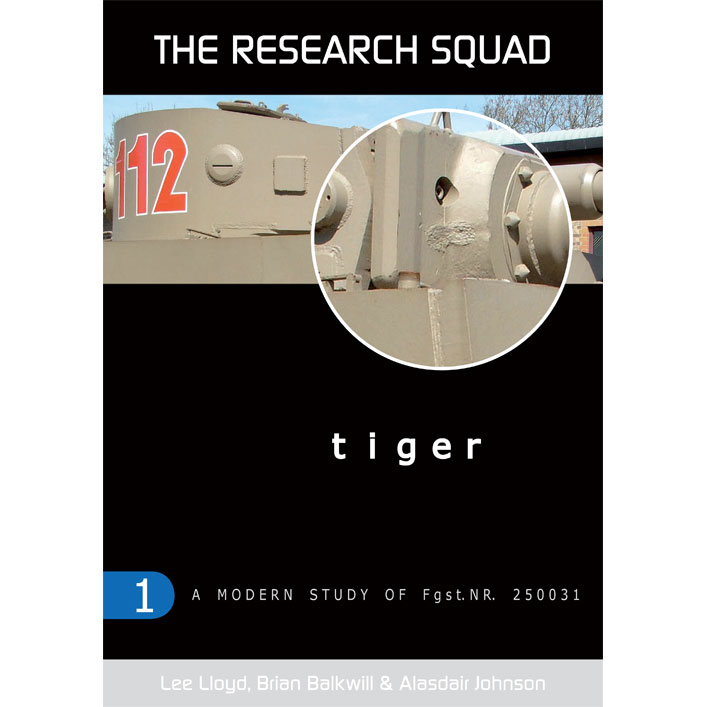
Book Alert: Research Squad Tiger book

The Research Squad has announced that their Tiger tank book is at the printers and available for pre-order.

Tiger1The Research Squad are pleased to announce the upcoming release of Tiger: Modern Study of Fgst. NR. 250031, a complete photo study of the Aberdeen 712 Tiger tank. The Research Squad were given given special permission by the collection and Aberdeen Proving Ground Museum to fully document this important vehicle in order to create a photographic record for any future restoration work. This includes a full exterior walk-around, a complete documentation of the interior and also a detailed study of the engine compartment and engine.

To this end the knowledge and expertise of many contributors were brought together, not least of which were our two technical editors, Liejon Schoot and Rob Veenendaal, without whose massive contribution this book would not have been completed.
208 pages
+/- 690 images.
69 technical diagrams (including 27 selected re-mastered diagrams at A4 size)

This includes:

  • a full exterior walk-around,
  • a complete documentation of the interior
  • a detailed study of the engine compartment.
  • a history of the vehicle from capture to present date
  • a veteran interview with the driver of Maj. Leuder
  • a history of the vehicle from capture to present date
  • a technical article by Liejon Schoot and Rob Veenendaal on the Vorpanzer design

This book is currently at the printers – all copies pre-ordered will ship first during November 2015.

From the Vault: Robert Icks on the best Tanks books circa 1972

Today we present a two part series written by tank expert and author Robert Icks originally published in ARMOR magazine in 1972.  The subject of the article is simply “books about armor.”  Obviously, many of the books mentioned in this article are out of print and forgotten, although a good number of them are still available through used book sellers online.  Good stuff for the serious tank book nerd.

Author Profile: R. P. Hunnicutt

ore0003165667_2_023148Echo Point Books has released reprint editions of “Bradley” and “Armored Car” by R. P. Hunnicutt.  This brings the number of Hunnicutt titles reprinted by Echo Point Books up to eight.  Only two Hunnicutt titles that have not been reprinted, “Fire Power” and “Sheridan.”

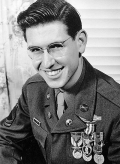
For those not familiar with the works of Richard Pearce Hunnicutt (1926-2011), his ten volume set chronicling the history of US armored vehicle development is unparalleled.  Despite the importance of his works, his name is not as well known as some authors who write about tanks and armor due to the fact that his ten volume set was published in relatively small print runs and priced outside the range of most casual readers. His ten volume set was written over the course of  thirty-one years, the first book being published in 1971 and the final volume in 2002.

Hunnicutt was a veteran of World War II and after the war pursued a master’s degree in engineering from Stanford University.  He went on to work at General Motors and later on became a partner in an engineering firm named ANAMET.  Hunnicutt’s professional specialty was metallurgy and he was recognized as one of the most knowledgeable expert in that field in California.

His success in his professional life gave him the means to pursue his hobby of researching and writing about US armored vehicles.  He formed friendships and connections with many of the critical figures in US armor history, as evidenced by the many tank luminaries who wrote the forwards to his books.  Hunnicutt was also one of the founders of the U.S. Army Ordnance Museum at Aberdeen Proving Ground, MD as well as a supporter and friend to the Patton Museum at Fort Knox KY.  His books were financed and produced largely out of his own pocket, since the size and quality of his books required a cover price far beyond what most publishers would be willing to consider for such a specialized topic.

The books themselves are high quality hardcover editions with thick glossy paper and an abundance of photos (primarily black and white), illustrations and diagrams.  Each book is patterned in the same fashion, the format changing little volume to volume.  The writing style is clear if somewhat dry.  People looking for exciting stories of tanks in action will be sorely disappointed if they expect that from a Hunnicutt books.  These books are detailed histories of the development and variants of US vehicles.  They contain little information as to the use of these vehicles once they were in service.  Nor does Hunnicutt provide much evaluation or opinion regarding these various vehicles.  His histories are first and foremost a presentation of hard information, providing details and data about vehicle development seldom seen in previous works on the topic.

His ten volume set consists of the following:

Pershing: A History of the US Medium Tank T20 Series 1971 – This is the first book in the series and it is probably the least expansive of any of his books, covering only the T20 series of tanks.  This book uses a slightly different font on the dust jacket than the following books, as well as being from a different publisher (Feist Publications) than the later books (Presidio).

Sherman: A History of the American Medium Tank 1978 – Since its publication, this book has widely been regarded as the bible of Sherman tank books.  The title is misleading, this book covers much more than just the Sherman tank.  The development of US medium tanks starting in the immediate post-WWI period up to the M4A3E8 “Easy Eight” is covered in this massive tome.

Patton: A History of the American Main Battle Tank Vol. 1 – 1984  This book picks up where “Pershing” leaves off with the development of the M46 Patton tank up through the final variants of the M60 series.

Firepower: A History of the American Heavy Tank 1988 – Since no US heavy tank ever got an official nickname, Hunnicutt had to give it a more general title than the other books.  This book deals with the early heavy tanks developed at the close of WWI up to the WW2 era M6 and the post war designs leading up to the M103.  Rumor has it that Wargaming NA is working on a reprint of this book.  They have access to many of the original photos used in the book and are promising a better quality reprint than those provided by Echo Point.  Time will tell what happens with this title.

Abrams: A History of the American Main Battle Tank Vol. 2  1990 – This volume covers US attempts to develop a new series of tanks to replace the Patton line going all the way back to the 1950’s.  The Abrams tank does not appear until the second half of the book, the first half being devoted to the T-95, the MBT-70 and other early programs.  Since this book was published in 1990, it does not cover anything beyond the M1A1.

Stuart: A History of the American Light Tank Vol. 1  1992 – Much like the Sherman book, this volume covers it’s topic from the latter part of WWI up to the final versions of the M5 Stuart as well as the M24 Chaffee.  Also covered in this book are other light armored vehicles of the period such as the LVT “Amtrac” and the M18 Hellcat Tank Destroyer.

Sheridan: A History of the American Light Tank Vol. 2  1995 – Much like the Stuart book, this one covers quite a bit of ground, including the M51 Walker Bulldog tank as well as the T92.  Also covered are the various Armored Gun System prototypes intended to replace the Sheridan.  The self propelled guns M107, M108, M109 and M110 SPGs are covered in this book as well.

Bradley: A History of American Fighting and Support Vehicles  1999 – This one is a very substantial volume, including all the US post WW2 armored personal carriers and the various vehicles that shared the same chassis.  This includes the myriad variants of the M113 APC.  In fact, the Bradley does not appear until after page 250!

Half-Track: A History of American Semi-Tracked Vehicles  2001 – This is one of the smaller books in the series.  The majority of the book is devoted to coverage of WW2 era US half tracks.

Armored Car: A History of American Wheeled Combat Vehicles  2002 – This is the last book in the series and it covers a greater time period than any other volume.  Starting with the earliest armored cars of WWI, it continues all the way to the introduction of the Stryker.  The M8 gets good coverage in this book.

The only flaw with this series is that certain vehicle types get scattered around different volumes.  For example, if someone wanted to read about US tank destroyers, they would have to start with Armored Cars, then go to Half-track, then Stuart and finally Sherman.  The situation with self propelled artillery is similar.  However, this is a rather minor complaint.  US armor enthusiasts owe a great debt to Richard Hunnicutt for creating this superlative set of books.  Unfortunately, armor enthusiasts may also go into financial debt trying to obtain a set of the original editions.  The more popular books in the series such as Sherman and Firepower regularly command anywhere from $100 – $300 on the used book market based on condition.  PDF copies of the books are not hard to find online, not that we condone that sort of thing. The Echo Point Books reprints are more affordable, although response has been mixed regarding the quality of the reproduction on these editions.

For a more detailed description of his life, you can read the obit for Hunnicutt in The Oregonian here.

Book Alert: Kursk: The Battle of Prokhorovka

51KvncC1EwL._SX423_BO1,204,203,200_Looking for the ultimate book on the famous tank battle at Prokhorovka?  Aberdeen books is listing a mid-October release for the massive new book on the topic, “Kursk: The Battle of Prokhorovka” by Christopher A. Lawrence of the Dupuy Institute.  This is no ordinary book, it’s a whopping 1662 pages and comes with an equally impressive price tag of $195.  While this price tag may put it outside the range of many readers, imagine how impressive it would look on your coffee table.  Or, considering the size of the thing, you can use it as a coffee table.  Joking aside, this book is available for pre-order from Aberdeen books, who offer a special $175 price on pre-orders.

Publishers Description:

Kursk: The Battle of Prokhorovka is the first definitive account of the largest tank battle in history. This book is unique in that it draws upon in-depth research in both the German and Russian archival records. This was research that was begun in the 1990s, after the Soviet Union had fallen, when The Dupuy Institute was able to gain access to the Russian military archives. The book is built from the actual unit records from both sides, as opposed to the sometimes distorted narratives and legends that have grown up over the battle. It then compares and contrasts those records with the stories and interviews collected from veterans. It is an attempt to cover the entire range of fighting, from the strategic decisions, the operational art, to the tactics and the personal stories. It is a detailed description of the battle, a quantitative analysis of the battle and personal description of the battle as seen through the eyes of the participants. Over hundred German and Russian participants on both sides were interviewed exclusively for this book. It is a unique body of research that will not be replicated.

This is a large book. This is because the amount of unique material collected on the battle was unparalleled, first as part of a U.S. Army funded research project and then as an extended book project. The book includes 29 fold-out maps, 94 maps in the text, 41 charts, graphs and diagrams, 166 tables, 194 statistical sheets covering each engagement, 100 separate sidebars of discussion, 66 German and Soviet commander biographies, and four photo sections with 289 photos. They are drawn from both German and Soviet sources.
The Battle of Kursk was the largest armor battle in history. On 5 July 1943, three German panzer corps, under command of German General Erich von Manstein, tore into the Soviet fortified defenses south of Kursk. Driving back the Soviet Voronezh Front’s desperate defense, under command of Soviet General Nikolai Vatutin and future Soviet leader Nikita Khruschev, the fight culminated in the famous tank battle at Prokhorovka. This book focuses on the German offensive in the south of the Kursk salient that was the high point of the Battle of Kursk. It addresses all units that fought in the battle, not just the Panther and Tiger tanks, not just the SS, not just the tank busting Stukas.

Book Alert: T-34/85 Camouflage and Markings 1944-1945 (Green Series)

October 9 is listed as the release date for the latest entry in the Green Series by MMPBooks, T-34/85 Camouflage and Markings 1944-1945 by Przemyslaw Skulski.  This book is listed as 120 pages softcover 8.3 by 11.7 inches.

Publishers Description:

T-34 served in huge numbers with the Soviet Army and its allies, and was also used by their enemies! This book describes the colors and markings applied to the T-34-85 in service with all major users, including unit and tactical markings, individual names and insignia, and air recognition features. Profusely illustrated with photos and color profiles, this is essential reading for armor enthusiasts and modelers.

Video Preview:

Book Review: Armored Campaign in Normandy by Stephen Napier

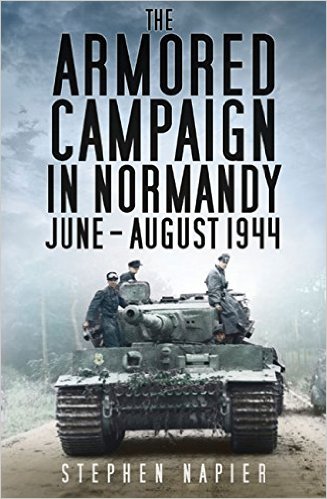
Armored Campaign in Normandy June-August 1944 by Stephen Napier

51ORzhG5PSL._SX325_BO1,204,203,200_Much ink has been spilled over the past 70 years on the Normandy Campaign of 1944 and about the tanks used in that campaign.  Author Stephen Napier decided to put his own mark on the discussion with his new book ” The Armored Campaign in Normandy.”  At over 400 pages of text, this is an impressive work,  well documented and footnoted.

Napier’s central thesis is that the performance of British Armored forces in Normandy was rather lackluster and often failed in the face of resistance from German forces, even when significantly outnumbering their opponents.  He lays the blame for this on a variety of factors, including General Montgomery, British divisional and regimental commanders, British tank doctrine and technical deficiencies of British tanks.  His analysis of the German commanders is even more harsh, noting the convoluted chain of command of the German forces in Normandy which was almost guaranteed to create indecision, confusion and defeat.

Napier approaches the subject by breaking down each of the major operations of the Normandy Campaign as a separate chapter, each chapter divided up by the combatants.  This approach means that the majority of the book focuses on the British Army and their Canadian and Polish allies.  The German and American armored forces are included, although they receive far fewer pages.  The book starts out with an examination of the use of armor on D-Day, focusing on the swimming “DD tanks” used on the beaches of Normandy by British and US forces.  He ultimately concludes that these DD tanks were not particularly effective and that Allied forces would have been just as well relying on tanks landed by LCT ships (although he notes that the US was much harsher in their judging of the DD tanks than the British.)

The next chapter is on the only one not focused on a particular battle, but rather describes the tanks and tactics used by the combatants of the Normandy Campaign.  Napier describes the armor and firepower deficiencies of the M4 Sherman and British Cromwell compared to some of their heavier German tank adversaries.  He also describes some of the daily realities that tankers faced in the Normandy Campaign, their lives spent maintaining and living inside a cramped metal box on treads.

The rest of the book is broken down into ten more chapters, each looking at a major operation.  Since most of these operations, such as Epson, Goodwood, Totalize, or Tractable, were initiated by UK forces, the focus of much of the book is on British armored units.  Napier’s descriptions of these battles is lively and he presents a good deal of detail.  Intermixed with his descriptions of the battles are quotes taken from participants of the action, both Allied and German.  These quotes add considerably to the book, helping to keep the readers interest and provide some color.  One nice touch is that Napier usually follows up these quotes with relevant information from the historical record.  This is quite useful in regards to the quotes from some of the German tank commanders who often make claim to killing a certain number of tanks.  Napier sometimes follows these quotes with unit loss figures from Allied sources, often showing that the German tankers exaggerated their kill counts by a factor of 2 or 3.

In popular accounts of the Normandy Campaign, much is often made about the technical disparities between Allied armor and the dreaded German Tiger and Panther tanks.  Napier addresses this issue, but keeps it within its proper context.  He notes that while this was factor, it was certainly not the only factor in explaining the sometimes poor performance of British Armor versus their German adversary.  If anything, the reader comes away with the impression that by 1944, the tank had lost the aura of invincibility that it had in the 1939-1941 era and that any attack by armor against a position well defended by tanks and anti-tank guns was bound to suffer heavy casualties.  This is illustrated not just by the attacks carried out by British units, but also by the counterattacks attempted by the German Panzer forces.  Despite whatever technical advantages the Panzer forces might have had, when used on the offensive in the Normandy Campaign, they almost always failed to achieve their goals.  This is well illustrated in the chapter on the ill-fated German Mortain counter-attack.

The book comes with a center section of black and white photographs.  While interesting, these pages would have been better used to include a more detailed series of maps.  The few maps included in the book are frankly a bit inadequate considering the number of battles described in the text.  That said, the book itself is well made and the paper quality good.  Personally, we feel that a picture of a British tank would have been more appropriate than the Tiger tank which adorns the front duct jacket, but we realize that nothing sells a tank book quite like the image of a Tiger tank.  That said, we highly recommend this book for those looking for an account of armor in the Normandy Campaign.

Special thanks to Casemate publishing for providing a review copy.

Hunnicutt’s Abrams and Pershing Books Reprinted

51kvxIYQoHL._SX385_BO1,204,203,200_Echo Point Books & Media have released a reprints of Abrams: A History of the American Main Battle Tank, Vol. 2 and Pershing: A History of the Medium Tank T20 Series by R. P. Hunnicutt.  The Abrams book is available in either softcover for $45 or hardcover for $55 while the Pershing book is $40 for the softcover or $50 for hardcover .  With the reprinting of Abrams and Pershing, Echo Point has now reprinted six of the ten books that Hunnicutt wrote documenting the history of US Armor.  Hunnicutt’s book ‘Firepower: the history of US Heavy Tanks”, is believed to be reprinted soon by the folks over at World of Tanks.  That leaves only Sheridan, Armored Car, and Bradley as available only in the original editions.  Fortunately, these three were later books in the series and generally can be found for under $100 on the used book market

51Xp1KKyCEL._SX385_BO1,204,203,200_It’s fair to say that the works of R. P. Hunnicutt are essential items in the collection of anyone serious about learning about US Armor history.  The Abrams book covers not only the development of the Abrams, but also earlier attempts at developing a new MBT during the cold war, such as the T-95 and the MBT-70.  The book was published in 1990, so it does not include any information on Abrams variants past that date.  Pershing covers the development of the T-20 series through to the M26 Pershing.  Used copies of the original hardcover editions of these books are long out of print and command $100+ prices on the used book market, so these affordable reprints are most certainly a welcome development for tank and AFV aficionados.

Book Alert: Conqueror Heavy Gun Tank

ConquerorLater this month Tankograd Publishing will be releasing a new book on the Conqueror Heavy Gun Tank by Carl Schutze.  This will be a softcover book of 64 pages with 12 color and 94 b&w photos and 17 graphics.  Text is in both English and German.

Publisher’s Description:

The FV214 Conqueror heavy gun tank was developed and fielded by the British Army in the early years of the Cold War to counter the threat caused by Soviet heavy tanks such as the IS-3 and the T-10. If the Cold War had turned hot, the Conqueror would have served as a tank destroyer to knock out enemy armor at a range superior to that of the Centurion main battle tanks.

This publication describes the development history, the technology, variants and the only eight year long in-service life of the Conqueror heavy gun tank. Also covered is the Conqueror armored recovery vehicle.

Book Alert: Tip of the Spear

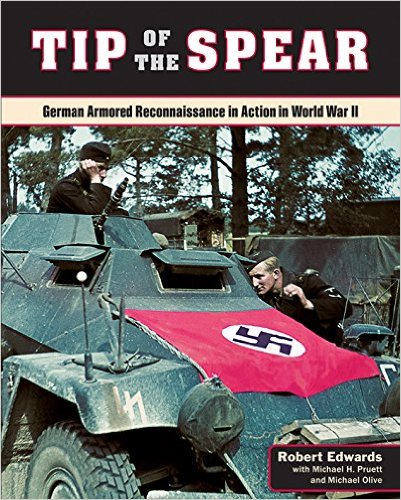
61jdF4bn6aL._SX399_BO1,204,203,200_Stackpole Publishing has announced a November 1, 2015 release for the upcoming book ‘Tip of the Spear: German Armored Reconnaissance in Action in World War II” by Robert Edwards.    This is a 528 page hardcover volume with 500 black and white photos as well as a 32-page color insert.  This book follows Edward’s “Scouts Out: A History of German Armored Reconnaissance Units in World War II” published in 2014.  Robert Edwards is a retired U. S. Army armor officer who has translated numerous books from German to English.  Most notably for armor fans, he translated Otto Carius biography “Tigers in the Mud.”

Publishers Description:

During World War II, German armored reconnaissance laid the groundwork–often through small-unit actions–for the stunning tank and infantry operations that made the German military famous. Robert Edwards’s follow-up to Scouts Out, the first extensive treatment of the subject in English, focuses on the battles and personalities found in ranks of the Waffen-SS, Luftwaffe, and other divisions.

– Covers armored reconnaissance in Poland, France in 1940, the Balkans, North Africa, the Eastern Front, Italy, and the Western Front

– Numerous firsthand accounts and after-action reports

– Analysis of recon operations, from tactics and doctrine to vehicles and commanders