Leichttraktor pictures and documents from Swedish Tank Archives blog

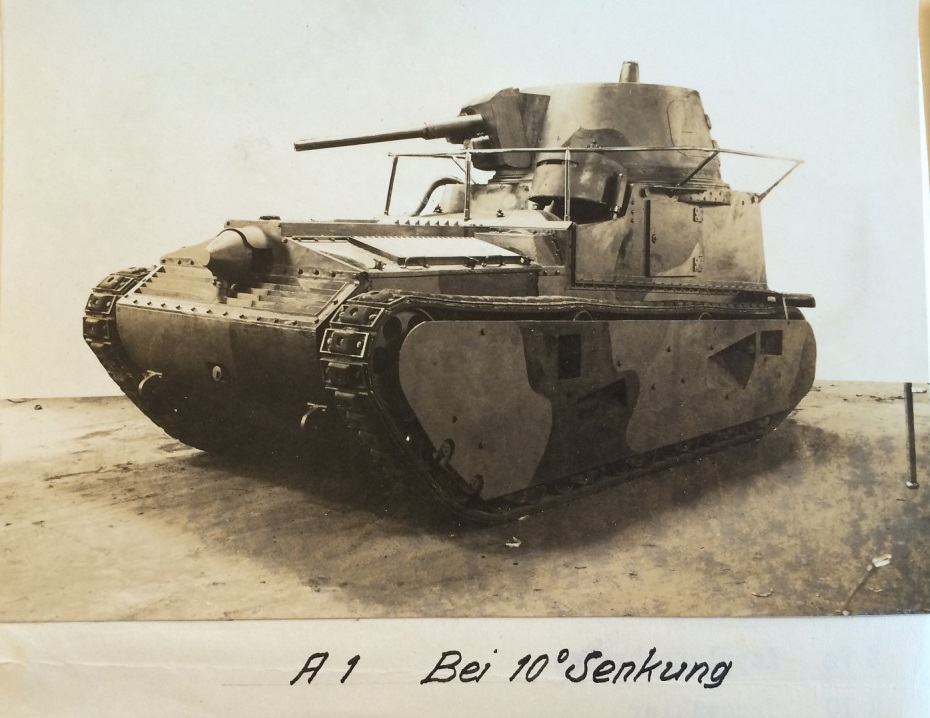
leichttracktorRen Hanxue, creator of the Swedish Tank Archives blog, recently posted a PDF of documents and pictures from the Swedish Archives pertaining to the German Leichttraktor.  The documents are of course in German so we are not entirely sure what they contain.  However, the pictures are very interesting, providing shots of not just the vehicle but also of some of the automotive components and subsystems.  The Leichttraktor is a fairly obscure vehicle, being a German post WWI design that never saw mass production.  It is most widely known as the tier one German tank in the World of Tanks video game, where it is commonly referred to as the “Loltraktor.”

The PDF is available here.

We highly recommend Swedish Tank Archives.  People with an interest in Swedish tanks will find it a valuable resource.  The site also contains documents relating to Swedish evaluations of foreign vehicles such as the Chieftain, AMX 13, and T-80U.  Ren Hanxue also maintains a youtube page with some videos if Swedish tank terrain trails including Centurion, Strv 104, T-72 and T-80 tanks.
From the Vault: History of the Cav Hat

Today we present an article from the Jan-Feb 1996 issue of ARMOR on the history of the Cav Hat.  Written by Major Mark Farrar, this piece looks at this iconic item, detailing its history both in popular culture and in military service.

From the Vault: The Grim Reaper

Another interesting item from ARMOR magazine.  This comes from the May-Jun 1998 issue.  It’s a one page description of the most heavily armed tank in Vietnam, the Grim Reaper.  According to former crewmate Dave Decker, this vehicle was modified by it’s crew to have up to three .50 cal machine guns on the roof.  The article notes that for a short period of time, the crew also mounted the 7.62 Minigun from a Cobra helicopter on the front of the loaders hatch!  The author notes that this gun “was confiscated by an irate high-ranking officer.”

The Grim Reaper

From the Vault: An Israeli view on Soviet tanks

Today we present another article from ARMOR, the official journal of the armor branch.  This piece is an evaluation of Soviet tanks by Lieutenant Colonel David Eshel of the Isaeli Defense Forces and it appeared in the May-Jun 1988 issue.  In this article, the author focuses primarily on the T54/55 and the T62, since both of these vehicles were captured in large numbers by the IDF and pressed into service.  Col. Eshel notes the many modifications that the IDF made to these vehicles as well as listing some of the problems they encountered with the Soviet designs.  While Eshel makes many critical comments about these vehicles, he ends the piece with the following remarks:

In short, Israeli experience in tank combat reveals shortcomings in Soviet tank designs. However, Soviet tanks are, in principle, excellent fighting machines, combat proven and viable under field conditions.  If manned by determined and highly-trained crews, they can be a most dangerous and deadly opponent.

From the Vault: Merkava 2 article from ARMOR magazine

Today we present an article from the Nov-Dec 1985 issue of ARMOR by R. M. Ogorkiewicz titles “Israel’s Merkava Mark 2 Battle Tank.”  The article gives a good description of the Merkava as well as explaining the reasons for the vehicle’s unusual design.  it is worth pointing out that the author is quite clear in stating that the Merkava is not intended to function as a tank/APC hybrid.  This claim still gets made in various online forums from time to time.  Ogorkiewicz states that “the fact that the Merkava can carry infantrymen has been misinterpreted by many people, including several contributors to ARMOR, who have wrongly assumed it to be some kind of tank-cum-infantry carrier.  Those who have done this not only misunderstand the design of the Merkava, but seem to have no idea of the monstrous size of any tank which would carry not only a major caliber gun and a full load of ammunition, but also a squad of infantry.”

From the Editor: Weird and wonderful old timey AFV patents

Here at Tank and AFV News, we like to dig through old patents to see what sort of odd and unusual ideas people have come up with in regards to tanks and AFV design.  Today we present a few of the more unusual patents we have found from the early days of tank and AFV design.  These were found by browsing Google patents (any typos in the patent descriptions are due to errors made by the OCR when these patents were digitized.)

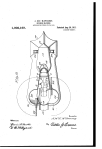
1. We’ll start with a patent from 1911 by Anthony Mcf Mcsweeny for a “Skirmish-machine.”  This is essentially an armored car and is probably the most sensible of the designs we present in this article.  That said, it earns a place on this list by nature of it’s rather unusual name of “skirmish-machine.”

The inventor describes his invention as:

The present invention provides an engine of warfare which is self-propelling and armored so as to amply protect the `vital parts and the complement of men manning the same. The machine besides being self propelling, so as to move from place to place by its own power, is adapted for use as a traction engine for drawing ordnance, wagons,” or vehicles containing supplies or munitions of war.

[Read more…]

From the Editor: The Hull Machine Gunner

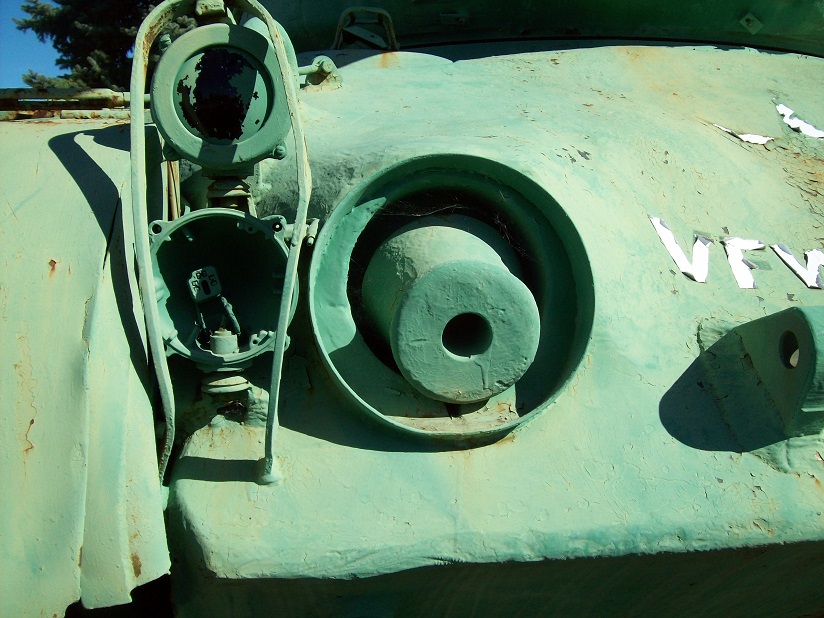
bow gunOne of the unique characteristics of WW2 era tanks is the hull machine gunner position.  This crew position was assigned a variety of names in different armies, being referred to as the assistant driver, radio operator, or bow gunner to name a few. A large majority of the tanks designed and used during the war had this position as part of their crew layout, although it quickly disappeared from tank design in the post war period.

In the 1920’s and early 1930’s, tank design was still in its formative stages and vehicle crew and component layout varied dramatically.  However, by the late 30’s a consensus starts to emerge in regards to crew layout.  In Germany, the Panzer III and IV established the layout that would be most common during the war, a five man crew with three in the turret and two in the hull, a driver and the hull machine gunner.  The Soviet Union, USA, Czechoslovokia and Japan also adopted the hull gunner concept, although their early war tanks typically had two men in the turret (T-34, M2 and M3 light tank, LT vz 35 and 38, Type 97).  The two major exceptions to the move toward bow gunners were the United Kingdom and France.  French tank design was fairly unique, relying primarily on smaller vehicles with 2 man crews (Renault and Hotchkiss infantry tanks) or larger tanks such as the Somua S35 or Char B1 Bis which had a radio operator position but did not give him a machine gun to operate. British pre-war tank design varied.  The Matilda II (A12) infantry tank had a very modern crew layout of driver in the hull and three in the turret.  On the other hand, the Cruiser Mk I introduced into service in 1939 had two hull machine gunners, each with his own turret!

[Read more…]

From the Vault: Zaloga on the Polish Cavalry VS German Panzers myth

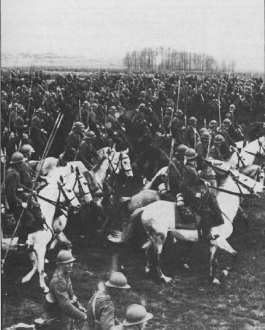
polish cavalryDigging through old issues of ARMOR magazine, we have found an article from 1984 written by well known historian and tank expert Steven Zaloga titled “Polish Cavalry Against the Panzers.”  In this piece, Zaloga seeks to put to bed the long standing myth regarding Polish Cavalry troops conducting brave yet futile charges against German Panzers.  As Zaloga puts it:

“Tales of Polish cavalry charges against German tanks during the September 1939 campaign still remain widely believed even amongst serious historians who are otherwise skeptical of similar German propaganda excesses of the period.  The subject has been dealt with in extensive detail by Polish military historians, but most of this material is inaccessible to western historians due to the language barrier.”

The article is can be read in the image gallery below (ARMOR is a government publication and not under copyright.)  These pages are from the Jan-Feb 1984 issue of ARMOR.

[Read more…]

From the Vault: Vickers Valiant MBT

Today we present an article on the mostly forgotten Vickers Valiant Main Battle Tank. This article is from the March-April 1983 issue of ARMOR and is authored by noted tank expert Richard Ogorkiewicz.  The Valiant MBT (also knows as the Vickers MBT Mk 4) was designed in 1977 as a follow up to the Vickers MBT developed in the 1960’s as a private venture.  While the original Vickers Mk 1 MBT was relatively successful, being adopted by the armies of India (as the Vijayanta) and Kuwait, and the later Mk 3 version was used by Nigeria and Kenya, the Mk 4 Valiant never made it past the prototype stage.  The primarly selling point of the Mk 4 was the inclusion of Chobham armor and a “universal” turret capable of mounting either the L7 105mm gun, the 120mm rifled gun of the Chieftain MBT, or the Rheinmetall 120mm gun of the Leopard 2.  Unlike most British main battle tanks, the Vickers series used a torsion bar suspension rather than the Horstmann system found on Centurion or Chieftain.  It’s worth pointing out that the Vickers MBT Mk 4 was the second unsuccessful British tank to be named “Valiant.”  The first was a dreadful WW2 era infantry tank prototype (A38) developed by the Ruston & Hornsby company.  This vehicle is preserved at the Tank Museum in Bovington, in part as an example to armor students on how not to design a tank.

From the Vault: Churchill tanks tested against beach obstacles

Here is a video from 1942 showing early model Churchill tanks navigating beach obstacles.  The film was created by the C.O.X.E. “Combined Operations Experimental Establishment.”  There is quite a bit of footage of Churchill tanks sporting the “bobbin” carpet laying device.  At 10:25 into the video, a Matilda tank makes a brief appearance.  An worthwhile video for those interested in the history of “Hobart’s Funnies.”