The Washington Post has a new article on the American Armored Foundation Tank Museum in Danville, VA.
“Seven … eight … zero … zero … zero … three!”
Dan Gasser calls out the numbers in a booming, stadium-beer-vendor voice. His wife, Natasha, dips her right hand into a glass bowl and pulls out another winning ticket.
“Seven … seven … nine … eight … three … six!” Dan shouts.
It’s raffle time at the family-owned and -operated American Armoured Foundation Tank Museumin Danville, Va., a 300,000-square-foot former milling factory that contains more than five football fields’ worth of steel-plated history. Parked in neat rows like soldiers at parade rest are a rare World War I British tank, a Russian T-34 (arguably the greatest of all workhorse tanks) and a 65.5-ton M103, which was the last of the “heavy tanks” made in America. There are 52 tanks in all, plus scores of armored personnel carriers, self-propelled anti-aircraft weapons and long-barrel howitzers on wheels. This amount of muscle is on public display in only a handful of places around the world.
If the Gassers ever get the urge to invade North Carolina, they could do serious damage.
 On January 26th, 1944, the second day of the Korsun-Shevchenkovo Offensive, the contours of the pocket in which Army Group Center would be caught in were already being drawn on the map. The German response was a powerful counterattack in the zone of the Soviet 2nd Ukrainian Front. If it was successful, P. Rotmistrov’s 5th Guards Tank army would be encircled instead of the Germans.
 The IS-7 heavy tank is well known to armour enthusiasts. A combination of impressive armour, a powerful gun, and an engine that could propel the 70 ton tank at 60 kph made it the pinnacle of its class. At the same time, no less than 7 vehicles existed under the IS-7 index, and three of them were called “Object 260”. The creation of this vehicle is shrouded in mystery, partially due to the conditions of secrecy created at the factory #100 design bureau. Thanks to recently discovered archive materials, we can now see how the IS-7 (back then, still Object 257) developed in its early stages.
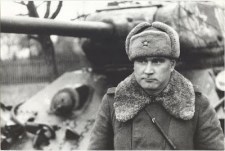 The aim to return what was lost in battle with a swift and powerful counterattack is common to any army. However, one must remember that haste is only necessary when hunting fleas and will lead to no good in war. This is what happened to the first German counterattacks at Fastov.
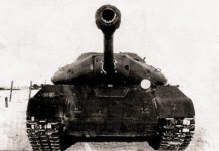 The order to produce a new tank under the index IS-3 was received by Chelyabinsk factory management on December 16th, 1944. By January 25th, 1945, eight of the ten planned tanks had to be built. It took a fairly long time to build and “tune” the tanks, and they arrived in the army only by the time that the Second World War was at an end.
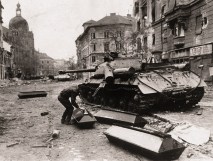 The first time IS-3 tanks took part in any fighting was in Hungary, in 1958. A Soviet military force was maintained there to keep communications with forces stationed in Austria. In 1955, the troops in Austria were withdrawn, and in May of that same year Hungary joined the Warsaw Pact. The Soviet troops remained, now as allies, under the name “Special Corps”. It included the 2nd and 17th Guards Mechanized Divisions, 195th Fighter and 172nd Bomber Air Divisions, and auxiliary units. There were no Soviet forces within the capital, Budapest.
 German tanks of the first half of the 20th century are commonly associated with Tigers and Panthers, light and medium “Panzers” designed in the 1930s, and the first German tank, the A7V. Meanwhile, the work of German tank designers in the 1920s remains in obscurity, although many interesting designs were developed during that time. For various reasons, German designers were forced to work abroad. Nevertheless, secret work on domestic tanks began in Germany in the late 1920s. One of those tanks was the Leichttraktor.
 During the First World War, a special technical commission presided over all German tank development, headed by General Friedrichs. The commission appointed a captain from the automobile forces, Joseph Vollmer, to direct design work. When Germany lost the ability to develop and produce tanks after the war, a part of their engineers left the country and began building tanks for other nations. However, several years later, work on new vehicles resumed, and companies who were left during WWI had their chance. The Krupp conglomerate was one of those companies.
 In February of 1945, American forces in Europe received the Pershing tank. The reaction of the soldiers was positive: finally, something to fight Tigers and Panthers! The application of Pershings in combat was fairly successful, but there were some complaints about the new tank, one of which was about the poor mobility.
 The British were pioneers in creating not only tanks, but self-propelled artillery. The Gun Carrier Mk.I was developed back during WWI, not only the first SPG, but the first gun carrier. The gun could be removed from the chassis and used as towed artillery. The positional nature of the Western Front led to the Gun Carrier Mk.I mostly acting as an artillery tractor. After the war, a decision was made to focus on tractors, but the British did not forget about SPGs. In the 1920s, a small family of these vehicles was created, characterized by the Birch Gun.
 The Swedish post-war Strv 74 medium tank is interesting due to the fact that medium tanks died out as a class after the end of WWII. They evolved into main battle tanks, built by all leading tank building nations at the time. The Strv 74 was designed and accepted into service at the same time as the Soviet T-55, American M60, and a little earlier than the German Leopard. The Strv 74 was also the last Swedish tank with a classical layout, as it was replaced by the exotic turretless Strv 103. How was the last European medium tanks created and what was it like?
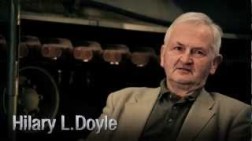 Back in 2012 Overlord’s Blog published a several part interview with author and researcher
  series. With four years having passed since this interview was published, we thought it was time to bring some attention to this interesting piece. The interview is broken up into several pages, links to which we have provided below. The questions posed to Doyle were submitted by readers, which explains why the quality of the questions sometimes varies. It is also worth pointing out that the first page of the interview is somewhat confusingly labeled “Part 4”, parts 1 through 3 do not contain interview segments.
 Tank and AFV News