An article from the Turkish Daily Sabah is calming that Turkish civilians protesting the attempted coup attempt were able to stop Turkish army tanks by stuffing their clothes into the exhaust outlets of the vehicles. From the article:
A chef at a restaurant in Istanbul, Danyal Şimşek, and the restaurant owner, Mehmet Şükrü Kintaş, told Anadolu Agency in Istanbul Thursday that they stopped almost 10 tanks this way.
The duo firstly set up a barricade with their cars to halt the tanks, and then stuffed the exhausts with their clothes.
Civilians brought many soldiers who were in the tanks to the police, as the soldiers had to leave after the exhaust gases filled the interior.
Kintaş added that the pro-coup soldiers had been headed to the airport.
“How can we stop this tank?” he said he asked the chef. A nearby mechanic then told them, “If you fill these exhausts, the tanks will stop.”
Kintaş continued, “We took our clothes off. Everyone gave us their clothes and t-shirts. We plugged the exhausts with them and covered the top of the filters. So the tanks had to stop in two or three minutes.”
 “So what do you think of France’s new super tank, the Leclerc?” a retired colonel in the French army’s logistical brigade jokingly asked me in 2002. “You know, the one we paid a fortune for and that we’ll never use in battle.”
 Do you need a Soviet-designed surface-to-air missile defense system to deter your neighbors? If so, a small U.S.-based arms broker named the Redfish Trading Company is offering to sell a complete Buk-MB complex—a Belarusian modification of the original Soviet-era SA-11 Gadfly air defense system—to a paying customer. The emailed sales pitch came with a detailed brochure outlining the technical characteristics of the weapon and an animation from Almaz-Antey showing off the capabilities of Russia’s layered integrated air defense system.
 Russian Uralvagonzavod (UVZ) scientific-research corporation has halted the deliveries of armoured vehicles to Iraq due to delayed payments last year, according to the UVZ`s 2015 annual report. “In 2015, the UVZ Corporation stopped the shipping of the defense production to the No.356 customer (Iraq) due to delayed payments. The contracts signed with the No.012 (Algeria) and the No.356 (India) customers were implemented in strict accordance with the terms of the signed documents. The export sales of the UVZ’s defense production increased by 35% last year (compared to 2014),” TASS reported, citing the UVZ document.
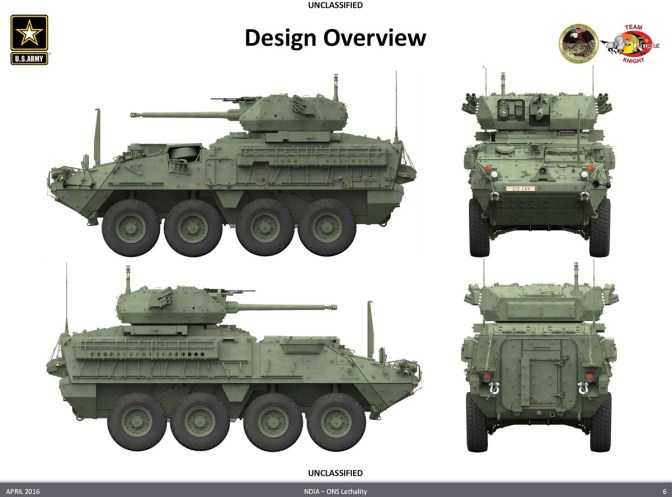
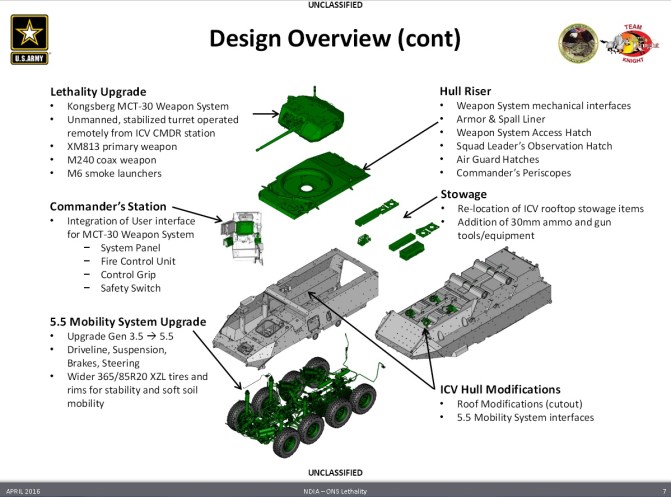
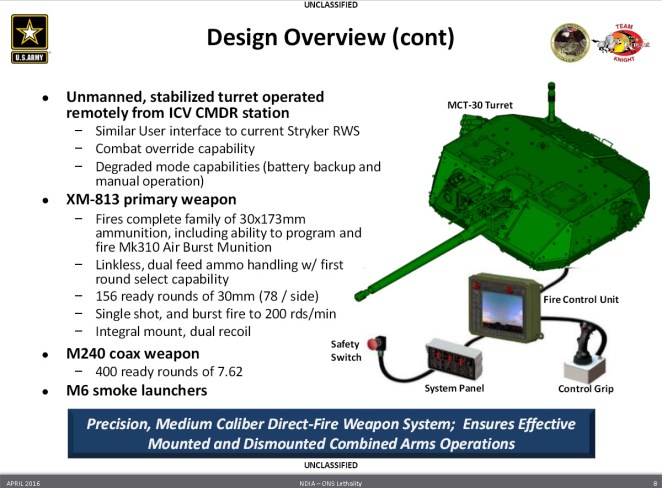
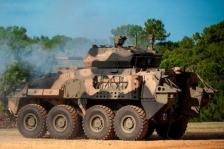 Senior U.S. Army maneuver officials recently took part in a firepower demonstration of reconnaissance vehicle prototypes less than two months after the service killed the Light Reconnaissance Vehicle effort. Lt. Gen. H.R. McMaster, along with leaders from the Maneuver Center of Excellence at Fort Benning, Georgia, attended the June 15 live-fire event at Benning’s Red Cloud range to demonstrate the firepower potential of mounting 30mm cannons on different recon vehicle prototypes.
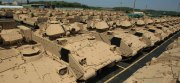 The U.S. Army’s M-2 IFVs (Infantry Fighting Vehicle) fighting vehicle proved to be the workhorse of the 2003 Iraq campaign. But that came at a cost that was not anticipated. Like most armored vehicles, the M-2 runs on metal tracks that have rubber pads attached to save wear and tear on roads and give better traction. Naturally, the rubber pads, as well as the entire track, wears out. Normally, a heavily used M-2 might need a new set of tracks once a year. In 2003 there were nearly 700 M-2ss in Iraq, and many needed a new tracks every few months. A set of tracks is normally good for 1,300-1,600 kilometers of travel. To keep the M-2ss in Iraq supplied with replacement tracks, the army’s only depot that refurbishes worn tracks (about 80 percent of the track is reused) has had to go from one shift a day, five days a week, to 24/7 production.
 In April 2011, the appearance of heavy armor indicated that a violent crackdown had become a full-fledged war.
 This past Sunday we had the opportunity to spend a few hours at the
 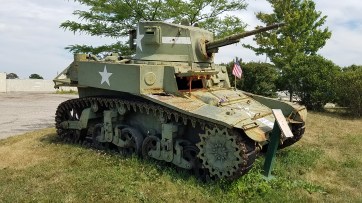 If not for the light tank sitting out front and the sign on the building, a passer-by might be forgiven for mistaking the museum for a salvage yard. Those expecting a highly polished, big budget affair such as the (relatively) nearby First Division Museum at Cantigny Park will be disappointed. The Russell Museum is a “mom and pop” style museum, a labor of love by owner Mark Sonday and his family, who double as the museum staff. While the museum may lack a certain amount of polish, it more than makes up for it in the amazing array of military hardware present in the collection.
 This past weekend we had the good fortune to spend a long weekend in the Chicago area. While there we were able to check out a couple museums housing tanks and armored vehicles. This review examines the tank collection at the
 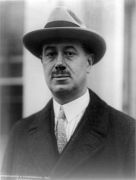 McCormick had served as a Colonel in the First Division in WW1, hence his interest in preserving the history of the unit. The museum is not large but is well worth the hour or so it takes to walk through the displays. Walking through the museum, the first thing encountered is a series of mannequins dressed in the various uniforms of the First Division from each major US war. This section then leads to a winding path in which the viewer progresses through each US war in chronological order. The WW1 section is the most impressive, designed to emulate the trenches of WW1, including a replica French Schneider tank.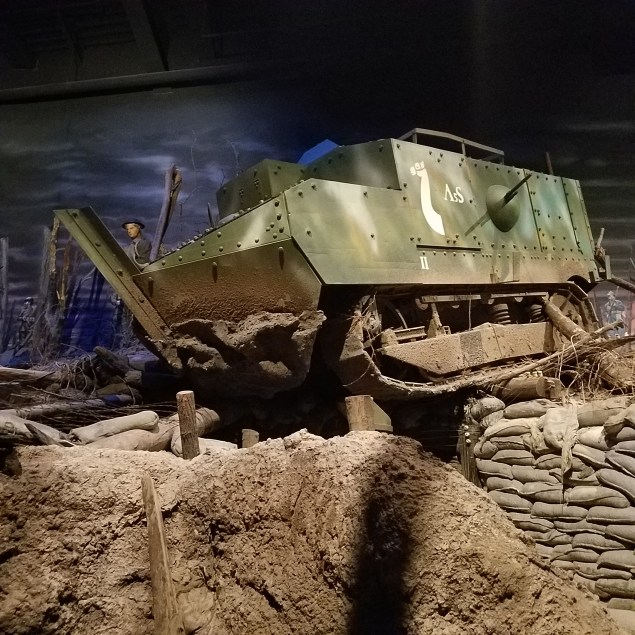
 According to the American Defense Security and Cooperation Agency, negotiations between the Kingdom and the United States for the tanks began in 2012. Morocco planned to purchase 200 Abrams tanks, complete with parts, equipment, support, and training, for over $1 billion. The two nations finalized the deal in September 2015.
 One of China’s biggest military manufacturers, China North Industries Corporation (Norinco), has developed a new variant of its Type 96 (ZTZ-96) main battle tank (MBT) in time to participate in the 30 July to 16 August International Army Games organised by the Russian Ministry of Defence. At least five T-96Bs arrived in Russia on 7 July to take part in the Masters of Automobile and Tank Hardware competition, according to Russian media reports. The ‘Tank Biathlon’ portion of this competition received wide coverage in Chinese state media last year when Norinco’s 50-tonne T-96A MBT was allowed to participate.
 The Ukrainian Private Joint Stock Company Research and Production Association Practika is now offering on the export market its latest 4×4 Kozak II armoured personnel carrier (APC), which has already seen active service on the Russian/Ukraine border. The company classifies the Kozak II as a mine-resistant ambush protected (MRAP) type vehicle and is based on an Italian Iveco 4×4 Trakker chassis.
 They brought “Stuie” home. Now it’s time to showcase the pride of Berwick — the Stuart tank built there and used in battle during World War II. Veterans of World War II and those who worked in the factory that built 15,224 Stuart tanks for the war will be celebrated this weekend as part of the inaugural “Weekend at Stuie’s.”
 Tank and AFV News