 Lately I have been thinking a good deal about the role of Walter J. Christie in pre-WWII tank development. As I have been attempting to assemble as much information concerning Christie as I can, I discovered that in the mid 1980’s, Christie’s son Edward wrote a short book about his father’s career called “Steel Steeds Christie.” This book was published by a vanity press and is now quite rare and expensive. Fortunately, ARMOR magazine featured a review of this book back in the Jan-Feb 1986 issue. The review, by retired Col, Leo D. Johns, is quite negative, prompting a number of replies from both Edward Christie defending his book, and other readers posting even harsher reviews than the original one by Col, Johns. I have reprinted the original review below as well as the various letters to the editor concerning the book. I have provided these letters in part as a warning to anyone thinking about shelling out the dough to purchase a copy of this rare book, but primarily because I think these letters are really quite entertaining.
Books best avoided: Steel Steeds Christie
Satire: Patton translated into modern business/military speak
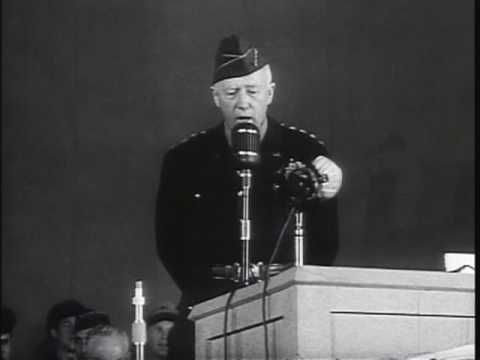 Every once in a while we like to take a break from our usual content and present something humorous. Recently in an online forum, we were discussing the latest issue of ARMOR and how much the style of writing has changed over the years. In our opinion, military writing has become far too laden with buzz words and business-speak, resulting in articles that are far more effective as sleeping aids than as ways of transmitting useful information. I issued a challenge to the other forum members to rewrite Patton’s famous Blood and Guts speech in the style of modern officer-speak. A forum participant by the name of xthetenth rose to the challenge, providing the following rendition. We present it here in a paragraph by paragraph comparison with the original. We hope you find it as amusing we we did.
—————
From the Editor: Research question for Eastern Front experts
While browsing through old issues of ARMOR, we came across this letter to the editor in the Jan-Feb 1951 issue from Generalmajor H. B. Mueller-Hillebran, former Chief of Staff of Germany’s XXXVI Panzer Corps & Third Panzer Army. His letter is in response to an article about Soviet tanks (which unfortunately is in an ARMOR issue not available for download) in which he explains German policy on using captured enemy armor. He also makes the rather startling claim that in the Ukraine from the end of October to the middle of December, his Panzer regiment destroyed 356 Russian tanks while only losing 12 of their own vehicles (a 30 to 1 kill ratio?!) He states that his regiment was equipped with around 100 tanks, half of which were Pz IV and half of which were Stug III. Unfortunately he does not specify the name of his Panzer regiment and his claim of a 30 to 1 kill ratio is a bit hard to swallow. We would be very curious to hear from anyone with access to the Soviet era archives what the Red Army records from this period show in terms of tank losses in Ukraine in late 1943.

From the Editor: M43 SPG pictures
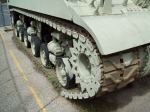
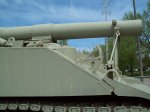
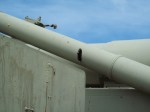
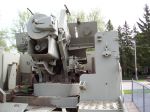
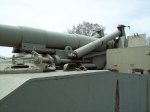
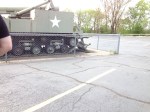
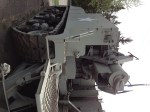
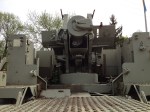
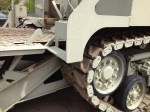
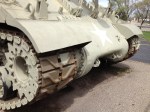
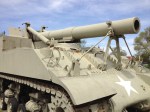
Today we present some photos of an M43 self propelled howitzer on display in Wyoming MI (greater Grand Rapids Metro area.) Only 48 of these were built and there are only three surviving example left. The M43 was essentially the same as the 155mm M40 gun motor carriage but with the 155mm gun replaced by an 8 inch howitzer.
















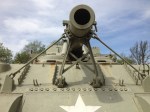
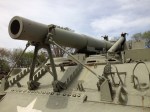


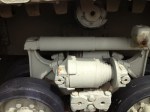
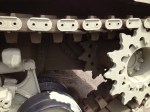


From the Editor: The Importance of the Hyphen
A recent article from “Russia Beyond the Headlines” inadvertently illustrates the importance of the hyphen in tank designations. Generally, Soviet/Russian tanks include a hyphen in their designation. Examples of this are MS-1, T-34 or T-80. US designations generally are not written with the hyphen, so they look like M4, M60 or M1. Since US tanks are generally designated with an “M” and Soviet/Russian tanks with a “T”, the hyphen is usually not all that important. However, the tricky part comes with US prototype vehicles, which were often designated with a “T.” For for example, the US prototype heavy tank “T34” is easy to confuse with the much more famous Soviet medium tank “T-34.” The Russia Beyond the Headlines article “Saddling the Iron horse: How Soviet tanks were born and bred” runs right into this common pitfall. In discussing early Soviet tank design, they mention the T-20, a development of the T-18 (MS-1), one of the very first Soviet tank designs. However, the accompanying picture in the article is an American T20 medium tank prototype from the 1940’s. The T20 was the first of a series of designs that would eventually result in the M26 Pershing tank. Very different vehicles indeed!
T20

T-20
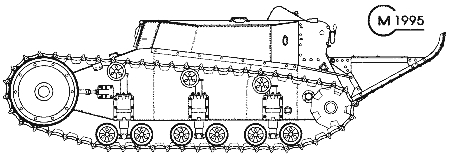
(Credit to Peter Samsonov for finding T-20 picture)
From the Editor: The Patents of Georges Even
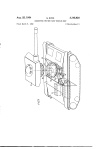
A few weeks ago we were looking for interesting patents of armored vehicles for an article on weird and wonderful old time tank patents. While searching we kept coming across patents by someone named Georges Even. All we know about him is that he was French and he was really into the idea of tiny tanks in the 1950’s and 1960’s based on his patents. We thought these were a bit amusing/interesting and so have decided to share them. These designs are somewhat similar in concept to the US M-50 Ontos or the JapaneseType 60 recoilless gun carrier.
Georges Even Armoured Tank 1957
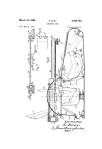


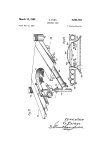

Georges Even Loading device for externally mounted tank guns 1955


Georges Even Armored vehicle 1954
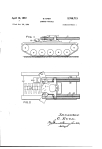
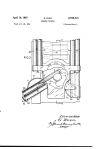

Georges Even diminutive two-men tank vehicle body 1962

From the Editor: Lights First Every Time?
(A year ago we had posted an earlier version of this post on our old blog.)
 Most people familiar with the history for of the M4 Sherman tank have heard the story that the British nick-named them “Ronsons” after the famous cigarette lighter due to the flammability of the Sherman tank. The story goes that the troops co-opted the Ronson slogan of ” lights first every time” to describe their vehicles. This story has been reported in many books and TV shows about the Sherman tank.
Certainly, the idea that the Sherman was uniquely susceptible to burning is a bit of a fable. According to one common version of the myth, the Sherman burned easily due to the fact that it used “high octane” gasoline while its German opponents used diesel (the most famous example of this myth is in the Academy Award winning film “Patton”.) In reality, the vast majority of German tanks and armored vehicles used gasoline engines and the Sherman ran on the same 80 octane fuel as every other US Army vehicle. When a tank is penetrated by an armor piercing shell and brews up, ammunition is the most common culprit, not fuel. The Sherman got a bad reputation in the early stages of the Normandy campaign for catching on fire in part due to improper stowage of ammunition. Once the US introduced the “wet stowage” system of ammo storage into the M4 Sherman, the rate of tanks that burned when hit decreased significantly.
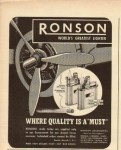
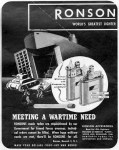
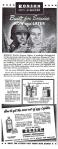
That troops may have called their tanks a derogatory nickname like Ronson seems pretty plausible. The only problem with the Ronson nickname is the explanation that this was due to the slogan “lights first every time.” The issue is that this slogan appears in almost no surviving print ads, and not in any ads from the period right before or during the war. The most common slogan used in print ads for the Ronson is “The World’s Greatest Lighter.” To a leaser extent, the slogan “Flip… It’s Lit… Release… It’s Out” or “Press… It’s Lit… Release… It’s Out” appears regularly. Nowhere does the slogan “lights first every time” appear, except in a single ad from 1929 which states “Lights every time.”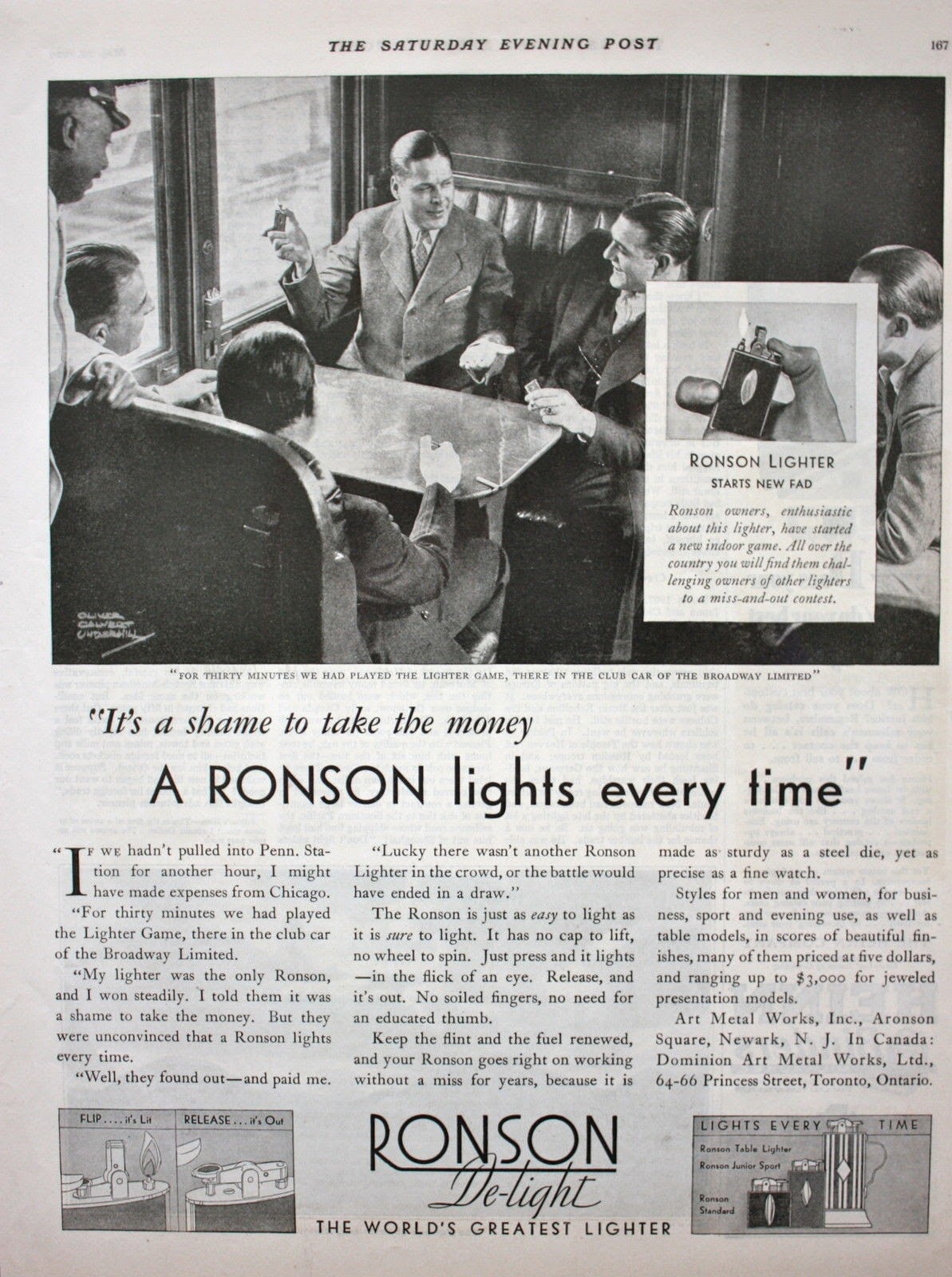
So what does this mean? Not much really. Perhaps the “lights every time” slogan was used in a radio jingle and not in print ads. Or perhaps the troops mistakenly attributed the slogan to the Ronson brand. However, based on the available print ads its probably fair to question the validity of the “lights every time” myth.
For those wanting to examine a large number of Ronson ads arraigned by date, please consult this page.
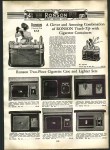
Below is a sample of Ronson ads





From the Editor: Weird and wonderful old timey AFV patents
Here at Tank and AFV News, we like to dig through old patents to see what sort of odd and unusual ideas people have come up with in regards to tanks and AFV design. Today we present a few of the more unusual patents we have found from the early days of tank and AFV design. These were found by browsing Google patents (any typos in the patent descriptions are due to errors made by the OCR when these patents were digitized.)
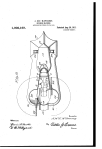
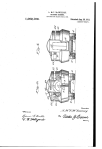
1. We’ll start with a patent from 1911 by Anthony Mcf Mcsweeny for a “Skirmish-machine.” This is essentially an armored car and is probably the most sensible of the designs we present in this article. That said, it earns a place on this list by nature of it’s rather unusual name of “skirmish-machine.”
The inventor describes his invention as:
The present invention provides an engine of warfare which is self-propelling and armored so as to amply protect the `vital parts and the complement of men manning the same. The machine besides being self propelling, so as to move from place to place by its own power, is adapted for use as a traction engine for drawing ordnance, wagons,” or vehicles containing supplies or munitions of war.

From the Editor: The Hull Machine Gunner
 One of the unique characteristics of WW2 era tanks is the hull machine gunner position. This crew position was assigned a variety of names in different armies, being referred to as the assistant driver, radio operator, or bow gunner to name a few. A large majority of the tanks designed and used during the war had this position as part of their crew layout, although it quickly disappeared from tank design in the post war period.
In the 1920’s and early 1930’s, tank design was still in its formative stages and vehicle crew and component layout varied dramatically. However, by the late 30’s a consensus starts to emerge in regards to crew layout. In Germany, the Panzer III and IV established the layout that would be most common during the war, a five man crew with three in the turret and two in the hull, a driver and the hull machine gunner. The Soviet Union, USA, Czechoslovokia and Japan also adopted the hull gunner concept, although their early war tanks typically had two men in the turret (T-34, M2 and M3 light tank, LT vz 35 and 38, Type 97). The two major exceptions to the move toward bow gunners were the United Kingdom and France. French tank design was fairly unique, relying primarily on smaller vehicles with 2 man crews (Renault and Hotchkiss infantry tanks) or larger tanks such as the Somua S35 or Char B1 Bis which had a radio operator position but did not give him a machine gun to operate. British pre-war tank design varied. The Matilda II (A12) infantry tank had a very modern crew layout of driver in the hull and three in the turret. On the other hand, the Cruiser Mk I introduced into service in 1939 had two hull machine gunners, each with his own turret!
From the Editor: Photo Gallery of M551 Sheridan at New Lothrop MI
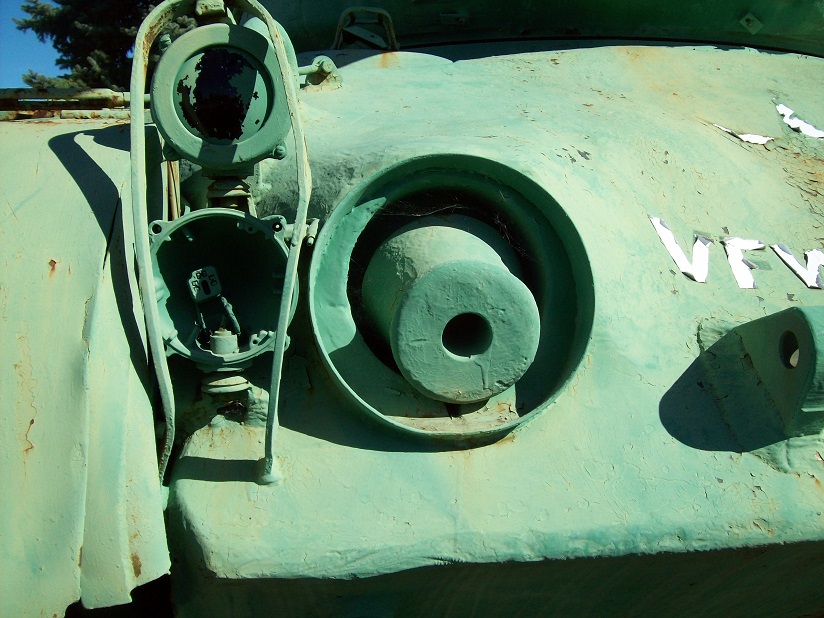
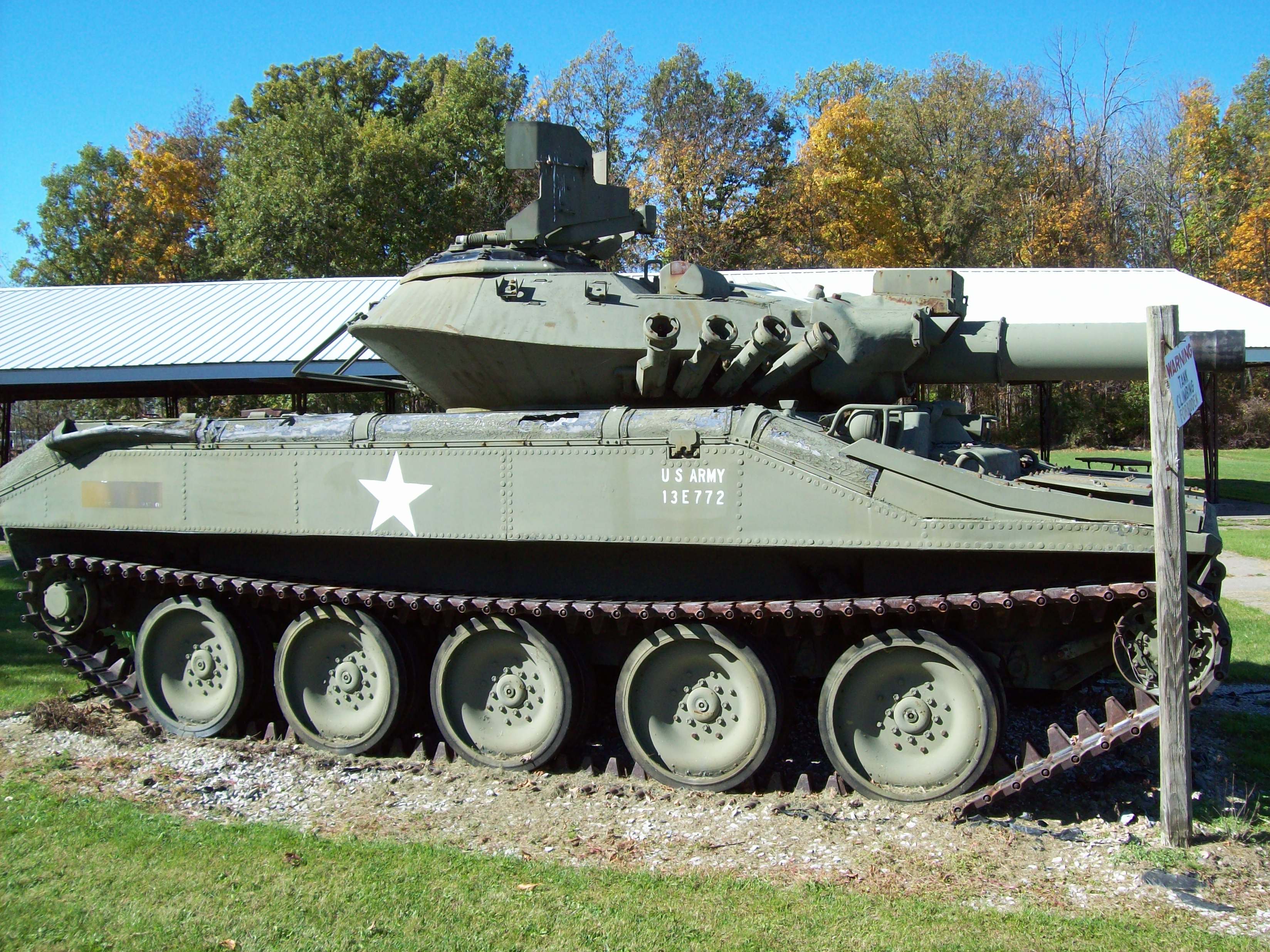 Today we present a photo gallery of the M551 Sheridan light tank on display outside the VFW hall in New Lothrop Michigan. These photos were taken in fall of 2013. As far as we can determine, this is the only M551 on display in Michigan. There are many Sheridan light tanks on display around the country, primarily in museums or on military bases. Several are on display outside of National Guard armories. Only a few serve as monuments outside VFW or American Legion halls such as this one in New Lothrop. For those interested in finding tanks on display near where they live, please consult the Historical AFV register homepage.

 Tank and AFV News