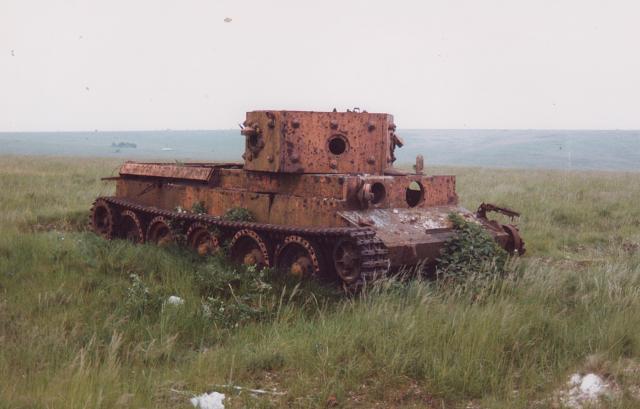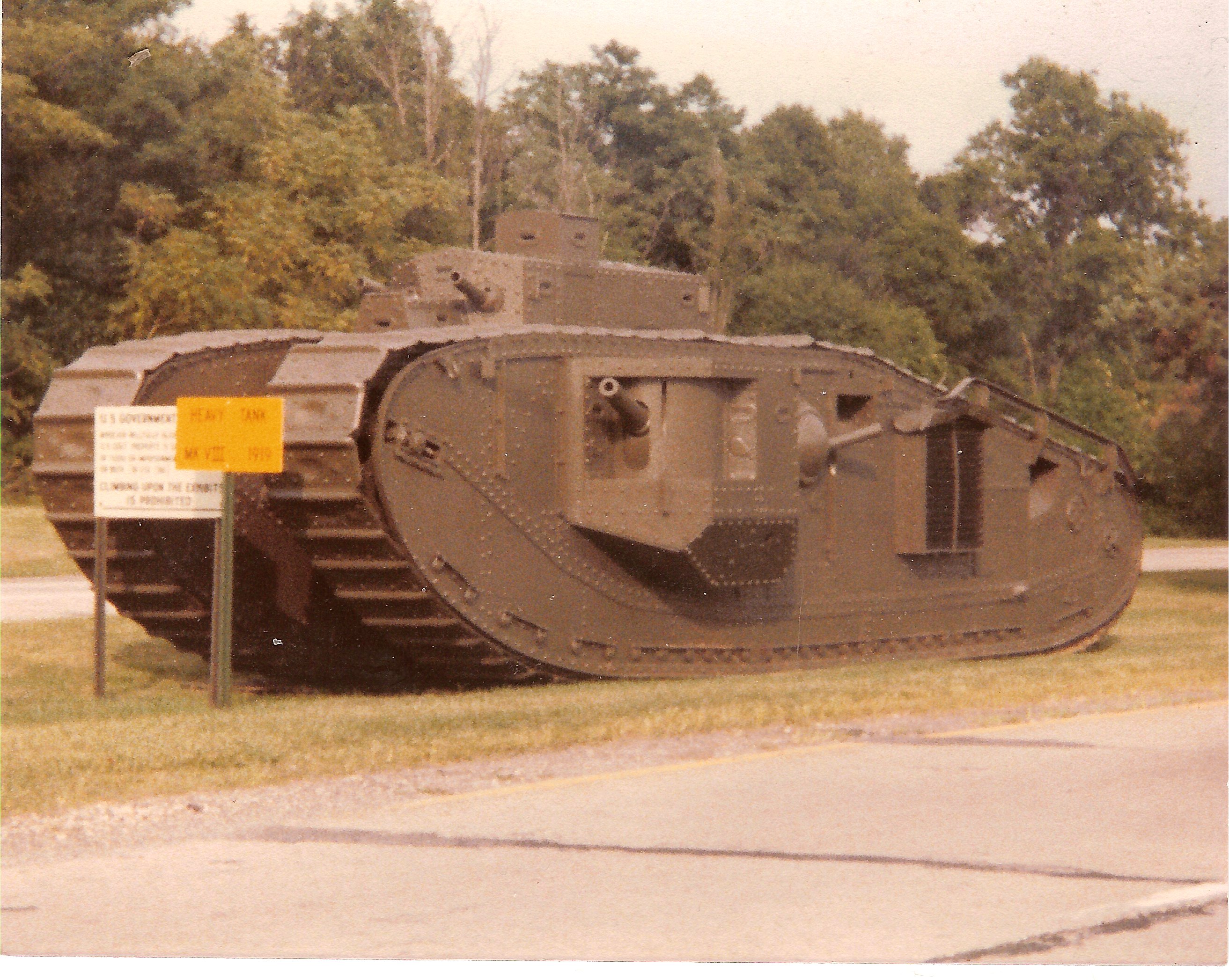
A couple years ago I scanned a set of old photos I had of the vehicles at Aberdeen Proving Grounds and posted them on my old blog. I have moved them over here where they will be more accessible. While the quality of these pictures is not great, they do give an idea of how the vehicles were displayed circa 1981. I’m starting with the pictures from “Tank Boulevard” which was a long row of US vehicles set up chronologically along Maryland Boulevard as one entered the base.
Video of armor repair facility in east Ukraine
Earlier this week AFP posted a video showing a facility in the Ukraine were battered military armor is repaired by Ukrainian separatists.
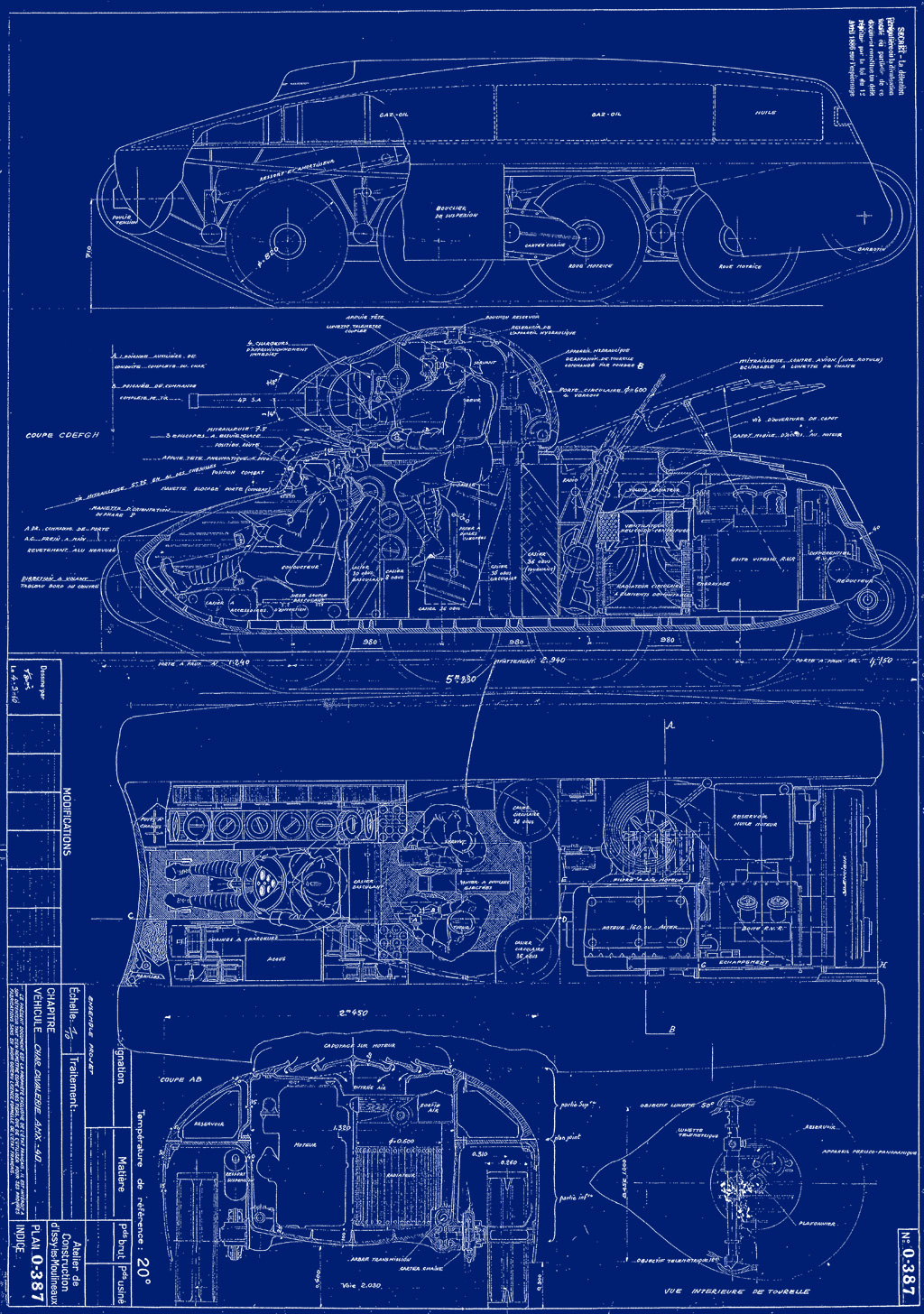
History of the AMX-40
The blog Status Report has posted an English language translation of an article by Russian researcher Yuri Pasholok on the history of the French AMX 40 tank. The original piece is available on Pasholok’s live journal page here. The translated version on the Status Report can be read here.
Excerpt:
By the time the first Somua S35 tanks were rolling from the assembly lines, the French high military staff already started thinking about their replacements. By the end of 1936, French army issued new demands for the future cavalry tank – these demands included:
– weight of no more than 20 tons
– 3 man crew
– armor of no less than 50mm
– operational range of no less than 200km
– one 47mm gun and two 7,5mm machineguns as armament
– radio and intercom systems
Even if they wanted to, there was no way the designers could rework the Somua S35 to fit those requirements. Even the Somua S40 had 5 km/h lower speed with only 40mm of armor. And so these requirements were ignored for three long years.
Read the full article here.
Christopher Foss on Hyundai K2 MBT
Christopher Foss on Leclerc MBT
20 mph speed limit for UK armor causes traffic jams, affects crew and vehicles
The Telegraph is reporting that British Army battle tanks will be able to drive at 40 mph on public roads, reversing a change implemented 18 months ago that cut the speed limit for tracked vehicles to 20 mph. These changes were in response to concerns that drivers are attempting dangerous maneuvers when stuck behind a slow-moving military convoy. Tank crews are expected to train regularly on the highway in preparation for active service. Army records show that between November 2013 and July 2014, there were 36 near-misses caused by motorists attempting to overtake slow-moving armored convoys. The article notes that travelling at 20 mph on road is not idea for British crews and vehicles, stating that trainee tank crews had reported a range of “mild physiological effects” including pins and needles and joint aches after slow road driving. According to the article, travel at 20 mph creates vibrations within a “resonance frequency band” that is at a higher level than is ideal for the human body. Full article here.
WWII tank wrecks gallery
War History Online has posted an gallery of 46 WWII tank wrecks from around the world. These pictures come from the member base of the HMVF (Historic Military Vehicle Forum.) The gallery can be viewed here. You can follow the thread over on HMVF where the full details of each wreck are given www.HMVF.co.uk
British “Bulldog” to be in service 70 years
The Daily Express is reporting that the FV432 “Bulldog” armored personnel carrier will remain in service until 2030. Replying to a parliamentary question by Lord Stevens of Ludgate, the Ministry of Defense said that it had 883 of the vehicles and pointed out they were given an upgrade in 2006. According to the article, an MoD spokesman said: “It proved its worth on operations in Iraq and huge improvements including power upgrades and enhanced armor protection mean more performance, reliability and endurance on the battlefield.” The article states that by 2030, the Bulldog will be one of the oldest pieces of equipment in NATO. Original article here.
Tanker Jimmie Leach
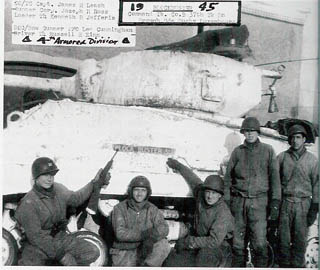
For those that have read the interview that Tank and AFV News did last year with author Steven Zaloga, they may have noticed that Mr. Zaloga mentioned a WWII veteran tanker named Jimmie Leach as someone he talked to regularly while researching WWII armor earlier in his career. As a young man of 22, Jimmie Leach was a company commander of Sherman tanks in the 37th Tank Battalion of the 4th Armored Division during WWII, serving under the command of Creighton Abrams. He went on to distinguished military career, reaching the rank of Colonel and receiving numerous awards and decorations, including three Silver Stars, two Bronze Stars, and five Purple Hearts. He retired from the Army in 1974 but stayed involved with armor, working for tank engine producer Teledyne Continental Motors for 13 years. He passed away on Dec 17, 2009 at age 87.
Fortunately, researcher Matthew Hermes was able to interview Leach extensively before he passed away and to craft those interviews into a biography. Extensive excerpts from the unreleased biography can be read at the website Tanker Jimmie Leach. For those interested in the experiences of a US Sherman tank commander in Patton’s 3rd Army, we would highly recommend reading through the content of this website. Of particular interest will be chapters 6 and 7 which deal with Leach’s experiences in Europe after D-Day.
WoT History Article: Gorlitskiy’s “Waffentrager”
Archive Awareness has posted an English language translation of an article by World of Tanks researcher Vladimir Pinayev on the Soviet SU-100P self propelled gun.
“Lev Izraelevich Gorlitskiy started the war in the role of the chief designer of artillery at factory #185 in Leningrad. From June to October of 1941, his department was tasked with placing weapons into long-term fortified positions to protect approaches to Leningrad. In October, the factory was evacuated to Sverdlovsk and became a part of the Ural heavy machinebuilding factory.
One year later, in October of 1942, Gorlitskiy headed a newly formed design bureau at Uralmash, tasked with developing SPGs. A very sharp need in them was felt after new Tiger tanks appeared on the battlefield.”
Read complete article here at Archive Awareness. The original Russian language version of the article with pictures can be viewed here.