 Sydney Valpy Radley-Walters passed away on April 21, 2015 at the age of 95. Radley-Walters was best known for having been a Canadian Army tank commander during the Normandy campaign in 1944. As part of the 27th Armoured Regiment of the 2nd Canadian Armoured Brigade, he is credited by some sources with 18 tank kills. Most famously, Radley-Walters may have been responsible for the destruction of the Tiger tank commanded by German tank ace Michael Wittman at the Battle of Villers-Bocage. While British tank gunner Joe Ekins is generally credited with destroying Wittman’s Tiger, a line of reasoning has been advanced suggesting that Radley-Walters unit was responsible for defeating Wittman.
Canadian tank ace Radley-Walters passes away
April 22, 2015 by Leave a Comment
Lawsuit over Panzer IV ownership continues
April 22, 2015 by Leave a Comment
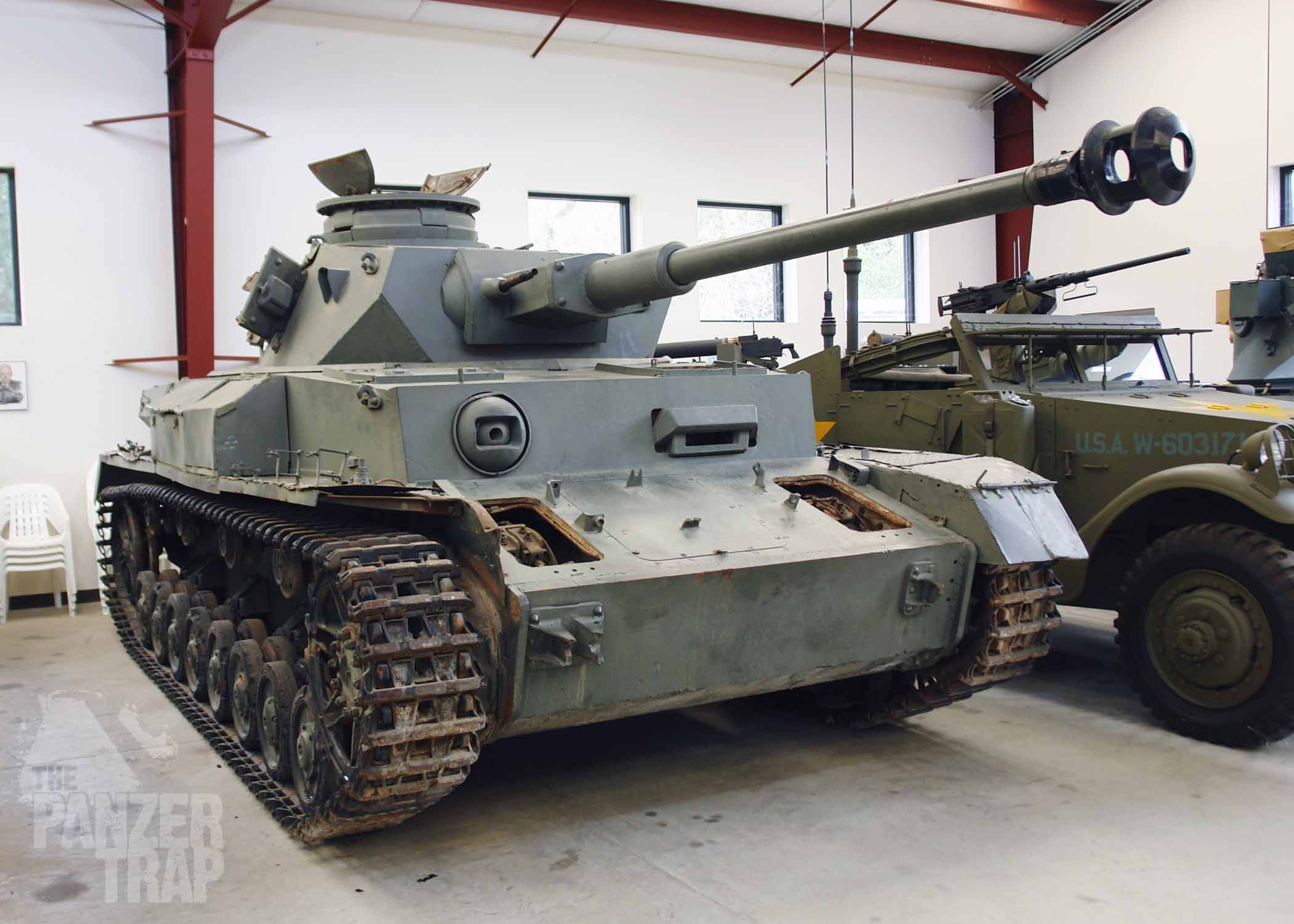 The Portola Valley Almanac is reporting that the lawsuit against the Collings Foundation brought by Vulcan Warbirds over ownership of a Panzer IV tank continues. The Panzer IV tank was part of the Jaques Littlefield collection, which was given to the Collings Foundation after Mr. Littlefield passed away in 2009. Last year Collings Foundation auctioned off part of the collection to pay for a building to house the rest of the collection. Vulcan Warbirds, which is headed by Microsoft co-founder Paul Allen, had made a bid during the auction which was rejected for not meeting the reserve price. After the auction ended, Vulcan Warbirds claims to have made an agreement with a representative of the auction house to buy the tank for 2.5 million dollars. Collings foundation says they did not agree to sell the tank after the auction ended nor did they receive the 2.5 million dollars. According to an LA Times article, the tank in question was built in 1944 and used as part of the German effort during World War II. It was eventually bought by Syria in the 1950s. The Israelis captured the Panzer in 1967 during the Six-Day War and used it to train soldiers before retiring it to the Israeli Armor Museum. In 2003 it was purchased by the Military Vehicle Technology Foundation (Littlefield Collection.)
The original auction listing for this Panzer IV can be viewed here.
From the Editor: Weird and wonderful old timey AFV patents
April 21, 2015 by Leave a Comment
Here at Tank and AFV News, we like to dig through old patents to see what sort of odd and unusual ideas people have come up with in regards to tanks and AFV design. Today we present a few of the more unusual patents we have found from the early days of tank and AFV design. These were found by browsing Google patents (any typos in the patent descriptions are due to errors made by the OCR when these patents were digitized.)
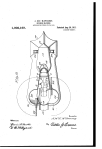
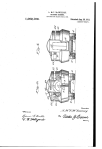
1. We’ll start with a patent from 1911 by Anthony Mcf Mcsweeny for a “Skirmish-machine.” This is essentially an armored car and is probably the most sensible of the designs we present in this article. That said, it earns a place on this list by nature of it’s rather unusual name of “skirmish-machine.”
The inventor describes his invention as:
The present invention provides an engine of warfare which is self-propelling and armored so as to amply protect the `vital parts and the complement of men manning the same. The machine besides being self propelling, so as to move from place to place by its own power, is adapted for use as a traction engine for drawing ordnance, wagons,” or vehicles containing supplies or munitions of war.

Book Alert: BTR-60 In Detail
April 21, 2015 by Leave a Comment
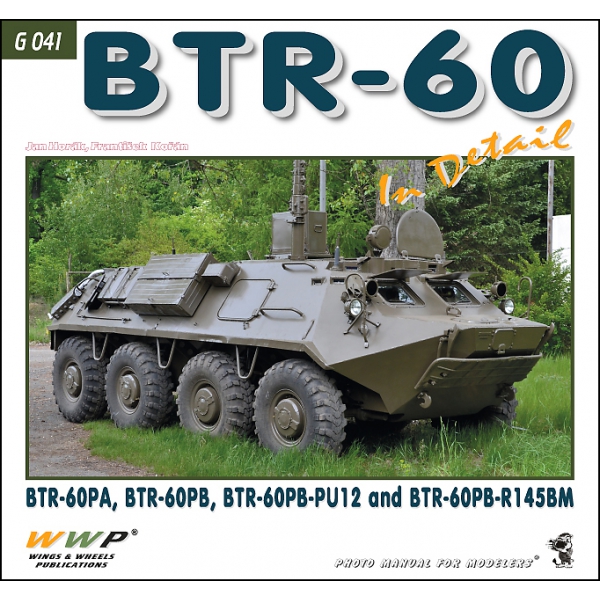 Wings and Wheels publications has announced the upcoming release of a new entry in their Green Series examining the BTR-60 family of APCs. This book covers BTR-60PA, BTR-60PB, BTR-60PB-PU-12 and BTR-60PB-R145BM and contains 385 colour photos and manual drawings on 120 pages. The author of the book is František Kořán, the owner of WWP. The release date for the book is April 24. To order the book, or to see other titles from this series that are available, go to the WWP website at http://wwpbooks.com.
Russian Defense Ministry reveals photos of T-14 Armata
April 21, 2015 by Leave a Comment
The International Business Times is reporting that Russia’s defense ministry has released it’s first official image of the new Armata T-14 tank. The image was released via the “Russia Beyond the Headlines” news source. The article notes that:
The heavily armored T-14 is the main battle version of the Russian Armata tank and features a 125mm gun that is remotely controlled, with an unmanned turett. The photo of the tank was first posted on the ministry’s site in a section about Victory Day, Russia’s celebration of the 70-year anniversary of the end of World War II. Images first leaked of the highly anticipated tanks in late March.
The tanks are a part of Russia’s plan to update its military, and it has proven costly with the country attempting to maintain its plan to spend 23 trillion rubles ($433 billion) despite economic contraction, Bloomberg reported.
The picture itself it not particularly exciting. As with the other leaked pictures of Armata that have appeared, the details of the turret are obscured by a tarp. Also, it would appear that the picture (below) referred to in the article is not of the tank version of the vehicle as it has no cannon.

Virginia Museum of Military Vehicles Video Clips
April 21, 2015 by Leave a Comment
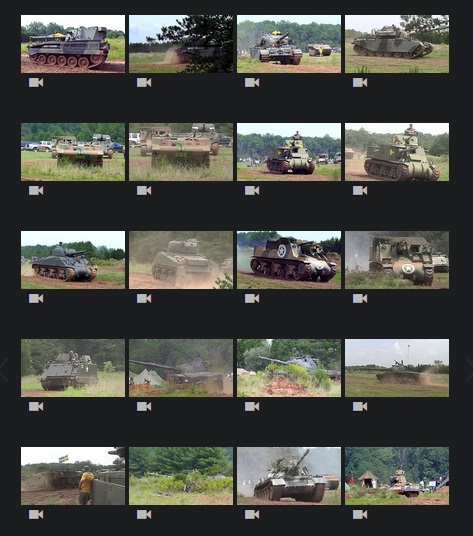 Over at the AFV News Discussion Board, board member “vagabond” recently posted this nice collection of videos from the 2010 Virginia Museum of Military Vehicles Open House. The video clips contain footage of numerous tanks and armored vehicles being run around the track. Vehicle types include a Centurion tank, M3 Lee, M7 Priest, M4 Sherman, Pz 61, T-55 and a British Valentine tank.
View the SmugMug video gallery of the 2010 VMMV Open House here
.
From the Editor: The Hull Machine Gunner
April 20, 2015 by Leave a Comment
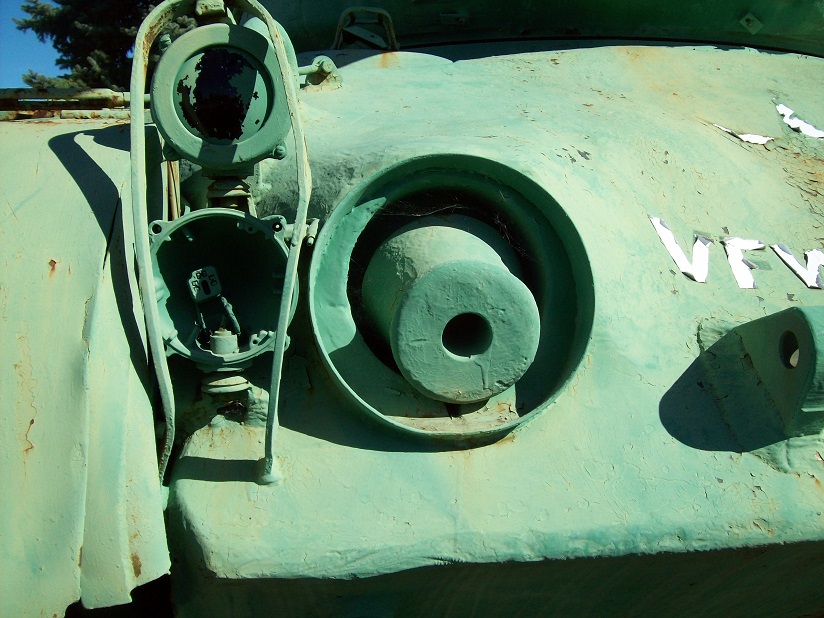 One of the unique characteristics of WW2 era tanks is the hull machine gunner position. This crew position was assigned a variety of names in different armies, being referred to as the assistant driver, radio operator, or bow gunner to name a few. A large majority of the tanks designed and used during the war had this position as part of their crew layout, although it quickly disappeared from tank design in the post war period.
In the 1920’s and early 1930’s, tank design was still in its formative stages and vehicle crew and component layout varied dramatically. However, by the late 30’s a consensus starts to emerge in regards to crew layout. In Germany, the Panzer III and IV established the layout that would be most common during the war, a five man crew with three in the turret and two in the hull, a driver and the hull machine gunner. The Soviet Union, USA, Czechoslovokia and Japan also adopted the hull gunner concept, although their early war tanks typically had two men in the turret (T-34, M2 and M3 light tank, LT vz 35 and 38, Type 97). The two major exceptions to the move toward bow gunners were the United Kingdom and France. French tank design was fairly unique, relying primarily on smaller vehicles with 2 man crews (Renault and Hotchkiss infantry tanks) or larger tanks such as the Somua S35 or Char B1 Bis which had a radio operator position but did not give him a machine gun to operate. British pre-war tank design varied. The Matilda II (A12) infantry tank had a very modern crew layout of driver in the hull and three in the turret. On the other hand, the Cruiser Mk I introduced into service in 1939 had two hull machine gunners, each with his own turret!
Overlord’s Blog: Tigers for Breakfast
April 20, 2015 by Leave a Comment
David Lister at Overlord’s blog has posted an article about an action involving Tiger tanks in North Africa called “Tigers for Breakfast“.
By January 1943 the war had turned against Germany. At this point the allies were pushing the Germans from two sides in North Africa, including in Tunisia. On the 31st two companies of infantry and two troops of six pounder guns were dug in covering the road leading to Robaa. They were on an area of rocky rough terrain on the side of the hill, with the German lines somewhere to their front. At about 0600, in the pitch darkness reports start to filter back from the infantry that they can hear tank movement to the front. Immediately the two troop commanders of the AT guns leapt out of the truck they’d been sleeping in and struggled up the hill. The Lieutenant for the 2nd Troop in his haste just threw on a greatcoat over his pyjamas before dashing to his troop. Lt Stanley Edwards of 1st Troop however had only to pull on his boots.
Veteran Tank Commander recalls service in Vietnam
April 20, 2015 by Leave a Comment
 The Tyler Morning Telegraph has posted a story about Vietnam War Purple Heart recipient Virgil Melton Jr. recalling his service as a Marine Corps tank commander in the Vietnam war. Melton earned his Purple Heart on Aug. 15, 1968 at the age of 19 at an action near the Ben Hai River called Operation Lam Son 250. According to the article:
“We smelled food,” Melton said. “We smelled cooking, we were that close. They were eating breakfast. … We could see their chow lines.” Enemy fighters spotted the tanks lined along the ridge and began shouting in alarm, sending troops scrambling for cover and weaponry. “It was a total surprise; they never thought we would go that far in the DMZ (demilitarized zone),” Melton said. “They knew they were caught.” The tanks began firing, destroying the enemy’s light artillery. They responded, shooting off rocket powered grenades, mortars and machine guns before scattering in all directions, pursued by the Americans. “We fought from daybreak that morning when we could hardly see, until late that evening,” Melton said. “Then it started getting dark, fast, and we knew we needed to get out of there.” The tankers tried to make a hasty getaway to safer territory, but two crafts inadvertently rolled over hidden land mines.
The article does not specify what sort of tank Melton served in, but judging from the details provided in the article, it is possible the “tanks” referenced in the article are actually LVTP-5 Amphibious Armored Personnel Carriers.
From the Vault: Zaloga on the Polish Cavalry VS German Panzers myth
April 19, 2015 by Leave a Comment
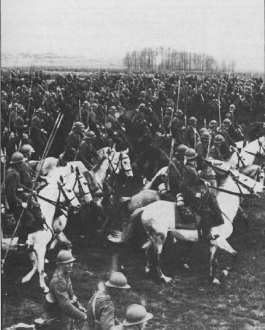 Digging through old issues of ARMOR magazine, we have found an article from 1984 written by well known historian and tank expert Steven Zaloga titled “Polish Cavalry Against the Panzers.” In this piece, Zaloga seeks to put to bed the long standing myth regarding Polish Cavalry troops conducting brave yet futile charges against German Panzers. As Zaloga puts it:
“Tales of Polish cavalry charges against German tanks during the September 1939 campaign still remain widely believed even amongst serious historians who are otherwise skeptical of similar German propaganda excesses of the period. The subject has been dealt with in extensive detail by Polish military historians, but most of this material is inaccessible to western historians due to the language barrier.”
The article is can be read in the image gallery below (ARMOR is a government publication and not under copyright.) These pages are from the Jan-Feb 1984 issue of ARMOR.

 Tank and AFV News