Korean War tanker twins

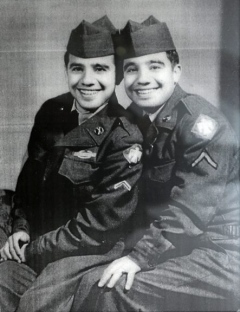
twin tankersThe Times-Tribune.com has posted an article about Joe and Pat Lacertoso, identical twins that served together in a Sherman tank during the Korean war.

Article excerpt:

The identical twin brothers from Dunmore spent 10 months serving together in Korea with the Army’s 1st Calvary, 70th Tank Battalion. Their weapon, transportation and, for all intents and purposes, home, was a Sherman tank that kept them unscathed for the duration of their tour. Many of their friends were not so lucky.

“Those Sherman tanks were the best,” Pat Lacertoso said on a recent afternoon at his twin’s home, where his granddaughter, Carissa Hart, and Joe’s wife, Carmella, listened to them recount their combat experiences.

“Korea was the Forgotten War,” Carmella Lacertoso said. “I don’t care what anyone says.”

Full article here.

“Patton’s Spearheaders” 737th Tank Battalion holds reunion

The 737 Tank Battalion, known as Patton's Spearheaders, gathered for the 68th reunion of the battalion in Faith, NC. Three of the World War II veterans attended the reunion.The Salisbury Post has published an article about the remaining veterans of the 737th tank battalion.  Nicknamed “Patton’s Spearheaders” the 737th participated in five major battles, including Normandy, Northern France, Ardennes-Alsace, Rhineland and Central Europe. Military records show the battalion spent 299 days in actual combat, starting with its landing at Omaha Beach July 12, 1944. It saw some of its fiercest action in the Battle of the Bulge.  The article notes that at the recent reunion for the 737th, only three members were present, all of whom are over 90 years old.

Article excerpt:

In past reunions, the men’s stories touched on living and praying in foxholes, catching glimpses of Patton, being knocked off tanks by exploding shells nearby, wearing handed-down leather helmets from high school and college football teams, driving tanks over pontoon bridges and recuperating in French and English hospitals.

Bob Kluttz, a tank gunner in Co. A., said none of the tanks he was in were ever lost, though he saw a German Tiger, with its 88 mm cannon, take out tanks in front and behind his.

Kluttz said he wore out two 75 mm cannon on his own tanks before freezing his feet and being sent back to an English hospital for three months with frostbite.

Deal had shrapnel rip into his legs when he tripped on a land mine.

Pritchett had to drive a 15-ton Kenworth truck onto the battlefields to tow away disabled tanks. “I’m sure I pulled a tank of Jim’s that got knocked out,” Pritchett said.

He often teamed up on those wrecker missions with his buddy Richey, a tank mechanic who had been trained at Fort Knox. “If I had to have any help, I would use him,” Pritchett said.

Read the full article here.

From the Vault: T-72B Turret Armor Exposed

t-72bJim Warford has shared with us a copy of a piece from 2002 that was originally published in the Journal of Military Ordnance.  The article is titled “T-72B MBT – The First Look at Soviet Special Armor” and it contains some of the first published photos of the armor layout of the T-72B “Super Dolly Parton.”  According to the author, this article made quite a splash, becoming a much read item in defense circles.  The author based the article on a unclassified version of the source report which was dated January 1999.  The report documented an inspection of the configuration of the ERA package as well as the armor package inside the turret frontal armor lobes of the T-72B.  No information is given in the source report about where the two T-72B tanks that were examined came from, nor was any information given as to armor performance or capabilities of the armor packages examined.  One of the more interesting conclusions of the evaluation is that the construction of the cavities inside the T-72B turret provides the ability to change the makeup of the special armor package either during production or during a depot-level rebuild of the tank.  For people interested in late cold war Soviet armor, this article should prove very interesting!

From the Vault: Tank-Fighter Team by Robert Gerard

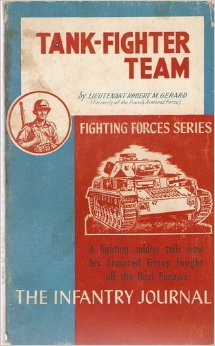
71LyFF4LgeL._SL500_SY344_BO1,204,203,200_Today we present the book “Tank-Fighter Team” by Lieutenant Robert M. Gerard.  Published in 1942 by the Infantry Journal, this book is an account of tank combat during the Invasion of France in 1940 written by Lt. Gerard, a French commander of a Somua S35 tank.  The book tells of how Lt. Gerard and his unit were committed to battle against German tanks as part of a rearguard action, protecting the retreat of a French Infantry division.  Following the fall of France, Lt. Gerard was able to escape to the United States where he helped train U.S. soldiers at Fort Knox in the basics of tank combat. This book should prove interesting to those looking for a first hand account of tank combat in France.  This book is in the public domain and can be viewed here.

Book Alert: T-64 Battle Tank

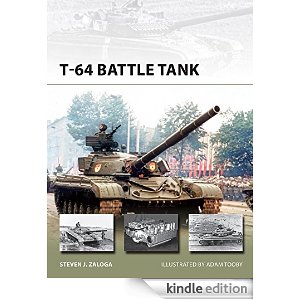
51fK8okCzwL._AA278_PIkin4,BottomRight,-35,22_AA300_SH20_OU01_According to Amazon, Osprey Publishing will be releasing a new entry in their New Vanguard line of books titled T-64 Battle Tank on August 18.  Authored by Steven Zaloga, this volume completes the coverage of cold war Soviet main battle tanks in the New Vanguard Series (Osprey already published books on the T-54/55, T-62, T-72 and T-80.)  The format appears to be the same as the other entries in the NV series and since Steven Zaloga authored the other other NV books on cold war Soviet tanks, readers should have a good idea what to expect from this upcoming book.  It is perhaps fortuitous that Osprey waited to cover the T-64 last in this series, since the tank finally saw it’s first use in combat this past year in the crisis in Ukraine.

Publishers description:

The T-64 tank was the most revolutionary design of the whole Cold War, designed to provide the firepower and armor protection of a heavy tank in a medium-weight design. It pioneered a host of sophisticated new technologies including laminate armor, stereoscopic tank rangefinders, opposed-piston engines, smooth-bore tank guns with discarding sabot ammunition, and gun-fired guided projectiles. These impressive features meant that the Russians were loath to part with the secrets of the design, and the T-64 was the only Soviet tank type of the Cold War that was never exported.

Written by an armor expert, this detailed technical history sheds light on the secrets behind the Cold War’s most controversial tank, revealing how its highly advanced technologies proved to be both a blessing and a curse.

Italian tankettes in Ethiopia

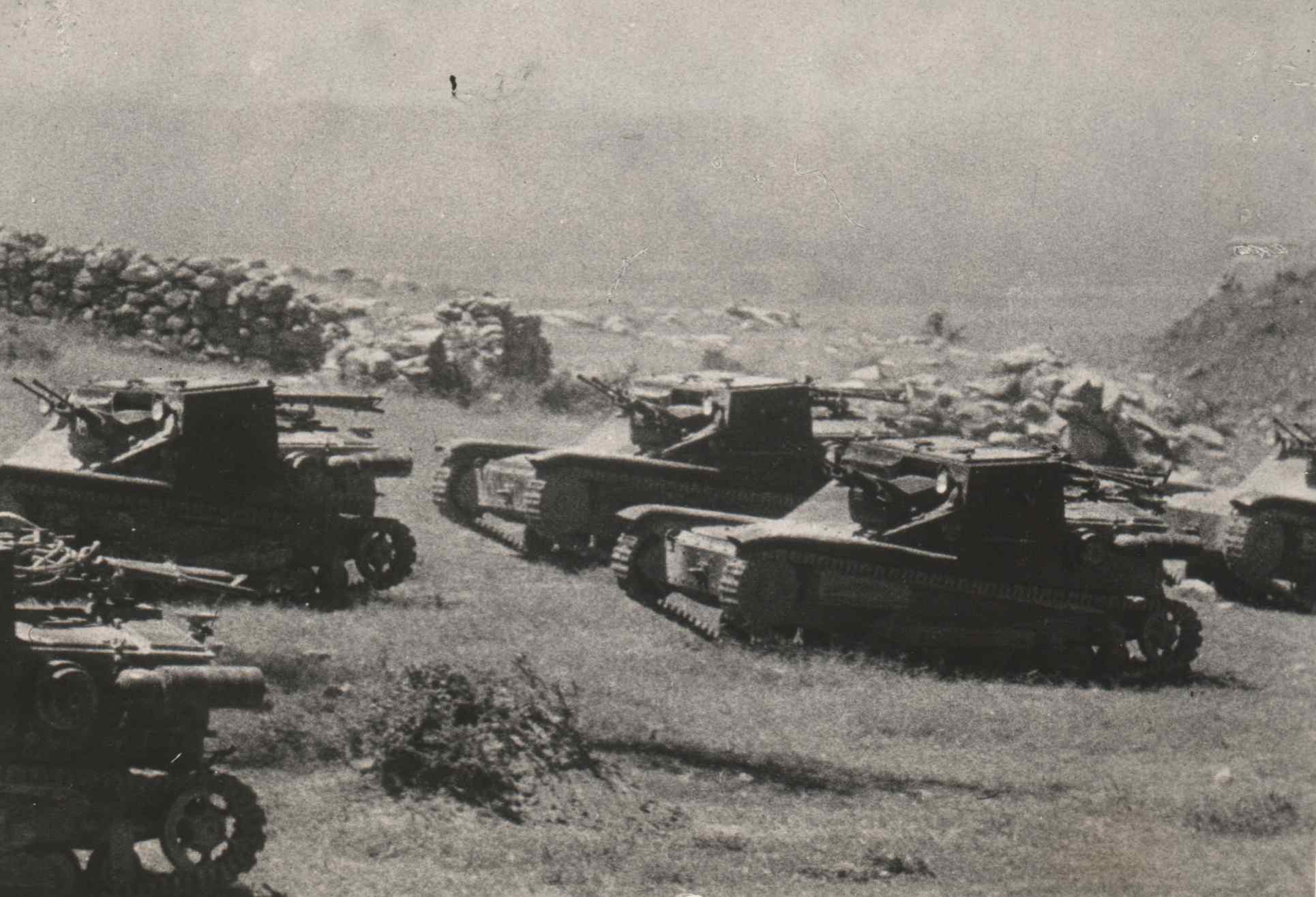
Overlord’s blog has a post titled “Sticks and Stones” about the battle Dembeguina Pass during the Italian invasion of Ethiopia in 1935.  The Italian forces in this particular encounter were armed with the CV-35 tankette.  The article has some interesting examples of how ineffective these little tanks could be:

FaD1LiPOne Ethiopian soldier whom had been one of the lead element was armed with nothing more than a sword. His name was Tashemm. His rank was Balambaras, which has no real equivalent that we might recognise. It essentially means he was a trusted person. Tashemm crawled out of the tankettes line of fire and moved round behind it. Sneaking closer he concocted his plan. He climbed up on the rear of the tank and hammered on the hatch with his sword pommel yelling in Italian “Open! Open!”. Immediately the crew of the CV-35 opened their hatches with fatal results.

You might ask why the Italians opened up their hatches. The answer is these simple machines lacked radio’s and so had to communicate by word of mouth. At another battle later in the war a large number of tankette crews were killed and wounded simply because they had to open their hatches to communicate.

Read the full blog post here.

Army awards contracts for FFV (Future Fighting Vehicle) designs

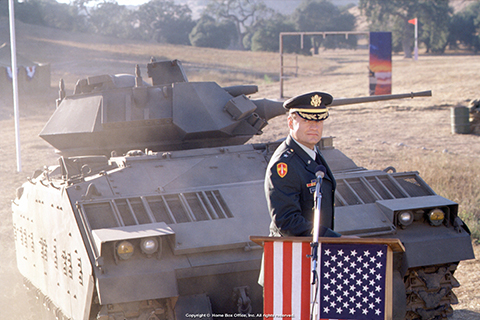
the-pentagon-wars-1014407-tDefense News is reporting that the Pentagon has awarded contracts worth more than $28 million each to BAE Systems Land and Armaments and General Dynamics Land Systems as part of the FFV (Future Fighting Vehicle.)  The article describes the FFV program as a design contract that could yield a Bradley replacement or technology spin-outs to upgrade the Bradley.  The FFV program is being described as a more pragmatic approach, as opposed to the failed Ground Combat Vehicle and the Future Combat Systems programs of the last two decades.  Commented Army Chief of Staff Gen. Ray Odiemo, “One of the problems we’ve had in the past with our major programs is that we tried to build the perfect vehicle.  The requirements were so high they were difficult, they took a lot of time, they were over-budget, and we couldn’t meet them.”  The article notes that the work is due Nov. 28, 2016.

Full article here.

Rheinmetall, PBZ to develop reconnaissance vehicle

polishbrdm2450Defense News is reporting that Germany’s Rheinmetall has teamed up with the state-run Polish Armaments Group (PGZ) to develop a new armored vehicle for Poland’s military. The two partners have agreed to develop a six-wheel-drive armored vehicle that will meet the requirements of the Polish Army’s LOTR [light armored reconnaissance vehicle] procurement program.  The designed vehicle is to weigh less than 20 tons and will replace the Soviet built BDRM-2 currently in use by Polish armed forces.  German business daily Handelsblatt reported that Poland plans to acquire 200 new vehicles for an estimated US $330 million.

Full Article here.

From the Vault: Bibliography of pre-WW2 tank books and articles

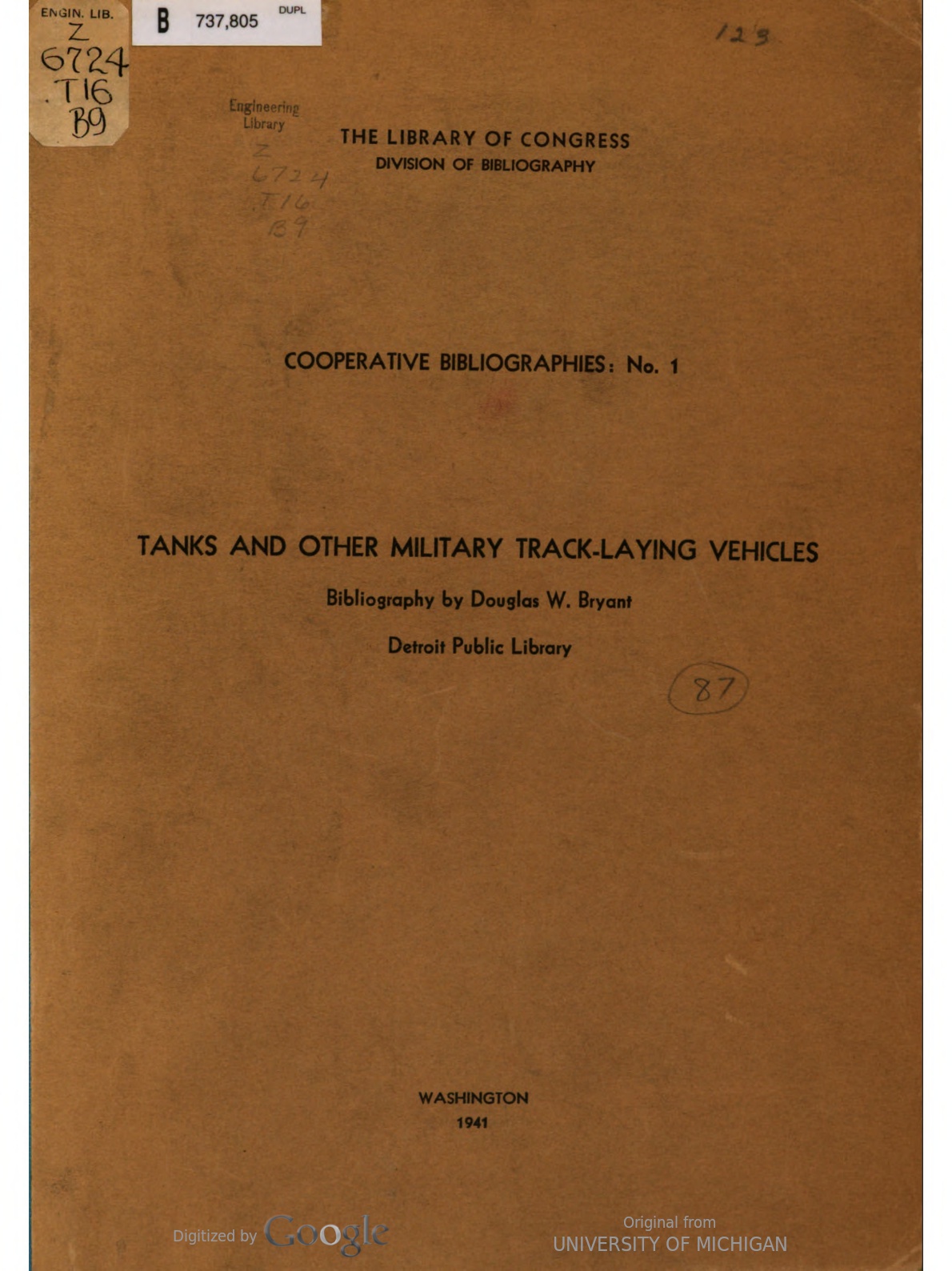
bibliography coverHere is an item that may be useful to those doing research on pre-WWII tanks: “Cooperative Bibliographies No. 1 :Tank and other Military Track-Laying Vehicles” by Douglas Bryant.  According to the preface, this document “has been compiled chiefly for the use of those people interested in the design and production of tanks and other military track-laying vehicles.  Material on the use of such vehicles and on their tactics in battle has not been included.  The bibliography lists what is, in the compiler’s opinion, the best description and technical literature available to the public.

The document may be viewed at the Hathi Trust Digital Library website.

World of Tanks video on KV-1 recovery from Don river

Wargaming has released a Russian language video about the recovery of a KV-1 tank that was sitting in the Don river for 70 years.  Fortunately, English language subtitles are provided.