 Osprey Publishing is running a 3 for the price of 2 special on all books at their online store. For those looking to add to their collection of New Vanguard or Duel series books, this would be a good opportunity to save a little money. We have not been paid by Osprey to promote this sale, we just thought our readers might like to know about it.
Book Alert: Osprey Publishing 3 for 2 special
July 8, 2015 by Leave a Comment
Slovakia buys Scipio 8×8 IFVs
July 8, 2015 by 1 Comment
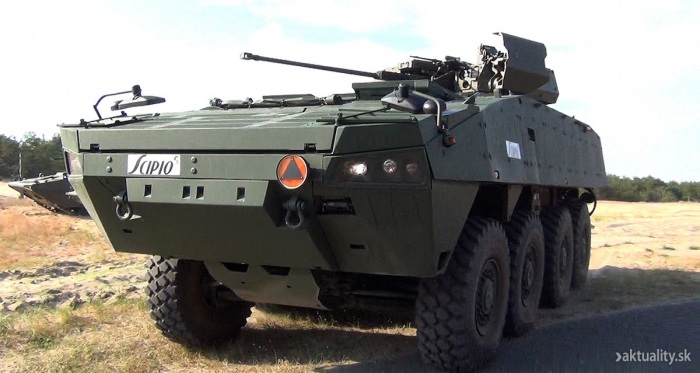 Jane’s is reporting that Slovakia plans to purchase 31 Rosomak 8×8 armored personnel carrier vehicles for $31 million. In Slovakian service the vehicles will be armed with the Slovakian TURRA 30 unmanned turret, and known as the Scipio infantry fighting vehicle (IFV). The Rosomak is a version of the Finnish Patria AMV (specifically the XC-360P variant) built under licence in Poland by Siemianowice Slaskie (formerly known as WZM), part of Polska Grupa Zbrojeniowa (PGZ). Each Rosomak chassis costs $1.1-1.4 million. The TURRA 30 is armed with a 2A42 30×165 mm cannon (the same that equips the BMP-2), a PKT 7.62×54 mm machine gun, and two anti-tank guided missile (ATGM) launchers (for either the 9K111 Fagot ‘AT-4 Spigot’ or 9K113 Konkurs ‘AT-5 Spandrel’). For the export market a version of the TURRA 30 was unveiled in May at IDET 2015 armed with an ATK Mk 44 Mod 1 Bushmaster II cannon (30×173 mm) and a M2HB 12.7 mm (.50 cal) machine gun. It can optionally be equipped with other ATGMs such as the Rafael Spike
From the Vault: Ten Lean Years by General Robert Grow
July 7, 2015 by Leave a Comment
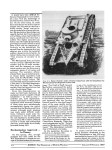
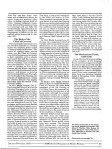
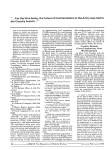
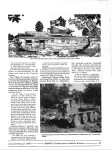
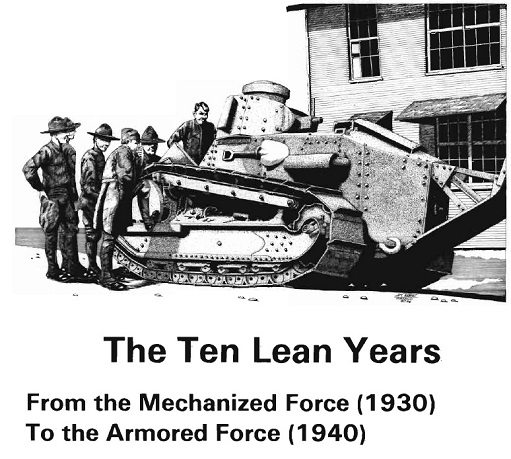 Today we present a lengthy article from ARMOR magazine that appeared in four parts in 1987. Titled “The Ten Lean Years: From the Mechanized Force (1930) to the Armored Force (1940)”, this piece was written by Major General Robert W. Grow. The articles were published posthumously, Gen. Grow had passed away in 1985. His career spanned the 1930’s to the 1950’s, including commanding the 6th Armored Division in the ETO during WWII. The ARMOR magazine editors describe the article as “remarkable and enlightening” and state that it is “full of facts, the personal observation of a very astute officer, and generally heretofore unknown or limited information, and deserves the widest possible dissemination to the Armor forces.”
We have provided two different methods by which people can read the article. Below the four parts of the article are presented as four separate image galleries. We have also collected the entire four part article into a single PDF document which may be downloaded from Internet Archive.
Part 1


Armor for the Ages: SdKfz 234/4
July 7, 2015 by Leave a Comment
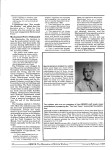
 The Armor for the Ages website has recently updated their website, adding a new article to their Military Vehicles section. These articles describe the various vehicles and weapons that are now in the National Armor and Cavalry Museum (NACM) or the Patton Museum of Leadership. Some of these vehicles were once in the Patton Museum of Cavalry and Armor collection before being transferred to NACM while others came from the Aberdeen Proving Ground (APG) collection.The new article describes the German SdKfz 234/4 armored car. The unit this vehicle was assigned to during World War II has never been officially known until now. Recently acquired photographic evidence proves that the 234/4 was once part of Panzerkorps Feldherrnhalle and was surrendered to U.S. forces in southern Czechoslovakia in 1945. The article is accompanied by two photo galleries of the vehicle.
Armor for the Ages SdKfz 234/4 article
SdKfz 234/4 Photo Gallery Number One and Photo Gallery Number Two
Inside the Chieftain’s Hatch: M56 Scorpion, Pt 1
July 6, 2015 by Leave a Comment
Nicolas “The Chieftain” Moran has released a new video in the World of Tanks “Inside the Hatch” series. This episode examines the M56 Scorpion self propelled gun.
Ken Estes on Tiger II at Carrousel
July 6, 2015 by Leave a Comment
Over at the Tanknet forum, author and researcher Ken Estes recently posted about getting to examine the Tiger II tank at the Musee des Blindes in Saumur. He was there for their annual Carrousel, an event that includes a public exhibition of some of their historic AFV’s. Mr. Estes posted some brief observations on the Tiger II along with a few photos. Since the Tiger and Tiger II are such popular vehicles, we figured people would be interested in his comments.
It’s surprisingly roomy inside, if you forget about the 70 rds of 88mm that were stowed in the hull sides forward of the engine compartment to the driver’s compartment, plus up to 22 more in the turret bustle. Tiger I had no main gun ammo in the turret and apparently the crews did not like to store rounds in the Tiger II turret, but the whole thing was an ammo box, and only the turret ammo would have been handy for loading. Perhaps because there is not a turret basket, there is much room for everybody but the gunner. I could stand fully upright in the loader and commander positions.
Gunner and driver controls were OK, and I don’t know why the British found the manual traversing wheel awkward projecting into the gunner’s lap. Interestingly, there is a second manual traverse located in front of the loader, so he could add his energy as well to the traversing load. They should have had this in other tanks as well, especially heavies. My eyes popped out when I saw the 8 speed transmission shifting lever, but it is apparently as easy to drive as the earlier Tiger. Many controls are redundant, for instance braking is via foot pedals and the usual levers; must help a lot for panic stops.
So well engineered I’d say, at first impression, but of course it’s hopelessly underpowered and overtaxed by terrain limitations for which the suspension could not handle. As with the M103, it likely represented the limits of automotive engineering of its day.

Mr Estes noted that he took an extensive number of pictures of the vehicle which will be used for a book to be published in 2017. He has authored several books on Tanks and AFVs, including Marines Under Armor, Tanks on the Beaches, M103 Heavy Tank (New Vanguard) and US Marine Corps tnak Crewman 1941-45 (Warrior).
While we were not able to find any videos yet of the 2015 Carrousel, here are some clips of the 2014 Carrousel, including the Tiger II tank (video 2).
UK orders CTAS 40mm cannons
July 5, 2015 by Leave a Comment
 Jane’s is reporting that the UK Ministry of Defense has placed a $236 million order for CTA International 40 mm Case Telescoped Armament System (CTAS) cannons for its future fleet of tracked armored fighting vehicles. This order of 515 cannons are slated for the new Scout SV recon vehicle and the upgraded Warrior infantry fighting vehicle. According to the article, the CTAS features a novel telescoped ammunition that means the cannon and its ammunition takes up a significantly reduced internal volume within a vehicle’s turret. This in turn allows a larger calibre cannon to be fitted to smaller vehicles, and for more ammunition to be carried. The UK has a total of 589 Scout SVs on order, of which 245 are of the turreted, cannon armed version. Under the Warrior Capability Sustainment Programme (CSP), the British Army is also upgrading 380 vehicles from the Warrior family. Of these, 245 will be of the infantry fighting vehicle variant – fitted with the CT 40 mm cannon in a new Lockheed Martin UK turret.
For information on the 40 Cased Telescoped Armament System, click here.
Mitsubishi building amphibious assault vehicle
July 5, 2015 by Leave a Comment
Reuters is reporting that Mitsubishi Heavy Industries in Japan has built a prototype of an amphibious assault vehicle. The article notes that the prototype uses engines adapted from the main battle tank made by Mitsubishi as well as new water jet propulsion technology. The full size prototype is undergoing pool tests and is likely several years from being ready for production. The goal of the project is stated as producing an AAV (amphibious armored vehicle) that can move through water at 20 to 25 knots. For the sake of comparison, the AAV7 used by the US Marine Corps has a water speed of 7 knots. Little other information is given in the article describing the prototype.
From the Vault: The Fighting Tanks since 1916
July 4, 2015 by Leave a Comment
Today we present “The Fighting Tanks Since 1916” written by Ralph Jones, George Rarey, and Robert Icks. This book was published in 1933 and represents the most complete examination of the topic up to that point. The book was reprinted in 1969, copies of the reprint can be found from online book vendors at relatively reasonable prices. Fortunately, the book is also available for reading on the Hathitrust digital library website. For those that would like to give it a look, click on the image below.

More on the basement dwelling Panther
July 4, 2015 by Leave a Comment
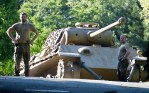
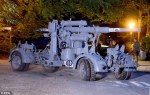
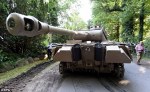
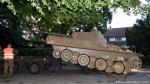
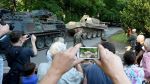
Since we first reported on this story, several new articles have appeared on the topic. We are posting as many pictures here as we can find. The name of the 78 year old owner of the tank has not been released. It seems that his villa had previously been searched as part of an investigation in stolen Nazi art. Prosecutors in Kiel had been alerted to the presence of the Panther and other military equipment by authorities from this previous investigation. It has been noted that almost 20 soldiers struggled to remove the tank from the villa, taking nine hours and the use of two modern AFVs to haul the tank out of it’s storage area. Ulrich Burchardi, an army spokesman, described the difficult task of removing the tank without damaging the house as “precision work”, requiring the soldiers to build a wooden ramp in order to free the tank. The other notable items found in the villa were an 88mm Flak cannon and a large torpedo.
Peter Gramsch, lawyer for the villa’s owner, claimed that the tank and the anti-aircraft gun could no longer fire their weapons and were therefore not breaking any law. The lawyer noted that there was even a note from the responsible district office from 2005 stating that the tank had lost its weapons capability. Mr Gramsch now wants to take legal action against the seizure and also for compensation for his client, stating that “I assume that the tank was damaged in the process.“ The mayor of Heikendorf, Alexander Orth, who was present at the tank’s removal, said the discovery came as no surprise. “The Mayor noted that the owner of the tank “was chugging around in that thing during the snow catastrophe in 1978”.





 Tank and AFV News