Here is part two of our post bringing us up to speed with the translated Russian articles from Tankarchives.com. Click on the headline to read the full article.
Halftrack Experiments
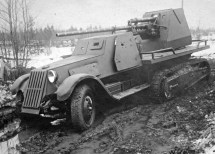 Ever since their appearance in the mid-1910s, halftracks have been considered as a chassis for armoured vehicles, especially SPGs. Better off-road performance than wheeled vehicles and stability made these vehicles an attractive chassis for artillery. Halftrack SPGs were popular in Germany and the United States. The heroes of this article, Soviet ZIS-41 and ZIS-43 halftracks, are not as well known.
Medium Tank M2: Last Place in the Arms Race
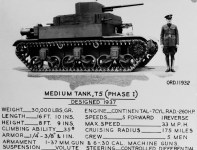 The late 1930s were a time when armoured vehicles were developing rapidly. The start of WWII in September of 1939 gave an even bigger push to the flywheel of progress. Designs that were considered revolutionary suddenly fell behind. There were cases where tanks became obsolete soon after coming out of the factory. The American Medium Tank M2 is among those unlucky ones. You can read a lot of mockery of the combat abilities of this tank, but they are unreasonable. American engineers made a decent medium tank, but by the time it entered mass production there were already other tanks with more armour and better armament.
Light Tanks T1E4 and T2E1: Experiments on an Ideal Platform
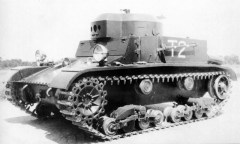 The idea of a light tank with a front engine that the American Ordnance Department insisted on was at a dead end by 1932. Trials of the Light Tank T1 family and later the Medium Tank T2 showed that the idea was unacceptable. Poor visibility, excessive mass, bad crew conditions, and, most importantly, the limits of further development, put an end to such tanks. Designers moved on to working on other tanks with different layouts. Harry Knox, the father of the front engine American tanks, did not abandon his idea, and kept looking for a place for his idea. Stooping down to plagiarism, he crossed his Light Tank T1E1 with the Vickers Mk.E, its overseas competitor. The resulting “hybrid” Light Tank T2E1 was not that bad.
Combat Car M1: Armour for American Cavalry
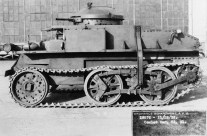 Traditionally, cavalry occupied a very strong position in the American army. As soon as there was an opportunity to obtain its own tanks, the cavalry took it. Since, officially, the cavalry was not allowed to have tanks, the name “combat car” was used, even though these vehicles were actually tanks. The Combat Car M1 and several similar vehicles on its chassis are typical representatives of the small family of interbellum cavalry tanks.
T18 HMC: Quick Howitzer
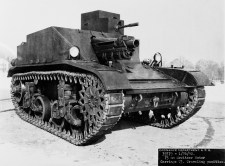 The American army began thinking of motorizing their artillery back in WWI. For a long time, attempts were made to build an SPG on the chassis of the light tracked Holt tractor. In parallel, John Walter Christie was working on a similar vehicle. Neither project satisfied the US Army for various reasons. A second attempt at an SPG was made in 1930, but the Howitzer Motor Carriage T1 remained an experiment. The next opportunity to obtain self propelled artillery came a decade later in the form of the Howitzer Motor Carriage T18.
Gun Motor Carriage M10
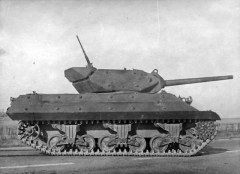 Unlike many tanks, few tank destroyers arrived in the USSR within the Lend Lease program. The Gun Motor Carriage T48, or SU-57, built on the chassis of the M3 halftrack, was the only exception. Initially, they were built by the Americans for a British order, but the British barely used them. The USSR gave them a completely different reception: they were used actively and showed themselves as an effective anti-tank measure. As for tank destroyers on a tank chassis, the only Western vehicle that was accepted into the army was the Gun Motor Carriage M10, known widely under the British nickname “Wolverine”.
Infantry Tank Mk.I: the First Infantry Tank
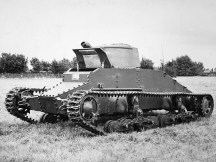 There are many tanks in the history of armoured warfare that were simply unlucky. The British Infantry Tank Mk.I is one of them. Even its name was lost when it became the Matilda due to some historian’s error, even though that name applies to a completely different vehicle. As Britain’s first infantry tank, it was hopelessly obsolete by the start of the war. Even its thick armour was not enough to survive in a war that it was simply not suitable for.
Hummel: Bee with a Long Stinger
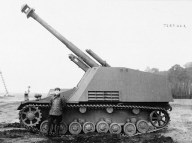 German engineers invented the “self propelled gun mount” class of artillery. The first work in this area was done during WWI, but it truly became a mass event 25 years after it ended. The recipe was simple: take a light or medium tank and use its parts to to build a chassis with bulletproof armour. A slightly modified version of a towed gun was installed on that chassis. Thanks to this phenomenon, the mobility of German artillery grew significantly. The Hummel became the post powerful of German “self propelled gun mounts”. This SPG earned its position as one of the symbols of German self propelled artillery.
E-50 and E-75: A Story of Failed Unification
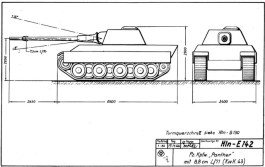 Tanks that could have been built are often discussed within certain circles. Aside from the superheavy Maus and E-100, there are the light and medium E-10 and E-25 tank destroyers. Despite very incomplete data about these vehicles, the overall characteristics are known, including the armament. Meanwhile, the core of “Panzerwaffe-46” was going to be composed of the medium E-50 tank and heavy E-75 tank, at least in the minds of fans of alternative history. The story with these tanks is a lot more complicated, since work stopped at an early stage, and a good half of the information available on these tanks is divination at best. Let’s try to figure out what about the E-50 and E-75 is true and what is blatant misrepresentation.
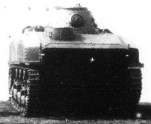 Like many nations, Japan wanted to have a light amphibious reconnaissance tank. The idea came up in the 1920s when the country purchased the French AMP amphibious half-tracked armoured car. In 1928, two amphibious armoured cars based on the Vickers-Wolseley were built, but what Japan needed was specifically an amphibious tank. This is where the sad story of the SR series of tanks begins.
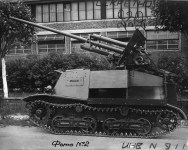 The idea to use tractors as a chassis for SPG was born in the USSR in the 1930s. The SU-2 and SU-4 prototypes were built, but the projects did not move past the prototype stage. On the other hand, the Germans achieved different results. Taking captured French Renault UE tractors, they created SPGs with 3.7 cm Pak guns. The resulting vehicle wasn’t the best, but could be produced in large amounts at a small cost. A year later, the ZIS-30 was built in the USSR, the first mass production SPG of the war.
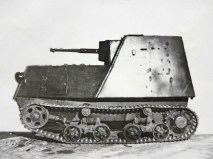 Improvised armour vehicles appeared during WWI, but the phenomenon became truly commonplace during the Spanish Civil War. The most common type of vehicle was the improvised armoured car, but armoured tractors were also built. Less mobile than wheeled armoured cars, they were not in high demand in Spanish conditions. WWII triggered a resurgence of improvised armoured vehicles. The USSR built the largest amount of armoured tractors, and one of them, the HTZ-16, was accepted into production and built on an industrial scale. On July 20th, this vehicle turned 75 years old.
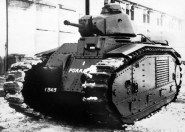 On March 16th, 1934, after almost 13 years passed since the medium Char B program was launched, the French infantry command ordered the first seven Char B1 tanks. This decision was controversial. Yes, the French army was in need of a new tank. However, not only did its mass reach twice that of the initial requirements, but the tank came out very expensive, and there could be no hope of truly mass production. Paradoxically, the Char B1 bis, an improved version of the Char B1, was one of the causes of French defeat in the summer of 1940.
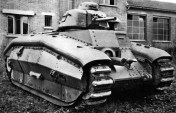 In 1936, only two years after a decision was made to put the Char B1 into production, work on its modernization began. Mostly, it entailed improving the armour and armament. In April of 1937, the first modernized tank, indexed Char B1 bis, left its Renault assembly plant. It was destined to become the most numerous medium tank in the French army, although many of its parameters put it in the heavy class. Nevertheless, even before it entered production, discussion about a deeper modernization that would create an even heavier vehicle began. This vehicle was called Char B1 ter.
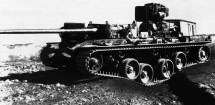 The Strv 103, also called the S-Tank, is Sweden’s trademark tank. A lack of turret, fixed gun with an autoloader, active suspension, three driver positions (one per crewman), these are only some of its unusual features. Swedish tank designers managed to surprise the world. However, the Strv 103 didn’t come out of nothing, and a significant portion of the components that went into the tank came from experimental vehicles. How did Sweden assemble this industrial “Lego set”?
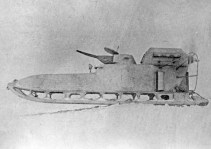 The history of the aerosan in Russia and then the USSR is old and varied. The first mass produced aerosans were built in 1912, were actively used in WWI and then the Russian Civil War. Development of aerosans received great attention due to the geographical features of our country. It was not surprising that the Red Army had the largest aerosan fleet in the world during the Great Patriotic War. Meanwhile, the widely used NKL-26 reconnaissance aerosan was a pale shadow of what was initially planned for production. The wishes of the Soviet military materialized as the 02SS battle aerosan which had no equivalent in any country in the world.
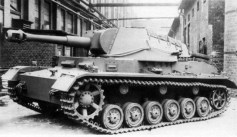 German wartime SPGs are well known. However, it took some time to develop the “selbstfahrlafette” concept of a large open casemate, like the one used on the Hummel. Initially, the idea was to built medium SPGs instead of light ones, and their layout differed noticeably from the vehicles that showed up on the battlefield in 1943. Even though German SPGs developed along a different path, the Pz.Sfl.IVb was built and even got to fight.
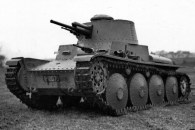 Czechoslovakian tank manufacturing caught up to world standards in the mid-1930s. The P-II, CKD’s first light tank and the first mass produced domestically designed tank, was close to the world’s leading designs. The LT vz. 35 that won the tender for a new cavalry tank caught up with the rest of the world’s leaders. It’s not surprising that Czechoslovakian tanks were considered for purchase in countries without a domestic tank design program. This caused the design of the CKD TNH and LTP (Tanque 39); excellent tanks that became the backbone of the Iranian and Peruvian tank fleets.
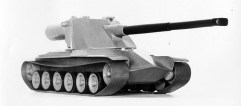 Sweden’s tank industry was in crisis in the second half of the 1940s. On one hand, the middle of this decade was a time when Swedish self propelled artillery thrived. That is when the Swedish army finally received assault guns, tank destroyers, and SPAAGs. However, the tank program lagged behind. Sweden’s luck ran out with the Strv m/42. Pricken, LS 46, Leo, all of these projects remained on paper. Attempts to build a new tank weighing between 25 and 30 tons encountered various problems. A way out of this dead end appeared in the early 1950s, which led to two interesting heavy tank projects: the EMIL and the KRV.
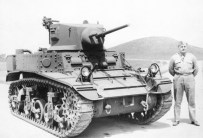 History knows many instances when an attempt to improve a design led to, if not a worse one, then at least an equivalent. The American M3A1 light tank is one such example. Even though its modernization improved some characteristics, the well-intentioned modifications had some unintended consequences. Let us go through them in order.
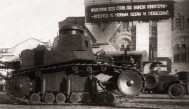 The first tank built in the young Soviet Republic was the “Russian Renault”, a poor copy of the most numerous and probably best tank of WWI. It is also known as “Freedom Fighter Comrade Lenin”, after the name of the first tank of the batch. There were 15 Russian Renaults built in total at the Krasnoye Sormovo factory in Nizhniy Novgorod under the supervision of visiting engineers from the Putilov and Izhor factories. This group was headed by Sergei Petrovich Shukalov. The Putilov and Obukhov factories were pioneers of the Russian Empire when it came to mastering complicated machinery, and the Izhor factory specialized in producing armoured plates and parts for the Imperial army.
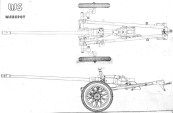 The light LPP-25 anti-tank gun was built as an answer to the German s.Pz.B.41 anti-tank rifle. As a result of information that reached Soviet designers from the front lines, a weapon was born that did not lose out to the German gun, but without the complex and short-lived conical barrel. What was this LPP-25 like?
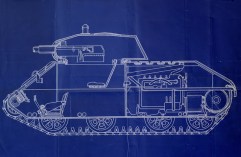 Hundreds of tank-themed proposals were sent to the Main Automobile and Armour Directorate of the Red Army during the Great Patriotic War. There was a wide spectrum of ideas and inventors. There were workers, scientists, engineers, ordinary citizens. A significant percentage was made up of military men of all ranks and branches. One of these men was Lieutenant Provornov, who proposed a light tank in July of 1942 with a number of original solutions. It was never built in metal, but fans of World of Tanks know it as LTP.
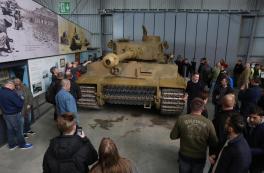 THOUSANDS of people visited The Tank Museum today for an event which included two restored World War Two tanks which featured in Brad Pitt’s blockbuster movie ‘Fury’.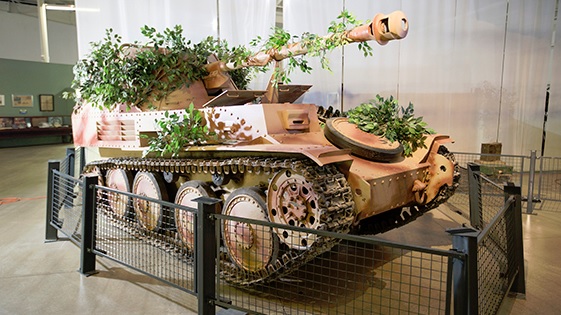
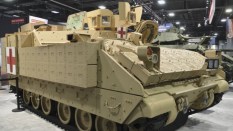 The armed forces of the United States of America are running a number of projects to modernize the land vehicle and amphibious vehicles during the next few years. The Armored Multi-Purpose Vehicle (AMPV), based on a modified Bradley chassis, will replace the obsolete M113 (not called Gavin) in the Army’s inventory. The AMPV features enhanced protection against mines and improvised explosive devices (IEDs), a total of 2,907 AMPVs will replace the M113-based vehicles as general-purpose vehicles, mission command vehicles, mortar carriers, medical evacuation and medical treatment vehicles in the US Army’s Armored Brigade Combat Teams (ABCTs). On the long run a further 1,922 AMPVs might be procured, if the M113 should be replaced at brigade level (and lower) on a one-to-one basis by the AMPV.
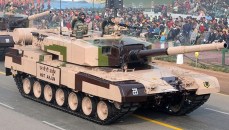 NEW DELHI — The Indian Army is seeking major structural and design changes in the homegrown Arjun Mk-2, but the state-owned Defence Research and Development Organization says the “changes” could take up to seven years, causing a delay in the induction schedule. The service wants DRDO to redesign the hull, the turret structures and use newer material to reduce the tank’s weight. The Arjun Mk-2 currently weighs about 68.6 tons, compared to the 62-ton Arjun Mk-1 tank currently in operation with the Army. The Mk-2 version’s weight makes it inappropriate for operations in the semi-developed sector of the western front bordering Pakistan where tank battles would take place, according to an Indian Army official.
 MOSCOW — Russia’s largest state-owned defense industry holding, Rostec, is set to become even larger. The company has announced plans to take ownership over UralVagonZavod, a subsidiary of the Tractor Plants Concern specializing in military vehicles like tanks and other armored platforms, according to a statement provided to Defense News. Rostec is an umbrella corporation founded in 2007 to begin consolidating and reforming disparate elements of the Russian defense and high-technology base. It is run by Sergey Chemezov, who is reportedly a close friend of President Vladimir Putin. Under Chemezov’s charge, Rostec has taken about two-thirds of Russia’s defense industry under its wing.
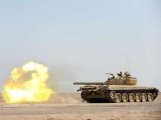 The US Army just put out an invitation for bids on building a modification for Humvees to make them look like Russian T-72 tanks. The invitation for bids states that the mods will help the Army simulate realistic battle scenarios in training. The solicitation also mentions MILES/TESS quite a few times, suggesting the fake tanks will be likely used for Multiple Integrated Laser Engagement System/Tactical Engagement Simulation System — the military’s version of laser tag.
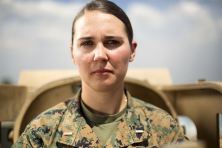 In another first for the Marine Corps, 2nd Lt. Lillian Polatchek graduated at the top of her class from the Army’s Armor Basic Officer Leaders Course, making her the Corps’ first female tank officer. “I’m just sort of looking at it as another Marine graduating from this course,” Polatchek described her accomplishment in a Defense Department video. She will now serve with the 2 nd Tank Battalion at Camp Lejeune, North Carolina. Polatchek’s graduating class contained 67 students, five of whom were Marines, a Defense Department news story says.
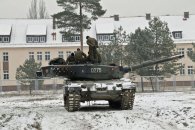 The Polish Ministry of National Defence (MND) has decided to relocate two of its newest tank battalions from the country’s western border to strengthen units stationed in the east. The Leopard 2A5 MBTs of the 34th Armoured Cavalry Brigade (part of the 11th Armoured Cavalry Division) based in Zagan have been moved to the 1st Tank Brigade (part of the 16th Mechanised Division) based in Wesola: a city close to Poland’s capital, Warsaw. While the first tanks began arriving at the beginning of April, the training of drivers, gunners, and commanders has been under way in Wesola since January.
 by Nigel Thomas and illustrated by Johnny Shumate. This is a softcover book of 64 pages in the standard Osprey format.

 Tank and AFV News