From the Vault: Tank Analysis by Joseph Williams 1974

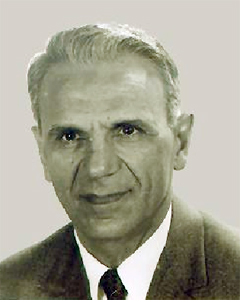
williamsA while back someone asked us to dig up an article from a 1974 issue of ARMOR by Joseph Williams on US post war tank design.  With the help of an internet friend, we were able to obtain a copy.

Joseph Williams is one of those names that should be well known to tank and AFV aficionados but is not.  As we have pointed out in past posts, the former Soviet Union did a far better job of publicly recognizing their prominent tank designers than the Western democracies tended to do.  Fortunately, there is a short biography dedicated to Mr. Williams on the US Army Ordnance “Hall of Fame” page.

Mr. Joseph Williams entered Government service at Aberdeen Proving Ground in July 1941 as a designer and project engineer.

In a very short time, he became one of the Army’s pioneers in design and analytical disciplines which are now the basic framework for scientific approach and methodology of combat vehicle design and development. Mr. Williams played a key role in the initial concepts of prototype tanks leading to the medium tank M26. He was also responsible for the conception and execution of the first postwar tank design, Model T37/M41 light tank, featuring such innovations as a single driver, quick removable powerplant, scientifically developed ballistic shape, and concentric gun recoil system.

Mr. Williams was a driving force in the initiation and development of new tank building blocks. He designed the T42/M47 gun and turret assembly, including fire control selection and installation and development of ballistic and casting sections.

He also conceived and performed most of the preliminary design and analytical work for the M103 heavy tank. He then designed the T48/M48 tank, which was later produced in large quantities and is the main battle tank for many foreign countries.

Versions of this tank are currently being modernized in the US Army and are a vital part of the tank inventory. He was a driving force in the development of the M551 and the M60A2 tanks, in both a direct-responsibility role and as a consultant.

Through his international interests and affiliations and his vast knowledge of tanks, he also played a major role in the United States/Federal Republic of Germany tank development program, a precedent-setting international endeavor. During the last 10 years of his career, Mr. Williams was recognized internationally as an outstanding leader in the design and development of combat vehicles.

That is a pretty impressive resume to say the least.  In the gallery below we present Mr. Williams’ 1974 article from ARMOR magazine on “Tank Analysis.”

From the Vault: Armor of the Future circa 1960

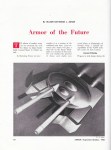
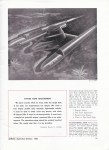
picture coverLooking back at what previous generations predicted the future might hold can often be amusing.  Books, films and TV of the past often present version of the future that are considerably more fantastic than what actually came to be.  Military thinkers are not immune to this trend either, as today’s article shows.  We present “Armor of the Future” by Major Raymond J. Astor, published originally in the Sep-Oct 1960 issue of ARMOR.  In the article, the author uses as his starting point a quote from General Bruce C. Clarke on future tank requirements.

“We know exactly what we want.  Take the single item of the tank: our requirements are simple.  We want a fast, hightly mobile, fully armored, lightweight vehicle.  It must be able to swim, cross any terrain, and climb 30 degree hills.  It must be air-transportable.  It must have a simple but powerful engine requiring little or no maintenance.  The operation range should be several hundred miles.  We would also like to to be invisible.”

One would assume that General Clarke was speaking tongue in cheek when he made these comments, however the author of the article takes them at face value!

” This requirement could be approached and perhaps fulfilled completely if the United States were willing to assign the necessary scientific resources of the nation to the problem.  Let us examine the problem and determine how this could be achieved.”

Looking back, this claim seems to contain more than a hint of hubris.  Perhaps it is not surprising considering the unbridled optimism concerning technology that was the style in 1950’s America.

From the Vault: T-72B Turret Armor Exposed

t-72bJim Warford has shared with us a copy of a piece from 2002 that was originally published in the Journal of Military Ordnance.  The article is titled “T-72B MBT – The First Look at Soviet Special Armor” and it contains some of the first published photos of the armor layout of the T-72B “Super Dolly Parton.”  According to the author, this article made quite a splash, becoming a much read item in defense circles.  The author based the article on a unclassified version of the source report which was dated January 1999.  The report documented an inspection of the configuration of the ERA package as well as the armor package inside the turret frontal armor lobes of the T-72B.  No information is given in the source report about where the two T-72B tanks that were examined came from, nor was any information given as to armor performance or capabilities of the armor packages examined.  One of the more interesting conclusions of the evaluation is that the construction of the cavities inside the T-72B turret provides the ability to change the makeup of the special armor package either during production or during a depot-level rebuild of the tank.  For people interested in late cold war Soviet armor, this article should prove very interesting!

From the Vault: Tank-Fighter Team by Robert Gerard

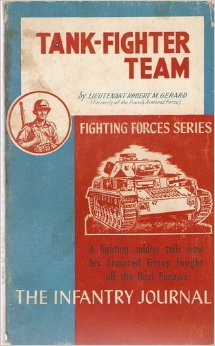
71LyFF4LgeL._SL500_SY344_BO1,204,203,200_Today we present the book “Tank-Fighter Team” by Lieutenant Robert M. Gerard.  Published in 1942 by the Infantry Journal, this book is an account of tank combat during the Invasion of France in 1940 written by Lt. Gerard, a French commander of a Somua S35 tank.  The book tells of how Lt. Gerard and his unit were committed to battle against German tanks as part of a rearguard action, protecting the retreat of a French Infantry division.  Following the fall of France, Lt. Gerard was able to escape to the United States where he helped train U.S. soldiers at Fort Knox in the basics of tank combat. This book should prove interesting to those looking for a first hand account of tank combat in France.  This book is in the public domain and can be viewed here.

From the Vault: Bibliography of pre-WW2 tank books and articles

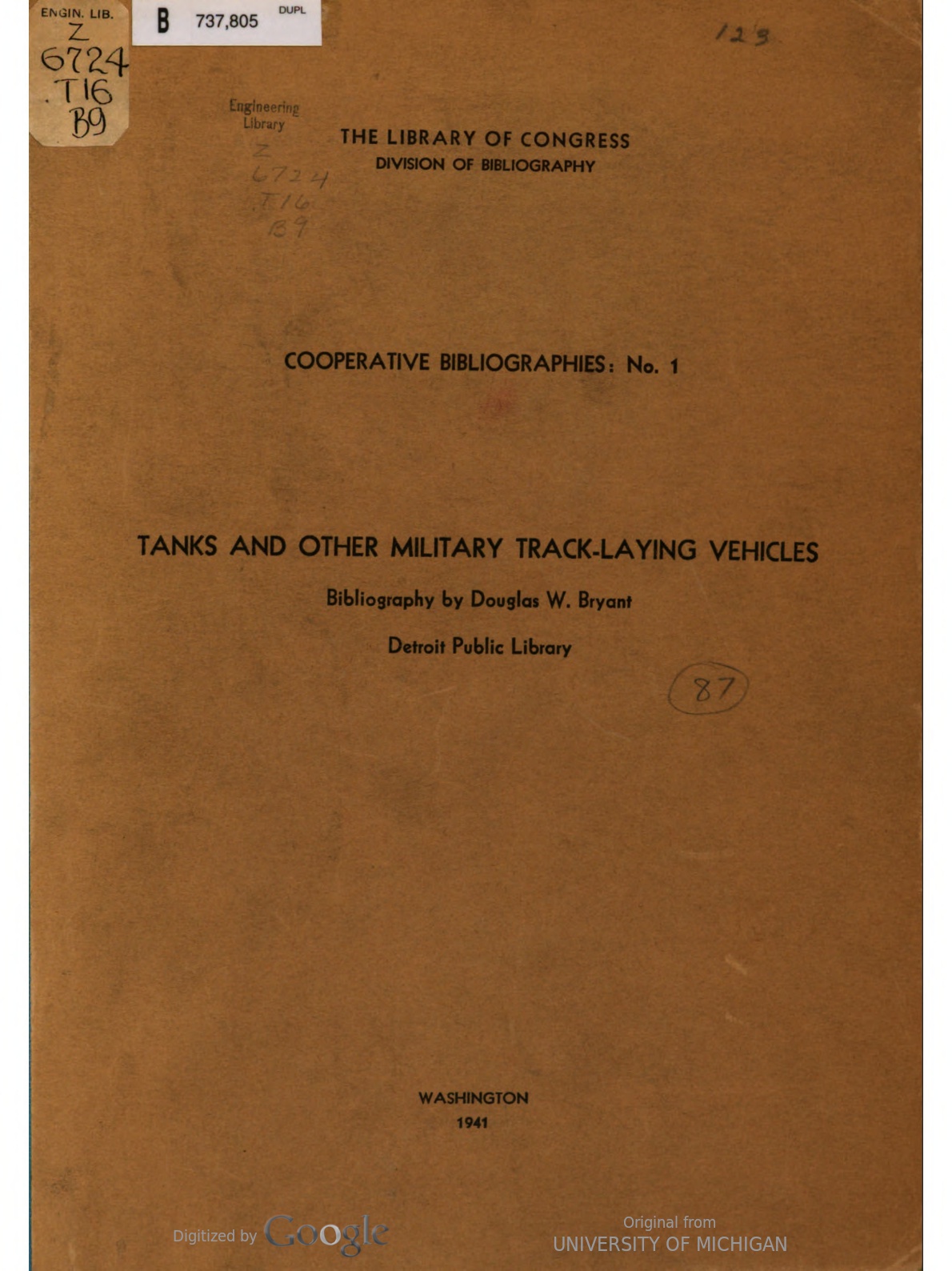
bibliography coverHere is an item that may be useful to those doing research on pre-WWII tanks: “Cooperative Bibliographies No. 1 :Tank and other Military Track-Laying Vehicles” by Douglas Bryant.  According to the preface, this document “has been compiled chiefly for the use of those people interested in the design and production of tanks and other military track-laying vehicles.  Material on the use of such vehicles and on their tactics in battle has not been included.  The bibliography lists what is, in the compiler’s opinion, the best description and technical literature available to the public.

The document may be viewed at the Hathi Trust Digital Library website.

From the Vault: Public domain WWI era tank books

big willieToday we present several books covering First World War armor that are in the public domain.  All of these books are free to download in a variety of formats at internet archive.  These books were all written shortly after the war and so represent what was then the current thought on armor and mechanization.  Just click on the title to go to the Internet Archive download page.

Our first offering is “Tanks in the Great War: 1914-1918” by J.F.C. Fuller published in 1920.  This name should be familiar to those with even a passing interest in the history of tanks.  Fuller was the author of the British strategy at the Battle of Cambrai, and would help plan the tank operations for the Autumn offensives of 1918.

Second is “Tanks 19-14-1918: The Log-book of a Pioneer” by Sir Albert G. Stern published in 1919.  Stern was one of the key figures in early British tank development, having served as the Secretary of the Landships Committee in 1915.  Stern headed up the creation of the Allied Mark VIII tank in the later part of the war.

The next books is “The Tank Corps” by Clough Williams-Ellis and Amabel Williams-Ellis published in 1919.  As the name of the book implies, this is an early history of the British WWI Tank Corps.  William-Ellis was known primarily for his work as an architect.

Our fourth selection is “The Tank in Action” by Captain D.G. Browne published in 1920.  This also is a history of the British Tank Corps during WWI.

The next book is a memior from a WWI British Tanker.  “A Company of Tanks” by William Hentry Lowe Watson, published in 1920.

The final book we present is probably one of the earliest fiction stories written about tankers.  “Men and Tanks” by J.C. Macintosh, published 1921.

From the Vault: Story of Soviet Armor from ARMOR magazine 1949-1952

Several days ago we posted a letter written by a German general to ARMOR magazine in 1951 in response to an earlier article on the history of Soviet armor.  We noted that the article on Soviet armor that prompted the letter was not available for download on the ARMOR magazine site.  A fellow named Paul Mutter tracked down the article and sent us a digital copy.  The Soviet history article actually turned out to be a four part series called “The Story of Soviet Armor” by Garrett Underhill and originally appeared in the Jan-Feb 1949, May-Jun 1949, Mar-Apr 1950 and May-Jun 1950 issues of ARMOR.  In 1952 Mr. Underhill added to his story of Soviet armor with an article on assault guns and self propelled artillery.  This article is available in the Nov-Dec 1952 issue of ARMOR.  We have posted image galleries of all five articles for those that may be interested in looking at them.  For those wanting a PDF copy, the “SU” article is available as part of the Nov-Dec Issue of ARMOR which can be downloaded here.  For a PDF of the four part “Story of Soviet Armor” article, please visit this internet archive page we created.  When taken all together, these articles add up to over 50 pages, essentially a small book.  For those interested in what the US knew and thought about Soviet armor in the early Cold War Era, these articles should provide some valuable insight.

Story of Soviet Armor Part I Early Days (Jan-Feb 1949)

[Read more…]

Nicholas “The Chieftain” Moran on Myths of American Armor

Att the recent TankFest Northwest event at the Flying Heritage Collection, World of Tanks researcher Nicholas Moran made a presentation on “The Myths of American Armor in WW2.” Fortunately for those unable to attend, his talk was video recorded and posted in the Chieftain’s Hatch section of the WoT forums.

From the Vault: Robert Icks on Liddell Hart

Today we present an article from the November-December 1952 issue of ARMOR written by Colenel Robert J. Icks title “Lidell Hart: One View.” Icks was a pioneer in the writing and researching of tanks and armored warfare, writing numerous books on the topic starting in the 1920’s up through to the 1970’s. In “The Fighting Tanks 1916-1933“, which he co-authored with Ralph Jones and George Rarey, Icks is described as possessing “one of the most complete individual tank libraries in the world.” At the time of his death in 1985, his library was bequeathed to the Patton Museum. A list of his collection can be viewed here, it is listed as 70 linear feet of material!

In the course of his research on tanks, Icks carried on a correspondence with British journalist, historian and military theorist Basil Liddell Hart.  Widely credited as one of the prophets of modern mechanized warfare, Liddell Hart was one of the most prolific writers on military matters in the 20th century. A WW1 British Army captain, Liddell Hart retired from the army in 1927 to embark on a career as a journalist and historian. Following WW2, Liddell Hart continued to write, among his most well known works were his books based on interviews with surviving German Generals (The Other Side of the Hill, The German Generals Talk) , his editing of the Rommel Papers as well as his single volume history of the war.  Liddell Hart was no stranger to controversy, and his strong opinions on matters often have drawn strong replies from historians and military thinkers.  This article presents Colonel Icks view on Liddell Hart and his writings.

From the Vault: Ogorkiewicz on self propelled artillery

Today we present an article from the 1951 Nov-Dec issue of ARMOR by Richard Ogorkiewicz on developments and trends in self propelled guns.  The article notes that this is not the first article for ARMOR that Mr. Ogorkiewicz has written, although it does qualify as one of the earlier pieces in a career which stretches all the way to the current day.  While we tend to think of indirect fire weapons when self propelled guns are mentioned these days, this article includes direct fire “assault guns” as well as self propelled anti-tank guns.  These categories of vehicles have fallen out of favor in modern times, but were still considered a viable vehicle type when this article was authored in 1951.