From the Vault: Final Drive for Combat Vehicles circa 1921

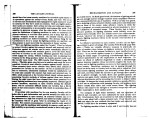
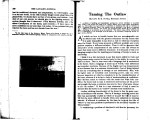
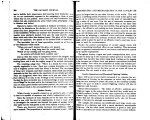
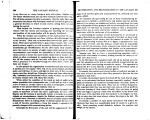
For those interested in the automotive components of early tanks and AFVs, this article may be of interest.  “Final Drive for Combat Vehicles” is from the May-June issue of the Ordnance Journal and it examines the transmissions and final drives that were in service in 1921.  Despite the use of the term “combat vehicle” in the article title, the authors seem more interested in artillery tractors than tanks.  Having looked through a number of early 1920’s issues of Ordnance Journal, it seems there was much more work and interest shown to artillery tractors and self propelled artillery development than to tanks in the immediate post WW1 era.

Click on the thumbnails below to view full size page.


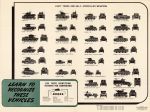
From the Vault: WW2 Tank Recognition Poster

Here is a small gallery of three tank recognition posters printed by the US during WW2.  These posters have circulated the internet a bit and reproductions are sold on ebay.  They contain some interesting errors and some of the vehicle profiles seem a bit “off,” particularly the Japanese tanks.

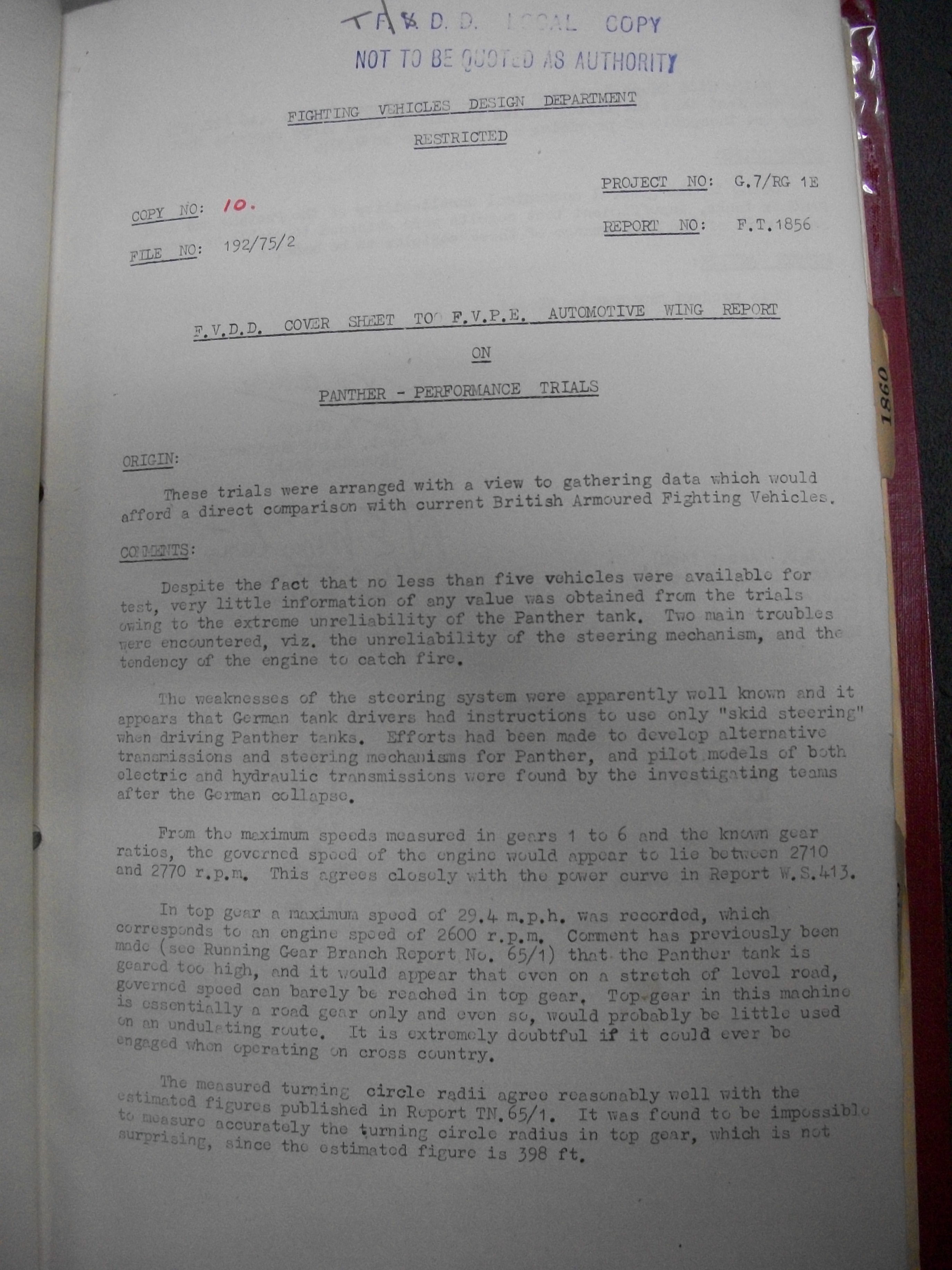
From the Vault: Post War British Report on Panther

100_3965Back in early October friend of the site P. M. Knight shared with us a wartime British report on the reliability and performance of a German Panther tank.  That report was based on the testing of a single early model Panther provided by the USSR and the tests end early due to mechanical failure.  P. M. Knight has provided us with photos of a second report, this one being conducted in the immediate post war period based on tests of five Panthers (two Panther tanks, two Jagd Panthers, and one Panther ARV.)  Much like the first report, the end result is the same, trials were ended prematurely due to mechanical failures.  The primary problems noted are failures of the steering mechanism and engine fires.

Report text below:

[Read more…]

From the Vault: General Patton on Mechanization and Cavalry circa 1930

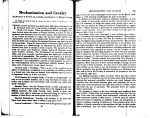
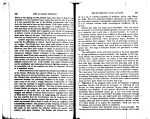
People generally think of General George Patton as an early advocate of the tank in the period between the world wars.  While he was involved in some of the earliest uses of tanks during WW1, he realized after the war that for the sake of his career he was better off transferring to the Cavalry.  While he would advocate for the use of armor in the US army, he also continued to speak out on behalf of the traditional horse mounted cavalry in the interwar period.  A good example of this are the two articles presented below from the April 1930 and July 1930 issues of The Cavalry Journal.  Titled “Mechanization and the Cavalry” and “Motorization and Mechanization in the Cavalry”, these articles illustrate Patton’s thoughts on the appropriate role of armored vehicles compared to those of the horse cavalry, arguing that the two could be used to compliment each other.  Unfortunately, the print quality of these articles is not great, but they are legible.

Mechanization and the Cavalry April 1930

Motorization and Mechanization in the Cavalry July 1930

From the Vault: Why Three Tanks?

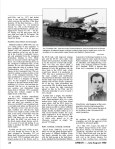
Today we present an article from the July-August 1998 issue of ARMOR titled “Why Three Tanks” by Stephen “Cookie” Sewell.  This article gives a nice overview of Soviet tank development from WW2 through the cold war seeking to explain why the USSR ended up with three similar main battle tanks, the T-64, T-72 and T-80.  Mr. Sewell wrote several articles for Armor and is an avid model builder, being the founder and first president of the Armor Modeling and Preservation Society.

From the Vault: British Tank and AFV Demonstrations at Bovington from British Pathe

Today we present a couple British Pathe videos showing British armor from the early cold war period.

First is two videos about armor being demonstrated for the public at Bovington.  These videos are from 1955 and 1961.


Here is a video on various British Vehicles on display at Bovington in 1962.


Next is a video on the British Saladin armored car from 1959


Here is a video showing a demonstration of a British ATGM from 1960.


Here are two more videos of British armor at Bovington.  These videos are from 1954 and lack audio.


From the Vault: 1952 Patton 48 tank demonstration

Here is a video from 1952 showing off the brand new American M48 tank.  This video recently surfaced on youtube and it should be a treat for those with an interest in early postwar US tanks.  Much of the footage is from the Chrysler Delaware plant which was built specifically for the production of the M48.  Construction of the Delaware plant took place in 1951 during the Korean war.  By 1956 Chrysler started a five year phase out of tank production at this facility, converting it to automobile manufacture.  Along with the M48, the T-43 heavy tank (later designated M103) was also built at the Delaware facility.  There is one noticeable error in the video.  At 5:42 in the video the narrator says “Both the engine and the Patton’s range finder are manufactured in other Chrysler Corporation plants.”  The engine for the M48 was built by Continental Motors, a separate company from Chrysler Corporation.

From the Vault: The Tanks are Coming (1941)

Here is a short film from 1941 by Warner Bros titled “The Tanks are Coming.”  The film is part comedy, part propaganda and frankly the humor is more than a bit dated.  However, the film includes a good deal of interesting footage of early war US M2 light and M2 medium tanks.  There are some good training shots as well, featuring driving and gunnery simulators.  The film was shot on location at Fort Knox.

From the Vault: The Gas Turbine and the S-Tank

When most people think of a gas turbine in a tank, they probably think of the M1 Abrams or maybe the Soviet T-80.  However, the first MBT to utilize a gas turbine was the rather unusual Swedish “S-Tank” STRV 103.   The S-Tank was the most unusual design of its day and its engine layout was unusual as well.  Rather than have a single engine, the S-Tank had two, a 490 HP gas turbine and a 240 HP diesel.  The tank could be run on just the diesel engine when stationary or moving at low speed, when moving at full speed both engines were engaged for a maximum power of 730 HP.  This article from the March-April 1973 issue of ARMOR details the design of the S-Tank layout.  The article author is Sven Berge, the Swedish engineer chiefly responsible for the S-Tank design.

From the Vault: Japanese Armor circa 1968

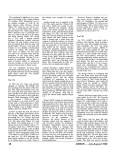
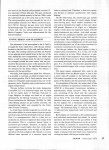
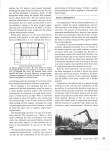
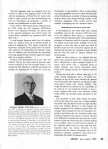
Here is an article from the July-Aug issue of ARMOR by Tomio Hara on the Development of Modern Japanese Armor.  The focus of the article is on the Japanese Type 61 tank, a vehicle that does not get much attention in English language sources.  The author of this article, Tomio Hara, was one of the leading tank experts in Japan, having commanded a tank regiment during WWII and later holding the position of commandant of the Japanese Army Combat Vehicle Research Laboratory.  The article describes the rationale used in the design of the Type 61.  Unfortunately, the article does not explain the most peculiar design element of the Type 61 which is the front mounted transmission and drive sprockets with the engine in the rear.  Although this layout was common in WW2 era tanks, the Type 61 is the only post war tank to retain this layout (other than vehicles with front mounted engines.)