The Tank Museum presents part 8 of their video series showing the restoration of their Matilda tank. Here Bob Darwood explains what is involved in re-assembling the road wheels into the bogies.
Translated Articles from Archive Awareness
November 27, 2016 by Leave a Comment
It’s been over a month since the last time we posted links to some of the translated articles on the Archive Awareness blog. Here are some of the Russian language pieces they have translated and posted recently. Click on the headline to read the full article.
T-70: Growing Up
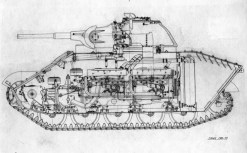 On July 20th, 1941, the Red Army adopted the T-60 small tank into service. This was a necessary measure, as incredible losses of tanks in the first month of the Great Patriotic War had to be replenished, and mass production of the T-50 wasn’t getting off the ground. Even if the goal of producing 10,000 tanks in 1941 was not met, large amounts of T-60 tanks entered service in October, playing an important part in the defeat of the Germans at Moscow. At the same time, an idea to modernize the T-60 was tossed around as early August, resulting in a heavier tank that was indexed T-70. What is the history of this tank?
Type 95 Ha-Go: Manchurian Prisoner
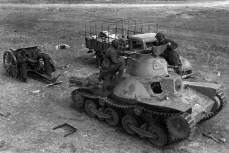 The fighting in July-August of 1939 near the Khalkin-Gol river was the Red Army’s first real large engagement of the 1930s. The battle at Lake Hasan in 1938 was also fierce, but it was not comparable to Khalkin-Gol. Khalkin-Gol was also the first real test of strength for the Japanese Imperial Army as they, especially their tank units, had yet to face an enemy like the Red Army. During the fighting, some amount of Japanese armoured vehicles were captured by the Red Army. One of them was a Ha-Go tank from the 4th Tank Regiment, which was later closely studied in the USSR. What impression did Soviet engineers get from the Ha-Go?
Christie M1931
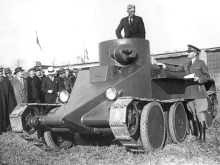 On November 19th, 1928, an unusual vehicle came out of Fort Meade in Maryland. It looked more like a race car than what it really was: a tank. The turret was absent, replaced with a Browning M1919A2 on a pintle mount. Another machinegun was installed in a sponson in the front of the hull. This was the Christie M.1928, an experimental vehicle built by John Walter Christie’s new company, the US Wheel Track Layer Corporation. Christie called his brainchild “M.1940”, implying that this was a design ahead of its time. The main feature of the tank was the independently sprung suspension, known as the Christie suspension today.
Vickers E: Bestselling Export
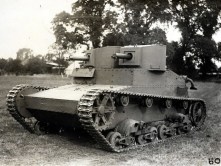 The late 1920s were a dark time for British tank building in general and the Vickers company in particular. Sir George Thomas Beckham, the company’s chief designer, died on May 9th, 1928. Order for new tanks began to decrease. New designs, the A1E1 Independent and A6 Medium Tank, were unsuccessful. Meanwhile, Vickers received their first overseas order, selling a Medium Tank Mk.C to Japan. The next foreign sale was a Medium Tank Mk.D to Ireland, plus the Medium Tank Mk.II piqued the interest of some foreign buyers. This pushed the company, united with Sir W.G. Armstrong Whitworth & Company into Vickers-Armstrong Limited in 1927, to work on creating tanks purely for export. The result of this work was the Vickers Mk.E, a tank that cemented its creators and the Vickers company in world tankbuilding history.
Strv m/38 and m/39: Quality at a Premium
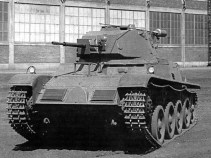 The Swedish military waited for a long time to get respectable results out of their tank industry. Sweden began working on its own tank in the late 1920s, but it took almost 10 years to see satisfactory fruits of their labour. Thanks to the fact that the Germans were using Swedish industry as a test lab for their own experiments, Sweden gained rich tank building experience by the second half of the 1930s. The Lansdverk L-60, developed under German engineer Otto Merker, became the first Swedish tank available for export. The design of the tank became the base of two similar tanks, the Strv m/38 and Strv m/39 that were used by the Swedish army.
T-55: The Third World’s Main Argument
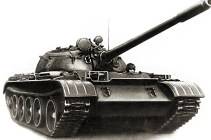 The T-54, a logical improvement on the T-44, was designed at factory #183 in Nizhniy Tagil (the future UralVagonZavod), and was the main tank of the first post-war decade. The first T-54 prototypes were created during WWII, in late 1944 and early 1945. The tank was accepted into service in 1946, and production began that same year. The T-54 was ahead of other tanks in its class in all parameters. The design was so progressive that the Soviet Army had no need to develop a replacement for over a decade. This success can be largely explained by the fact that Nizhniy Tagil was home to a unique group of engineers who created the legendary T-34 during the war and the first few post-war years. They were evacuated along with factory #183 from Kharkov and continued working in the Urals.
Medium Tank T1E1: Britain’s Heir
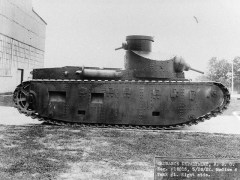 The American tank building school began with building tanks based on foreign designs. For example, the first real success of American builders was based on the Renault FT. The reworked version of the tank, M1916 6-t Light Tank, became the main vehicle for American tank units for fifteen years. A foreign design was also the base of the first American medium tank accepted for service: the Medium Tank T1E1. American cooperation with Britain was even closer than with the French, resulting in the Mark VIII International heavy tank: a tank that was designed in Britain, equipped with an American engine, and built in the United States. Of course, analogous tanks were also designed in the US, but it was the designs with foreign roots that became the catalyst for the development of American heavyweight tanks.
Renault R 35 in German Service
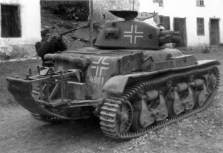 The most numerous tank in French service in 1940, the Renault R 35, was naturally the most numerous tank among the Wehrmacht’s trophies. Many tanks fell into German hands either completely intact or damaged so superficially that they could quickly be repaired. In total, the Germans captured 800-840 Renault R 35 tanks, an impressive number, but the name change to Panzerkampfwagen 35R 731(f) didn’t add anything to the tank’s qualities. The tank’s career with its new masters was long, but complicated: it served as an SPG, an engineering vehicle, a tractor, and a mobile crane. The first use of the Panzerkampfwagen 35R 731(f) in combat was still during the summer campaign of 1940. Having quickly mastered their trophies, the Germans sent them into battle against their former masters.
Renault R 35: More for Less
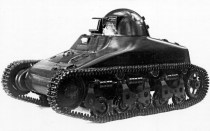 French light tank development after WWI opted to continue modernizing the Renault FT. After long experiments that resulted in the Renault NC, infantry command decided to develop a tank that weighed 12 tons. This project resulted in the 14 ton Renault D1, whose size and mass was closer to a medium tank. The D1 was pursued by technical problems, and it was not very numerous: compared to the 3,500 Renault FTs that it was supposed to replace, 160 of these tanks were a drop in the sea. French commanders thought long and hard, and the result was the new Renault R 35 tank which played an important role in the defeat of France in the summer of 1940.
World of Tanks History Section: Maloyaroslavl Line
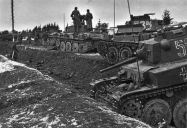 The Wehrmacht’s pincer closed around Vyazma on October 7th, 1941. Soldiers of the West and Reserve Fronts, about 600,000 men, were trapped in side. On the next day, Commander-in-Chief I. Stalin sent a telegram to Lieutenant-General M. Lukin, the commander of the surrounded forces. It began with the words “If you don’t break through, I will have nothing and no one to defend Moscow. I repeat: nothing and no one!” The chief wasn’t joking. A new line of defense had to be built between the Germans and Moscow after the West and Reserve Fronts fell. This cost time, time that the enemy wasn’t about to donate. Precious days and hours were won in fierce battles. The battle for the Maloyaroslavl fortified region (37th UR) was one of them.
3.7 cm Pak: Life of the Doorknocker
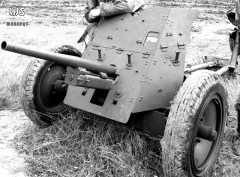 When one thinks of the German blitzkrieg and its weapons, one first thinks of tanks and airplanes. Meanwhile, the 3.7 cm Pak anti-tank gun could very well be one of the symbols of the early war. First used with great success in Spain, forcing its enemies to develop tanks with shell-proof armour, it ended up as a useless “doorknocker” against T-34 and KV tanks. What is the history of this little cannon? Soon after tanks appeared on the fields of WWI, the issue of fighting against them was raised. Germany was particularly sensitive to its rapid resolution, and several anti-tank measures were quickly developed, which were inherited by the post-war Reichswehr. In the mid 1920s, it was obvious that these measures were obsolete, and it was necessary to design a new gun that could fight against tanks.
7TP: Polish Vickers
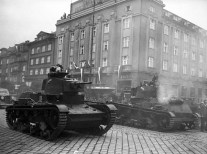 Polish armoured forces were pitted against the Panzerwaffe, one of the main instruments of German strategy. Even though battles in September of 1939 showed that the light 7TP tanks could resist German tanks on a technical level, but the numerical difference left no chances for Poland. It was already clear during WWI that wars of the 20th century will be “wars of the motor”, both in the air and on the ground. However, this did not mean that all nations hurried to fill their arsenals with aeroplanes and tanks. Losing nations were prohibited from having them by peace treaties.
AFV News from around the Net
November 27, 2016 by Leave a Comment
We hope everyone had a good Thanksgiving weekend. Here is a number of articles from the past week or so related to tanks and AFVs Click on the headline to read the full article.
Lincolnshire Live – Dad’s Army’s Private Godfrey was at Lincoln tank’s first battle
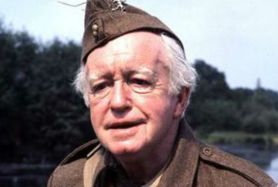 As the mild-mannered Private Godfrey in the hit TV show and film Dad’s Army, actor William Arnold Ridley won a place in the nation’s hearts. He actually served in the Home Guard for real in the Second World War after being evacuated from Dunkirk as the Germans pushed the British back across the Channel in May 1940. But even before that time, Ridley has seen action in the trenches during the First World War with the Somerset Light Infantry.
The Washington Post – The Islamic State is now deploying tanks made of wood
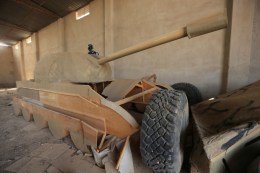 IRBIL, Iraq — As they battle to hold on to the northern Iraqi city of Mosul, Islamic State militants have added a new weapon to their arsenal: tanks made of wood. The life-size replicas are intended to confuse air support from the U.S.-led coalition backing the Iraqi ground offensive for the city, commanders said. Although they may look far from realistic when viewed from close quarters, it’s harder to tell what they are made of from the sky. Iraqi forces discovered a building used to manufacture the decoys when they retook the village of Sada, north of Mosul, last week. In addition to three fake tanks, they found five wooden Humvees.
Defense News – Romania to Award Armored Vehicles Deal to Germany’s Rheinmetall
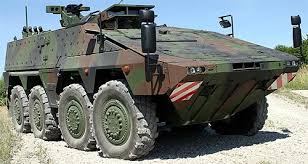 WARSAW, Poland — Romanian Prime Minister Dacian Ciolos has announced that the country’s Defence Ministry is planning to award a contract for the delivery of armored personnel carriers (APC) to Germany’s Rheinmetall Defence. The company is to team up with a state-run Romanian manufacturer and launch a plant in Romania that will produce the APCs. “There will be a partnership, a Romanian-German joint venture, which will allow Rheinmetall to obtain the contract from the Ministry of Defence and build an armored personnel carrier that will be first supplied to the Romanian military,” Ciolos told local broadcaster Europa FM in an Nov. 17 interview.
IHS Jane’s – Brazil orders new 6×6 armoured carriers
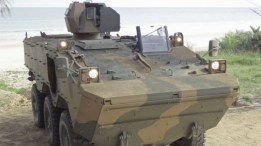 The Brazilian Army’s Logistics Command (CoLog) will award Iveco Latin America a contract for 1,580 serial production VBTP-MR Guarani 6×6 amphibious armored vehicles on 22 November, the service’s Projects Management Office told IHS Jane’s . The fleet, to be delivered from 2016-35, will comprise troop transport, communications, command post, ambulance, and 120 mm mortar vehicles. CoLog is buying the platforms in batches of 723, 547, 275, and 35 vehicles, as well as associated equipment and services totalling BRL5.9 billion (USD1.76 billion). Several will be armed with manned protected weapon mounts and ARES Aeroespacial & Defesa’s REMAX and UT-30BR remote weapon stations.
IHS Jane’s – Morocco takess delivery of M109A5 howitzers
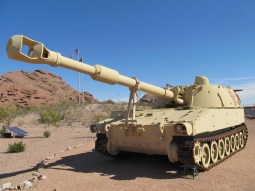 Morocco has taken delivery of a consignment of 155 mm M109A5 self-propelled howitzers, local media reported on 21 November. The reports were accompanied by photographs showing at least 12 M109s that had been unloaded at Casablanca’s port. The US Excess Defense Articles database shows that Morocco has requested 70 surplus M109A5 howitzers. Morocco is already an M109 user, having imported 42 M109A2 howitzers from Germany in 2008, as well as three M109A3s and a single M109A4 from the United States in 2013, according to the UN Register of Conventional Arms (UNROCA) information.
The Independent – Russia ‘preparing bring to up to 3,000 Soviet-era T-80 tanks back into service’
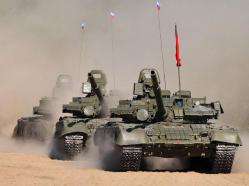 Russia is reportedly preparing to upgrade its Soviet-era T-80 battle tanks in order to bring them back into service. Up to 3,000 of the tanks, which entered service in 1976, will be updated to bring their combat power closer to the current T-90 model. “At present, the preparative works to start the modernisation of the first T-80BV MBTs are at a final stage,” a defence industry source told military magazine Jane’s Defence Weekly. The “overhaul and modernisation” of the tanks “will be launched next year” the source added. They said the number of tanks to be upgraded will be determined by the military.
IHS Jane’s – Ukraine to provide engines for Pakistan’s improved Al Khalid MBT
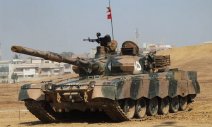 The Pakistani government has signed an agreement with Ukraine for the supply of 200 engines to equip the country’s highly anticipated next-generation main battle tank (MBT), which is commonly referred to as the Al Khalid-Improved (I) MBT, according to Pakistani defence officials. The deal was signed on 23 November during the International Defence Exhibition and Seminar (IDEAS), which is held every two years in the southern Pakistani city of Karachi. While the exact type of engine was not revealed, a senior official of Pakistan’s Ministry of Defence (MoD) told IHS Jane’s that it will be larger than the Ukrainian 6TD-2 engine generating a maximum 1,200 bhp that powers the 420 Al Khalid MBTs operated by the Pakistan Army’s Armoured Corps.
The Jerusalem Post – IDF soldier killed after tank flips during exercise
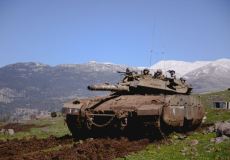 A 20-year old IDF soldier was killed when his tank overturned during an exercise on the Golan Heights shortly after midnight Wednesday, the IDF announced on Thursday morning. The accident victim was Sgt. Ido Ben- Ari from Ramat Sharon, a tank commander in the 9th Battalion of the Armored Corps’ 401 Brigade. He was posthumously promoted to staff-sergeant. Three other soldiers suffered minor injuries in the incident and were discharged from Rambam Medical Center in Haifa after receiving medical treatment. Ben-Ari’s tank brigade was taking part in a wide-scale training exercise along with the Givati Brigade and its engineering forces when the accident occurred at around 1 a.m. on Mount Shifon on the northern Golan Heights.
Sunday Express – Army cuts to see UK have FEWER tanks than Serbia
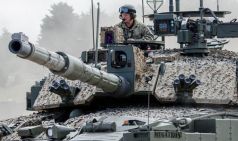 CUTS being planned by army chiefs would see the country’s defence force lose a third of its frontline tanks, leaving it with fewer than Serbia. The plan, expected to be revealed in the coming months, would see one of the army’s three tank regiments have all of its 56 Challenger 2s replaced with Ajax fighting vehicles. If the plan was sanctioned it would leave the country with just 40 more tanks than neutral Switzerland. The move would see the UK’s tanks drop from 227 to 170, with 112 on frontline duty while the rest would be used for training in the UK and Canada.
Ynet news.com – Former IDF commanders against women in tanks
 Several former IDF commander have come out against a bill proposal that would result in the IDF integrating women in combat roles that are currently not open to them. MK Merav Michaeli, a member of the Knesset Foreign Affairs and Defense Committee, introduced the legislation that would require the IDF to design a model to fill personnel needs regardless of gender. “What the American armed forces are doing now is what the IDF was recommended to do ten years ago,” said Michaeli. “Every day that goes by without exhausting human resources is a waste of quality manpower and motivation. Instead of giving female soldiers with high motivation every opportunity, the IDF is dragging its feet because of prejudice and pressure from rabbis.”
South China Morning Post – Mainland agents ‘tipped off Hong Kong about Singaporean army vehicles’
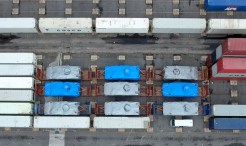 Mainland agents tipped off Hong Kong customs about nine Singaporean military vehicles after the boat carrying them docked in the mainland port of Xiamen, prompting their seizure and impounding in the city last Wednesday, a report has claimed. Before the latest twist in the diplomatic row, Singapore stepped up efforts to recover the armoured vehicles, with a delegation arriving in Hong Kong on Friday night to expedite their release and quell the potential political fallout. Sources said Singapore would need to contact the Chinese Ministry of Foreign Affairs to get the vehicles back, adding that the discovery had been reported to Beijing already and the decision on whether to release them was no longer in Hong Kong hands.
Kurdistan 24.net – N. Syria: Kurdish-led forces blow up four Turkish tanks
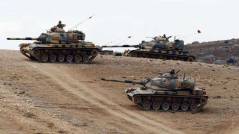 MANBIJ, Syria (Kurdistan24) – The Kurdish-led military command in the northern Syrian town of Manbij on Thursday announced they destroyed four Turkish army tanks in the western countryside of the township. In a statement, the Manbij Military Council (MMC), a Syrian Arab-Kurdish coalition allied to the Kurdish-led Syrian Democratic Forces (SDF), said the Turkish army airstrikes and shelling had changed the course of their battle against the Islamic State (IS) since last week. The MMC statement said the Turkish airstrikes were supposed to be against IS in al-Bab town in northern Syria, but the Turkish warplanes and artillery were targeting the liberated areas around Manbij. “Our forces [MMC] blew up four Turkish tanks around the village of Sheikh Naser, west of Manbij,” the statement said.
The Chieftain’s Hatch: Bigger Turret, Less Room
November 23, 2016 by Leave a Comment
 Over at the World of Tanks website, tank researcher Nicholas “The Chieftain” Moran has posted an article on Sherman tank turrets and guns. Specifically, he found some archival materials about an attempt to put a 75mm gun into the T23 turret (this is basically the same turret as the 76mm armed Sherman tanks). Oddly enough, they found that the 75mm gun did not fit. While this may seem counter-intuitive since the T23 turret was larger than the 75mm gun turret, the answer lies in the shape of the turret and the placement of the trunnions. The Chieftain uses this example to make the larger point that up gunning a tank turret is more than just a simple case of making sure the turret ring is big enough and jamming in a new gun.
Excerpt:
One of the problems with Firefly was that the turret was a little cramped.
The 17pr is not a small gun to cram into a turret bustle measured in inches. US Army Ordnance had a crack at putting the somewhat smaller and lighter 76mm into the same turret, and Armored Force found it unsatisfactorily cramped and rejected it.
Another lesser-known issue for Firefly is that in order to be converted, the tank had to be the 75mm one with the smaller turret. This is partly why the 75mm Sherman remained on the production lines even after the US Army decided to switch to the 76mm. But it raises the question: why did they mandate use of the 75mm tank? Surely the 76mm turret, bigger as it was, would have been a better match, and reduce the limitations the Firefly was under. How could the British miss this?
Video: RedCarUSSR on T-55
November 23, 2016 by Leave a Comment
This video about the Soviet T-55 showed up recently on youtube. The video is part of a new channel by “RedCarUSSR.” A tour of the exterior and interior of the vehicle is provided, accompanied by an English translation of the Russian language audio. The translation is a little rough but still understandable.
This channel also has videos on the T-62…
..and the Self-propelled gun Object 268
Leopard 1A5BE on Ebay
November 14, 2016 by 1 Comment
For anyone that has a spare quarter million dollars and a very large garage, there is a Leopard 1A5BE listed for sale on Ebay right now. The listing states that the vehicle is located in Carlisle Pennsylvania. The Army Heritage & Education Center is located in Carlisle and has several historic tanks in their possession. However, we do not know if this Leopard belongs to them.
Sellers Description:
Up for auction is a very nice Leopard 1A5BE main battle tank. Not often that these come up for sale, be one of a handful of owners of these beautiful pieces of machines. These were designed by Porsche for the German army, this unit is one of the final variations produced with the latest thermal battle sights. Everything is full functional, unit is in good running condition. All of the armament has been removed or demilled to all of the current ATF specs for importation. This unit can be view at the buyers request. Please email me for more photos and questions. We can assist with all import requirements and shipping as we have helped other buyers bring these to the US market.
WoT Veteran’s Day Tanker Interview
November 12, 2016 by Leave a Comment
World of Tanks researcher Nicholas “The Chieftain” Moran posted this video interview with World War II veteran Tom Sator as part of a Veteran’s Day tribute. Sator served as a tank crewman in the 4th Armored Division.
The Chieftain also posted a youtube video of the raw, unedited interview footage.
An Unofficial High-Speed Tour of The Tank Museum, Bovington, Part 3.
November 5, 2016 by Leave a Comment
Nicholas “the Chieftain” Moran of World of Tanks conducts the third and final part of his high-speed tour of the Tank Museum at Bovington. This part of the tour covers the vehicles in the non-public vehicle conservation center.
The Tank Museum Tiger Collection – The Tanks, The Terror & The Truth
November 4, 2016 by Leave a Comment
The Tank Museum at Bovington has announced a new exhibition featuring every member of the Tiger tank family to be on display in April of 2017. The Tank Museum will be receiving an Elefant tank destroyer on loan from the US Army Ordnance Training and Heritage Center. According to the image of the display on the Tank Museum website, the featured vehicles will be Tiger 131, the Elefant on loan from the US, a Jagdtiger, a King Tiger with “Porsche” turret and a King Tiger with “Henschel” turret. Oddly, the painting at the top of the page for this exhibit shows a different mix of vehicles, two Tigers, a King Tiger, Jagdtiger and a Sturmtiger. Chalk it up to artistic license we guess. As far as we know, the only surviving Sturmtigers are one in Russia at Kubinka, and one that was at Aberdeen Proving Grounds in the USA which is now at the Munster Panzer Museum in Germany. Bovington is said to have the 380mm mortar from a Sturmtiger, hopefully this artifact will be part of the Tiger Collection exhibit.
Event Description (from Tank Museum website):
The new exhibition, which will be unveiled in April 2017, is aimed at enthusiasts of German armour and will feature new and previously unseen crew interviews and testimonies and account from those who faced them in action.
The development and technology employed in these huge machines along with historical detail about the battles in which they were fought will aim to assess the extent to which these tanks deserve their mighty reputations.
Veteran accounts will include reminiscences from those who were present at the capture of Tiger 131 and the story of Gunner Joe Ekins of the Northamptonshire Yeomanry, who in August 1944, knocked out three Tigers in his Sherman Firefly within a matter of hours. It is believed that one of these Tiger tanks was crewed by famed tank ace Michael Wittmann.
In an interview conducted before his death in 2012, Gunner Ekins recalled; “We were in the orchard, looking out over a couple of thousand yards of flat, plain land. Suddenly there were three Tigers coming across our front. We waited until they were about 800 yards. My commander said ‘target the rear one’ and I fired two shots at him and hit him. We pulled out again and fired at the second tank, hit him with the first shot and it went up in an explosion so, obviously we hit the ammunition or something. By this time the first tank of the three had realised what was going on and he started looking for cover, so it turned a bit towards us, we fired two shots at him and I hit him as well”.
Of course, the German perspective will also be presented. At TANKFEST 2015, former Tiger 1 driver Wilhelm Fischer was interviewed by Museum staff and research is being carried out to identify further personal accounts.
With veteran stories, supporting artefacts, unseen imagery and the stories unique to the vehicles on display, the exhibition will showcase the Museum’s collection of what were arguably the most feared and famous tanks of the Second World War.
Video: Fat Raccoon stuck in hatch
November 4, 2016 by Leave a Comment
This video has been circulating around the internet for a few days. It shows a raccoon stuck trying to fit itself into the drivers hatch periscope hole of an M41 Walker Bulldog light tank.
Remember folks, when filming with your cell phone, hold it sideways to achieve the proper aspect ratio.

 Tank and AFV News