How to buy a Russian tank

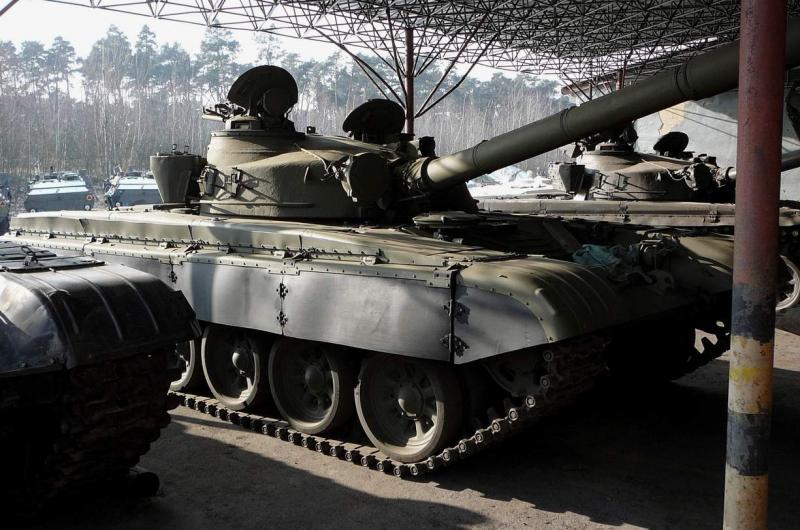
2341The past couple weeks have seen a few articles in the media about “how to buy a Russian tank.”  Wired ran an article on the topic which seemed to garner a far amount of traffic.  The article focuses on the relatively inexpensive former Soviet equipment being offered by Mortar Investments, a Prague-based dealer of military vehicles and gear.  The Wired article describes the process of purchasing one of these Czech tanks as:

Ordering starts with a 30 percent deposit and a two-month wait as the Czech authorities work through their end of the paperwork.

Then four things need to happen before your baby comes home. No surprise, this involves forms. You’ll need an Application and Permit for Importation of Firearms, Ammunition and Implements of War from the Bureau of Alcohol, Tobacco, Firearms and Explosives. Plus an International Import Certificate from the US Department of Commerce.

Second amendment or no, you can’t have your tank sent over before someone strips out the machine guns and cuts a hole in the cannon. And somebody needs to wipe the thing free of dirt to please the US Department of Agriculture.

You have to ship the thing. Mortar Investments estimates it costs $15k to the East Coast, $20k to Houston, and $25k to the West Coast. Your tank will arrive at the seaport closest to you, at which point you make yourself known to trucking companies through a series of peculiar phone calls.

The Wired article can be read here.

Just for fun, we did a price check on vehicles over at the Mortar Investments page.  We found the following:

T-72  $50,097

T-55  $44,531

T-34/85  $44,531

SU-100  $72,363

BMP-1  $38,965

2S1 Gvozdika  $22,266

VT-34 Recovery vehicle  $27,832

VT-55 Recovery vehicle $19,482
UK 1940: Cranes into Self Propelled Guns?

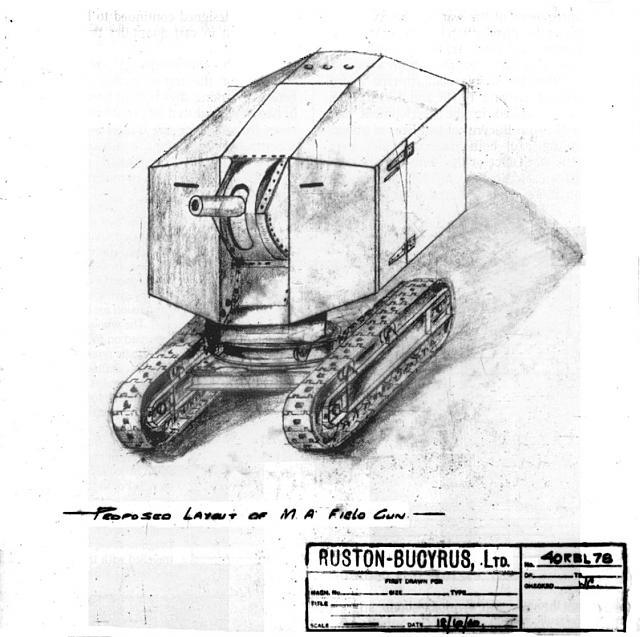
Over at the Status Report blog, researcher “Volketten” has created a post about an ill conceived plan to convert a grab crane into a gun carrier in the UK in 1940.

Excerpt:

h2pMTSDIn 1940 Britain was fighting for its life and a multitude of good and not so good ideas were put forward to develop new armored vehicles to meet the needs of home defense and the British Army overseas. Lincolnshire was a hub of development at the time from a variety of companies and one of them was the firm of Ruston-Bucyrus. Founded in 1930 the firm was a merger of the Lincolnshire firm of Ruston and Hornby (who had already had some experience with track laying vehicles in WW1 during the development of early British tanks) and the American firm of Bucyrus-Erie of Bucyrus, Ohio.

They specialized in vehicles for earth-moving and excavation mainly track based although there were a couple of walking machines. By 1940 they were already placed under contract to build some British Cruiser tanks but they also tried to develop their own expertise in cranes for a more military use and the vehicle chosen to prototype the design was an old rusting RB-10 grab crane.

Read the full post here.

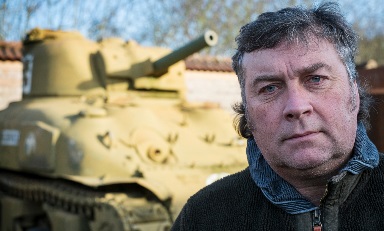
Guardian article on British collector Kevin Wheatcroft

The Guardian published an article this week on British collector of armored vehicles and Nazi memorabilia Kevin Wheatcroft.  The article deals primarily with Wheatcroft’s Nazi memorabilia collection rather than with his collection of Tanks and AFVs.  That said, tank and AFV aficionados will still find it interesting, if for no other reason than to learn a bit about the rather media shy man behind the largest private AFV collection in the UK.

Article excerpt:

wheatcroftWe stood beside the muscular bulk of a Panzer IV tank, patched with rust and freckled with bullet holes, its tracks trailing barbed wire. Wheatcroft scratched at the palimpsest of paintwork to reveal layers of colour beneath: its current livery, the duck-egg blue of the Christian Phalangists from the Lebanese civil war, flaking away to the green of the Czech army who used the vehicles in the 1960s and 70s, and finally the original German taupe. The tank was abandoned in the Sinai desert until Wheatcroft arrived on one of his regular shopping trips to the region and shipped it home to Leicestershire.

Wheatcroft owns a fleet of 88 tanks – more than the Danish and Belgian armies combined. The majority of the tanks are German, and Wheatcroft recently acted as an adviser to David Ayer, the director of Fury (in which Brad Pitt played the commander of a German-based US Sherman tank in the final days of the war). “They still got a lot of things wrong,” he told me. “I was sitting in the cinema with my daughter saying, ‘That wouldn’t have happened’ and ‘That isn’t right.’ Good film, though.”

Around the tanks sat a number of strange hybrid vehicles with caterpillar tracks at the back, lorry wheels at the front. Wheatcroft explained to me that these were half-tracks, deliberately designed by the Nazis so as not to flout the terms of the Treaty of Versailles, which stipulated that the Germans could not build tanks. Wheatcroft owns more of these than anyone else in the world, as well as having the largest collection of Kettenkrads, which are half-motorbike, half-tank, and were built to be dropped out of gliders. “They just look very cool,” he said with a grin.

Alongside the machines’ stories of wartime escapades and the sometimes dangerous lengths that Wheatcroft had gone to in order to secure them were the dazzling facts of their value. “The Panzer IV cost me $25,000. I’ve been offered two and a half million for it now. It’s the same with the half-tracks. They regularly go for over a million each. Even the Kettenkrads, which I’ve picked up for as little as £1,000, go for £150,000.” I tried to work out the total value of the machines around me, and gave up somewhere north of £50m. Wheatcroft had made himself a fortune, almost without realising it.

To read the entire article, go here.

To go to the website for the Wheatcroft Collection, go here.

Archive Awareness on Finnish Impressions of T-34/85

archive awarenessThe blog Archive Awareness posted an interesting article earlier this week reporting on Finnish impressions of the T-34/85 tank compared to the earlier model 1943 version.  The Finns seem generally impressed with the vehicle, noting that the quality of the armor is better than on previous versions and also that while the engine is the same as found in previous models of T-34, the quality of construction has improved leading to a slightly higher power output and engine lifespan.  The 85mm gun is praised in the report as being “identical to the German 88 mm tank gun in main parameters.”  The Finns also praise the refractive telescopic sight on the T-34/85, noting that is “greatly superior to the sight of the model 1942-1943 T-34 tank.”

Read the full article here.

The Research Squad

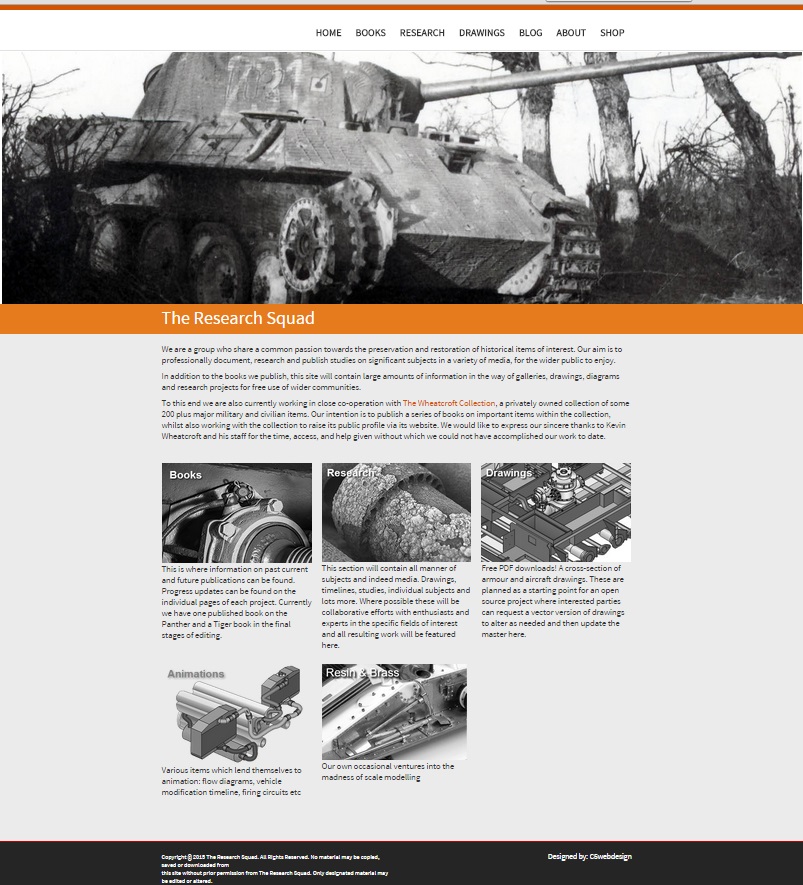
research squadFor those interested in the technical aspects of WWII tanks, check out the website for The Research Squad.com.  The Research Squad are a group who share a common passion towards the preservation and restoration of historical items of interest. Their aim is to professionally document, research and publish studies on significant subjects in a variety of media, for the wider public to enjoy.  In addition to their books, they plan for the site to contain large amounts of information in the form of galleries, drawings, diagrams and research projects for free use of wider communities.

To this end they are currently working in close co-operation with The Wheatcroft Collection, a privately owned collection of some 200 plus major military and civilian items. The intention is to publish a series of books on important items within the collection, whilst also working with the collection to raise its public profile via its website.

To check out the Research Squad website, click here.

Panzer wrecks from the Bulgarian Border

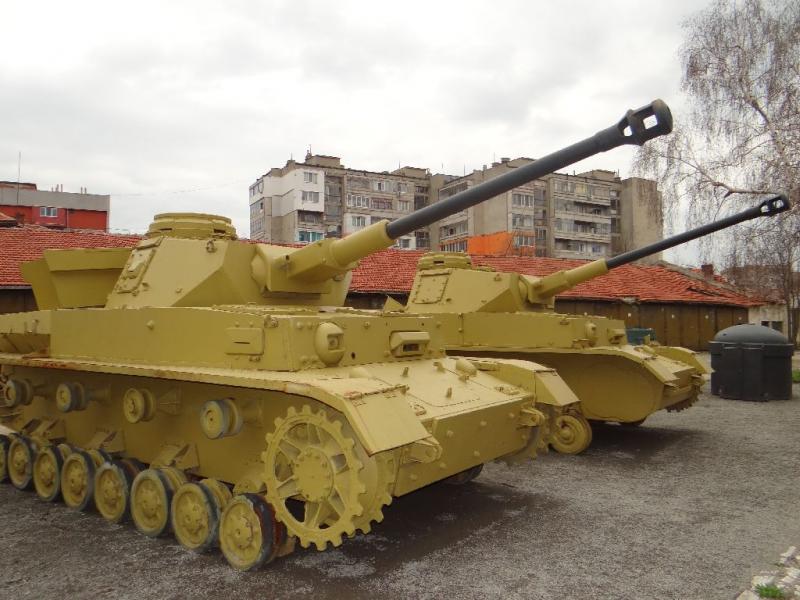
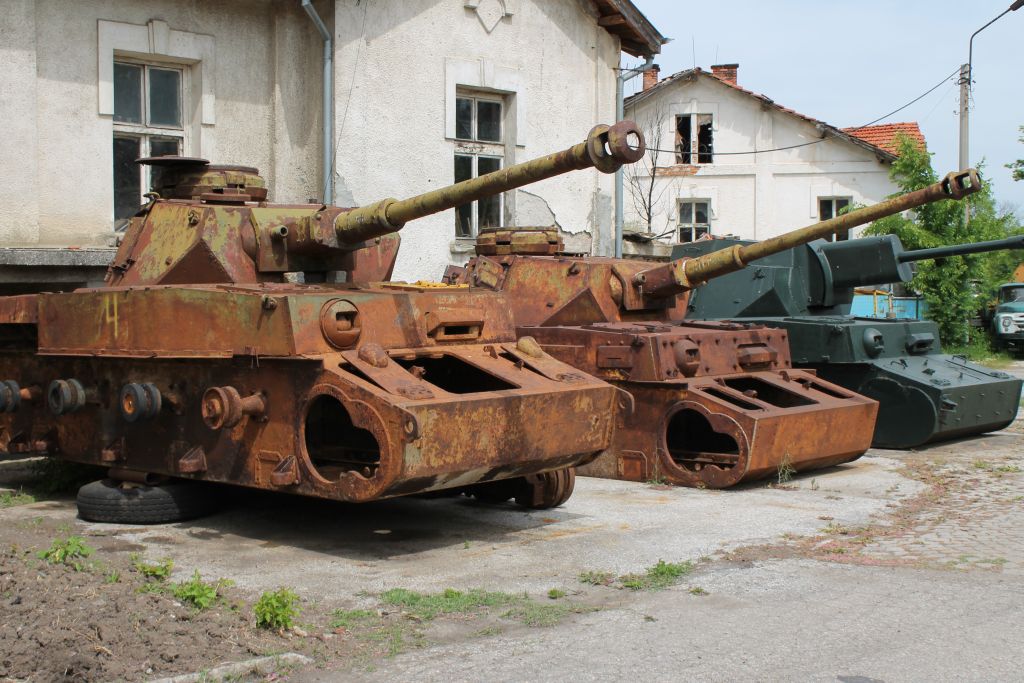
4654_thank_in_museum_of_battle_gloryLast month War History Online ran an update to a story that first appeared way back in 2008 about WWII German tank wrecks on the Bulgarian border.  The Bulgarian government had buried more than 40 former Nazi tanks on their southern border as stationary pill boxes during the cold war.  In 2008 the Bulgarian government announced that they were unearthing the vehicles and selling them at auction.  Over the years, many of the vehicles had fallen prey to scrap metal hunters who removed many of the smaller bits off the tanks.  The Bulgarian government cancelled the auction before it happened, deciding instead to keep the vehicles.  Currently, these vehicles reside at the Museum of the Battle Glory.  Several of the tanks have been partially restored, getting sandblasted, primed and repainted.  According to the article, 7-8 vehicles are on display with the rest in storage.

The full article from War History Online can be viewed here.

Here is a video showing these vehicles prior to restoration.

One of the stranger vehicles shown in the photos and the video is what appears to be a Panzer IV turret modified to fit the cannon and mantlet from a SU-76m! (the vehicle on the right painted dark green)

1368104366IMG_6749

Sherman tank on display at Pittsburgh Heinz History Center

CBS Pittsburgh is reporting on a M4A3E8 Sherman tank which has been put on display outside of the Pittsburgh Heinz History Center as part of their “World War II – We Can Do It” exhibit.  This particular tank belongs to a local amateur military historian named John Tippins who loaned the tank for the exhibit.  Click on the image below to go to the video.

Sherman tank Heinz museum

David Lister on last Sherman vs Pz IV battle

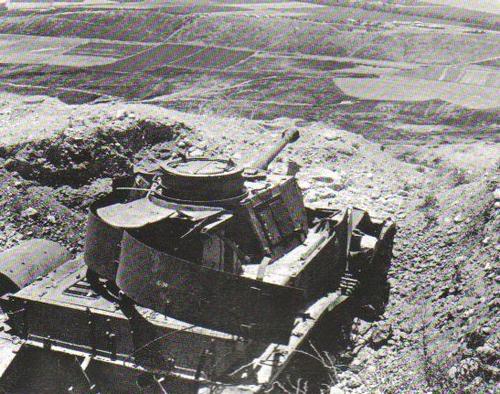
PWgV4UpOver at Overlord’s Blog, researcher David Lister has posted a short piece on the last battle involving M4 Sherman tanks and Pz IV tanks.  While many people might guess that 1945 was the last time these two vehicles faced off against each other, Lister points out that the final confrontation of these two metal warriors was far later than that, occurring during the 1967 “Six Day War” between Israel and her Arab neighbors.

After their defeat in the Israeli War of Independence and the following years the Syrians brought in advisers to help train their army. These were predominantly German ex-soldiers. These advisers convinced the Syrians they needed more armour. So the Syrians went shopping and from about 1959 they started to acquire Panzer IV’s, Stug IIIG’s, a handful of Jagdpanzer IV’s and even the odd Hummel. The tanks seem to have been sourced from both Czechoslovakia and France, although some may have come from Spain as well. They saw action on the Golan heights during the War over Water. However when the Israelis deployed Centurions the old German tanks were forced back. The Syrians then started to receive Russian support, such as T-34/85’s and T54’s. From then on the tanks remained in positions on the Golan heights.

Full article available at Overlord’s Blog.

Video: T-54 “Centurion” OPFOR vehicles

This video appeared on youtube few days ago.  It shows Soviet T-54 tanks modified to appear as British Centurion tanks for training purposes.

T-34/85 Walker Bulldog

Two days ago this video of a T-34/85 modified to look like an M41 Walker Bulldog appeared on youtube.  We have no idea why this vismod was created or what it was used for.  It is somewhat unusual, since the M41 Bulldog is not a particularly rare or unusual tank.  In many films, M41 tanks were used as stand-ins for other tanks.