Breaking Defense.com is reporting that funding to upgun the Army’s General Dynamics-built Stryker armored vehicle has grown 350 percent in three weeks. The article lists reasons for this budget increase as fear of Russia and the situation in the Ukraine as well as lobbying from General Dynamics. In mid-May, the House approved a $79.5 million addition to the administration’s budget request. Yesterday, the Senate, not to be outdone, voted $371 million — four and a half times more. The House Appropriations Committee has actually approved $411 million on Tuesday, but that hasn’t passed the full chamber yet. The upgrade in question is called the Medium Caliber Remote Weapons Station (MCRWS), a remotely controlled turret containing a 30mm quick-firing cannon. Containing only the gun and ammo, the system takes up less room than a manned turret, so the Stryker can still carry the same number of troops, which was a critical consideration for the Army.
Marine Corps Tiger Competition
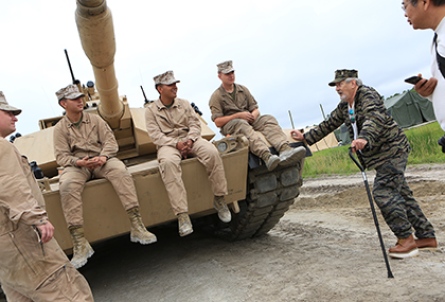 JDNews.com is reporting that this past Friday Marine Corps tankers gathered in Sneads Ferry NC to watch tank crews compete for the service’s top spot. The annual Tiger Competition, in its 13th year, brings together the top performing crews from tank battalions around the country vying for the covenanted McCard Trophy- named after Medal of Honor recipient Gunnery Sgt. R. H. McCard who died during the Battle of Saipan while serving with 4th Tank Battalion. This year’s champions were from Camp Lejeune’s 2nd Tank Battalion: Staff Sgt. Joseph Lowery, tank commander; Cpl. Charles Smith III, gunner; Lance Cpl. Ryan Foster, loader; Lance Cpl. Keondre Mitchell, driver. The winning team advances to compete in the U.S. Army’s Sullivan Cup competition next spring.
A century of the tank: Mark 1 vs Altay
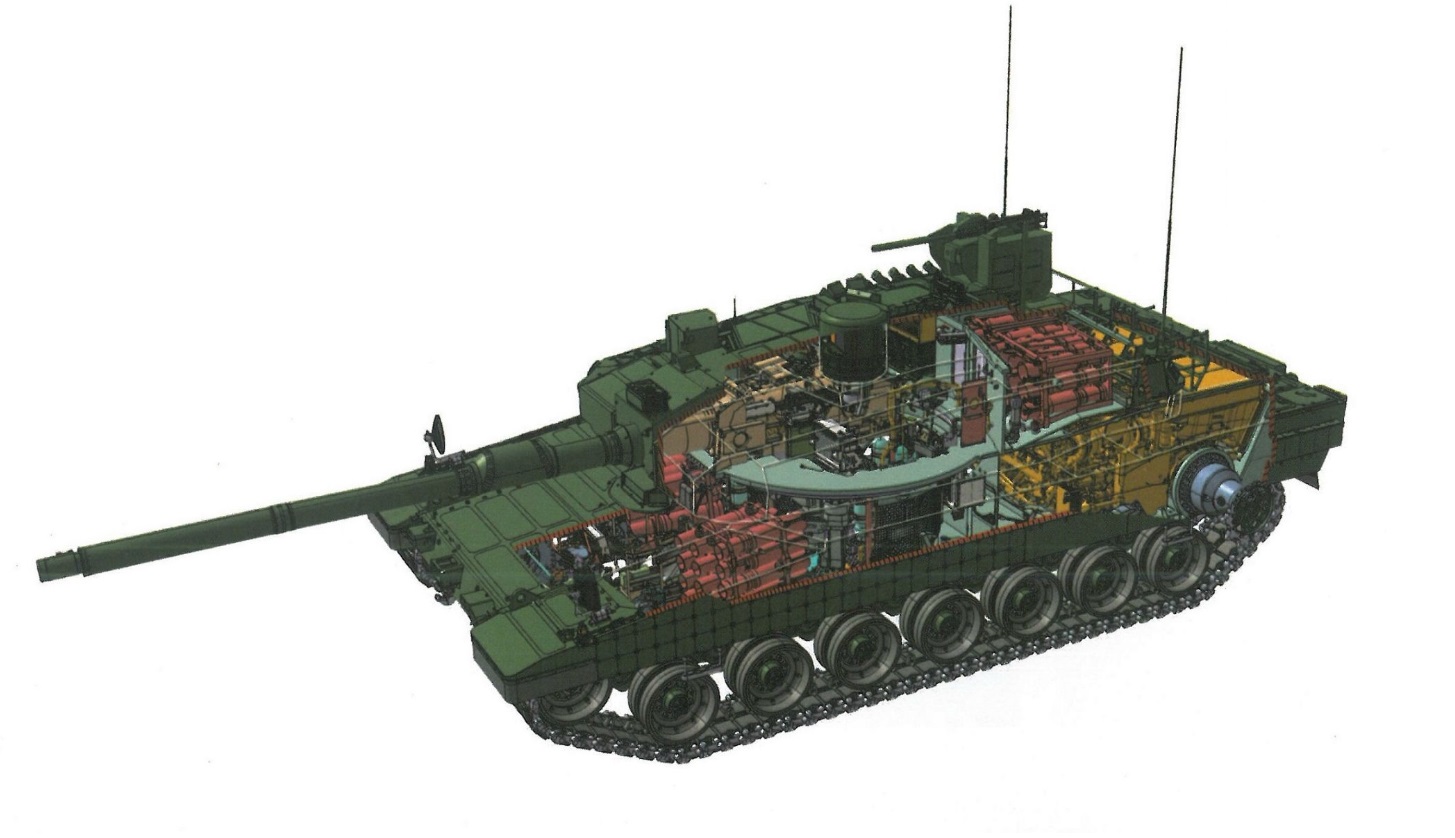
 Turkish defense contractor Otokar has published a 12 page advertising supplement titled “A century of the tank: Mark 1 vs Altay.” The article contrasts the Mark 1 tank of a 100 years ago with Otokar’s new Altay main battle tank. The piece includes a good deal of information about he Altay, including a nice cutaway picture of the vehicle. The article also includes an essay on the Future of the tank provided by Bovington Tank Museum curator David Willey. At the end of the piece, David Fletcher of the tank museum is thanked, it’s fair to assume he provided much of the information regarding the Mark 1.
A PDF of the article may be downloaded here. Also, it can be viewed in an Imgur gallery here.
WW2 British tanker returns target model to Bovington
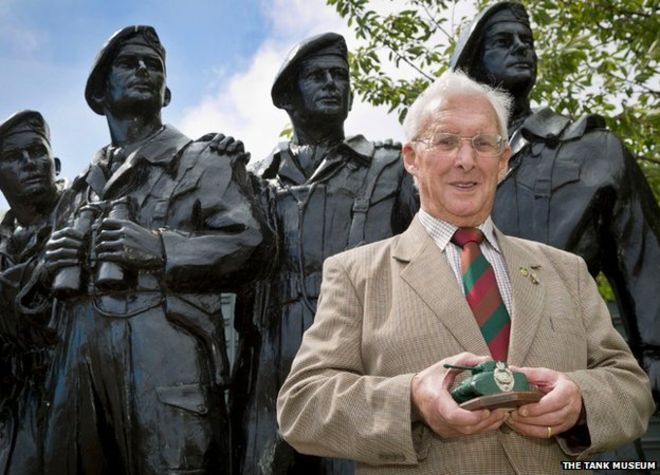 The BBC is reporting about a WW2 veteran who has returned a model tank he took from an army camp more than 70 years ago. According to the article, George Martin, 88, nabbed the small lead Sherman tank used for training from Bovington in Dorset in 1944. Martin had trained with the 52nd Royal tank Regiment as a gunner for a Sherman tank. The small lead Sherman tank was part of a training exercise. Martin kept one of the models as a souvenir, keeping it with him for the rest of his service in Egypt, Japan and Burma until he left the Army in 1953. The model Sherman then resided on his mantelpiece until he recently decided to donate it to the Tank Museum at Bovington. According to Martin, “I was worried that if I died it would be thrown away and that its story would be forgotten”. Commented Tank Museum curator David Willey: “This lead tank is not an item we previously held in the collection and coming to us with such a good story – and the fact it’s been cherished so long by its owner – makes this a very worthy addition to our collections here.”
From the Vault: Story of Soviet Armor from ARMOR magazine 1949-1952
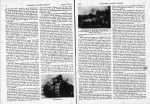
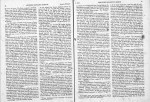
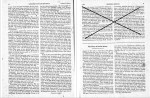
Several days ago we posted a letter written by a German general to ARMOR magazine in 1951 in response to an earlier article on the history of Soviet armor. We noted that the article on Soviet armor that prompted the letter was not available for download on the ARMOR magazine site. A fellow named Paul Mutter tracked down the article and sent us a digital copy. The Soviet history article actually turned out to be a four part series called “The Story of Soviet Armor” by Garrett Underhill and originally appeared in the Jan-Feb 1949, May-Jun 1949, Mar-Apr 1950 and May-Jun 1950 issues of ARMOR. In 1952 Mr. Underhill added to his story of Soviet armor with an article on assault guns and self propelled artillery. This article is available in the Nov-Dec 1952 issue of ARMOR. We have posted image galleries of all five articles for those that may be interested in looking at them. For those wanting a PDF copy, the “SU” article is available as part of the Nov-Dec Issue of ARMOR which can be downloaded here. For a PDF of the four part “Story of Soviet Armor” article, please visit this internet archive page we created. When taken all together, these articles add up to over 50 pages, essentially a small book. For those interested in what the US knew and thought about Soviet armor in the early Cold War Era, these articles should provide some valuable insight.
Story of Soviet Armor Part I Early Days (Jan-Feb 1949)

Nicholas “The Chieftain” Moran on Myths of American Armor
Att the recent TankFest Northwest event at the Flying Heritage Collection, World of Tanks researcher Nicholas Moran made a presentation on “The Myths of American Armor in WW2.” Fortunately for those unable to attend, his talk was video recorded and posted in the Chieftain’s Hatch section of the WoT forums.
Tankchats #6 Vickers Light MKVI B
The Tank Museum has released another video in their Tankchats series featuring David Fletcher. This episode looks at the Vickers Light Tank MKVI B.
Being, in terms of numbers, the most significant British tank at the outbreak of war, the Mark VIB saw service with the British Expeditionary Force in France, the Eighth Army in North Africa and in various subsidiary theatres. As a reconnaissance vehicle it was satisfactory, as a fighting tank quite useless since armour protection was minimal and the armament ineffective against enemy tanks.
WoT History article on T-14 Armata
The Archive Awareness blog has translated a Russian language article on the T-14 Armata tank that originally appeared on the World of Tanks History page. While numerous articles have appeared on the T-14 recently, this one seems to have a good bit more detail than most we have seen.
Excerpt:
30 years ago, engineers from Nizhniy Tagil created a foundation for a new tank with Object 187 and Object 187A. The innovative but unfortunate Object 195 was then built in metal. What was the fruit of the labours of Ural engineers?
On the way to a breakthrough
Successful decisions in the 1960s allowed Soviet engineers to achieve a tank with a very tight layout. The tanks were compact, not very heavy, and had excellent protection. On the other hand, if the enemy shell did punch through the armour, it was nearly guaranteed that it would destroy components or kill the crew. The ammunition rack in the fighting compartment was especially worrying.In the end of the 1980s, all major Soviet tank factories were working on new tanks. Engineers aimed to boost the firepower (including by means of increasing the gun caliber), increase protection, and automate the vehicles. Additionally, a new layout was necessary, as the classic layout was no longer sufficient for survivability on the battlefield.
Soviet engineers had a difficult task. They needed to develop an innovative solution to protect the crew and fighting compartment, separating them from the ammunition rack. Kharkov, Nizhniy Tagil, and Leningrad were working on this task. The Nizhniy Tagil project from Uralvagonzavod, Object 187A, was never built in metal, but was the basis of the experimental “Perfection-88” program. In 2000, the Object 195 vehicle was created based on that research, a predecessor for the T-14 tank built on the heavy universal tracked Armata platform.

Book Alert: Char Leclerc
 Not sure how this one slipped past our radar, but last month Kagero Publishing released a new installment in their “Photosniper” series titled Char Leclerc. This volume is written by M. P. Robinson, who also authored last years three Kagero books on the AMX-30 tanks and its derivatives. As we noted in our book review on his AMX-30 titles, modern French tanks have not received much coverage in English language publications. Hopefully this book will live up to the standard set by the earlier books in the Photosniper Kagero series.
Publishers Description:
The Leclerc is the only battle tank serving in operational combat units in the French Army. Designed as a Cold War era tank killer that could take on numerically superior enemies, the Leclerc has served the armies of France and the United Arab Emirates for over twenty years. Since 1989 when the first Leclerc prototype appeared, it has been counted amongst the world’s most complex and deadly AFVs. Despite its fame, relatively little has appeared on the Leclerc in English, and much of the information about the Leclerc on the web is incorrect. Even in French, it has been ten years since the Leclerc was studied in a published work. Char Leclerc by MP Robinson and Thierry Guillemain is a survey of the Leclerc’s development and service in the French Army right up to the present day. It explains the differences between the eleven Leclerc production batches produced for the French Army, the different Leclerc derived vehicles, and the changes that have transformed the French armored force since the Leclerc first entered service. This latest addition to the Kagero Photosniper series is illustrated with over 220 unpublished photographs and ten color plates, making it
an ideal reference for historians and modelers alike.
From the Vault: Robert Icks on Liddell Hart
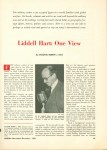
Today we present an article from the November-December 1952 issue of ARMOR written by Colenel Robert J. Icks title “Lidell Hart: One View.” Icks was a pioneer in the writing and researching of tanks and armored warfare, writing numerous books on the topic starting in the 1920’s up through to the 1970’s. In “The Fighting Tanks 1916-1933“, which he co-authored with Ralph Jones and George Rarey, Icks is described as possessing “one of the most complete individual tank libraries in the world.” At the time of his death in 1985, his library was bequeathed to the Patton Museum. A list of his collection can be viewed here, it is listed as 70 linear feet of material!
In the course of his research on tanks, Icks carried on a correspondence with British journalist, historian and military theorist Basil Liddell Hart. Widely credited as one of the prophets of modern mechanized warfare, Liddell Hart was one of the most prolific writers on military matters in the 20th century. A WW1 British Army captain, Liddell Hart retired from the army in 1927 to embark on a career as a journalist and historian. Following WW2, Liddell Hart continued to write, among his most well known works were his books based on interviews with surviving German Generals (The Other Side of the Hill, The German Generals Talk) , his editing of the Rommel Papers as well as his single volume history of the war. Liddell Hart was no stranger to controversy, and his strong opinions on matters often have drawn strong replies from historians and military thinkers. This article presents Colonel Icks view on Liddell Hart and his writings.

 Tank and AFV News