 This article originally was serialized in four parts in the 1969 run of ARMOR magazine. Written by Timothy K. Nenninger, it gives a good description of the development of American armor from 1917 to 1940. We have provided links to the four parts below which can be downloaded in PDF form.
Part II The Tank Corps Reorganized
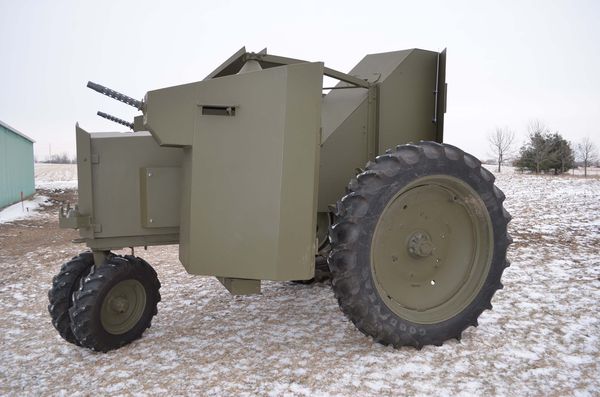
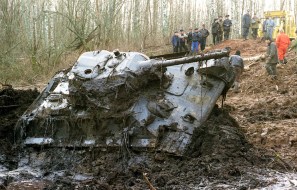
 This past Sunday we had the opportunity to spend a few hours at the
 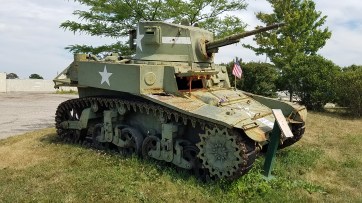 If not for the light tank sitting out front and the sign on the building, a passer-by might be forgiven for mistaking the museum for a salvage yard. Those expecting a highly polished, big budget affair such as the (relatively) nearby First Division Museum at Cantigny Park will be disappointed. The Russell Museum is a “mom and pop” style museum, a labor of love by owner Mark Sonday and his family, who double as the museum staff. While the museum may lack a certain amount of polish, it more than makes up for it in the amazing array of military hardware present in the collection.
 This past weekend we had the good fortune to spend a long weekend in the Chicago area. While there we were able to check out a couple museums housing tanks and armored vehicles. This review examines the tank collection at the
 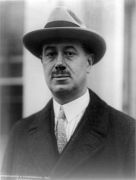 McCormick had served as a Colonel in the First Division in WW1, hence his interest in preserving the history of the unit. The museum is not large but is well worth the hour or so it takes to walk through the displays. Walking through the museum, the first thing encountered is a series of mannequins dressed in the various uniforms of the First Division from each major US war. This section then leads to a winding path in which the viewer progresses through each US war in chronological order. The WW1 section is the most impressive, designed to emulate the trenches of WW1, including a replica French Schneider tank.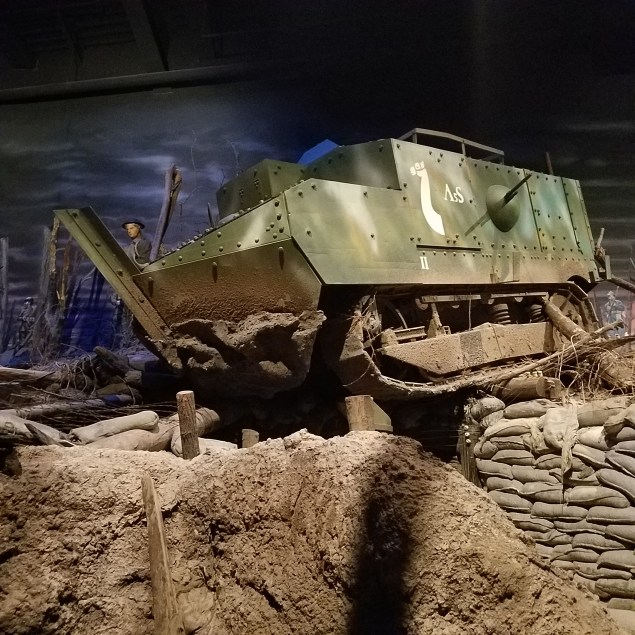
 According to the American Defense Security and Cooperation Agency, negotiations between the Kingdom and the United States for the tanks began in 2012. Morocco planned to purchase 200 Abrams tanks, complete with parts, equipment, support, and training, for over $1 billion. The two nations finalized the deal in September 2015.
 One of China’s biggest military manufacturers, China North Industries Corporation (Norinco), has developed a new variant of its Type 96 (ZTZ-96) main battle tank (MBT) in time to participate in the 30 July to 16 August International Army Games organised by the Russian Ministry of Defence. At least five T-96Bs arrived in Russia on 7 July to take part in the Masters of Automobile and Tank Hardware competition, according to Russian media reports. The ‘Tank Biathlon’ portion of this competition received wide coverage in Chinese state media last year when Norinco’s 50-tonne T-96A MBT was allowed to participate.
 The Ukrainian Private Joint Stock Company Research and Production Association Practika is now offering on the export market its latest 4×4 Kozak II armoured personnel carrier (APC), which has already seen active service on the Russian/Ukraine border. The company classifies the Kozak II as a mine-resistant ambush protected (MRAP) type vehicle and is based on an Italian Iveco 4×4 Trakker chassis.
 They brought “Stuie” home. Now it’s time to showcase the pride of Berwick — the Stuart tank built there and used in battle during World War II. Veterans of World War II and those who worked in the factory that built 15,224 Stuart tanks for the war will be celebrated this weekend as part of the inaugural “Weekend at Stuie’s.”
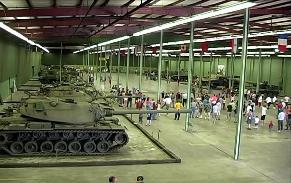 It’s raffle time at the family-owned and -operated American Armoured Foundation Tank Museumin Danville, Va., a 300,000-square-foot former milling factory that contains more than five football fields’ worth of steel-plated history. Parked in neat rows like soldiers at parade rest are a rare World War I British tank, a Russian T-34 (arguably the greatest of all workhorse tanks) and a 65.5-ton M103, which was the last of the “heavy tanks” made in America. There are 52 tanks in all, plus scores of armored personnel carriers, self-propelled anti-aircraft weapons and long-barrel howitzers on wheels. This amount of muscle is on public display in only a handful of places around the world.
 Tank and AFV News