Here are an assortment of Russian language articles covering WWII era armor translated into English by Tank Archives.com. It’s been a couple months since we last checked in on them so there are quite a few. Click on the link to go to Tank Archives.com and view the full article.
Medium Tank M3 – by Yuri Pasholok
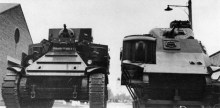 The American army had only a handful of medium tanks at the start of WWII. That does not mean that American designers ignored vehicles of this class. In the summer of 1939, the Medium Tank M2 entered production. Only 18 units were built, but it turned out to be the start of a new era for American tank building. The layout of its chassis became the foundation of American medium tanks. In 1940, the superior Medium Tank M2A1 was built, although it was already obsolete at the time.
Light Tank M5: The Peak of Evolution – by Yuri Pasholok
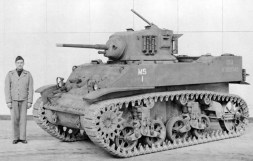 Rapid advances in armoured vehicles during WWII meant that even very good designs did not stay at the top for long. This was especially noticeable in American tank building. In 1939, the Light Tank M2 and Combat Car M1 were at the top of technical progress, but they were replaced with the Light Tank M3 by the time the USA entered the war in late 1941. In 1942, the Light Tank M3A1 entered production, but it did not last long as America’s main light tank. At the end of 1942, the Light Tank M5 was there to replace it, the last of the descendants of the Light Tank M2.
Through Adversity to the SU-122 – by Yuri Pasholok
 It was clear by the spring of 1942 that work on a medium SPG on the T-34 chassis with an 85 mm gun in a rotating turret hit a dead end. The result of this work, which started back in the summer of 1940, was the U-20, which the military considered unsatisfactory. The project didn’t leave the drawing board. Later, development of Soviet SPGs took a different path. A significant influence was the study of a captured StuG III Ausf. B. Later, factory #592 built a Soviet version on its chassis, called SG-122. It was clear, however, that converting foreign vehicles was not the end.
SU-26: Blockade Long-Liver – by Yuri Pasholok
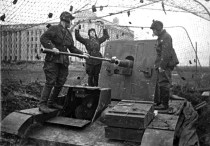 The start of the Great Patriotic War in the summer of 1941 forced many changes onto the prospective designs of Soviet SPGs. Many branches were cancelled, and work on the ZIS-30 SPG on the Komsomolets tractor platform was urgently started. Until then, it was not considered as an SPG platform at all. However, one SPG that was designed according to pre-war plans was not only built, but mass produced. This is a vehicle best known under the name SU-26. Its real name, T-26-6, was buried deep in the archives.
Light Paper SPGs (SU-31 and SU-32) – by Yuri Pasholok
 As with many other Soviet SPGs, the path to the SU-76 was not easy. Initially, the two-turreted T-26 tank would be used as the chassis for an infantry support vehicle. Later, the T-50 joined in the plans. The situation after the start of the war forced the concept of the SPG to change urgently. Instead of a light infantry support SPG, the ZIS-30 appeared, a tank destroyer on the Komsomolets tractor chassis. Designers only returned to the topic of a multipurpose SPG towards the end of 1941. The SU-12, the first production variant of the SU-76, did not come about on the first try. This article tells the story of vehicles that were dead ends, without even being produced in metal.
The Road to SU-76 – by Yuri Pasholok
 The T-50 tank was considered the highest priority platform for light SPGs in the pre-war Soviet Union. However, a proposal for an SPG chassis based on the T-40 amphibious reconnaissance tank was made at a meeting on June 9th, 1941. The idea was quickly abandoned, and, a few weeks later, the USSR was too busy for the T-50 SPG. Suddenly, the first wartime light Soviet SPG turned out to be the ZIS-30, which used the chassis of the Komsomolets artillery tractor. Due to the cancellation of artillery tractors, the idea of building an SPG using T-40 components came out of retirement. The result was a small family of experimental vehicles, such as the SU-31 SPAAG and SU-32 SPG.
Big Dreams, Small Chassis (T40) – by Yuri Pasholok
 Despite the difficulty with which the Soviet T-40 amphibious reconnaissance tank entered production, designers considered the platform quite promising. The T-40 chassis would be used to produce the GAZ-22 artillery tractor, which would eventually replace the Komsomolets. The fact that the T-40 was also seen as an SPG platform was less well known. Most of the designs remained on paper, but at least one was produced in a small batch.
Metamorphoses of an Amphibian Scout (T-37 and T-38) – by Yuri Pasholok
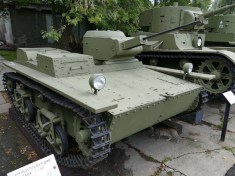 An unusual modification of the T-38 can be seen in the outdoor display of the Central Museum of the Armed Forces of the Russian Federation. This vehicle is distinct from its brothers: instead of one DT machinegun, its turret houses a 20 mm TNSh autocannon and a coaxial DT machinegun. Some Russian historians spread the myth that this tank was experimental. In reality, not only was this not an experimental tank, but these tanks had the chance to fight. This article will cover modifications of T-37 and T-38 amphibious tanks.
Israeli Sandwiches – by Yuri Pasholok
 When Israeli armoured vehicles are mentioned, one often thinks of Merkava tanks first. Without a doubt, these vehicles are a point of pride for Israel. However, the backbone of the Israel Defense Force (IDF) was composed of converted foreign vehicles for a very long time. The Israelis spent several decades fine tuning the art of adapting vehicles to suit their needs. Everything started with improvised armoured cars, which played an important role in the war for Israeli independence.
Marder II: Light Tank Destroyer -by Yuri Pasholok
 By the end of 1941, the Germans began to understand that the time of light tanks was over. This also applied to the PzII tank. By that time, it’s main enemy was medium tanks with shellproof armour, against which the 20 mm autocannon was useless. Production of light tanks ended in Germany in the summer of 1942, but that doesn’t mean that the PzII chassis was done for. Work on light SPGs on its chassis began in the spring. One of them was a tank destroyer that is best known as the Marder II.
An Aryan From Poland – by Yuri Pasholok
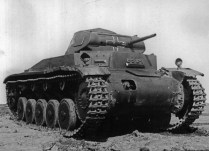 The Red Army GABTU had a very vague idea about the armoured vehicles of its potential enemy at the start of World War II. The same could be said about the other members of what would become the Allies. For obvious reasons, there was very little available information about tanks made by Germany and its allies. Mainly, it could be obtained from encyclopedias, which were full of errors. The ability to properly study the foreign tanks was only possible after combat began. In this respect, the USSR was ahead of the rest of the world. The first trophies began arriving from Spain: a captured PzI Ausf. A and an Italian L3/35. In the summer of 1939, a Japanese Ha-Go tank was captured in the Far East. The list of trophies grew with the start of WWII. The German PzII Ausf. C was among them.
Pz.Kpfw.II Ausf. F: Third Time’s the Charm – by Yuri Pasholok
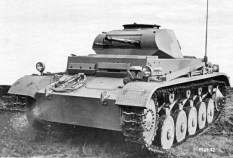 There are few cases when a tank that is accepted into service is replaced by a modification that is inferior to it. In Soviet tank building, one example of this is the KV-1S, a necessary measure. It was lighter than the KV-1, and had thinner armour, but as a result of its lower mass and improved gearbox, it was a lot more reliable and mobile. The tank itself received a large number of improvements. With the Germans, the most clear example of such a paradoxical course of action was the PzII Ausf. F. Here, the Germans returned to an older version of the PzII (Ausf. C, albeit with some improvements) than the one that was already accepted into production (Ausf. D).
Pz.Kpfw.II Ausf. D-E: Unlucky Torsion Bars – by Yuri Pasholok
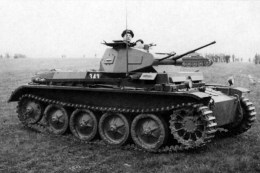 Worldwide tank building progressed rapidly in the second half of the 1930s. This can definitely be said about Germany’s tank industry, which developed tank suspensions, along with everything else. Various experiments in this area led to widespread use of torsion bars. However, there is a tank in the history of Germany’s tank design that was produced in large numbers, but it is rarely remembered. It ended up in a paradoxical situation where, instead of a technically superior tank, a tank with an old suspension returned into production. This was the PzII Ausf. D: a light tank that fought in its initial configuration for only a month.
 On the second day of Operation Bagration, June 25th, 1944, the Red Army took the Bogushevsk settlement, located between Vitebsk and Orsha. As a result, the Germans lost a vital stronghold. Soviet command sent Major-General N.S. Oslikov’s motorized cavalry group into the breach. The group was tasked with developing the Red Army’s offensive towards Senno and Lepel, with the eventual exit to Berezina river.
 The Czechoslovakian industry received a number of advanced military technologies after the end of the Second World War as the result of German orders, but their inheritance didn’t end here. A large amount of formerly German tanks were left in the country. Even though Czechoslovakia preferred Soviet tanks and SPGs, nobody was going to say refuse the wealth of German vehicles. As a result, the country ended up with a colourful tank park, including domestic pre-war LT vz.35 and LT vz.38, British Cromwells and Challengers, Soviet T-34-85s and IS-2s, and many German vehicles, including the StuG 40.
 On June 23rd, 1944, a mad steamroller entered the territory of Belarus. Thundering westward at a speed of twenty kilometers per day, it crushed and ground up German forces in its way. In mere days, Army Group Center was reduced into pitiful shreds. The demolition of German forces was unprecedented, to the point where the Western Allies were doubting Soviet reports. The only solution was to gather up foreign correspondents and hold the famous prisoner of war march. 19 German generals and 45,000 soldiers and officers became a convincing confirmation of the Red Army’s success. But where did this skepticism come from?
 American tank building fell behind those of other nations during the interbellum period, but rapidly closed the gap. In May of 1940, mass production of the Light Tank M2A4 began, a tank that caught up to other members of its class, and surpassed them in speed and armament. At the same time, the Americans realized that the war in Europe will last a long time, and tanks and guns grow obsolete quickly. This was the trigger that resulted in the Light Tank M3, the first American tank to result in more than a thousand mass produced vehicles.
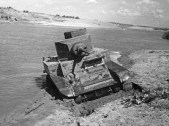 The USSR was the second country, after Great Britain, to receive tanks from the United States. Among them were M3 light tanks. According to American data, 1336 tanks of this type were sent to the USSR, a quarter of the overall volume of Light Tank M3 production. Out of all tanks sent, 440 (including M3A1 tanks) were lost during transport. Domestic literature often calls the M3 weakly armoured and poorly armed. This evaluation is surprising, especially when you compare the tank to the Soviet T-70. In order to truly evaluate the American tank in the Soviet Union, we must consult archive documents.
 The Kiev Offensive Operation was not going smoothly for the Red Army. After penetrating the first line of enemy defenses, Soviet forces traveled 5-12 km, encountered German reserves, and started losing momentum. Nevertheless, on the second day of battles, November 4th, 1943, it was already clear that the Germans will not hold the city. The enemy started withdrawing westward. The Red Army attempted to prevent this, encircling the enemy and cutting their supply lines. The city of Fastov, some 70 kilometers south-west of Kiev, was among key positions that had to be captured for this plan to work. Tankers from P.S. Rybalko’s 3rd Guards Army hit the city.
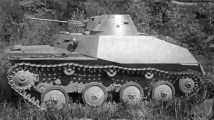 75 year passed on Sunday July 17th 2016 since the decision to produce the T-30 small tank. This tank remained in obscurity for a number of reasons. Born at a time of difficult for its country, it was overshadows by its “older brother”, the T-40, and “younger brother”, the T-60. In addition, the tank was indexed T-60 for some time, complicating the process of figuring out what tank is mentioned in reports. Lost among almost 6000 “real” T-60s, this tank played an important role on the battlefield in the fall and winter of 1941.
 The history of the T-60 tank is atypical for Soviet tank building. The tank was accepted into service before even the first blueprint was prepared, and thousand of units were ordered immediately at three factories. Even though the final results were a lot more humble, more than 5500 completed vehicles is a very impressive number. Remaining in production for just under a year, from September 1941 to July 1942, the T-60 became the most numerous small tank in history. These vehicles appeared on the front lines during the most heated part of the Battle for Moscow, and made a noticeable contribution to the war during its most difficult point. On July 20th, 2016, the T-60 turned 75 years old.
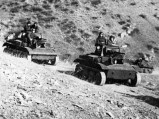 The British light Tetrarch tank is most often remembered in connection with the landing in Normandy. While it was the first tank used for this purpose, initially the Tetrarch was designed for something else. The adventures of the Tetrarch in the British army are well known, unlike the use of the tank in the Red Army. That story is still full of omissions.
 The results of the French competition for a new light tank in the mid 1930s were unclear. On one hand, the army made a deal with Renault to produce 300 light Renault ZM tanks. The tank entered service with the name Char léger Modele 1935 R,or Renault R35. A year later, the FCM 36 was accepted into service, which was more promising according to the infantry commanders. Doubt was cast on the production of the R35, but it was never cancelled, and it became the infantry’s most numerous tank. Right before WWII began, the AMX 38 appeared, another tank that could have been accepted into service with the French army.
 The summer of 1944 was coming to an end, but the Sandomierz foothold was still hot. The sun was beaming from above and battled raged on the ground. A German attack at dawn of August 13th failed, but the enemy started anew during the day, hoping that the long guns of the King Tigers will do their job. Their path was blocked by IS tanks from the 71st Guards Heavy Tank Regiment. Among them was a company commanded by Senior Lieutenant V. A. Udalov.
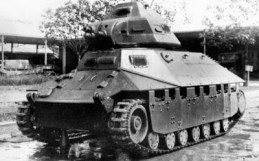 The FCM 36 was the least lucky French tank created in the interbellum period. Its design was progressive: it was the first tank with sloped armour to be put into production. While other French tanks were put together with bolts or rivets, FCM made its hull welded. In addition, the FCM 36 had a diesel engine. Alas, the fate of this interesting tank was a difficult one.
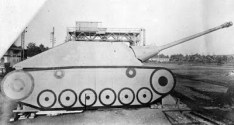 Of all German E-Series (Entwicklung, development) only the E-100 ever reached the stage where it was ready to be built in metal. This did not stop other vehicles in the series from becoming very popular. These vehicles included not only tanks, but also tank destroyers, including the medium E-25 tank destroyer. Let us look deeper into its history and familiarize ourselves with other “paper” vehicles of its class.
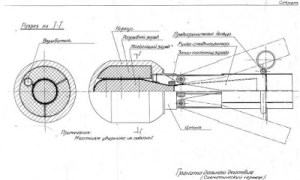 A grenade and a bottle with incendiary fluid: this was the most widespread armament of a Red Army infantryman in late 1941. It was most effective where it was used with another powerful weapon: heroism. A well trained soldier could throw a bottle 20-30 meters, a heavy grenade bundle would fly even less. The bravest men closed in to this distance or even less, often paying with their life for a disabled or burned tank. On paper, this looks like a good trade, but in real life this is a tragedy.
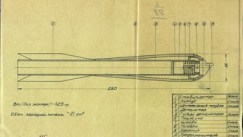 The range of a hand grenade is very short. In WWI, many methods were tried to solve this problem. One of those was a special rifle grenade. A cup was attached to the muzzle of a rifle, which fired a grenade with the aid of a blank cartridge. This method was not very effective: the range was barely a few hundred meters, the fragmentation effect of the grenade was weak, and there was no accuracy to speak of. Due to a low muzzle velocity, the shots had to be fired at a large upward angle. Despite poor reliability and questionable effectiveness, the idea of rifle grenades not only survived until the Great Patriotic War, but continued to evolve.
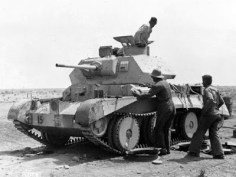 The adoption of the Cruiser Tank Mk.III in 1938 didn’t mean that the British were fully satisfied with it. Armour that was only 14 mm thick made the tank vulnerable to anything bigger than a rifle. High caliber machineguns that were one of the most popular anti-tank weapons during the Spanish Civil War made the military seriously think about improving protection. It was impossible to do anything radical with the Cruiser Tank Mk.III, since a whole new tank would be needed. It was decided to go down the road of minor modernization. The resulting tank became one of the best and longest lasting pre-war British tanks.
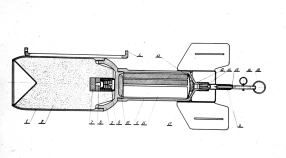 Using a rocket against a tank is very tempting. Rockets can carry a powerful warhead and can be launched without an expensive barrel: all you need is a rail. In the 1930s, Soviet pilots were already using rockets to fire at enemy planes.
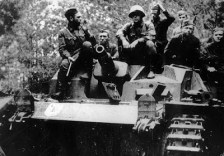 At the start of the Great Patriotic War, Soviet military intelligence and the GAU had a very approximate idea about the types and characteristics of German tanks. This deficiency led to an overestimation of the possibilities of German armour and the launch of the KV-3, 4, and 5 programs in March of 1941. Even information on real German tanks was sparse. Intelligence missed the increase of the front armour of PzIII and PzIV tanks to 50 mm and use of 50 mm guns. This lack of information had to be made up for in the most reliable way during the war: studying trophies. Among the vehicles that were glossed over by Soviet intelligence was the StuG assault gun.
 By noon of the first day of the Sandomierz-Silesian Offensive Operation, Soviet infantry penetrated the first line of German defenses and hit the second. Quickly realizing the situation, Marshall Konev, the commander of the 1st Ukrainian Front, played the ace up his sleeve: several hundred tanks and SPGs. Thanks to them, Soviet forces were ready to assault the second line by the second half of January 12th, 1945.
 The history of the Pz.Kpfw. Maus is still full of blank spots, despite the popularity of the subject. The beginning of the tank’s development from March of 1942 to 1943 is the least studied area. During this time, the project indexed Typ 205 radically changed. Essentially, the only constants were the index and the idea of using an electric transmission. Thanks to new publications and archive research, it is now possible to remove the veil of mystery from many parts of the project.
 Winston Churchill’s saying “The tank that carries my name has more drawbacks than I do!” in regards to the Infantry Tank Mk.IV is well known. Despite this evaluation, the Churchill was the longest-living British tank, even finding itself useful in Korea. It is not know what the Prime Minister thought about the Cruiser Tank Mk.V, more known as the Covenanter, but there is one fact that says more than enough: it is the most numerous tank of the Second World War that never saw combat.
 The end of the First World War coincided with the decline of vehicles designed by William Tritton. Drastic budget cuts meant that further development of heavy tanks in Great Britain stopped. As for the first post-war medium tanks, they turned out to be too heavy, and could not repeat the success of the Mk.A Whippet. In late 1918, development of the Medium Tank Mk.D began, directed by Lieutenant Colonel Philip Johnson. The result was truly revolutionary and could reach a record of 20 mph (32 kph), but a large amount of mechanical problems brought about the end for that tank. After trials, the tank was not approved for mass production, but it did not disappear into nothingness. Later on, the Americans used it as a basis of their Medium Tank M1921. In England, the Vickers company had a go at making tanks and attained success with its first steps, creating the successful Medium Tank Mk.I.
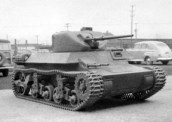 Thanks to John Walther Christie, the USA was the leader in airborne tanks before WWII, but with one caveat: not a single one of his vehicles was actually accepted into service. However, Christie’s experiments resulted in a very good understanding of what an airborne tank should be like. The idea of a tank with wings was quickly discarded in favour of a light tank that was attached under the fuselage of a heavy bomber or transport plane. This concept was used to make the Light Tank M22.
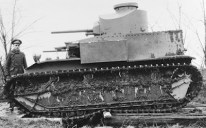 Starting with the M2 Medium Tank, American medium tanks were based on the M2 Light Tank. The method of their creation was as follows: novelties were tried out on a light tank, then the tank was proportionally scaled up in size. Of course, many changes were introduced into the design, like increasing the number of bogeys or return rollers. Overall, this method was successful. However, this was not the first attempt at using this method by American tank designers. The first time they tried it, they got something different…
 Work on heavy SPGs in the Soviet Union began in the early 1930s. By the end of the decade, development stopped, but began anew in early 1940. The Red Army needed tanks to destroy enemy pillboxes. The result of this requirement was the 212 SPG which, for various reasons, was never built. In April of 1942, the 212 project was finally closed, giving way to another no less interesting project: the KV-7 assault tank.
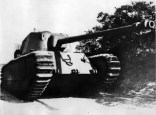 There is a misconception that the French worked only for their new masters during the occupation of 1940-1944. Indeed, most French tank manufacturing facilities ended up in the German occupation zone. Nevertheless, the resistance that so many speak of was active, and even on occupied territories, work continued. It became the foundation for French tank building that began immediately after the country was freed from occupants.
 What is Switzerland famous for? One immediately thinks of watches, banks, mountains, and cheese. Despite fighting its last war in 1848, this small country remained among the top producers of armament for decades.
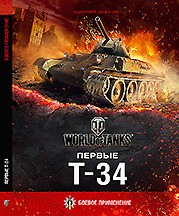 The website for Casemate books is listing a March 16 releases for two books in the “World of Tanks” series published by Wargaming.net. These books were originally released in Russia and claim to contain research based on archival materials never before examined or published.
 In 2012, the company that created World of Tanks, the phenomenal worldwide massive, multi-player online game, started publishing a series of books in Russian that utilized Soviet documents and archival materials that had never before been seen by outsiders or published in any language about the design, procurement, development, manufacturing, and combat employment of Soviet armored fighting vehicles (AFVs) during World War Two (the Great Patriotic War to Russians). Now these remarkable books are being published in English with the obvious aphorism The Russian View.
 Tank and AFV News