Today we present one more English 1944 report on Soviet equipment posted on Scribd. This report examines the V-2 12 cylinder diesel tank engine used in both the T-34 and the KV-1. This is a very thorough report, being almost as long as the similar reports on the vehicles themselves (posted here and here.) Detailed information on the V-2 engine is not all that easy to find in English, so this report should prove quite useful to those with a particular interest in the V-2 diesel. Click on the image below to view the report at Scribd.
Blog Profile: Tankograd
People interested in Soviet tanks and armor may find the blog “Tankograd” worth checking out. Authored by Tiles Murphy, this blog features extremely long and detailed posts focused on a specific Soviet vehicle. So far the author of the blog has posted three entries, looking at the BMP-3, BTR-80, and the T-72. These posts are quite possibility the most detailed and extensive descriptions of these particular vehicles on the internet in English. In fact, they probably contain as much or more information than many of the books written on these vehicles. If ever a blog entry could rightfully be called “epic”, this is it.
Fv3805 Restoration Project
The Wright military and Heritage Museum on the Isle of Wright in the UK has announced that they have started a restoration project of a Fv3805. The Fv3805 was a British self propelled gun design, of which only two prototypes were built. One of these prototypes still exists and is at the Wright museum. A kickstarter campaign has been launched to support the project. Here is the project description from the kickstarter site.
About this project
Our project is to raise fund and restore the only FV3805 vehicle left in the world with the aim to have it driving at Bovington tank museum by 2017. The vehicle will be restored by volunteers and disabled ex-servicemen and women and when running will be the first vehicle in the UK specifically restored to carry wheel chairs and have access to the insides.
This project will allow anyone with the suitable training which can be provided for free to access the vehicle regardless of gender or ability and will be shown at tankfest 2017 by the female staff and volunteers from the museum” ‘With your help and support this machine can once again be returned to a working condition and find a role far more peaceful than for what she was designed for.
Risks and challenges
The Vehicle current is sitting outside the back of a museum workshop as it’s the safest place to store her, the crew that work on her in their free time are from a variety of engineering backgrounds and almost all have been involved in restoration projects before. Each member is H&S trained and each has extensive knowledge in their own fields, the only obstacle is time and money.
The project is described further in this “Mingles with Jingles” video.
The sad story of the M73 coax machine gun
One of the more surprising stories of cold war US tank development is the M73/M219 machine gun. Developed for use in US armored vehicles, the M73 served most prominently as the coax machine gun in the M48/M60 “Patton” series of tanks and the M551 Sheridan light tank. During its time of service, the M73 distinguished itself as one of the worst machine guns ever adopted by the US military, suffering from numerous malfunctions which lead to frequent jamming. This was particularly frustrating for US tankers who were accustomed to the reliability of the .30 and .50 cal machine guns designed by John Browning which equipped US tanks during WW2 and the early cold war period.
A nice overview of the sad history of the M73/M219 is provided by an article over at the small arms review. The article sums up the M73/M219 saying:
In retrospect, the design of the M73/M219 was an accumulation of novel concepts that should have been thoroughly tested in the application before finalizing the design. The off and on development program challenged the ever-changing design teams with a new learning curve every time the project was restarted. It was a costly program in time, assets, money and loss of face. She was an ugly little baby and somebody should have told her Mama so.
For those interested in primary documents, here is a link to a government report from 1975 detailing tests to find a suitable replacement for the M73/M219. Interestingly, the guns tested include not just US designs, but also the Canadian C1, the German MG3, the MAG58 from Belguim, the British L8A1, the French AAT52 and even the Soviet PKM.
Attribute Analysis of the Armor Machine Gun Candidates (PDF)
Here is a video showing the operation of the M73.
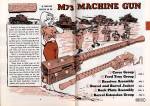
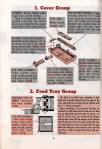
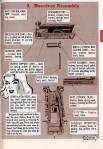
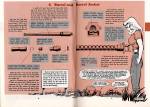
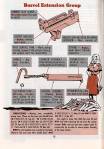
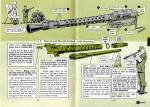
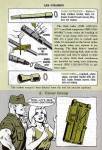
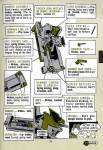
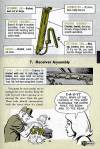
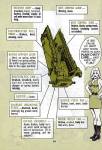
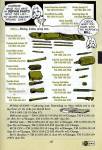
And finally, here are a couple PS Magazine articles on The M73. These are part of the “Be Your Own Inspector” series aimed at helping train soldiers properly maintain their equipment.
Issue 130 (1963)
Issue 200 (1969)
Sentinel Cruiser footage at Fishermans Bend
A new video has appeared showing the Australian Sentinel Cruiser along with other tracked and wheeled vehicles being put through their paces at a test sight in Australia. The date and location of the vehicles is listed as Fishermans Bend 1942. The video is featured in a news article in The Age Victoria, pointing out that the Fisherman’s Bend facility where these vehicles were manufactured is planned to become Melbourne’s newest high-rise apartment precinct. According to a report commissioned by the Nation Trust, the 19 Salmon Street factory was an experimental tank depot which produced fully sized timber mock-ups of what would become the Sentinel Cruiser from 1941 to 1943. A plan has been submitted to demolish the original factory and replace it with townhouses. The National Trust is calling for the original Art Deco style administration building to be retained, as well as a sample of the factory. Fishermans Bend was also a large car manufacturing area, from 1946 to 1972 being home to Rootes and later Chrysler car factories.
From the Vault: 1944 British Report on T-34 and KV-1
At Scribd there are posted two British 1944 reports examining a Soviet T-34 and a KV-1 tank. There are several interesting aspects to these reports. The British report writers seem relatively impressed with the Russian vehicles, stating that:
The design shows a clear-headed appreciation of the essential of the an effective tank and the requirements of war, duly adjusted to the particular characteristics of the Russian soldier, the terrain and the manufacturing facilities available. When it is considered how recently Russia has become industrialized and how great a proportion of the industrialized regions have been over-run by the enemy, with consequent loss of hurried evacuation of plant and workers, the design and production of such useful tanks in such great numbers stands out as an engineering achievement of the first magnitude.
For those that like to obsess over armor, the reports include fairly detailed diagrams noting the thickness of armor for each vehicle, including Brinell hardness figures. Click on cover image to go to the Scribd page.
More photos of 80’s era Soviet “Buntar” tank revealed
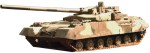
The Russian news source Sputnik is reporting that “the image of a top-secret Soviet tank of the late-1980s appeared on the Web earlier this week, along with a short list of its technical characteristics.” The article notes that photographs of the Buntar (Rebel) tank have appeared on several online forums, including recently posted pictures of the the vehicles modular armor, an antiaircraft gun placed under the commander’s seat and fiber optic observation instruments instead of the conventional prism-type ones. The article goes on to note:
Online forum participants all agree that, back in its day, the Buntar was a major breakthrough in the field of tank design.
The Buntar tank was designed in Kharkiv, Ukraine, as part of an effort to develop a new generation of battle tanks for the Soviet armed forces.
A number of prototypes were built as part of the program, launched in the early 1980s with two-stroke diesel engines, gas-turbine engines, T-64 chassis, electric transmission and two- and three-man crew configurations.
The year 1987 saw the advent of a principally new concept, built around 152mm smoothbore cannon.
Many of the tank designs developed as part of that program are still classified.
Unfortunately, the article does not contain any of the pictures that it mentions. Combing though the forums, we have been able to assemble a photo gallery of the “Buntar”, also known at Object 490A.
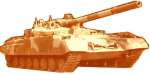
- Model of 490 “Buntar” This vehicle never got past “paper and wood” stage in development.
- Another Object 490 model. This was a Karkov project. Suspension appears to be derived from T-64 but with extra roadwheel.
- Object 490A model.
- Object 490A model. 152mm gun with autoloader and low profile turret. 34 rounds in special 2-stage autoloader. RoF was expected to reach 14 rounds per minute.
- Object 490A prototype. it could drive. It is unlikely that it could shoot. At the moment when we stopped working on it, FCS and autoloader were not finished. Redesign of suspension was planned, tank should have variants with completely external cannon.
- Object 490A prototye.
- Text reads “In 1982 it was decided to use 3-man crew. Tank had externally mounted main gun, driver was located at left part of hull, to the right from here there was 1290 litres fuel tank. COmmander was located to the left from gun, above [?] gunner”
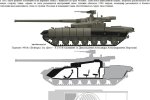
- Front armor thickness
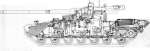
- Cutaway diagram.
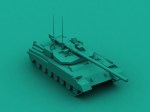
- Object 490A digital render
- Object 490A size comparison to T-14 Armata
- Object 490A size compared to T-64 and T-14 Armata
Forum member “LooSeR” at the Sturgeon’s House online forum provides this description of the Object 490A Buntar.
Object 490A was most likely build in some kind of working prototype, but how far it reached is unknown. Project was not far from Leningrad Kirov factory programm to create new tank of the future – Object 299 / Project “Leader 2000-2005”. New tank had new turret with autoloader in the middle, 2 crewmembers in the low-profile turret, deiver in the front. Gun was mounted externally.
Tank is armed with 152 mm cannon with all 34 rounds in special 2-stage autoloader. 2 stage were 2 mechanized ammoracks with 12 rounds each, while first stage loading device had capacity of 10 rounds. RoF was expected to reach 14 rounds per minute.
FCS “Argus” had multichannel sights with TV, Thermal imager and (possibly) radar channels. Information from all channales was collected by computer, which generated picture for a crew, based on all data from TV, TI and Radar, which was expected to give very good perfomance in bad weather, smoke, dust enviroment + active jamming from enemy. FCS was expected to locate and remember positions of enemy targets, showing them to crew in easy-to-read display/image. On board computer will give information about location of the tank, and status of different systems.
Engine was planned to be 6TD, with later modification to 6TD-3 (1500 HP). Overall, it is rumored that tank would had:
-
Weight of 50 tons
-
Crew of 3
-
1200-1500 HP engine and ~28 hp/t power to weight ratio
-
More than 75 km/h max speed on road and 50-60 km/h max speed offroad
-
0.8 kg/sm2 ground pressure
-
152 mm gun with 34 rounds in fully-mechanized ammorack
-
Protection against APFSDS in frontal projection – at least 1200 in RHA eq. (without ERA)
-
Protection against HEAT in frontal projection – at least 1800 in RHA eq. (without ERA)
If anyone has any corrections or additions we can add to this post, please feel free to contact us or comment.