WW2 Era German half-tracks recovered from Polish river

Two German WW2 era half-tracks have been recovered from the Pilica river in Poland by the historic military vehicle preservation group “Panzer Farm.”  The two vehicles recovered consist of a Sd.Kfz. 250 light armored halftrack and a Sd. Kfz.7 medium towing vehicle.  A photo-gallery of the Sd.Kfz. 250 recovery process can be seen on the Panzer Farm facebook page here.

This video is in Polish, but the footage should prove interesting to fans of German WW2 vehicles.

More information on this story available in this thread over at the AFV News Discussion Board.
British Comet tank rusting away in Cuba

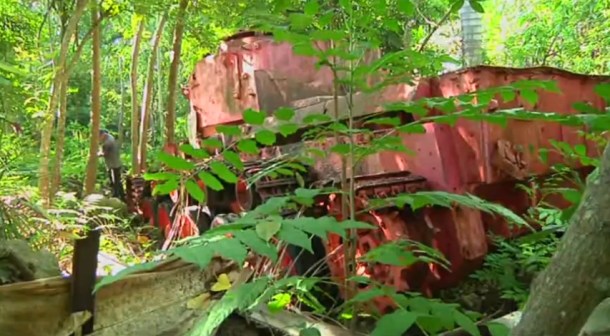
This video showed up on NBC news of a British Comet tank that somehow ended up in Cuba prior to the Cuban Revolution.  It has been painted pink and sits in a farmers field rusting away.  Of course, NBC mis-identifies the vehicle as a “Sherman tank.” Click on the image below to watch the clip.

cuban tank

$5 million to upgrade a Stryker?

Jane’s is reporting that the cost of a proposed firepower upgrade for 81 US Army Stryker wheeled personnel carriers is priced at a whopping $5 million per vehicle.  This upgrade would up-gun 81 Strykers for the 2nd Cavalry Regiment based in Germany with 30 mm cannons on remote weapon systems and others with Javelin anti-tank missiles.  According to Jane’s:

2013-11-14 KONGSBERG PROTECTOR2The cost per system appears particularly high (about USD5 million per vehicle), and according to Heidi Shyu, the army’s acquisition executive, this is partly schedule driven because it is through an urgent need statement that is seeking the upgrade as soon as possible. It is also for only 81 systems, so the limited quantity drives up per-unit costs. The price includes a design and integration element as well, she added.

These lethality upgrades are not for the heavier armoured Stryker Double-V Hull (DVH) vehicles, and rather are for the original flat-bottom configuration, although a Stryker engineering change proposal (ECP) effort may eventually include a 30 mm weapon for the DVH, Shyu said. “If we want more Strykers to have this capability beyond the 81 [requested in Europe], we will start a programme of record to do that,” she said, noting that the cost could be lower with a procurement of thousands of units.

Pricing on modern armored vehicles can be a bit hard to pin down, being influenced by factors such as exchange rates and production volume.  That said, most modern MBTs range anywhere from 4 to 10 million dollars each.  Using this metric, $5 for an upgrade to a Stryker does seem rather on the high side.  Of course, this is not the first time the Stryker program has drawn criticism for fiscal irresponsibility on the part of the US Army.

Video: Wine glasses on a Japanese Type 10

Check out this video of wine glasses being placed on the gun of a Japanese Type 10 tank to show off the smoothness of the gun stabilization.

Rusting T-64 tanks in the Ukraine

KyivPost has posted an article about the hundreds of T-64 tanks rusting away in huge outdoor storage areas in Ukraine.

original_bigIn the late 1980s, with the Cold War still on, the Soviet Union had an estimated 53,000 main battle tanks. As late as 1991, Soviet tank factories could still produce thousands of tanks a year. The Malyshev Tank Factory in Kharkiv alone made 800 tanks in the last year of Soviet Ukraine’s existence.

Yet when conflict broke out in eastern Ukraine in 2014, Ukraine suddenly found itself very short of tanks. Where did they all go?

“Ukraine had approximately 5,000 to 7,000 tanks left after the breakup of Soviet Union,” military expert and director of consulting firm Defense Express Serhiy Zhurets told the Kyiv Post. “But I doubt that the government has allocated any funds for tank maintenance at all for the last 25 years. About 10 tanks could have been kept in good condition, but no more.”

Full article here.

Author Profile: R. P. Hunnicutt

ore0003165667_2_023148Echo Point Books has released reprint editions of “Bradley” and “Armored Car” by R. P. Hunnicutt.  This brings the number of Hunnicutt titles reprinted by Echo Point Books up to eight.  Only two Hunnicutt titles that have not been reprinted, “Fire Power” and “Sheridan.”

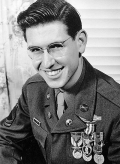
For those not familiar with the works of Richard Pearce Hunnicutt (1926-2011), his ten volume set chronicling the history of US armored vehicle development is unparalleled.  Despite the importance of his works, his name is not as well known as some authors who write about tanks and armor due to the fact that his ten volume set was published in relatively small print runs and priced outside the range of most casual readers. His ten volume set was written over the course of  thirty-one years, the first book being published in 1971 and the final volume in 2002.

Hunnicutt was a veteran of World War II and after the war pursued a master’s degree in engineering from Stanford University.  He went on to work at General Motors and later on became a partner in an engineering firm named ANAMET.  Hunnicutt’s professional specialty was metallurgy and he was recognized as one of the most knowledgeable expert in that field in California.

His success in his professional life gave him the means to pursue his hobby of researching and writing about US armored vehicles.  He formed friendships and connections with many of the critical figures in US armor history, as evidenced by the many tank luminaries who wrote the forwards to his books.  Hunnicutt was also one of the founders of the U.S. Army Ordnance Museum at Aberdeen Proving Ground, MD as well as a supporter and friend to the Patton Museum at Fort Knox KY.  His books were financed and produced largely out of his own pocket, since the size and quality of his books required a cover price far beyond what most publishers would be willing to consider for such a specialized topic.

The books themselves are high quality hardcover editions with thick glossy paper and an abundance of photos (primarily black and white), illustrations and diagrams.  Each book is patterned in the same fashion, the format changing little volume to volume.  The writing style is clear if somewhat dry.  People looking for exciting stories of tanks in action will be sorely disappointed if they expect that from a Hunnicutt books.  These books are detailed histories of the development and variants of US vehicles.  They contain little information as to the use of these vehicles once they were in service.  Nor does Hunnicutt provide much evaluation or opinion regarding these various vehicles.  His histories are first and foremost a presentation of hard information, providing details and data about vehicle development seldom seen in previous works on the topic.

His ten volume set consists of the following:

Pershing: A History of the US Medium Tank T20 Series 1971 – This is the first book in the series and it is probably the least expansive of any of his books, covering only the T20 series of tanks.  This book uses a slightly different font on the dust jacket than the following books, as well as being from a different publisher (Feist Publications) than the later books (Presidio).

Sherman: A History of the American Medium Tank 1978 – Since its publication, this book has widely been regarded as the bible of Sherman tank books.  The title is misleading, this book covers much more than just the Sherman tank.  The development of US medium tanks starting in the immediate post-WWI period up to the M4A3E8 “Easy Eight” is covered in this massive tome.

Patton: A History of the American Main Battle Tank Vol. 1 – 1984  This book picks up where “Pershing” leaves off with the development of the M46 Patton tank up through the final variants of the M60 series.

Firepower: A History of the American Heavy Tank 1988 – Since no US heavy tank ever got an official nickname, Hunnicutt had to give it a more general title than the other books.  This book deals with the early heavy tanks developed at the close of WWI up to the WW2 era M6 and the post war designs leading up to the M103.  Rumor has it that Wargaming NA is working on a reprint of this book.  They have access to many of the original photos used in the book and are promising a better quality reprint than those provided by Echo Point.  Time will tell what happens with this title.

Abrams: A History of the American Main Battle Tank Vol. 2  1990 – This volume covers US attempts to develop a new series of tanks to replace the Patton line going all the way back to the 1950’s.  The Abrams tank does not appear until the second half of the book, the first half being devoted to the T-95, the MBT-70 and other early programs.  Since this book was published in 1990, it does not cover anything beyond the M1A1.

Stuart: A History of the American Light Tank Vol. 1  1992 – Much like the Sherman book, this volume covers it’s topic from the latter part of WWI up to the final versions of the M5 Stuart as well as the M24 Chaffee.  Also covered in this book are other light armored vehicles of the period such as the LVT “Amtrac” and the M18 Hellcat Tank Destroyer.

Sheridan: A History of the American Light Tank Vol. 2  1995 – Much like the Stuart book, this one covers quite a bit of ground, including the M51 Walker Bulldog tank as well as the T92.  Also covered are the various Armored Gun System prototypes intended to replace the Sheridan.  The self propelled guns M107, M108, M109 and M110 SPGs are covered in this book as well.

Bradley: A History of American Fighting and Support Vehicles  1999 – This one is a very substantial volume, including all the US post WW2 armored personal carriers and the various vehicles that shared the same chassis.  This includes the myriad variants of the M113 APC.  In fact, the Bradley does not appear until after page 250!

Half-Track: A History of American Semi-Tracked Vehicles  2001 – This is one of the smaller books in the series.  The majority of the book is devoted to coverage of WW2 era US half tracks.

Armored Car: A History of American Wheeled Combat Vehicles  2002 – This is the last book in the series and it covers a greater time period than any other volume.  Starting with the earliest armored cars of WWI, it continues all the way to the introduction of the Stryker.  The M8 gets good coverage in this book.

The only flaw with this series is that certain vehicle types get scattered around different volumes.  For example, if someone wanted to read about US tank destroyers, they would have to start with Armored Cars, then go to Half-track, then Stuart and finally Sherman.  The situation with self propelled artillery is similar.  However, this is a rather minor complaint.  US armor enthusiasts owe a great debt to Richard Hunnicutt for creating this superlative set of books.  Unfortunately, armor enthusiasts may also go into financial debt trying to obtain a set of the original editions.  The more popular books in the series such as Sherman and Firepower regularly command anywhere from $100 – $300 on the used book market based on condition.  PDF copies of the books are not hard to find online, not that we condone that sort of thing. The Echo Point Books reprints are more affordable, although response has been mixed regarding the quality of the reproduction on these editions.

For a more detailed description of his life, you can read the obit for Hunnicutt in The Oregonian here.

M8 Armored Gun System makes appearance at AUSA

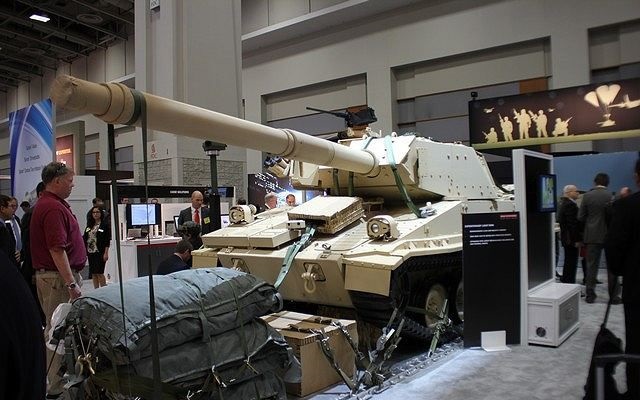
Expeditionary_Light_Tank_airdropped_airborne_troops_BAE_Systems_AUSA_2015_640_001BAE Systems has unveiled a new version of the M8 Buford light tank at the AUSA 2015 Annual Meeting in Washington D.C..  The M8 Buford design dates back to the late 1980’s when the US Army was pursuing a replacement vehicle for the M551 Sheridan.  The M8, built by United Defense beat out competing designs by Teledyne Continental Motors and Cadillac Gage.  By 1997 the M8 program was cancelled, it’s intended role somewhat being filled by the Stryker.  According to an article from Defense One:

“The intent of what we have out here is a conversation starter,” said Deepak Bazaz, BAE Systems’ director of New and Amphibious Vehicles, standing by his company’s M8 Armored Gun System.

The Army does not a formal requirement yet for what it calls a mobile protected firepower unit, but it could soon, prompting BAE to bring the unit to the Association of the U.S. Army annual gathering in Washington.

The Army suspended work on a similar project in the mid-1990s, “but the need really remains,” Bazaz said. “It’s emerging again with the changing world that we live in.”

The article notes that the M8 on display is one of the original vehicles built in the 90’s and has not yet been upgraded with modern electronics and sensor gear.  United Defense (now owned by BAE) had built six M8 prototypes in the 90’s.

Inside the Tanks: The M47 Patton

World of Tanks Europe has posted a new addition to their “Inside the Tanks” video series hosted by Richard Cutland.  This episode takes a look at the US M47 Patton tank of hte 1950’s.

Video: New Nexter vehicles at DSEI 2015

At the end of last month we posted some videos from the DSEI 2015 arms expo featuring Jane’s reporter Christopher Foss.  Since then, a few more videos from that event have been made available. Below are two videos, one on the Nexter VBCI-1 infantry fighting vehicle and one on the Nexter Caesar 8×8 self-propelled artillery system.


Book Alert: Kursk: The Battle of Prokhorovka

51KvncC1EwL._SX423_BO1,204,203,200_Looking for the ultimate book on the famous tank battle at Prokhorovka?  Aberdeen books is listing a mid-October release for the massive new book on the topic, “Kursk: The Battle of Prokhorovka” by Christopher A. Lawrence of the Dupuy Institute.  This is no ordinary book, it’s a whopping 1662 pages and comes with an equally impressive price tag of $195.  While this price tag may put it outside the range of many readers, imagine how impressive it would look on your coffee table.  Or, considering the size of the thing, you can use it as a coffee table.  Joking aside, this book is available for pre-order from Aberdeen books, who offer a special $175 price on pre-orders.

Publishers Description:

Kursk: The Battle of Prokhorovka is the first definitive account of the largest tank battle in history. This book is unique in that it draws upon in-depth research in both the German and Russian archival records. This was research that was begun in the 1990s, after the Soviet Union had fallen, when The Dupuy Institute was able to gain access to the Russian military archives. The book is built from the actual unit records from both sides, as opposed to the sometimes distorted narratives and legends that have grown up over the battle. It then compares and contrasts those records with the stories and interviews collected from veterans. It is an attempt to cover the entire range of fighting, from the strategic decisions, the operational art, to the tactics and the personal stories. It is a detailed description of the battle, a quantitative analysis of the battle and personal description of the battle as seen through the eyes of the participants. Over hundred German and Russian participants on both sides were interviewed exclusively for this book. It is a unique body of research that will not be replicated.

This is a large book. This is because the amount of unique material collected on the battle was unparalleled, first as part of a U.S. Army funded research project and then as an extended book project. The book includes 29 fold-out maps, 94 maps in the text, 41 charts, graphs and diagrams, 166 tables, 194 statistical sheets covering each engagement, 100 separate sidebars of discussion, 66 German and Soviet commander biographies, and four photo sections with 289 photos. They are drawn from both German and Soviet sources.
The Battle of Kursk was the largest armor battle in history. On 5 July 1943, three German panzer corps, under command of German General Erich von Manstein, tore into the Soviet fortified defenses south of Kursk. Driving back the Soviet Voronezh Front’s desperate defense, under command of Soviet General Nikolai Vatutin and future Soviet leader Nikita Khruschev, the fight culminated in the famous tank battle at Prokhorovka. This book focuses on the German offensive in the south of the Kursk salient that was the high point of the Battle of Kursk. It addresses all units that fought in the battle, not just the Panther and Tiger tanks, not just the SS, not just the tank busting Stukas.