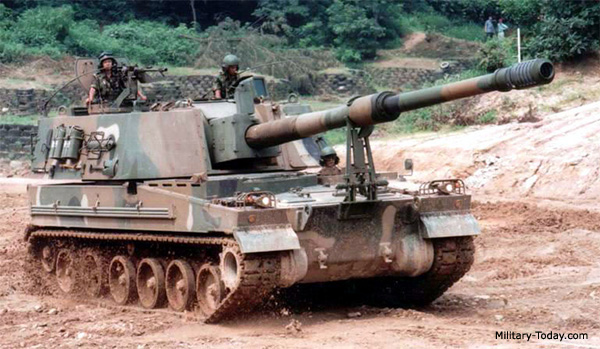
 Jane’s is reporting that India’s Ministry of Defense has selected the Samsung Techwin K9 Thunder 155 mm self propelled howitzer for the Indian Army. This program fro 100 guns is reported to be worth $800 million. According to Jane’s, the selection of the K9 follows a set of competitive tests between the K9 and a 155mm version of Russia’s MSTA-SP (2S19) gun mounted on a T-72 chassis. The article notes that “Senior artillery officers told IHS Jane’s that the K9 outperformed the Russian gun in operational mobility, speed, accuracy, and overall rate of fire.” The adoption of the K9 will be the end of a long delayed program by the Indian Army to acquire a new SPG over the past two decades. In 2005 the program suffered a significant setback when the Indian Ministry of Defense banned the purchase of the Bhim SPG from the South African company Denel. The Bhim consisted of a Denel T-6 155mm gun turret on the chassis of the Indian designed Arjun tank. Considering the numerous set-backs and issues encountered with the Arjun, perhaps it was best that India had not pursued this option.
K9 Thunder SPG selected by Indian Army
New 120mm “multi-purpose” round under development
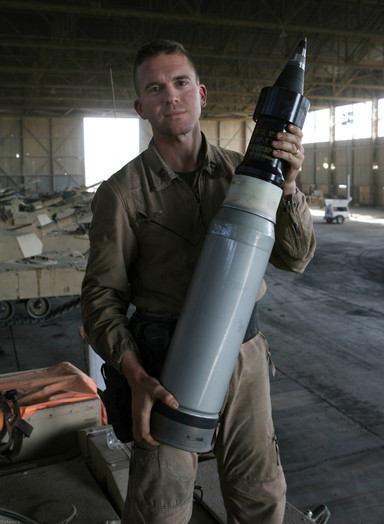
UPI is reporting that the U.S. Army has awarded Orbital ATK a $16 million contract for first-phase development of a new 120mm multi-purpose tank round. According to the article, Orbital ATK said the 120mm Advanced Multi-Purpose, XM1147 High Explosive Multi-Purpose with Tracer cartridge will replace four existing rounds, including those for defeating armor and breaching reinforced walls. The article does not specify which four rounds this new munition will replace. A timeline for this new ammunition development was not disclosed. Orbital ATK and the U.S. Army earlier this year finished qualification for the M829E4, creating the Army’s fifth generation 120mm kinetic energy round.
Orbital ATK website listing their line of 120mm ammunition types.
Video: Iraqi Abrams destroyed by ATGM
Here is a rather startling video from Live Leak showing an Iraqi Abrams tank being hit by a Kornet anti-tank guided missile. It appears that the missile strikes the turret rear, setting off the ammo storage. The tank can be seen to move after being hit, which suggests that the driver survived the attack, at least initially. One crew member is seen jumping from the turret after the ammunition is already burning. This suggests that the compartmentalized ammo storage system worked, preventing the ammo fire from immediately killing the crew.
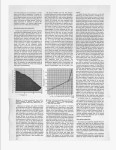
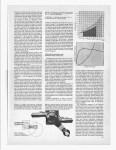
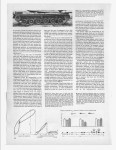
From the Vault: IDR Article on Tank Suspensions 1976
Today we present an article that originally appeared in International Defense Review way back in 1976. While much has changed since then, a good deal of the information in this article is still relevant.


Tank wreck videos
A new youtube channel called Wartime Wrecks has posted a couple videos in the past couple days of tank wrecks. These videos are really collections of still images set to trippy music.
Nature preserve located where tanks used to roll
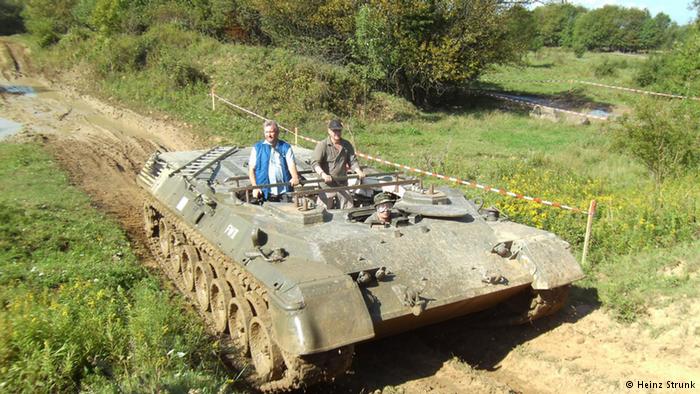 DW has posted an article about a piece of land in Germany that was once an exercise site for armor and is now a nature preserve for rare animals. While this article is not specifically about tanks, it’s a somewhat interesting look at the ecological impact that armored operations can have on an ecosystem. Somewhat ironically, the use of the land as a area for running tanks made it ideal for it’s current use as a preserve for rare animals due to the fact that the land had no buildings on it and was cleared of most trees, and no fertilizer, liquid manure or pesticides were used on it. This area is called Schmidtenhöhe and has been designated a natural reserve and a national natural heritage site by the German government.
According to the article, only one weekend per year do military sounds disturb the birds’ chirping on Schmidtenhöhe: When members of the local Military Vehicles Drivers Koblenz club gather to maintain and drive military vehicles. This once a year tank drive does have an environmental benefit, creating hollows that fill with rain water that become home to some of the species of the preserve. However, the use of the land for armor exercises has also left large parts of it contaminated with old munitions, some of it still live, as well as oil and diesel fuel.
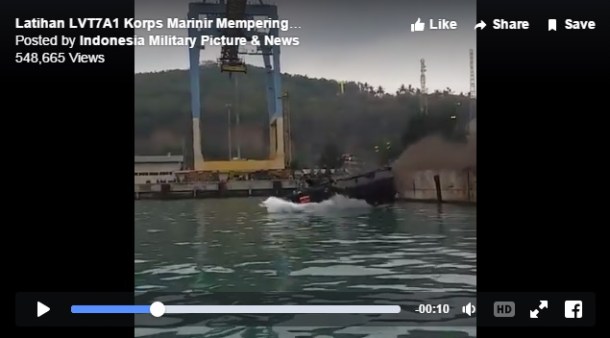
Video: AAV-P7 Leaps off Pier
Foxtrot Alpha has posted an article containing video of an Indonesian Armed Forces AAV-P7 launching itself off a pier at high speed. This spectacle was part of the 70th anniversary of the Indonesian Armed Forces celebrations. Click on the image below to go to the Foxtrot Alpha page and view the video.
AFV news from Jane’s
 Jane’s 360 has several AFV related headlines on their site currently. Rather than make a individual post for each, we will list the headlines below. None of these stories are particularly earth shattering, but they may be of interest to some readers.
Iraq, Saudi Arabia reportedly interested in placing major BMP-3 orders
Pentagon budget 2016: lawmakers fund up-gunned Stryker project
Brazilian Navy M113 upgrade now on track
Malaysian Army chief bullish on AV8 deliveries
Inside the tank: The M5 Stuart & M24 Chaffee
Wargaming Europe’s Richard Cutland takes a look at the M5 Stuart & M24 Chaffee.
Chieftain’s Hatch: How Suitable was T29? Pt.1
 Tank researcher Nicholas Moran has posted a new article in his “Chieftain’s Hatch” web forum. The post is a description of an Armored Board report from 1948 concerning future requirements of the heavy tank program.
Excerpt:
After the war, the US heavy tank program was in full swing. However, there was still some debate as to just what the heavy tanks would look like, or even what it is they were going to do. As a result, though it was accepted that the T28 and T29 series tanks were dead ends, they still provided some kernels for thought on the matter. Armored Board decided to put a more detailed writing down as to where the heavy tank program should go, if at all. Specifically, “to secure sufficient information on the employment of heavy tanks to form an intelligent basis on which future requirements for heavy tanks in the US Army may be determined.” The report was dated 30th June 1948.
This is a fairly long report, so I’m going to split it up into two parts. One the more philosophical outlook as to just what heavy tanks were supposed to be doing and the second, next week, will be on the practical matters relating to tanks of the T29 class in particular. Extract follows:
Background:
By current definition the term Heavy Tank includes those from 56 to 85 tons. The United States first developed a tank (Heavy Tank, M6) in this weight class in 1942; however, it failed to meet service requirements and was not produced. The German Mark VI (Tiger) appeared in 1943 followed by the Mark V (Panther) and a heavier more powerfully armed version of the Mark VI (The Royal Tiger). The Russian 50-ton KV, new in 1941, was succeeded by the Josef Stalin series in 1944. The Josef Stalin -3, a vastly improved fighting vehicle of the heavy tank class, weighs approximately 60 tons, is armed with a 122mm gun and as early as the summer of 1945 had been produced in considerable numbers.
Read the full post here.

 Tank and AFV News