Part 2 of Nicholas “The Chieftain” Moran’s look at the T-55A medium tank.
Photo of the Day
February 12, 2016 by 1 Comment
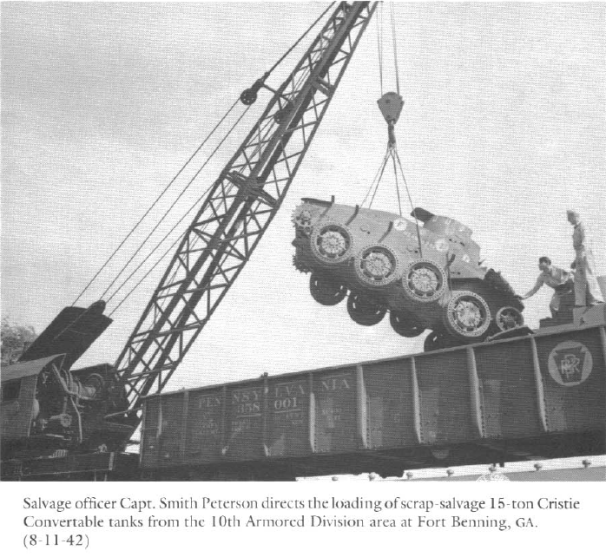
Welcome to our new “Photo of the Day” feature. Since we often come across photos that are worth sharing but don’t necessarily justify being their own news post, we have created the “Photo of the Day” category. Our first entry comes from the book “US Military Railway Service in WW2 by Nevi and Hall.”
Hotchkiss H39 Restoration planned
February 12, 2016 by Leave a Comment
 Over at the Historic Military Vehicles Forum, member “xrize” has posted some pictures of the remains of a Panzerkampfwagen 38h735(f) (Hotchkiss h39) tank which he has purchased at plans to restore. According to the forum thread, this vehicle was purchased at the end of November 2015 from a Norwegian firing range. This vehicle was captured by German forces following the fall of France and used in Finlan and North Norway as part of Panzer Abteilung 211. The vehicle is 70 to 80% complete and is missing the engine and gearbox.
Photos of the vehicle can be viewed here.
M1 Abrams seen with Shia Militia
February 12, 2016 by 3 Comments
Multiple news sources are reporting on a recently released video which shows an M1 Abrams tank in the hands of Kata’ib Sayyid al Shuhada (KSS), an Iranian-backed Shia militia which operates in both Syria and Iraq. This is not the first time that an M1 Abrams has ended up in a video or photo put out by a Shiite militia. According to the blog Threat Matrix:
The Hezbollah Brigades, a US-designated foreign terrorist organization, showed an Abrams flying the Hezbollah Brigades flag earlier last year. Additionally, the group has also published two videos from Iraq’s Anbar province in which several US-made vehicles are used by its forces.
The Badr Organization, another Iranian-backed Shiite militia, has also publicized photos showing its forces in possession of an Abrams. These photos showed the militia with the tank, and at least one US AT-4 anti-tank rocket, near Saqlawiyah in Anbar last year.
The Abrams tank appears at the 16 second mark in the video.
Tank Talk with Len Dyer – German Panzer IV
February 11, 2016 by 3 Comments
Len Dyer of the National Armor and Cavalry Restoration Shop discusses the WWII-era German Panzer IV tank. Tank Talk is a series designed to educate on the features, tactics and histories of tanks throughout world military history.
Marine Corp “Floating Tanks”
February 11, 2016 by Leave a Comment
The website for the US Marine Corps has posted an article about M1 Abrams tanks being floated across a river on rafts of the 8th Engineer Support Battalion. There is a small photo series attached to the article with some nice shots of Marine Corps M1A1 tanks. See the full article and photos here.
MARINE CORPS BASE CAMP LEJEUNE, N.C. — Through strong winds and choppy waters, Marines with Bridge Company, 8th Engineer Support Battalion, prepared for Operation Iron Blitz by providing support to 2nd Tank Battalion by operating rafts, which allowed the tanks to cross a body of water at Marine Corps Base Camp Lejeune, Feb. 4, 2016.
Bridge Company operated two seven-bay raft systems which would each carry two tanks at the same time across New River. The operation allowed 2nd Tanks to cross the river in less than 15 minutes.
“This operation definitely increases the mobility [of a unit],” said 1st Lt. Walter Williams, a platoon commander with Bridge Company. “You will save your tanks from having to cross a civilian bridge and you can literally cross any body of water as long as the shore conditions are correct.”
Transporting tactical vehicles over open bodies of water is typically the preferred method of travel when the opportunity is afforded.
From the Vault: British Assessment of T-64
February 9, 2016 by Leave a Comment
 Here is a British technical assessment of the Soviet T-64 tank circa 1978. At this point in time the British and other Western countries had only very limited information on the T-64, so much of this report is based on photographic evidence and the best guesses of intelligence analysts of the period. Therefore, take the info in this report with a grain of salt. That said, it’s an interesting look into what the West knew, or at least thought they new about this revolutionary tank design in 1978.
Summary from report cover page:
This report describes the external features of the Soviet T-64 medium tank derived from photographic intelligence and gives also an assessment of the probable internal arrangements based on intelligence reports matched to the spatial configuration. The appendix to the paper gives details of the turret model used to produce turret sections from which armour distribution of the turret was derived.
New and Upcoming Books
February 9, 2016 by Leave a Comment
Here are some books that either have been released recently or on scheduled to be released in the next month.
 Nagmachon Heavy APC by Michael Mass and Adam O’Brian
Publishers Description:
Desert Eagle Publishing is proud to announce the release of its No. 15 book, in the IDF Armor Series. Title is – NAGMACHON Heavy APC – Centurion based APC IN IDF SERVICE – Part 2
Book includes old (birdcage) and new (slat armor and doghouse) versions, and the regular chapters :
– The family
– In action
– In details
– Power pack and engine compartment
– Armament
– Suspension
– and a Recovery story in Lebanon, with a personal touch.
Contains many previously unseen photographs. Release date: March 1st 2016
 U.S. Half-tracks Part 2 By David Doyle
Ampersand Publishing
Publishers Description:
Explore the development, production and deployment of America’s heavily armed half-track variants. Illustrated with 700 period photos and described in detail in the 448 hard-bound pages of this volume are the myriad of half-track based mortar, howitzer and gun motor carriages ranging from the ubiquitous but uncelebrated M4 Mortar Carrier to the obscure twin-40mm Bofors-armed T68 to the acclaimed M16 antiaircraft vehicle, which armed with four .50 caliber machine guns remained in the US arsenal until the late 1950s. Drawing heavily on obscure manufacturer documents and long-forgotten government records, this volume, when combined with Part 1, published in 2015, is the only complete study of these vehicles. ISBN: 978-0-9861127-4-4. $49.95
 German Panzer I: A Visual History by David Doyle
Ampersand Publishing
Publishers Description:
Clandestinely developed during the post WWI-era during which Germany was forbidden from developing, producing or owning armored combat vehicles, the Panzer I served as a proof of concept. Manufacturers and engineers became acquainted with the creation of modern fully tracked combat vehicles and soldiers were familiarized with the driving, maintenance, logistics entailed by fielding an armored force. Once war began, not only did these experiences prove invaluable, the tanks themselves, armed only with twin machine guns, nevertheless proved formidable weapons against ill-prepared enemies. Spread through 168 hardbound pages, over 200 photos document all variations of this, the cornerstone upon which Germany’s famed panzer force was built. As a special bonus, this title includes a 16-page-color walk around section featuring very rare examples of the Panzer IA, B and F. ISBN: 978-1-944367-04-6. $28.95
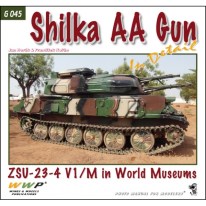 Shilka AA Gun In Detail By Jan Horák and František Kořán.
WWP
Publishers Description:
The book covers ZSU-23-4V1 and ZSU-23-4M variants on 120 pages, 370 colour photos and 20 manual drawings.
WW2 Japanese Heavy Tank O-I
February 9, 2016 by Leave a Comment
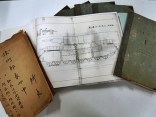 Over at the Status Report is a new post about the history of the little known Japanese O-I super heavy tank project from WW2. This vehicle never got past prototype stage and the one prototype constructed is no longer in existence. Much of the information on this vehicle was kept secret until mid 2015 when the surviving documentation concerning the O-I was purchased by FineMolds Inc. The article is written by Seon Eun Ae.
Excerpt: The O-I (オイ車 Oi-sensha) was a super-heavy tank prototype designed by the Imperial Japanese Army during the Second Sino-Japanese War after the Battles of Nomonhan in 1939. The O-I is one of the Second World War’s more secretive tank projects, with documentation regarding the tank being kept private for over 75 years at Wakajishi Shrine, Fujinomiya. Surviving files have been purchased by FineMolds Inc., and publicly previewed in mid-2015. The multi-turreted 150-ton tank was designed for use on the Manchurian plains as a supportive pillbox for the Imperial Japanese against the Soviet Union. The project was disbanded four years after the initial development began, deemed unsatisfactory for continuation in 1943 after the lack of resource material for the prototype.
From the Vault: British/Israeli Assessment of T-55
February 8, 2016 by Leave a Comment
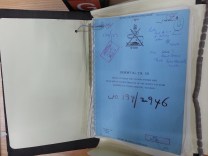 Today we present a report from the British Archives dating back to 1970 concerning the Soviet T-55 tank. This particular report was conducted jointly by the British and the Israelis and documents “trials to assess the weapon system and fightability characteristics of the Soviet T-55 tank.” We have uploaded the entire report onto a separate page which can be viewed here. The report is quite lengthy and will be of interest for those interested in the T-55 tank, particularly those looking for information as to the crew ergonomics. We have transcribed the report summary below:
The main points which emerged form the assessment are:
Ballistic dispersion of the 100mm gun – this was found to be comparable with western standards, ie intrinsic dispersion applicable to full bore projectiles – AP or HE.
The Weapon System – it is simple and has the basic components of any AFV system but without any sophistication or complexity.
The Gun Control System – it is crude. The hand controls do not operate smoothly and in particular elevation and depression is of a low standard due mainly to excessive gun muzzle preponderance. The power and stabilizer controls leave much to be desired, this applies particularly to attempts at engaging targets on the move with the 100mm gun.
Vision for the Driver and Gunner – it is adequate but, for the commander, the devices provided are, by British standards, inadequate and cupola arrangements are of poor quality. They do not compare favorably with the equipment provided for the commander in Centurion of the 1958 period.
Fuel Stowage – this constitutes a fire hazard. The forward or hull front tank surrounds 100mm ammunition and other fuel is carried in “Jerry Can” type containers which are plumbed into the system and situated on the right side track guard and are highly vulnerable to aircraft cannon fire.
Ammunition Stowage – other than the rounds stowed in the forward hull compartment, some rounds – about 6 – are stowed above the turret ring on the turret walls. the rounds are secured by rather crudely designed clips. The total carried is 43. The rounds are heavy.
Armour Protection – for a weight of 6 tons the arrangement of armour is a point in favour of the T-55 tank although it is well known that considerable success against the armour was obtained from attacks with the British 105mm L28 APDS ammunition during the Six Day War.
Silhouette – this is similar to that of the FRG Leopard tank. However, detection of the tank is enhanced by the external fittings on the turret roof. It is, however, a compact vehicle.
Vehicle Generated Smoke – this is extremely effective and simple to operate. A few tanks employed in creating a smoke screen can accomplish a screen of high density, lacking “windows”, in a very short time – a very good feature.
Fightability in General – the vehicle is rugged, the ammunition is heavy and awkward to handle in the cramped crew positions, the gun is loaded from the right side, ie left handed loading, and the result is a very low rate of fire which when combined with the low chance of hit with the first round of an engagement constitutes rather poor fightability characteristics.
Click here to see the entire report.

 Tank and AFV News