Tank Museum Curator David Willey talks about the Chieftain Main Battle Tank.
Inside the Chieftain’s Hatch: Sherman VC “Firefly” part 2
March 29, 2017 by 1 Comment
Here is part 2 of Nicholas “The Chieftain” Moran’s examination of the Sherman Firefly variant.
AFV News from around the Web
March 23, 2017 by 3 Comments
Another installment of AFV articles from various news sources. Click on the headline to go to the full article.
The Motley Fool – After the M1A2 Abrams, the Army Wants a New Tank for 2030
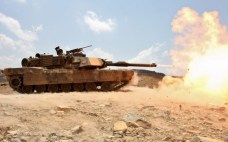 The U.S. Army boasts a motorpool stacked to the rafters with 6,000 M1 Abrams main battle tanks — more tanks than some countries have soldiers. Yet for some crazy reason, Congress keeps buying more. Actually, the reason isn’t totally crazy. The U.S. only has one factory left that’s totally dedicated to the production of main battle tanks — General Dynamics’ (NYSE:GD) factory in Lima, Ohio. Sporadic demand from tank-buyers, however, keeps this factory always on the edge of having to shut down operations — at which point the U.S. wouldn’t be able to build tanks if it suddenly needed to. (A shutdown would also cost jobs in an important Congressional district.)
Washington Examiner – General: US no longer has a ‘world class’ tank
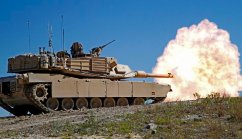 U.S. tanks are now roughly on par with Russian tanks, according to a top general, and the American military doesn’t have the technology to recover its former advantage. “I would not say that we have the world class tank that we had for many, many years,” Lieutenant General John Murray said during a Senate Armed Services subcommittee hearing on modernizing the Army. “I’ll be the optimist and say that we’re at parity with a lot of different nations.”
Newsweek – Moscow Man Convicted of Trying to Smuggle Soviet Tank into Kazakhstan
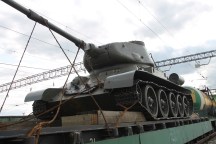 Russian authorities have slapped a three-year suspended sentence on a Moscow man for trying to smuggle a World War II-era tank into neighboring Kazakhstan, state news agency Itar-Tass reports. The man—whose name federal authorities did not divulge—obtained a Soviet Т-34-85 circa from 1945, from a Latvian citizen at the bargain price of €20,000, but planned to sell it off to a buyer in Kazakhstan for more than 10 times that amount.
War is Boring – The Biggest Tank Battle in History Wasn’t at Kursk
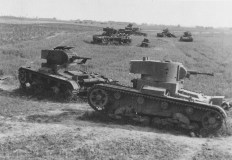 A thousand coffee table books and countless hours of popular history programs have described the Battle of Prokhorovka, part of the Third Reich’s 1943 Operation Citadel, as the largest tank battle in history. Near the city of Kursk on the Eastern Front, hundreds of Soviet tanks slammed into the 2nd SS Panzer Corps in an enormous conflagration of flesh and metal. Prokhorovka was certainly an important clash and one of the largest tank battles ever, but it might be time to retire its description as the biggest — a claim which has been seriously questioned in recent years by historians with access to Soviet archives opened since the end of the Cold War.
Warrior – Why Allies’ Secret DD Tank Failed on D-Day
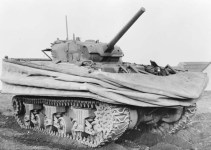 If you’ve seen the blockbuster movies The Longest Day (currently on Netflix) or Saving Private Ryan, a big part of the story is how infantry fought through the obstacles on Omaha Beach (the wisdom of sending two divisions into that meat-grinder can be debated at another time). But the lack of tank support wasn’t part of the plan. In fact, it was one hell of an instance where that notorious and unwelcome Murphy’s Law put in an appearance, costing the infantry some much-needed support. It would have been their secret weapon: the Dual-Drive, or DD, tank.
The National Interest – The PT-76: The Russian Tank That Can ‘Swim’
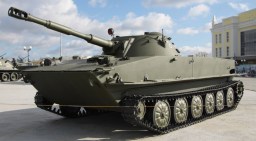 The PT-76 seems like a minor oddity of the Cold War — a Soviet amphibious light tank with thin armor and an unimpressive gun. Certainly it seemed bound for rough treatment on modern battlefields full of heavy weapons and heavier tanks. But the floating PT-76 chalked up a remarkable record, carrying knife-wielding Himalayan soldiers into battle, sinking gunboats on the Ganges Delta, dueling powerful U.S. Patton tanks in Vietnam, and launching amphibious surprise attacks on both sides of the same Middle Eastern war. The first article in this two-part series will look at the origin and characteristics of the PT-76, the nasty shock it gave U.S. forces in Vietnam, and the historic countermeasure used against it.
Inside the Hatch: Sherman VC “Firefly” part 1
March 21, 2017 by Leave a Comment
Nicholas “The Chieftain” Moran of World of Tanks takes a look at a WWII era “Firefly” tank.
Video: The Chieftain on Irish Armored Vehicles
March 16, 2017 by 1 Comment
Nicholas “The Chieftain” Moran of World of Tanks talks on camera about the history of Irish armored vehicles.
Tank Chats #33 Panzer III
March 12, 2017 by Leave a Comment
The Tank Museum presents another installment of “tank chats.” This episode features museum curator David Willey describing the late model Panzer III tank that resides at the Tank Museum. For more information on this vehicle, we recommend the recently released Haynes Manual on the Panzer III by Dick Taylor.
Photo of the Day: “Five of Hearts”
March 10, 2017 by 3 Comments
Today’s POTD is of the Renault FT tank on display at the Ft. George Meade Museum in Maryland. This particular tank, nick-named the Five of Hearts, served with the 2nd Platoon, Co. C, 344th Tank Battalion during the Meuse-Argonne fighting on 4 October 1918. This photo comes from the Facebook page of Steven Zaloga who notes that the camouflage scheme is more typical of the post-war US experimental schemes than the wartime French colors.

Lester Tenney, WWII tank commander and survivor of Bataan Death March, passes away at 96
March 7, 2017 by Leave a Comment
 On Feb 24, 2017, US tank commander and survivor of the Bataan Death March Lester Tenney passed away in California at age 96. A member of the 192nd Tank Battalion National Guard at the beginning of WWII, Tenney served as a radio operator and later a tank commander during the fighting on Bataan in the Philippines in December of 1941. After being taken prisoner, Tenney survived the Bataan Death March as well as over three years as a POW forced to labor in a coal mine. Following the war, Tenney was released and made a new home in California. He would go on to obtain a doctorate in finance from the University of Southern California, taught at San Diego State and Arizona State Universities and founded a company providing financial advice to corporations. He authored a book based on his experiences titled My Hitch in Hell (Memories of War)
For more about Lester Tenney, check out the following links.
New York Times 3/5/2017 – Lester Tenney, 96, Dies; Faced Japan’s Brutality and Won Its Apologies
LA Times 2/27/2017 – Lester Tenney, Army tank commander who survived Bataan Death March during World War II, dies at 96
CNN 4/9/2017 – ‘Dying was easy: It’s the living that’s hard’
Voices of Manhattan Project (2013) – Lester Tenney’s Interview
Simon Wiesenthal Center – Letter from Lester Tenney in response to Yukie Sasa article “The Bataan Death March: Fact or Fiction”
Vintage News: So what happened to the 450 Argentine Shermans? 40 images may just tell the story
March 4, 2017 by Leave a Comment
This article was published in September of last year at the Vintage News website. We didn’t notice it at the time, but it came to our attention today when the Tank Museum shared it on their facebook page. It’s a fun article and should prove entertaining to anyone with an interest in post-war Sherman tank history. Those familiar with the Surviving Panzers website will recognize a good many of these photos.
So what happened to the 450 Argentine Shermans? 40 images may just tell the story
In the late 1940’s, Argentina bought nearly 450 M4 Sherman’s from Belgium in many British variants, over 250 of them were the Firefly version, with the long barrelled 17pdr gun that could take on the Tiger 1.
In the late 1970’s, the Argentinian Army needed to modernize their armoured units. The TAM project was under way, but the border crisis with Chile required an urgent reinforcement until the TAM was operational and the Army ordered the modernization of 250 Shermans, mainly the Firefly version then in service.
This program included a new engine and a new armament. Many versions of M4 in the Argentinian service were used, and the Repotenciado (Lit; Upgraded) was born. Most of the Sherman Repotenciado are the British Sherman Hybrid Firefly IC, but it`s not the only version. The principal advantage in using the Firefly was the easy adaptation of the internal configuration to the new 105mm ammunition storage.
The Tank Museum: Tank 100
March 4, 2017 by Leave a Comment
 It’s been a few months since we visited the Tank Museums Tank 100 website, celebrating 100 years since the first use of tanks in 1916. There is quite a bit of interesting new content there, including more installments of the Tank Men series looking at WWI British tank crewmen and Training and Combat section. Quite a few of the posts are written by Tank Museum researcher and prolific author David Fletcher. We have provided some links to some of posts written by Fletcher below. This is not a complete list and we highly recommend that people spend some time browsing the content at the Tank 100 site, it’s well worth the time.
Recruiting for the Heavy Section – Mr. Fletcher describes the formation of the first tank units
Part I – Lieutenant-Colonel Ernest Swinton was one of the leading men in the development of the Tank Corps, going on to recruit hundreds of tank men who served in the First World War. Read his story in the first of a three part series on the creation of the Heavy Section of the Royal Machine-Gun Corps.
Part 2 – It can’t be easy recruiting for a new branch of the Army, especially if you’re not supposed to say in the first place exactly what it does. This seems to have been the main problem in the early days facing Lieutenant-Colonel Ernest Swinton, Royal Engineers, when he tried to recruit men for the new war machines, the ‘tanks’.
Part 3 – Part 3 goes into more detail regarding exactly how Swinton, first commander of the Heavy Section, managed to swell the numbers up to 184 officers and 1610 men of other ranks.
A Tank in Your Town – A list of some of the WWI British tanks that survived the war
Ypres – Ypres, in Belgium, on the edge of the Salient of evil memory, is another location that acquired a tank, selecting one from those about to be destroyed at the end of the war which had significant local associations.
Tonbridge – It would be nice to say that I remembered the Tonbridge tank but it was long gone by the time I was there, I knew the Castle well enough, and the river Medway that runs by it, but the tank was scrapped in 1938, even before I was born.
Barnsley – Barnsley, in Yorkshire, received its tank on 27 June 1919. It was delivered to the goods yard and driven from there by a Tank Corps crew, to a temporary resting place in the town centre, two weeks later the men returned and drove the tank to its permanent site in Locke Park where it was displayed along with a German 77mm field gun.
Aberdeen – Scotland ran its own National War Savings Scheme and since we don’t have their version of the Silver Bullet we don’t yet know how many tanks were distributed. We can only rely on postcards, such as the one above from Aberdeen, but we’re slowly building up a picture.
Colchester – At Colchester, in Essex, the gifted tank was set up on a plinth alongside the ancient castle walls. It was a Mark IV female although its number is not recorded. However we do know that it sported unditching beam rails and the white/red/white markings which indicate that it served in France and was not a mere training machine from Bovington.
Toward the Tank – The first 8 of a 12 part series looking at the predecessors of the tank over the centuries.
Part 4: Valturio’s War Chariot
Part 6: Steven’s Landship 1599
Tanks in the Middle East – A very interesting series of articles about the little known use of WWI armor in Palestine and Egypt.
Tanks in Palestine in the First World War
Mark I & Mark II Tanks in Gaza

 Tank and AFV News