Nicholas Moran takes a look at the M47 Patton!
Yuri Pasholok articles via Archive Awareness
April 5, 2016 by Leave a Comment
Over at the Archive Awareness blog, they have recently posted a number of English translations of article by Russian tank researcher Yuri Pasholok. We have posted titles and links below for those who may want to check these out.
Covenanter: Reservist Tank
 Winston Churchill’s saying “The tank that carries my name has more drawbacks than I do!” in regards to the Infantry Tank Mk.IV is well known. Despite this evaluation, the Churchill was the longest-living British tank, even finding itself useful in Korea. It is not know what the Prime Minister thought about the Cruiser Tank Mk.V, more known as the Covenanter, but there is one fact that says more than enough: it is the most numerous tank of the Second World War that never saw combat.
Medium Tank Mk.I: First of the Maneuver Tanks
 The end of the First World War coincided with the decline of vehicles designed by William Tritton. Drastic budget cuts meant that further development of heavy tanks in Great Britain stopped. As for the first post-war medium tanks, they turned out to be too heavy, and could not repeat the success of the Mk.A Whippet. In late 1918, development of the Medium Tank Mk.D began, directed by Lieutenant Colonel Philip Johnson. The result was truly revolutionary and could reach a record of 20 mph (32 kph), but a large amount of mechanical problems brought about the end for that tank. After trials, the tank was not approved for mass production, but it did not disappear into nothingness. Later on, the Americans used it as a basis of their Medium Tank M1921. In England, the Vickers company had a go at making tanks and attained success with its first steps, creating the successful Medium Tank Mk.I.
Light Tank M22: Steel Locust
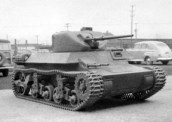 Thanks to John Walther Christie, the USA was the leader in airborne tanks before WWII, but with one caveat: not a single one of his vehicles was actually accepted into service. However, Christie’s experiments resulted in a very good understanding of what an airborne tank should be like. The idea of a tank with wings was quickly discarded in favour of a light tank that was attached under the fuselage of a heavy bomber or transport plane. This concept was used to make the Light Tank M22.
T2 Medium: Scaling Up
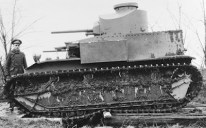 Starting with the M2 Medium Tank, American medium tanks were based on the M2 Light Tank. The method of their creation was as follows: novelties were tried out on a light tank, then the tank was proportionally scaled up in size. Of course, many changes were introduced into the design, like increasing the number of bogeys or return rollers. Overall, this method was successful. However, this was not the first attempt at using this method by American tank designers. The first time they tried it, they got something different…
KV-7: Lock, Stock, and Three Smoking Barrels
 Work on heavy SPGs in the Soviet Union began in the early 1930s. By the end of the decade, development stopped, but began anew in early 1940. The Red Army needed tanks to destroy enemy pillboxes. The result of this requirement was the 212 SPG which, for various reasons, was never built. In April of 1942, the 212 project was finally closed, giving way to another no less interesting project: the KV-7 assault tank.
The Last of the Char B
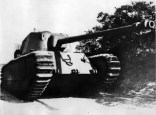 There is a misconception that the French worked only for their new masters during the occupation of 1940-1944. Indeed, most French tank manufacturing facilities ended up in the German occupation zone. Nevertheless, the resistance that so many speak of was active, and even on occupied territories, work continued. It became the foundation for French tank building that began immediately after the country was freed from occupants.
World of Tanks History Section: Panzer 58 Mutz
 What is Switzerland famous for? One immediately thinks of watches, banks, mountains, and cheese. Despite fighting its last war in 1848, this small country remained among the top producers of armament for decades.
For many years, Switzerland did not have its own tanks or SPGs. Even though Europe experienced a tank building boom after the end of the Second World War, Switzerland preferred to buy British Centutions and Czech G-13s (an improved version of the Jagdpanzer 38(t), mistakenly called Hetzer). This was cheaper than developing and producing domestic designs. The situation changed in the 1950s.
More on the Stuart tank at Berwick
April 5, 2016 by Leave a Comment
 A couple weeks ago we posted about a WWII era Stuart tank that has found a new home in Berwick PA, site of the former American Car and Foundry factory. Bob Kalinowski of The Citizen’s Voice of Luzerne County has posted an article and video about the Berwick Stuart tank and Louis Kovach, a 90 year old former employee of American Car and Foundry who welded parts on many of the 15,000 Stuart tanks produced by the company.
Louis Kovach welded parts of all 15,224 tanks manufactured at the American Car and Foundry in Berwick that were used in combat during World War II.
At age 90, he finally got to see one return home.
A 1942 Stuart tank, built at the American Car and Foundry, recently arrived back in Berwick following a 12-year effort by a group of citizens motivated by a motto they adopted — “Bring Stuie Home.”
“It was built in Berwick and a lot of people served in those tanks. Coming back to its original place in Berwick was quite an achievement,” Kovach said recently. “It’s nice for Berwick.”
Today, the tank will take center stage in the borough where it was born. The tank will be paraded through Berwick around 2 p.m. on a trailer as part of a homecoming ceremony, then it will be on display at the Reliance Fire Hall for people to take pictures. Members of the committee expect a lot of interest since more than 9,100 people from Northeastern Pennsylvania worked at the plant during its peak, including 1847 workers from Luzerne County.
The tank has been stored on a trailer in a garage in Salem Township since arriving 10 days ago.
Kovach’s nephew, Columbia County Commissioner Dave Kovach, was part of the Stuart Tank Committee that worked for 12 years to find, buy and relocate a Stuart tank.
Click on this image to view the video of Louis Kovach and the Berwick Stuart.

Team Konigstiger
April 5, 2016 by Leave a Comment
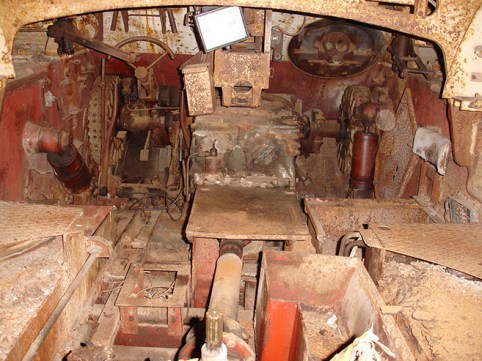
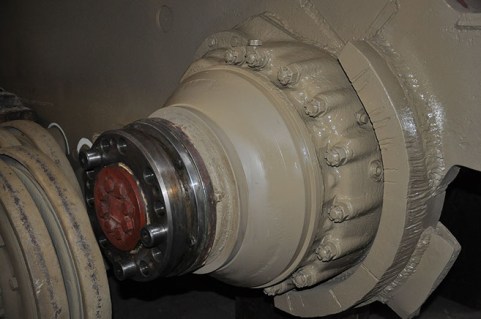
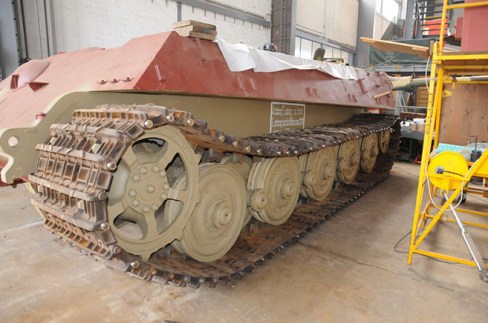
Over at the Swiss Military Museum, a group has been working on the restoration of a WWII era King Tiger tank since 2006. They have documented the restoration process on their website, including some rather nice photo galleries. Unfortunately, the website is not in English. However, there are enough good images at this site that we felt it merited mention here. Those curious about the text on the website can get a somewhat readable English version using the translate feature in Google Chrome.
The galleries include:

Tank Chats #17 Tiger I
April 2, 2016 by Leave a Comment
From the Tank Museum Youtube channel:
David Willey, The Tank Museum Curator and co-author of the Tiger Tank Owner’s Workshop Manual, presents this Tank Chat on the subject of the most famous tank in the Bovington collection- and perhaps the world – the German Tiger Tank from World War Two. Don’t miss Tiger Day on 30 April – for more information visit tankmuseum.org.
C&Rsenal on the T-Gewehr Anti-Tank Rifle
March 30, 2016 by Leave a Comment
For those with an interest in historic anti-tank weapons, we strongly recommend this video by C&Rsenal on the German T-Gewehr anti-tank rifle. C&Rsenal hosts Othias and Mae do a very good job of explaining the history of this rather unique and unusual rifle and also provide a live fire demonstration. We generally try to keep a pretty neutral tone in our posts here at Tank and AFV News, but we have to admit to being big fans of C&Rsenal. We don’t typically have reason to link to their videos since small arms are not our subject matter, so we were rather pleased to see them cover something related to tanks in the form of the T-Gewehr. If you like this video, please check out their other videos on WW1 small arms at their website.
Tank Talk: Tiger and King Tiger
March 29, 2016 by 2 Comments
Here are a couple new episodes of “Tank Talk” featuring Len Dyer of the National Armor and Cavalry Restoration Center.
Australian War Memorial Videos
March 28, 2016 by 1 Comment
Here are some tank related videos from the Australian War Memorial Youtube channel.
Film Collection Online: Tracks on Sprockets
Anatomy of the Mark IV
British Mark IV Tank in action – F03728 (silent)
Film Collection Online: DPR Highlights – Australian Army
Mephisto – rarest tank in the world
Inside the Chieftain’s Hatch: AC 1 Sentinel
March 28, 2016 by Leave a Comment
Nicholas “The Chieftain” Moran has posted a new video examining the Australian AC1 Sentinel tank.
Over at the Chieftain’s Hatch section of the WoT forum, member “Bonesaw” has posted links to a couple documents concerning the Sentinel that readers may find of interest.
Australian Cruiser tank mark -1 instruction book (Provisional)
Photo of the day: Mark I tank at Hatfield Park
March 26, 2016 by Leave a Comment
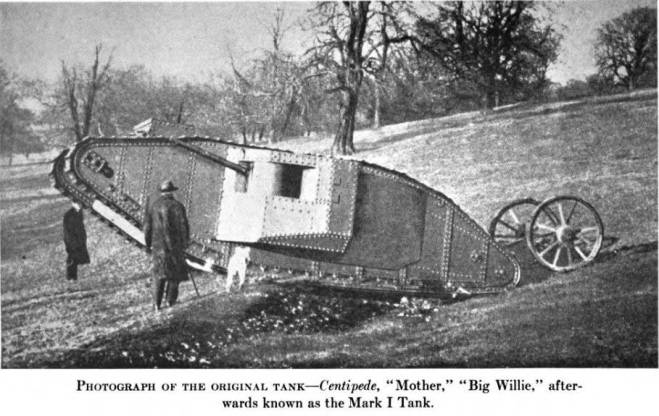
Today’s POTD ties in with the previous post about the 100th anniversary of the first tank trials at Hatfield Park in 1916. This photo comes from the book “Eye Witness” by Ernest Dunlop Swinton. We found the image at this website. For those interested in checking out “Eye Witness” by Swinton, the book is available for viewing online at the Hathi Trust Digital Library site.

 Tank and AFV News