Today we present “The Fighting Tanks Since 1916” written by Ralph Jones, George Rarey, and Robert Icks. This book was published in 1933 and represents the most complete examination of the topic up to that point. The book was reprinted in 1969, copies of the reprint can be found from online book vendors at relatively reasonable prices. Fortunately, the book is also available for reading on the Hathitrust digital library website. For those that would like to give it a look, click on the image below.
More on the basement dwelling Panther
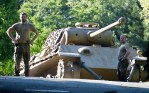
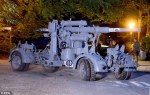
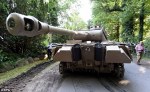
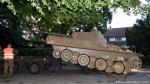
Since we first reported on this story, several new articles have appeared on the topic. We are posting as many pictures here as we can find. The name of the 78 year old owner of the tank has not been released. It seems that his villa had previously been searched as part of an investigation in stolen Nazi art. Prosecutors in Kiel had been alerted to the presence of the Panther and other military equipment by authorities from this previous investigation. It has been noted that almost 20 soldiers struggled to remove the tank from the villa, taking nine hours and the use of two modern AFVs to haul the tank out of it’s storage area. Ulrich Burchardi, an army spokesman, described the difficult task of removing the tank without damaging the house as “precision work”, requiring the soldiers to build a wooden ramp in order to free the tank. The other notable items found in the villa were an 88mm Flak cannon and a large torpedo.
Peter Gramsch, lawyer for the villa’s owner, claimed that the tank and the anti-aircraft gun could no longer fire their weapons and were therefore not breaking any law. The lawyer noted that there was even a note from the responsible district office from 2005 stating that the tank had lost its weapons capability. Mr Gramsch now wants to take legal action against the seizure and also for compensation for his client, stating that “I assume that the tank was damaged in the process.“ The mayor of Heikendorf, Alexander Orth, who was present at the tank’s removal, said the discovery came as no surprise. “The Mayor noted that the owner of the tank “was chugging around in that thing during the snow catastrophe in 1978”.
From the Vault: Differences in counting tank losses
Today we present a short article by William Platz from the May 1973 issue of AFV-G2 magazine on the differences in how tank losses were recorded by the WWII German Army compared to how they were recorded by the British Army. We often find that people in some of the online forums love to quote loss figures for different WWII actions, often taking at face value the figures reported in after action reports. This article does a nice job in showing how different counting methods could often lead to reported numbers differing significantly from reality.
We realize this article is from a copyrighted source, albeit a 40 year old one. If anyone associated with Baron Publishing still exists and wants us to remove this, we will be happy to do so. We present it strictly for educational purposes, we run no ads on this site and make no profit from it, other than the personal satisfaction of spreading around information we find interesting.
Tank Chats #7 British Mark II with David Fletcher
The Tank Museum has posted another installment in their Tank Chats series featuring David Fletcher.
The seventh in a series of short films about some of the vehicles in our collection presented by The Tank Museum’s historian David Fletcher MBE.
Only fifty tanks each of Marks II and III were produced. They were unarmoured, in the sense that the steel from which they were built was not heat treated to make it bullet proof. The reason being that these tanks were only intended for use as training machines.
The chief external differences from Mark I lay in the tail wheels, which were not used on Marks II and III and later heavy tanks, the narrower driver’s cab and the ‘trapezoid’ hatch cover on the roof.
Panther tank found in German Basement
A couple German language articles have appeared in the press the last couple days reporting on a WW2 era Panther tank having been found in a basement of an elderly German collector in Heikendorf. Apparently, a Bundeswehr unit equipped with two armored recovery vehicles were sent to the residence to recover the vehicle (or vehicles, some reports say two tanks were found.) It is being reported that a seven meter long torpedo was also removed from the premises. The articles state that the items were removed as they were in violation of the War Weapons Control Act, a claim the lawyer for the item owner says does not apply since the tank is not operational. An article from NDR.de has some pictures of the tank being removed from the premises. The articles does not state the name of the 78 year old collector who owns these items.
Israel to upgrade Argentinian TAM tanks
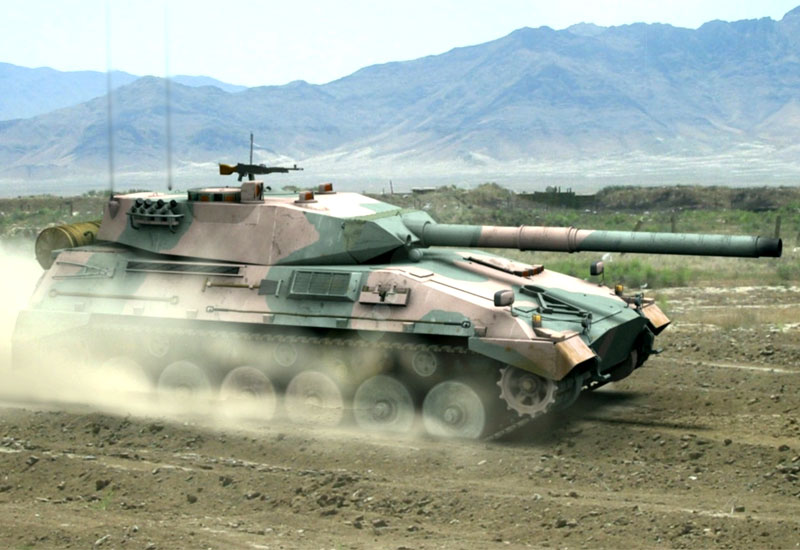
Jane’s is reporting that Israel has won a contract with Argentina to upgrade 74 of their TAM tanks. The contract is stated to be worth $111 million. According to Jane’s:
The deal was signed by Argentine minister of defense Agustin Rossi and Mishel Ben-Baruch, director of the Israeli Ministry of Defense’s International Defense Cooperation Division (SIBAT), on 26 June.
Rossi announced that the contract includes an offset agreement clause that will establish joint ventures to oversee technology transfers to Argentina. The work is to be performed at the 601 Arsenal Battalion in Boulogne Sur Mer in Buenos Aires province.
The article stub from Jane’s does not include details about what the upgrade will entail. According to the wiki page for the TAM:
In 2010, a modernization program was announced. Israeli defense contractor Elbit Systems was chosen to provide 3-axis gyro-stabilization, and most probably the L7A2 105 mm cannon will be replaced with a more powerful 120 mm cannon, like the L44 120 mm Cannon.
Video: History of US Tanks
This Vietnam war era government documentary showed up on youtube today. Not sure if this video has appeared online before, but it’s the first time we recall seeing it.
Books best avoided: Steel Steeds Christie
Lately I have been thinking a good deal about the role of Walter J. Christie in pre-WWII tank development. As I have been attempting to assemble as much information concerning Christie as I can, I discovered that in the mid 1980’s, Christie’s son Edward wrote a short book about his father’s career called “Steel Steeds Christie.” This book was published by a vanity press and is now quite rare and expensive. Fortunately, ARMOR magazine featured a review of this book back in the Jan-Feb 1986 issue. The review, by retired Col, Leo D. Johns, is quite negative, prompting a number of replies from both Edward Christie defending his book, and other readers posting even harsher reviews than the original one by Col, Johns. I have reprinted the original review below as well as the various letters to the editor concerning the book. I have provided these letters in part as a warning to anyone thinking about shelling out the dough to purchase a copy of this rare book, but primarily because I think these letters are really quite entertaining.
World of Tanks: Virtually Inside the Tanks videos
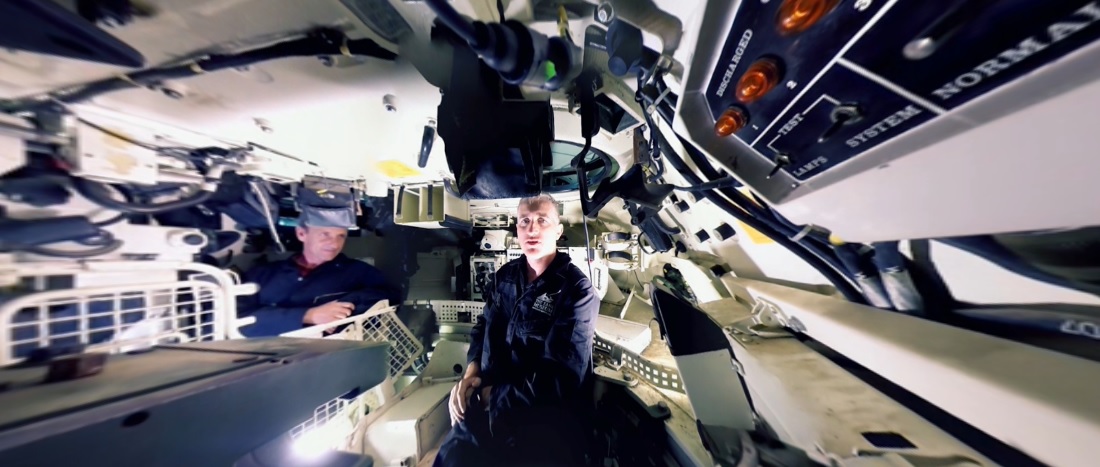
World of Tanks has released a new website featuring a series of videos titled “virtually inside the tanks.” These videos feature WoT personalities Nick Moran (The Chieftain) and Richard Cutland (The Challenger) as they ride around inside a tank. The videos are filmed with a series of cameras, providing a rotatable panoramic view of the inside of the vehicle. This filming technique creates a very strong “fisheye” effect which is frankly a bit disorientating. That said, people may find these videos informative and they do provide some good images of the vehicle interiors, albeit a distorted one. Currently the line up of vehicles featured in this series included the Leopard 1, the Chieftain, the M4 “Fury”, the T-34 and the T-55.
How to buy a Russian tank
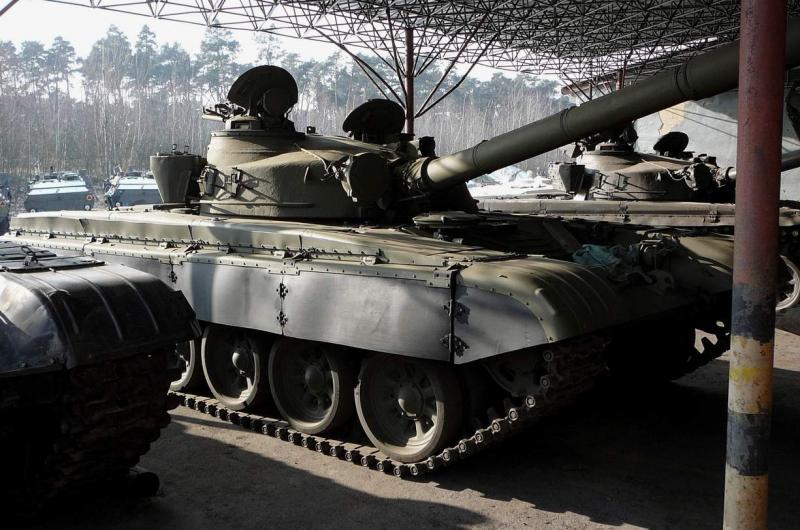
The past couple weeks have seen a few articles in the media about “how to buy a Russian tank.” Wired ran an article on the topic which seemed to garner a far amount of traffic. The article focuses on the relatively inexpensive former Soviet equipment being offered by Mortar Investments, a Prague-based dealer of military vehicles and gear. The Wired article describes the process of purchasing one of these Czech tanks as:
Ordering starts with a 30 percent deposit and a two-month wait as the Czech authorities work through their end of the paperwork.
Then four things need to happen before your baby comes home. No surprise, this involves forms. You’ll need an Application and Permit for Importation of Firearms, Ammunition and Implements of War from the Bureau of Alcohol, Tobacco, Firearms and Explosives. Plus an International Import Certificate from the US Department of Commerce.
Second amendment or no, you can’t have your tank sent over before someone strips out the machine guns and cuts a hole in the cannon. And somebody needs to wipe the thing free of dirt to please the US Department of Agriculture.
You have to ship the thing. Mortar Investments estimates it costs $15k to the East Coast, $20k to Houston, and $25k to the West Coast. Your tank will arrive at the seaport closest to you, at which point you make yourself known to trucking companies through a series of peculiar phone calls.
The Wired article can be read here.
Just for fun, we did a price check on vehicles over at the Mortar Investments page. We found the following:
T-72 $50,097
T-55 $44,531
T-34/85 $44,531
SU-100 $72,363
BMP-1 $38,965
2S1 Gvozdika $22,266
VT-34 Recovery vehicle $27,832
VT-55 Recovery vehicle $19,482