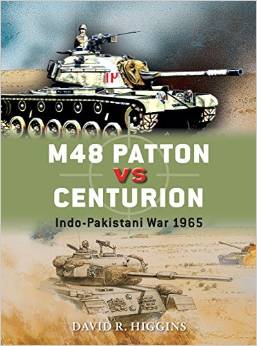
Book Alert: M48 Patton vs Centurion

downloadOsprey books has listed a new addition to their “Duel” series titled M48 Patton vs Centurion: Indo-Pakistani War 1965.  Written by David Higgins, this is the first of his Duel series books not to deal with WW2 German armor (King Tiger vs IS-2, Jagdpanther vs SU-100, Panzer II vs 7TP.)  The tank battles between India and Pakistan in the 1960’s and 70’s have received far less coverage than the Middle east tank battles of the same period.  We hope this volume will help fill the void of good reading material on these rather interesting though much overlooked armored clashes.  This book is slated for an early 2016 release.

Publishers description:

The Indo-Pakistani War of 1965 witnessed the largest tank battles seen since World War II, notably between India’s British-made Centurion Mk 7s and the American-made M48 Pattons fielded by Pakistan. Following nearly two decades of tensions and sporadic conflict between India and Pakistan, in August 1965 several thousand Pakistani soldiers entered the disputed territory of Kashmir disguised as local civilians, to which India responded with a successful ground assault. After a week of fighting, India’s 1st “Black Elephant” Armoured Division launched an offensive toward Sialkot, where it rebuffed Pakistan’s 6th Armoured Division, which suffered considerable tank losses. The ensuing battle at Chawinda on 14-16 September 1965 would demonstrate that the Centurion, with its 105mm gun and heavier armour, generally proved superior to the faster, lighter but overly complex Patton, mounting a 90mm main gun; however, the latter performed exceedingly well in the Sialkot sector, exacting a disproportionately heavy toll on its Indian opponents.

Featuring full-colour artwork, expert analysis and absorbing combat accounts, this is the story of the clash between the Centurion and the M48 Patton in the massed armour battles of the Indo-Pakistani War of 1965.

Tank Video: T-34/85 drafted back into service

This interesting video was brought to our attention in a post by Peter Samsonov over in the WoT forum.  Apparently, this video shows a T-34/85 tank being brought back to life by pro-Russian separatists in the Ukrainian city of Antratsyt.  The color scheme of the vehicle is a bit unusual.  Note the attempts to provide protection against shaped charge warheads, including the mesh side panels and dangling chains on the front of the vehicle.

From the Vault: Caccolube

This video from 1943 has been making the rounds the past couple years on a variety of websites.  It’s a wartime training film from 1943 from the O.S.S. (Office of Strategic Services) showing a rather innovative (?) way to destroy the engine of an enemy tank or truck.  Essentially, it’s a condom filled with abrasive powders and crushed walnuts that was intended to be dropped into an engine crankcase.  Once this is accomplished, the caccolube goes to work, causing the enemy engine to seize up after being run “20 to 30 miles.”  We will leave it to the viewer to determine how effective a weapon caccolube may have been.

Siberian farmers plow fields with tanks

The Siberian Times has posted an articleinformation_items_3032 about three farming brothers that use old tanks to plow their fields.  According to the article,  Vasily, Dmitry and Ivan Ivanov, from the rural settlement of Karatuzskoye in Krasnoyarsk Krai, bought the vehicles from the military in the 1990s for the price of scrap metal.  Initially they bought them to use as cars because the roads in their area are extremely bad. They live about 30km from the district centre and in the winter or bad weather it is almost impossible to travel anywhere.  The article identifies the tank hulls used by the brothers as being from T-62 tanks, although judging from the arraignment of the road wheels, the tractors appear to be based on T-55 hulls.  The Ivanovs farm about 400 hectares of land, half of which is sown with grain, with the tank used to plough the land and sow the oats and wheat.

Full article here.

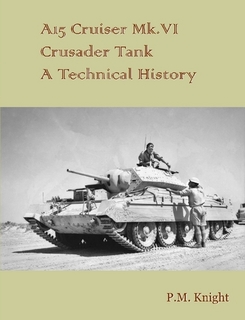
Book Alert: A15 Cruiser Mk. VI Crusader Tank – A Technical History

product_thumbnailA new book on the British Crusader tank by P. M. Knight has been released.  Titled “A15 Cruiser Mk. VI Crusader Tank – A Technical History”, this is a paperback volume of 199 pages.  This is the second book by P. M. Knight on British armor, his first book examined the Covenanter Cruiser tank.  At almost 200 pages, this book promises to be one of the most in-depth examinations of this much-maligned vehicle and should prove to be an indispensable addition to the library of any British armor enthusiast. Currently it is available for order through lulu.com although the author has informed us that it will be available through Amazon in 4-6 weeks.

Publisher’s Description:

There can be few tanks that have proved as controversial in their deployment as the Crusader, a tank that was invested with high hopes on its entry into service in 1941. This book investigates in unprecedented detail the issues that impinged on its service life. Drawing extensively on original archive sources, a new perspective is drawn on both the employment of the tank itself, and on British tank development of the era. The complex story that unfolds encompasses many interwoven and sometimes contradictory threads, allowing the author to reach both perceptive and surprising conclusions.

From the Editor: Unusual Soviet target vehicles

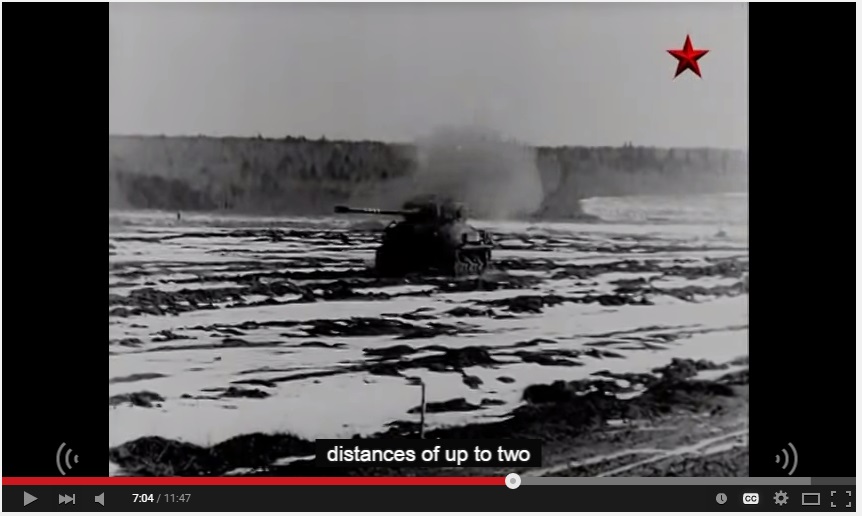
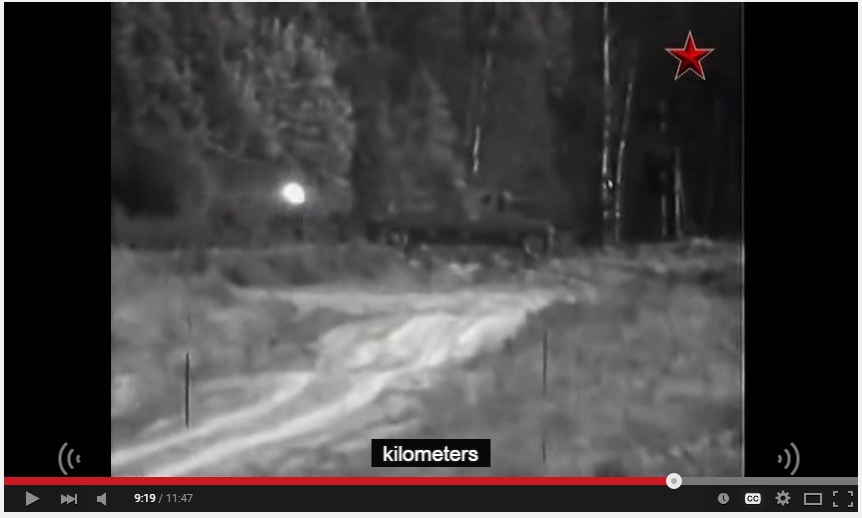
In our earlier post today on Soviet auto-loaders, we posted a youtube clip about the T-72 tank. This clip includes a good deal of footage that appears to be of early model T-72 tanks being put through tests or exercises.  In a couple instances, they show a T-72 firing at a target tank.  The scenes are quite brief, but it is still possible to identify the model of the target tank.  The vehicles used were rather surprising.

The first takes place at the 7:03 mark in the video and appears to show an Israeli M51 “Isherman” as the target vehicle.

Sherman target

The next scene showing a target tank takes place at the 9:17 mark in the video.  This shows a cannon fired missile being launched at what looks like a German Panzer III.

Panzer III target

Considering the price that WW2 German armor commands from collectors these days, it’s somewhat painful to see one used for target practice!

German Military – Fact or Fiction

The website for the video game “Armored Warfare” has posted a rather provocative article titles “German Military – Fact or Fiction.” The article focuses almost exclusively on tanks and armored vehicles. The article makes a number of claims that run counter to the popular conception of German WW2 armor. We present it here for the sake of discussion.

Excerpt:

Was the Panther the best German armored vehicle of the war? No. That title probably belongs to a less obvious candidate – the StuG III. Built upon the Panzer III chassis, the StuG III was not expensive, had excellent results and remained effective right until the end of the war. Building these vehicles made much more sense during the war than building over-armored heavy tanks, especially in the price per enemy kill perspective.

Contrary to popular belief, Tigers were (especially late in the war) very rare. Many older wartime accounts mention “Tigers”, “Panthers” and “Ferdinands” destroyed in large numbers but most of these tank kills were other tank models and not the dreaded “big cats” – for an average Allied soldier, however, every tank was a “Tiger”, especially in the east.

One issue of interest is German steel. In the past, various popular sources have attributed nearly mythical qualities to it and the “Kruppstahl” was largely a synonym for “durable”. Recent Russian sources have claimed exactly the opposite – that it was brittle and poor, especially late in the war. The truth, as usual, lies somewhere in the middle. The Krupp steel was certainly hard rather than soft but that is not inherently a good thing. Softer steel has some advantages over very hard steel (which is usually brittle), but it is possible that the (false) “harder means better” notion spawned the German steel reputation. On the other hand, the claim that German steel quality decreased later in the war is false – according to H.L.Doyle the Germans compensated the lack of certain elements of the steel creation process by modifying the formula.

Full article here.

Soviet Autoloader videos

Over at the tank-net forum, user “dyankov” pointed out this Russian youtube video showing how the autoloader in a T-72 tank works.  We thought it was worth sharing.


For those interested in seeing how the autoloader of the T-72 differs from that of the T-64, this video includes some brief footage of both systems.  The video is in Russian so it is a bit hard to follow for non-Russian speakers (setting youtube to translate the Russian close captioning to English will result in some real comedy.)  The operation of the T-64 and T-72 autoloaders can be seen starting at the 5:15 mark in the video.  T-64 autoloader is the one that turns the round from vertical to horizontal while the T-72 system keeps the shell horizontal through the entire process.

 
This video provides an even better look at the T-64 autoloader.


And here is a short clip showing the operation of the autoloader in the T-80, which is basically the same system as found in the T-64.

Overlord’s Blog on Universal Carrier

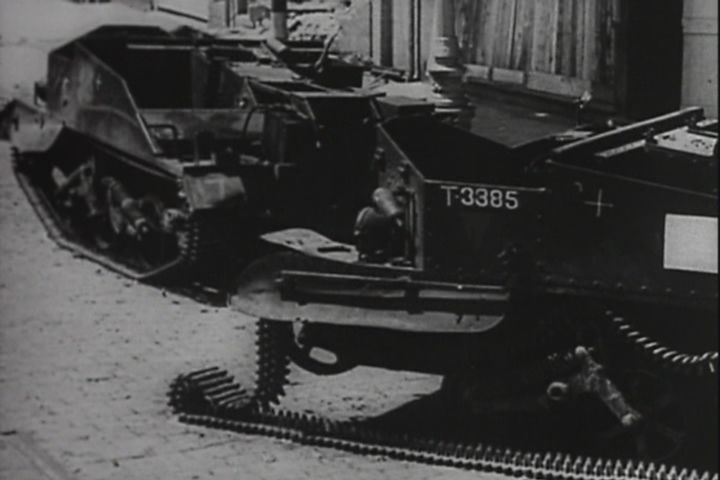
mor12U0Overlord’s Blog is featuring a post about a heroic action taken by a group of British Bren Gun Carriers during the 1940 campaign in France.  The post describes the exploits of Lieutenant Christopher Furness who commanded a section of Bren Gun Carriers belonging to the 1st Welsh Guards.  Furness was part of a column which was retreating from the Arras area and in danger of being destroyed by advancing German forces.  WIth a group of three Bren Carriers and three Mk VI light tanks, Furness set out to attack the German forces so as to give the rest of the column a chance to escape.

The light tanks set up a base of fire and started shooting at the Germans, however they were all quickly set on fire by the German anti-tank guns. However the lighter, smaller and faster Carriers were able to evade the German anti-tank gun fire. Not so the colossal amount of small arms rounds the Germans fired at the Carriers. Such was the volume of fire Carrier #3 had the bi-pod shot off its Bren gun. Soon all the Carriers had wounded men on them. Lt Furness led his Carriers along until nearly on top of the German position then began to drive in a circle around the German hilltop all the while firing with every weapon they could. They managed several circuits inflicting very heavy casualties on the Germans. However the German return fire was beginning to take its own toll. In Carrier #1 Lt Furness was the only man alive, and when the driver had been killed the Carrier had halted. In Carrier #2, just behind Carrier #1, Guardsman David Williams had been killed and the other crew wounded.

Read the full story at Overlord’s Blog.

Taiwan plans to buy 120 M1A1 Abrams

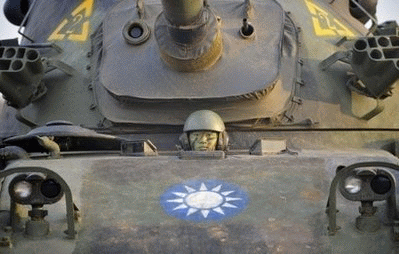
taiwan.soldier.tank_picTaipei Times is reporting that the Republic of China Ministry of National Defense has stated that they are sticking with a plan to purchase 120 M1A1 Abrams tanks.  The deal is set to be finalized in 2017 with delivery starting in 2020 and is valued at $1.08 billion.  The 120 tanks would come from existing US inventory and would replace Taiwan’s M60A3 and CM-11 Brave Tiger main battle tanks.  The article notes that the original plan was to purchase M1A2 tanks, but the less expensive M1A1 was selected instead.  Upon delivery, the 120 tanks are to constitute two battalions for deployment at the main ROC infantry base in Hsinchu County’s Hukou Township, which is tasked with the defense of the capital, Taipei, and northern Taiwan.