Strong Europe Tank Challenge

Here is a video and some photos promoting Strong Europe Tank Challenge 2016.

U.S. Army Europe and the German Bundeswehr will co-host the Strong Europe Tank Challenge at Grafenwoehr Training Area from May 10 – 12, 2016. The award ceremony will be on May 13, 2016.  This is the first Europe-wide tank challenge taking place at Grafenwoehr Training Area since 1991.  Seven NATO nations are scheduled to take part in the Strong Europe Tank Challenge – each sending a tank platoon to vie for first place. The participating nations are: Czech Republic, Denmark, Germany, Italy, Poland, Slovenia and the United States.   Each team will be tested on offensive and defensive operations as well as tasks including vehicle identification, battle damage assessment, mounted orienteering and more.  The Strong Europe Tank Challenge fosters military partnership while promoting NATO interoperability.

Photo gallery (29 images) related to Strong Europe Tank Challenge can be viewed by clicking the image below.

26906749585_5297b5a39b_z

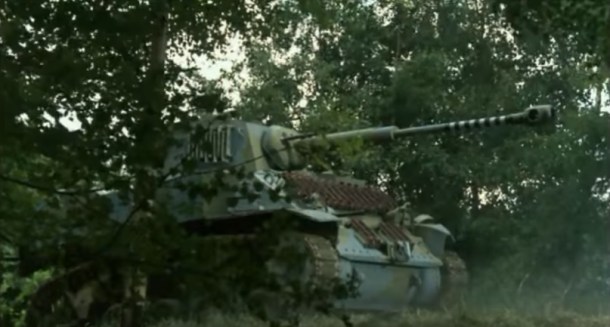
Photo of the Day: The Tiger-Stuart

Over at the AFV News discussion board, someone mentioned a Stuart Tank modified to look like a German Tiger in the not terribly good 1969 film “Mosquito Squadron.”  We decided it might be fun to find the film on youtube and grab a still image of the mighty Tiger-Stuart!

the tiger stuart

Book Alert: Combat History of the Panzer-Abteilung 103: September 1943 – August 1944

May 19 is listed as the release date for the book Combat History of the Panzer-Abteilung 103: September 1943 – August 1944 by Norbert Szamveber.  This is a hardcover book published by PeKo publishing, the number of pages is not included in the description unfortunately.

Publishers Description:

The book presents the detailed combat history of German Panzer-Abteilung 103 as part of the 3. Panzergrenadier-Division in Italy from September 1943 to August 1944 based on the almost unknown war diary of this unit. The Panzer-Abteilung 103 was fully equipped with Sturmgeschütz III assault guns. This is an impressive look at tactical-level events and command decisions, highlighting the German armored combat tactics in Italy. The book includes a number of original maps and excellent photos.

Video: Finnish Armor Museum T-34

Here is some footage from an event put on by the Parola Tank Museum in Finland.  This clip features a T-34 in Finnish markings and a BMP-1.

Matilda Diaries Part I

From the Tank Museum at Bovington comes this video about the restoration of their Matilda tank.

Germany’s Panzer Arm in WWII: An Interview with R. L. DiNardo

Last year we had the opportunity to conduct a phone interview with Prof. Richard DiNardo.  Dr. DiNardo is author of numerous books on military history, although it was his book Germany’s Panzer Arm in World War II (Stackpole Military History Series)
that brought him to our attention.  This book started out as his doctoral dissertation and  was later expanded on for publication.  The premise of the book is to examine the various different factors  and components that made up the German Panzer force.  These include the organizational, economic, personnel, doctrinal and tactical factors that affected the Panzer arm’s performance.  The book manages to accomplish all this in a very readable 199 pages.

Since the end of WWII, its fair to say that barrels of ink have been put to page concerning the German Panzer forces of 1933 to 1945.  Most books have focused on vehicles and/or battles.  This book does neither.  What it does is explain the underlying factors that made the Panzer forces what they were.  As such, we think it should be required reading for anyone looking for an understanding of German Panzer forces beyond just memorizing tank model numbers or Panzer division names.

While we certainly recommend Germany’s Panzer Arm in WW2, we would also recommend to those interested in WW2 history his book Mechanized Juggernaut or Military Anachronism?: Horses and the German Army of World War II (Stackpole Military History Series).  This book looks at the subject of horses and the German army of WWII.  While the focus in many military histories is on the mechanized component of the Wehrmacht, little attention has been paid , or analysis given, of the hundreds of thousands of horses that provided the motive power to the vast majority of the German Army.

Both books are available in softcover as part of the Stackpole Military History Series.

While we recorded this interview in spring of 2015, we have not had the opportunity to publish it until now due to technical reasons.  That is, we lost the files due to a computer mishap.  Fortunately, we recently were able to recover the files and finish transcribing (most of) the audio.  The interview is posted below, our questions in italics and Dr. DiNardo’s answers in regular font.


How did you get interested in the topic of World War II German panzers?

It’s the old saying by Thomas Hardy, peace makes for dull history.  War makes for rattling good reading.  Like a lot of kids I was drawn to the German military because I thought the uniforms were cool.  It’s that simple.

[Read more…]

Video:Tiger Day 2016 at The Bovington Tank Museum

This video appeared on youtube today showcasing many of the vehicles stored at the Tank Museum at Bovington.

For more on Tankfest 2016, check out the website for the Tank Museum at Bovington.  Tickets are going fast!

Book Alert: Tank Warfare on the Eastern Front 1943-1945: Red Steamroller


In two weeks Tank Warfare on the Eastern Front 1943-1945: Red Steamroller  by Robert Forczyk will be released according to Amazon.  This is the follow-up to his book Tank Warfare on the Eastern Front 1941-1942: Schwerpunkt which came out in 2014.  Published by Pen and Sword, this new book is hardcover with 288 pages.  Robert Forczyk is a former US Army tanker and author of several books on WW2, a number of Osprey softcover books and also a prolific Amazon reviewer.  For those that don’t mind reading on electronic devices, it’s worth pointing out that the first book of this set is available for Kindle for a mere $1.99.

Publishers Description:

By 1943, after the catastrophic German defeat at Stalingrad, the Wehmacht’s panzer armies gradually lost the initiative on the Eastern Front. The tide of the war had turned. Their combined arms technique, which had swept Soviet forces before it during 1941 and 1942, had lost its edge. Thereafter the war on the Eastern Front was dominated by tank-led offensives and, as Robert Forczyk shows, the Red Army’s mechanized forces gained the upper hand, delivering a sequence of powerful blows that shattered one German defensive line after another.

His incisive study offers fresh insight into how the two most powerful mechanized armies of the Second World War developed their tank tactics and weaponry during this period of growing Soviet dominance. He uses German, Russian and English sources to provide the first comprehensive overview and analysis of armored warfare from the German and Soviet perspectives.

This major study of the greatest tank war in history is compelling reading.

Tank Warfare on the Eastern Front 1943-1945: Red Steamroller is available for pre-order at Amazon.

New BMP-1 upgrade developed in Ukraine

IHS Jane’s is reporting that Ukrainian industry has developed a prototype for a substantial upgrade package for the Russian BMP-1 IFV.  The prototype, which has been named BMP-1 UM IFV, is currently being tested in Ukraine.

1678543_-_mainThe extensive modifications include the replacement of the original one-man BMP-1 turret, which was armed with a 73 mm 2A28 smoothbore gun, a 7.62 mm PKT co-axial machine gun (MG), and a KBM 9K11 Malyutka (Sagger) anti-tank guided weapon (ATGW) that was originally mounted on top of the main gun’s barrel.

Many operators have removed the original wire-guided ATGW as it is difficult to control, especially in windy conditions.

In the upgrade, the baseline turret has been replaced by the locally developed Shkval overhead weapon station (OWS), production quantities of which have been developed for installation on a number of platforms including the locally manufactured BTR-3 8×8 series of armoured personnel carriers (APCs).

The OWS is armed with a stabilised 30 mm ZTM-1 dual-feed cannon, 7.62 mm KT coaxial machine gun (MG), and a 30 mm AG-17 automatic grenade launcher, which is mounted externally on the left side of the turret.

The ZTM-1 has an effective range in the ground-to-ground role of up to 2,000 m and can also be used to engage some types of aerial targets. It has a maximum muzzle velocity of 960 m/s.

Ready-use ammunition typically consists of 225 rounds of 30 mm ammunition and 2,500 rounds of 7.62 m ammunition; additionally it can carry 116 rounds of 30 mm grenade ammunition (of which 29 are ready use).

Mounted on the right side of the turret is a bank of two Kyiv Design Bureau Bar’er laser-guided ATGW, which are semi-automatic command-to line-of-sight (SACLOS). The missile has a maximum range of 5,500 m and a minimum range of 100 m; it is fitted with a tandem high-explosive anti-tank (HEAT) warhead that is designed to neutralise targets fitted with explosive reactive armour (ERA).

Video of the Day: “Latest Tanks on Show “

An old British newsreel showing a demonstration of British post-WW2 armor.  tanks featured include the 33-ton Comet,  Centurions, the 20 ton Charioteer, the US Pershing tank and the Caernarvon.