A new entry in the Legend of Warfare: Ground Forces series on the German Panzer IV tank has been released. Written by David Doyle, Panzerkampfwagen IV: The Backbone of Germany’s WWII Tank Forces (Legends of Warfare: Ground Forces)
Publishers Description:
The Panzerkampfwagen IV, or Panzer IV as it is more popularly known, formed the backbone of Germany’s tank formations during WWII. With production totaling more than 8,500, the Panzer IV was the most plentiful German tank of the war, and the only German tank that remained in production for the duration of the conflict. Through more than 180 photos, this volume chronicles the design, development, and operational deployment of this ubiquitous German tank. This material is arranged in nine chapters, each focusing on a specific production model (Ausführung) of the tank. Comprehensive tables reveal the details of the performance and technical specifications of each variant. A concise, easy to read text, and detailed photographic captions expose the secrets of this iconic tank.

 The mittlerer Traktor (m.Tr., medium tractor), given the more widely known index Neubau Fahrzeug (Nb.Fz., newly designed vehicle) on October 3rd, 1933, began trials in 1933. The tank, an evolution of the Grosstraktor concept (Gr.Tr., large tractor) was supposed to become Germany’s medium tank. However, even as the tank began its trials, it was clear that the German military missed its mark. While the Grosstraktor was overcomplicated over its five years of development by three companies (it’s enough to say that it was also amphibious), the Nb.Fz. was in an even bigger hole.
 In December of 1936, the German military signed a contract with the Krupp conglomerate for a batch of 35 Begleitwagen tanks. This tank was designed to fight as a direct fire support tank, as its name suggests. The tank’s main targets were going to be enemy infantry and light fortifications. Ironically, this vehicle became Germany’s most numerous medium tank by the start of WWII. Later, the PzIII became more numerous, but only for a short time. By 1943, the Begleitwagen, known as the PzIV, retook the lead. The Pz.Kpfw. IV was the only German pre-war tank that never went through a radical chassis modernization.
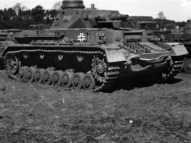 The German army entered WWII with a rather strange system of armament. The PzIII medium tank, which was built as Germany’s main tank, ended up being the least numerous in the Wehrmacht. As for the other medium tank, the PzIV, it was designed as a support tank, but ended up outnumbering the PzIII four to one. German industry could only equalize the number of both tanks by the end of 1939. By then, a new version of the support tank was in production, the PzIV Ausf. D, which was in a way a return to the original concept.
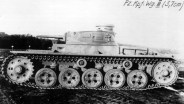 The appearance of John Walter Christie’s Medium Tank M1931 caused a revolution in tank building worldwide. A new type of tank appeared: the fast tank. Thanks to their speed, these tanks could carry out a number of other tasks in addition to infantry support. Many countries began working on conceptually similar tanks. The PzIII, Germany’s main tank in 1940-43 could be considered one of these tanks. What is the history of its creation?
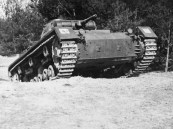 The PzIII, the main German tank for the first half of WWII, was at the same time its most problematic tank. Even though the PzII also had problems with its suspension, it was only seriously redesigned once. The PzIII, on the other hand, used five (!) different types of suspension, all of which went into production. Today, we will focus on the “intermediate” PzIII Ausf. B, C, and D. Even though none of these tanks were made in large numbers, they managed to see battle, and some of them remained on the front lines for a long time.
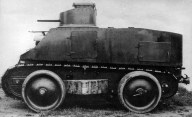 In the late 1930s, Czechoslovakia was the second largest exporter of tanks in the world. A small Eastern European country that only obtained independence in 1918 began to catch up with Great Britain, the world leader in arms exports. Of course, such impressive leaps in only 20 years of independence didn’t start with nothing. The first steps were made with inspiration from the British and German tank building schools. This experience resulted in a series of experimental vehicles and the mass produced LT vz. 34 light tank.
 By the middle of the 1920s, the British army received a new generation of medium tanks that served for a long time. The Medium Tank Mk.I and Medium Tank Mk.II became the first turreted medium tanks in the world. A good design and high reliability guaranteed a long life for these tanks, but by 1926, the British military was already thinking about their replacement. A Vickers design, the Medium Tank Mk.III, was suitable for the job. Even though the rather interesting design became the ancestor of a series of later tanks, including Soviet and German ones, its life in the British army was a difficult one.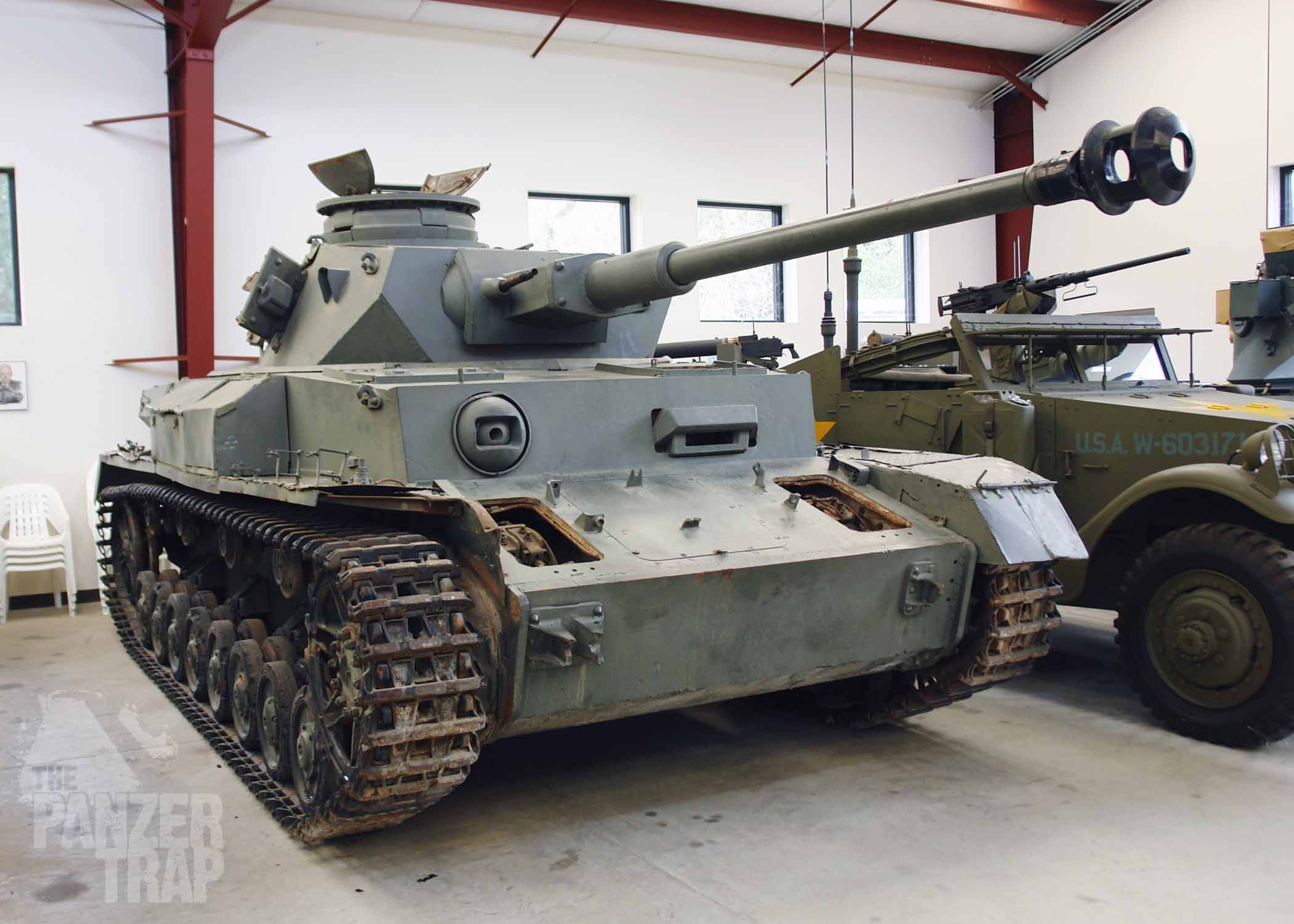

 Tank and AFV News