Book Alert: Czechoslovak Armored Cars in the First World War and Russian Civil War

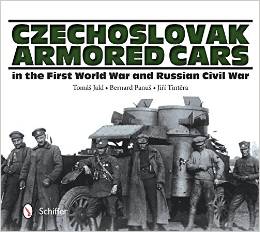
czech armored carAccording to Amazon, Czechoslovak Armored Cars in the First World War and Russian Civil War by Tomás Jakl, Bernard Panus, and Jirí Tintera was released for sale on Feb. 28.

Publishers Description: This highly illustrated volume covers the variety of armored cars used by Czech forces during World War I, and the Russian Civil War, as well as its post-WWI use in Italy and Slovakia. Along with details of armored car design, manufacturers, construction, and variants, the book covers Czech armored unit formations and their extensive operational use during the First World War. Special sections cover vehicle camouflage and markings, technical specifications, and uniforms and biographies of noted personalities.
Swedish Tank Archives blog

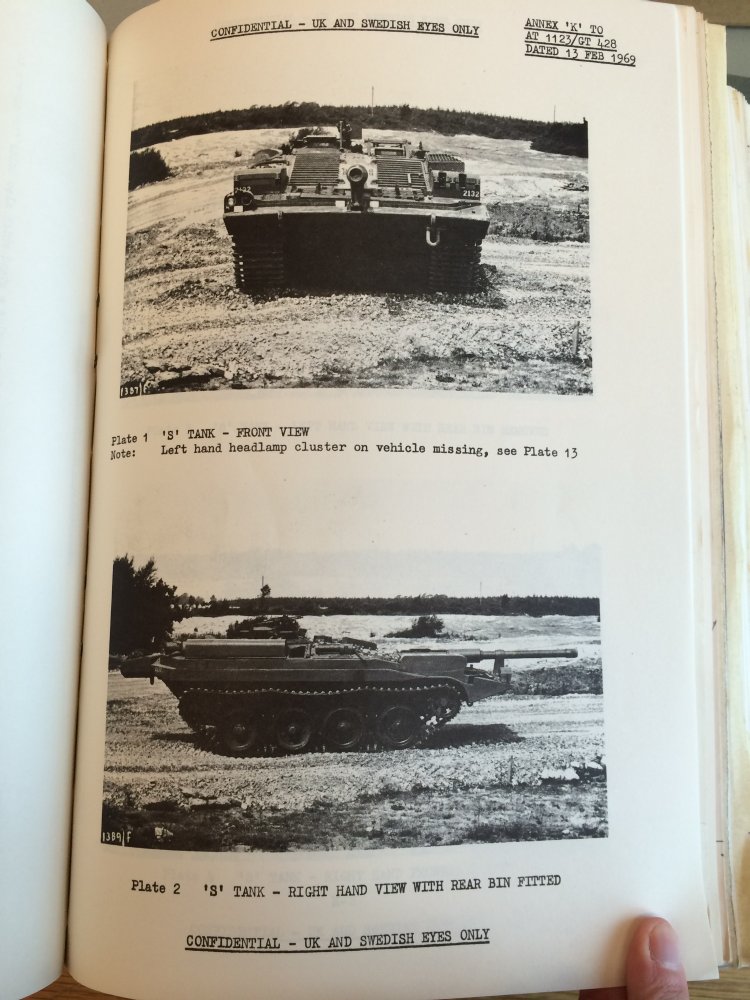
173For those interested in Swedish tank development, we recommend taking a look at the Swedish Tank Archives blog.  This blog started back in November of 2013 and the author has managed to post a number of interesting archival documents since then.  The blog is in English although many of the archival documents are in Swedish or other languages.  They have recently published an archival document of a British evaluation of the Swedish S-tank from 1968.  Of particular interest will be pages 6 and 7 of the report which contain the conclusions and recommendations.  Full report here.

People may also enjoy this youtube clip of the S-tank undergoing live fire trials.  English subtitles provided by Swedish Tank Archives.

Tiger Day at the Tank Museum May 2

tiger dayFor those that plan to be the in Bovington England area this spring, be sure to reserve your ticket for Tiger day at the Tank Museum.  This will be one of only two times this year that Tiger 131, the only operational Tiger I tank in existence, will be publicly run in the Museum’s outdoor arena.  According to the museum website, the Museum will open at 10.00am with a range of World War Two talks and tours taking place throughout the day, including the opportunity to get close to Tiger.  The Vehicle Conservation Centre will be open from 10am – 5pm allowing access to the main floor, this allows visitors unprecedented access to the museum’s extended collection of tanks and other military vehicles.

Video of Tiger Day 2014.

Israel doubles orders for Merkava and Namer APC parts

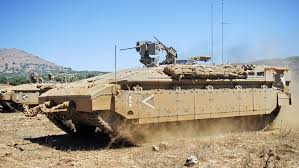
downloadThe Jerusalem Post is reporting that the Israeli Defense Ministry has doubled the number of orders for parts for Merkava tanks and Namer armored personnel carriers (APCs).  The move comes ahead of an expected rise in the number of IDF orders for Merkava Mk 4 tanks and Namer APCs, as well as the need to replace parts for these ground forces vehicles following their heavy use during Operation Protective Edge in Gaza last summer.

Full article here.

Norway receives upgraded CV90 IFV

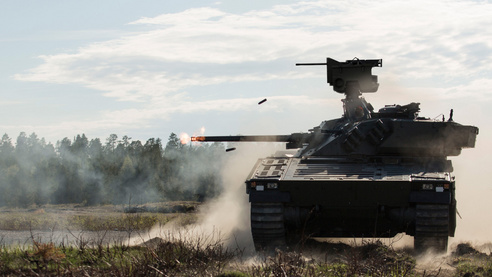
BAES_CV90 IFV,.Army Technology.com is reporting that the Royal Norwegian Army has received its first series-produced improved BAE Systems CV9030 infantry fighting vehicles.  BAE Systems is under contract to upgrade 103 existing Norwegian CV90s and build an additional 41 for a total fleet of 144.  The improved CV9030 for Norway includes enhanced protection, survivability, situational awareness, intelligence and interoperability. Five CV90 variants are on order for Norway, with all the vehicles set to be delivered by 2018.

Full article available here.

From the Vault: German comment on enemy tanks

coverWhat did Germany think of the tanks fielded by the Allies in WWII?  This article from Tactical and Technical Trends Number 35, October 7, 1943 should give a few clues to the answer to that question.  The piece in Tactical and Technical Trends is an English translation of a German language article that appeared in the June 27 1943 edition of Das Reich.  Oddly enough, the article has very little to say about German tank design but rather spends quite a few words praising the M4 Sherman.  For example, the article points out the M4 “represents one of the special accomplishments of the North American laboratories.  With its turtle-shaped crown rising in one piece above the “tub” and turret it must be regarded as quite a praiseworthy product of the North American steel industry.”

1

[Read more…]

The AMX 38

AMX 38For the Record has provided a translation of the live journal page of tank researcher Yuri Pasholok describing the French AMX 38 tank.  The AMX 38 was essentially a footnote in the story of French pre-war tank design, never getting past the prototype stage.  The vehicle was intended to be a slightly larger version of the typical French two man infantry tanks of the period. In general, French tanks have received far less coverage in English language publications than other vehicles of World War II.  This article provides far more detail than what is currently out there in print form regarding the AMX 38.  Steven Zaloga’s New Vanguard 209 French Tanks of World War II makes only a brief mention of the AMX 38.  The much older book AFV Weapons profile 58 by Bingham devotes a short paragraph to the AMX 38.

Read the full article over at For the Record.

From the Vault: Report of the New Weapons Board Jan 17, 1944

report coverOn January 17, 1944, the US Secretary of War directed the formation of the New Weapons Board. The mission of the board was to: 1. Disseminate among the theaters information concerning successful solutions to problems encountered in the theaters; 2. Obtain advice concerning the performance and suitability of standard weapons and equipment now in use in the theaters and assist in on-the-spot corrections of defects; 3. Introduce and demonstrate in the theaters new standard weapons and equipment which are available but are not in the theaters and new items which may be available within the following eight months, and to determine the requirements for the various items and; 4. Assist in increasing the effective use of weapons and equipment now in theaters. The entire report can be downloaded in PDF form here.  

A good deal of the report deals with tanks and armored vehicles.  We have selected the parts of the report that focus on tanks and AFVs and have posted them below with comments.

We will start with the introduction page.  Of particular interest are the comments that “there should be a progressive increase in fire power, such as 90mm guns in the T20 series tanks…and 90mm and 105mm guns in self-propelled mounts.

[Read more…]

Jordan buys South African 6×6 armored vehicle

Jordan-first-buyer-of-South-African-armored-vehicleIt’s being reported that Jordan has become the first customer to purchase the Mbombe 6×6 armored vehicle from South Africa’s Paramount Group.  The initial 50 vehicles for the Jordanian armed forces will be assembled in Jordan by KADDB, or the King Abdullah II Design and Development Bureau, which will also produce some components for it.  Additional details of the deal, including its monetary value, were not disclosed.  The Mbombe features a flat hull, Level 4 mine-protected technology for protection against 22-pound land mines and improvised explosive devices with a blast equivalent to as much as 100 pounds of TNT. Ballistic protection is provided against 14.5mm heavy machine gun rounds, and similar levels of protection are employed for protection from 155mm artillery bursts.

[Read more…]

British light tanks in Palestine 1936

Over at Overlord’s Blog, regular contributor David Lister has posted an article chronicling a 1936 action in Palestine by British light tanks.

Palestine MKIII

YR6G3ZaDuring April 1936 the British mandate in Palestine was rocked by an armed revolt and insurgency by the Arabs living in the area. The violence was targeted at the Jews and the British forces stationed there. To give you some idea of how bad the situation became British forces were forbidden from leaving their bases unless on operations and before departing outside the wire all weapons were to be loaded, although not charged. So for small arms such as a revolver this meant five rounds loaded, or for machine guns the ammunition belts being loaded into the feed. So all the soldier needed to do was cock the weapon twice and he’d be ready to defend himself.

Equally traffic all but disappeared from the road as Arab attacks were so common, along with roadblocks. To that end the British instigated a convoy system. For example from Tel-Aviv a convoy would run north via Tulkarm, Nablus to Haifa in the morning, and then make the return journey in the afternoon. Any vehicle was free to join these convoys, and the British presence was limited to mostly armoured cars and lorries. In later fighting the Rolls Royce armoured cars would often push a flatbed railway car in front of them to protect against mines and IEDs.

 Read the entire article at Overlord’s Blog.