From the Vault: PS Magazine articles on M60 Tank

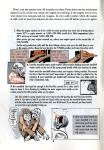
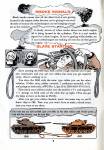
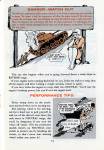
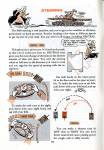
Today we present a couple articles from PS Magazine detailing the maintenance and operation of the M60 MBT.  The first article is a three part series called “Your M60” which ran in 1961.  The second article is a two part “Be Your Own Inspector” article which appeared in 1966.  PS Magazine is an illustrated “comic” style magazine put out by the US Army since 1951 to teach soldiers best practices in preventative maintenance.  These articles might be a trip down memory lane for any retired tankers that frequent this site.  For others, these articles may impress upon them the complexity and work required to properly maintain a cold war era MBT.

Your M60 Tank Part 1 (1961)
[Read more…]

Video: Russian tank transportation fail

Here is an amusing video of a tank transporter in Russia learning a harsh lesson regarding inertia and center of gravity.  The fun starts at 53 seconds.

(thanks to Belesarius at SH forum for pointing this video out)

Zaloga on the Culin hedgerow cutter

hedge3Over at the website missing-lynx.com, there is an article by Steven Zaloga titled “Normandy legends: the Culin hedgerow cutter.”  For those that are familiar with the history of tank combat in Normandy, the Culin hedgerow cutter is a well known story.  Zaloga casts a critical eye on the familiar story of the hedgerow cutter, concluding that the importance of the hedgerow cutter equipped “Rhino” tanks in the Normandy campaign is most likely exaggerated.

Excerpt:

Popular histories of modern wars inevitably simplify events and create myths and legends. The campaign in Normandy has created more than most, especially in view of the numerous television documentaries on this theme. For example, it is difficult to find an account of the breakout from Normandy that does not include reference to the Culin hedgerow cutter. My own recent account Campaign 88: Operation Cobra 1944 mentions it, of course. Another recent study calls it a myth. So it is worth taking a more detailed look to see how big a role it actually played in the battle.

Read the entire article at missing-lynx.com.

From the Vault: Ogorkiewicz on Tank Test Beds

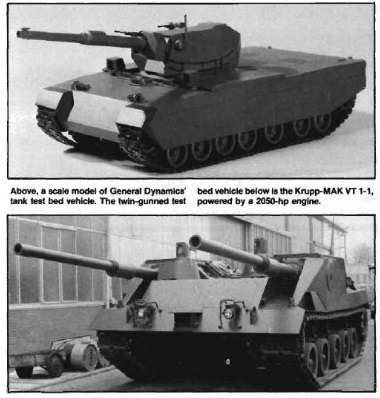
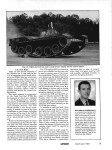
thumbnail picToday we present an article by noted tank expert Richard Ogorkiewicz from the mar-apr 1984 issue of ARMOR on the topic of tank test beds.  This article includes information on some of the experimental tank concepts being looked at in that time period, including mention of the British COMRES 75, the Krupp-MAK VT-1 and the UDES XX 20.  It is somewhat amusing to note the first sentence of the article, “Although the M1 tank is still in the early stages of its production program, it is not too early to think of its successor.”  Thirty one years since this article was written and a replacement for the Abrams is still far off in the distance.  It’s fair to say that the end of the cold war certainly put a damper on new vehicle development to a degree that writers of the time did not expect.

Book Alert: American Knights: The Untold Story of the Men of the 601st Tank Destroyer Battalion

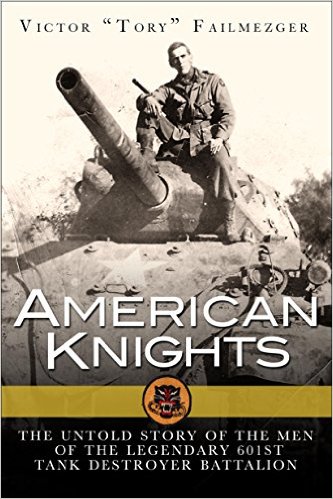
512xXC4vaGL._SX331_BO1,204,203,200_Osprey Publishing is listing a Sept. 22 release date for their upcoming book American Knights: The Untold Story of the Men of the 601st Tank Destroyer Battalion.  Written by Victor Failmezger, this 352 page hardcover book examines the history of the 601st Tank Destroyer Battalion, the very first unit converted into a TD unit during WW2.  The 601st first saw combat at Kasserine Pass and El Guettar.  Later the unit fought in Italy, being part of the assault at Anzio.  Later, the 601st was part of the landings in Southern France and ended the war occupying Hitler’s retreat in Berchtesgaden Bavaria.  Failmezger is a retired US Naval Officer and this book appears to be his first.

Publishers Description:

An unmissable white-knuckle ride from the Kasserine pass to Anzio, Operation Dragoon to the final attacks on the Third Reich, this is the gripping story of the men and machines that took on Nazi Germany’s best. This book not only reveals the technical details and origins of the 601st Tank Destroyer Battalion, it places the reader on the front lines of the European war.

As the war swung in the favor of the Allies, it became clear that no final defeat of the Third Reich would be possible until the armored monsters of the Panzerwaffe were defeated. But who would, or even could, take on the mighty Tigers and Panthers, just a handful of whom could stop entire formations in their tracks? The answer lay with the formation of a new type of unit, the Tank Destroyer Batallion. This is the story of the men and machines who made up the very first Tank Destroyer Batallion, the 601st, from their unique training and formation, to the final, desperate battles in the heart of Nazi Germany. Packed with rare material, letters, diaries and unpupublished photographs, this is an intense and intimate chronicle of the men who fought the Panzers in an astonishing 10 campaigns and 546 days of lethal combat. Re-live the excitement and terror of battling the best the Wehrmacht and SS had to offer, in every major campaign in the West.

Video: ASCOD APC demonstration and test drive

This video appeared on DefenseWebTV last month featuring the ASCOD APC variant.

Vehicle description:

The ASCOD is a new generation of tracked armored vehicle designed and developed jointly by the companies Santa Bárbara Sistemas (Pizarro) from Spain and Steyr from Austria which are now business units of General Dynamics European Land Systems. Survivability, mobility and reliability are the main features of this modular medium weight armored vehicle. ASCOD stands for speed, optimal protection and immediate performance day and night regardless of weather conditions. The ASCOD can be easily transported by military transport aircraft. The first version of the vehicle is in service in Austria under the name of Ulan and in Spain under the name of Pizarro. The latest variant of the ASCOD was selected in September 2014 by the British army to replace the old CVRT family under the name of Scout SV. The SCOUT SV of British Army program includes six variants: Scout Reconnaissance, Protected Mobility Reconnaissance Support (PMRS), Command and Control, Engineering Reconnaissance, Repair, and Recovery. Each SCOUT SV platform variant will be a highly-agile, tracked, medium-weight armored fighting vehicle, providing British troops with state-of-the-art best-in-class protection.

Blog of early Vickers tanks

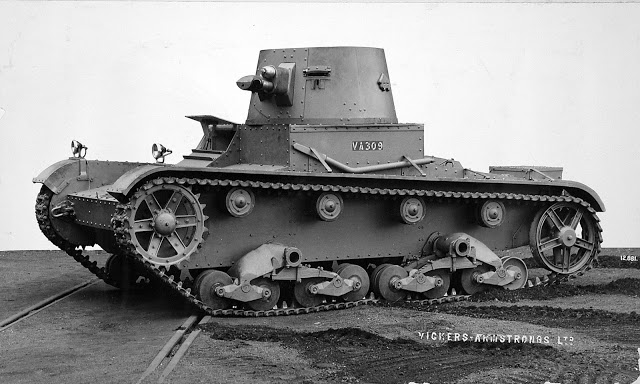
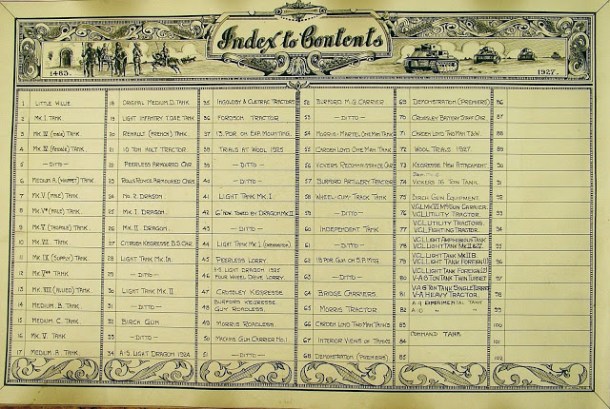
81 1 6 ton tank single turretA new blog has appeared showcasing photos of interwar tank development by Vickers Armstrong Ltd.  According to the blog, Tthe photographs used have come from two works albums from Vickers Armstrong Ltd, held by the Beamish Museum and used here with permission. They also cover other vehicles including half tracks and wheeled transport.  The blog also has a media section featuring videos of early Vickers tanks and a resources page listing some of the better books on the topic.

Click the image below to visit the site.

86 Index

Unusual Iranian AFVs

13940126150820252_PhotoLBack in April, three rather interesting and somewhat suspect vehicles from the research center in Tehran were displayed as part of Iran’s “Army Day” event.  We somehow missed this news back when it was first posted over at the Tanknet forum, but we felt it was sufficiently amusing that it warranted a post here.  Better late than never as they say.  The three vehicles showcased include the Nazir UGV, Fallaqh reconnaissance vehicle, and Aghareb “light tank.”

First off, we have the Nazir UGV: 600 kg payload, 2 km combat radius.

13940126150812779_PhotoL

Fallaqh: Reported 400 km combat range, four ton(ne) weight, one 12.7 mm RWS, a one-man crew, and a top speed of 100 km/h off-road, 130 km/h road.  This vehicle looks suspiciously like the Howe and Howe Ripsaw “luxury tank.”

13940126150758770_PhotoL

Last but not least, the Aghareb Light Tank.  This appears to be a BTR-60 with an upgraded engine mounting a turret of some sort armed with what looks to be the 90mm gun from an M47 tank.  Perhaps these guns were left over after Iran upgraded their M47 tanks to the Sabalan.

13940126150754371_PhotoL

Special thanks to the guys at the tanknet “Iranian tanks” thread for posting this info.  More photos of these vehicles are available here, here, and here.

Archive Awareness Blog on Red Army AFV numbers in Operation Barbarossa

BarbarosaOver at the Archive Awareness blog, Peter Samsonov has posted an interesting summary of data from “Order in Tank Forces: What happened to Stalin’s tanks?” by Dmitriy Shein.  In the post, he challenges the commonly held idea that the Red Army had 26,000 tanks at it’s disposal in 1941 versus only 4000 AFVs of the German invader.  In a series of charts, Shein shows the number of those tanks that were in the Western districts as well as what state of functionality they were in.  When taking into account these various factors, the Red Army had, according to Shein,  roughly 7000 – 7500 functional tanks available for battle on June 22nd, 1941.  And while that is still a numerical advantage over the tank forces of the German invader, these Red Army tanks of 1941 were hampered by a number of shortages, particularly in fuel trucks and certain types of ammunition.  In other words, the tanks of the Red Army were woefully prepared to repel an invader.  And while most histories note these issues affecting the “26,000” strong Soviet tank force in 1941, it’s interesting to see the numbers broken and explained.

Read the full blog post here.

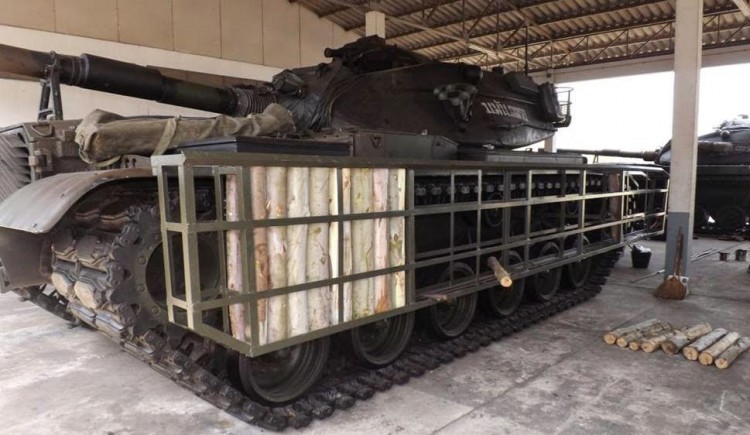
Thai M60A3 with extra wood armor

Defence Blog has posted some unusual pictures of an up-armoring scheme by the Thailand Army on their M60A3.  This consists of a metal framework along the side of the vehicle filled with….logs.  Check it out.

418401_original-750x435

No other information is given in the blog post, just pictures.  One has to wonder exactly how effective this wood armor is and what threat it is intended to negate.  More photos available here.