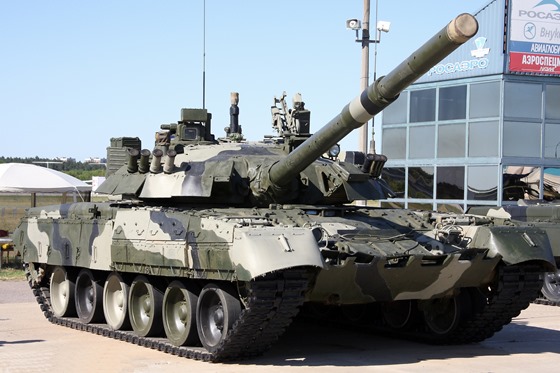
 The blog War is Boring has posted an article declaring the T-80 to be Russia’s most overrated tank. For those interested in reading their analysis, you may do so here. The article has also appeared on the National Interest website with the even more inflammatory headline ” This is Why Russia’s T-80 Tank is a Total Disaster.” The article seems to basing it’s conclusions on the fact that the T-80 did not perform well during the 1994 Chechen war and that the T-80 was relatively expensive an suffered from high fuel consumption. Do these factors justify calling the vehicle a “total disaster?” In our opinion probably not.
War is Boring blog declares T-80 overrated
August 11, 2015 by 7 Comments
From the Vault: M85 .50 Caliber Machine Gun
August 11, 2015 by 3 Comments
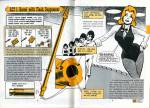
In honor of being declared the “blog of the month” over at The Firearms Blog (TFB), we will be posting about tank and afv related small arms this month. A few days ago we posted about the not so successful M73/M219 7.62mm coax machine gun. Today we will be taking a look at it’s larger cousin, the M85 .50 cal machine gun. Much like the M73, the M85 had a very mixed reputation among US tankers. It was intended to replace the venerable M2 .50 cal machine gun which had acquired an excellent reputation throughout WW2 and into the post war era. However, the M2 was considered rather heavy and bulky for use inside the enclosed commander cupolas common on US postwar tanks. By the time the M60 MBT was introduced, the M85 went into service, mounted in the commanders cupola/turret. The M85 was also used by the Marine Corps in the LTVP7. The M85 was almost 11 inches shorter and 20 pounds lighter than the M2 and featured a quick barrel change option and two different rates of fire. The M85 could be configured for either left or right hand feeding and in its tank gun configuration was fired by means of a solenoid. The M85 gun suffered from a history of reliability problems which it was never able to shake. By the time the US adopted the M1 Abrams MBT in the 1980’s, the M85 was replaced by the gun it was originally designed to supersede, the M2 .50 cal. Oddly enough, while the M85 and M2 both fire the same .50 cal round, ammunition for the two weapons is not interchangeable due to the use of different style belt links. According to globalsecurity.org, the USMC has in storage 3 million .50 caliber cartridges loaded in belts designed for the M85, despite the fact that they removed the gun from their inventory, replacing it on the LTVP7 series (now designated AAV-P7)with the M2.
PS Magazine article on the M85 (Issue #146 1965)

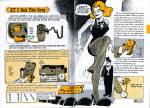


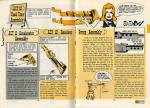

PS Magazine article on the M2 .50 cal (Issue #168 1966


AMX Leclerc deployed in combat in Yemen
August 10, 2015 by Leave a Comment
Jane’s has posted an article about how armored units from the UAE have spearheaded a breakthrough in the conflict in Yemen. The Emirati armored brigade helped pro-government forces push out from the southern port city of Aden and capture Al-Anad Air Base 48 km to the northwest. While the UAE did not publically announce the deployment of its armored forces in the conflict, it became apparent to astute observers that the vehicle types appearing in pictures indicated UAE involvement. By the end of July, BMP-3 IFVs had been filmed by AL-Jazeera and in early August, news footage showed Leclerc MBTs advancing in a column. Somewhat amusingly, one of the best quality videos that emerged of these Leclerc tanks is a clip from RT Ruptly which mistakenly identifies the vehicles as “Hundreds of Abraham M1 Abrams, provided by Saudi Arabia.” This represents the first use of the Leclerc MBT in combat, although it had been previously used in peace keeping missions Kosovo and Lebanon by French forces.
Also identified have been the SPG Denel G6. Video of this vehicle was taken during fighting for Anad airbase.
According to the Jane’s article, some of the Leclercs in Yemen are equipped with the AZUR urban warfare protection package. The UAE is known to have bought at least 13 AZUR kits, so the presence of Leclercs without the additional armor suggests a second battalion has been deployed to Yemen. The Leclerc tanks operated by the UAE are known as the “tropicalised” variant, differing from French Army Leclerc in that the UAE vehicles have a MTU MT883 engine and Renk transmission rather than the French SACM V8X Hyperbar engine and SESM ESM 500 transmission.
Photo gallery of UAE armored vehicles in Yemen
-
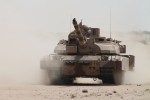
- Leclerc with AZUR armor kit
-

- Leclerc without AZUR kit
-

- Leclerc
-
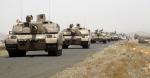
- Leclerc
-
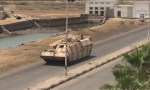
- Leclerc DNG armored recovery vehicle
-
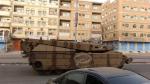
- Leclerc DNG armored recovery vehicle
-

- BMP-3
-

- BMP-3
-

- BMP-3
-
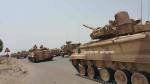
- BMP-3
-

- One of the first images of the Leclerc in Yemen, August 2


-
- G6 self-propelled howitzer
-

- G6 self-propelled howitzer
Overlord’s Blog on “A Killa” Sherman tank
August 10, 2015 by Leave a Comment
Overlord’s Blog has posted a piece by David Lister on the wartime career of WW2 British tank commander George Dring. While the details are a bit unclear, George Dring and his tank, named “Akilla”, managed to destroy or damage several heavy German AFVs during the Normandy campaign.
Excerpt:
As Sgt Dring approached a crossroads his habit of getting out for a shufti payed off. He sneaked through a cornfield and saw five tanks in a copse of trees below him, suddenly one started moving out. This is where some confusion comes in. By Sgt Drings words it appears he thought it might be a new tank that had recently been reported by intelligence, a Jagdtiger. However with hindsight we know it can’t have been. Sgt Dring does say it was a very large tank, which he’d ever seen before. However a later intelligence report simply calls it a “Panther”, but Sgt Dring was familiar with Panthers. So your guess is as good as mine as to what it could have been, a King Tiger? A Jagdpanther? Or a normal Panther? Either way it was bad news for a 75mm armed Sherman! Sgt Dring reversed his Sherman a little way up a side road and waited, the enemy tank moved out in front of him, and his first shot hit it in the drive sprocket shredding the track and immobilising the tank. The crew promptly bailed out.

Armata themed food truck?
August 9, 2015 by 4 Comments
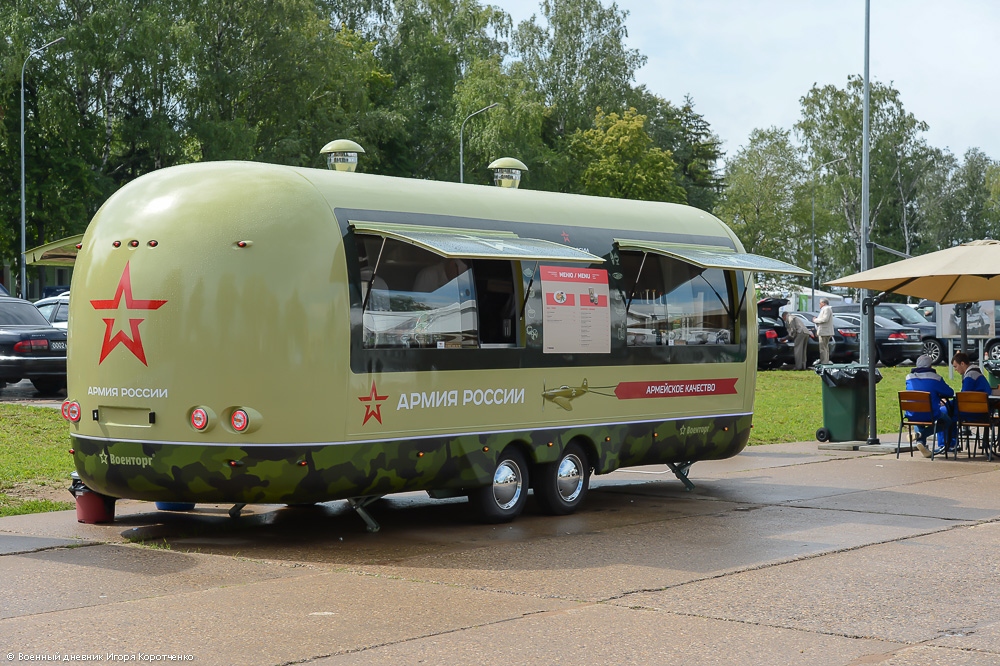
These pictures were brought to our attention in a forum recently. Apparently the Russians are so excited about the Armata that they are painting them on the side of food trucks? Anyone care to translate the text on the truck for us?

From the Vault: ARMOR article on Soviet Heavy Tanks
August 8, 2015 by 5 Comments
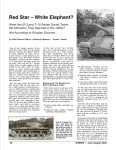
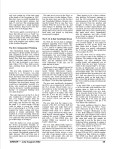
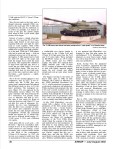
 Today we present an article from the July-August 2002 issue of ARMOR magazine titled “Red Star – White Elephant?” This article, written by Stephen “Cookie” Sewell, casts a critical eye on post WW2 Soviet heavy tank design, in particular the IS-3 and T-10. Sewell notes that much of the information he is basing his conclusions on comes from research done after the collapse of the Soviet Union. In the 1990s, access to the Soviet era archives opened up, allowing a new generation of Soviet armor authors to research and write. Many of these names show up in the bibliography of this article, including Svirin, Baryatinskiy, and Kolomiets. Unfortunately for western audiences, these Russian author’s works have not, for the most part, been published in English.




Tank Biathlon drift flip video
August 8, 2015 by Leave a Comment
A video shot with a phone has been making the rounds recently showing a T-72 flipping over during the 2015 Tank Biathlon in Russia. The accident involved a Kuwaiti crew who roll their T-72 over while practicing taking a corner in the style of a drift racer. The flip occurs at 1:55 into the clip. Earlier in the clip can be seen an Armenian crewed T-72 stalling out after passing through a water obstacle.
Jane’s article on IDF M48 Tamuz missle launcher
August 7, 2015 by Leave a Comment
Jane’s has posted an article about the IDF missle-firing Peres artillery vehicle. Details of the vehicle have only recently released, despite the fact that it entered service in 1982. This vehicle has generated a great deal of discussion recently, as the true purpose of the vehicle has been revealed.
Interesting details from the article:
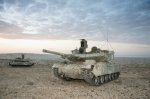 The manual guidance system restricts each Pere to having only one missile in the air at any given time, although a battalion of vehicles working together could potentially fire volleys at an enemy tank formation.
- The Pere vehicles are now linked to the IDF’s Torch command-and-control system, allowing them to receive intelligence on the co-ordinates of targets from a range of sources.
- Unlike the IDF’s Merkava Mk 4 tanks, the Peres have not been fitted with Rafael’s Trophy active protective system.
- The Peres can be used to fire either Tamuz 2 missiles with a 15 km range or Tamuz 4 missiles with a range of 30 km. The Tamuz 4 is similar to the Tamuz 5, which is the IDF’s name for the Spike NLOS missile that the company has marketed internationally since 2009. The main difference is that the Tamuz 5 has advanced day/night capabilities and can be used with a semi-active laser guidance system.
- The Pere’s first operational use was not until 2005, when it returned fire on Palestinian attackers in the Gaza Strip. It then participated in the July-August 2006 war with Hizbullah, during which Pere units fired 527 missiles. In the 2008-09 Operation ‘Cast Lead’ against Hamas in the Gaza Strip, Peres fired 26 Tamuz missiles.

Tank Chats #8 Renault FT-17
August 7, 2015 by Leave a Comment
The Tank Museum has released the eighth video in their Tank Chats series staring David Fletcher. This episode focuses on the Renault FT-17
Conceived by General Jean-Baptiste Estienne and manufactured under the control of the Renault Company this was the world’s first mass-produced tank, 3800 being built in all.
They went into action for the first time on 31 May 1918 near Ploissy-Chazelle and proved very successful when they were used in numbers. British forces used a few Renaults as liaison vehicles while the United States Army used them in combat and copied the design.
Civilian Sherman Photo Gallery
August 5, 2015 by Leave a Comment
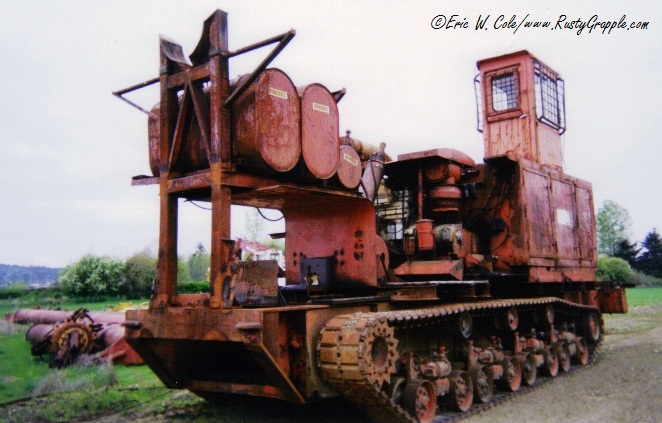 War History Online has posted some interesting photos of Sherman tanks converted into civilian work machines after the war. Most of these pictures show vehicles in which the turret and upper hull were removed and then used as the basis of a heavy vehicle for construction, forestry or mining. Some of the pictures show rather extensive modification to the hulls, including at least one example where a fourth suspension station was added (see picture to the left.) A couple photos also show vehicles based on M3/M5 light tanks, although this is not noted in the original article. The three page gallery may be viewed here.

 Tank and AFV News