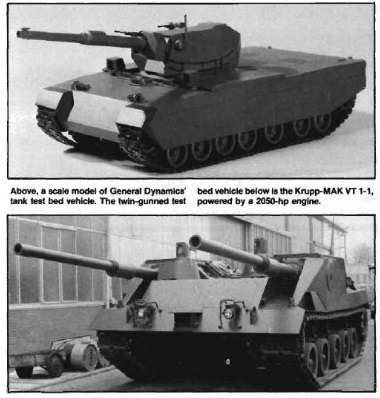
 Today we present an article by noted tank expert Richard Ogorkiewicz from the mar-apr 1984 issue of ARMOR on the topic of tank test beds. This article includes information on some of the experimental tank concepts being looked at in that time period, including mention of the British COMRES 75, the Krupp-MAK VT-1 and the UDES XX 20. It is somewhat amusing to note the first sentence of the article, “Although the M1 tank is still in the early stages of its production program, it is not too early to think of its successor.” Thirty one years since this article was written and a replacement for the Abrams is still far off in the distance. It’s fair to say that the end of the cold war certainly put a damper on new vehicle development to a degree that writers of the time did not expect.
From the Vault: Ogorkiewicz on Tank Test Beds


From the Vault: Ten Lean Years by General Robert Grow
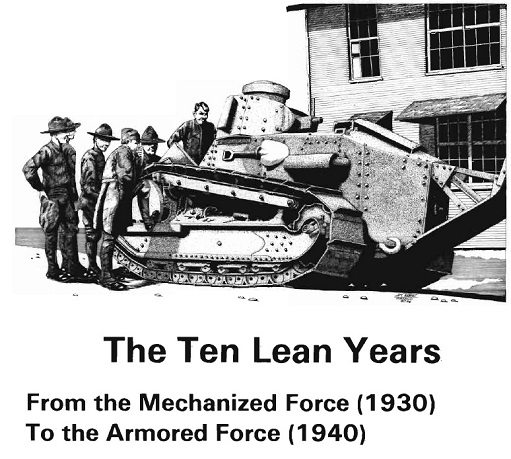 Today we present a lengthy article from ARMOR magazine that appeared in four parts in 1987. Titled “The Ten Lean Years: From the Mechanized Force (1930) to the Armored Force (1940)”, this piece was written by Major General Robert W. Grow. The articles were published posthumously, Gen. Grow had passed away in 1985. His career spanned the 1930’s to the 1950’s, including commanding the 6th Armored Division in the ETO during WWII. The ARMOR magazine editors describe the article as “remarkable and enlightening” and state that it is “full of facts, the personal observation of a very astute officer, and generally heretofore unknown or limited information, and deserves the widest possible dissemination to the Armor forces.”
We have provided two different methods by which people can read the article. Below the four parts of the article are presented as four separate image galleries. We have also collected the entire four part article into a single PDF document which may be downloaded from Internet Archive.
Part 1


From the Vault: The Fighting Tanks since 1916
Today we present “The Fighting Tanks Since 1916” written by Ralph Jones, George Rarey, and Robert Icks. This book was published in 1933 and represents the most complete examination of the topic up to that point. The book was reprinted in 1969, copies of the reprint can be found from online book vendors at relatively reasonable prices. Fortunately, the book is also available for reading on the Hathitrust digital library website. For those that would like to give it a look, click on the image below.

From the Vault: Differences in counting tank losses
Today we present a short article by William Platz from the May 1973 issue of AFV-G2 magazine on the differences in how tank losses were recorded by the WWII German Army compared to how they were recorded by the British Army. We often find that people in some of the online forums love to quote loss figures for different WWII actions, often taking at face value the figures reported in after action reports. This article does a nice job in showing how different counting methods could often lead to reported numbers differing significantly from reality.

We realize this article is from a copyrighted source, albeit a 40 year old one. If anyone associated with Baron Publishing still exists and wants us to remove this, we will be happy to do so. We present it strictly for educational purposes, we run no ads on this site and make no profit from it, other than the personal satisfaction of spreading around information we find interesting.
Tank Chats #7 British Mark II with David Fletcher
The Tank Museum has posted another installment in their Tank Chats series featuring David Fletcher.
The seventh in a series of short films about some of the vehicles in our collection presented by The Tank Museum’s historian David Fletcher MBE.
Only fifty tanks each of Marks II and III were produced. They were unarmoured, in the sense that the steel from which they were built was not heat treated to make it bullet proof. The reason being that these tanks were only intended for use as training machines.
The chief external differences from Mark I lay in the tail wheels, which were not used on Marks II and III and later heavy tanks, the narrower driver’s cab and the ‘trapezoid’ hatch cover on the roof.
Video: History of US Tanks
This Vietnam war era government documentary showed up on youtube today. Not sure if this video has appeared online before, but it’s the first time we recall seeing it.
Video: Tankfest 2015
The Mighty Jingles has released a video about the recent Tank Fest event at the Tank Museum in Bovington England.
From the Vault: STRV 104 (S Tank) users manual comic book
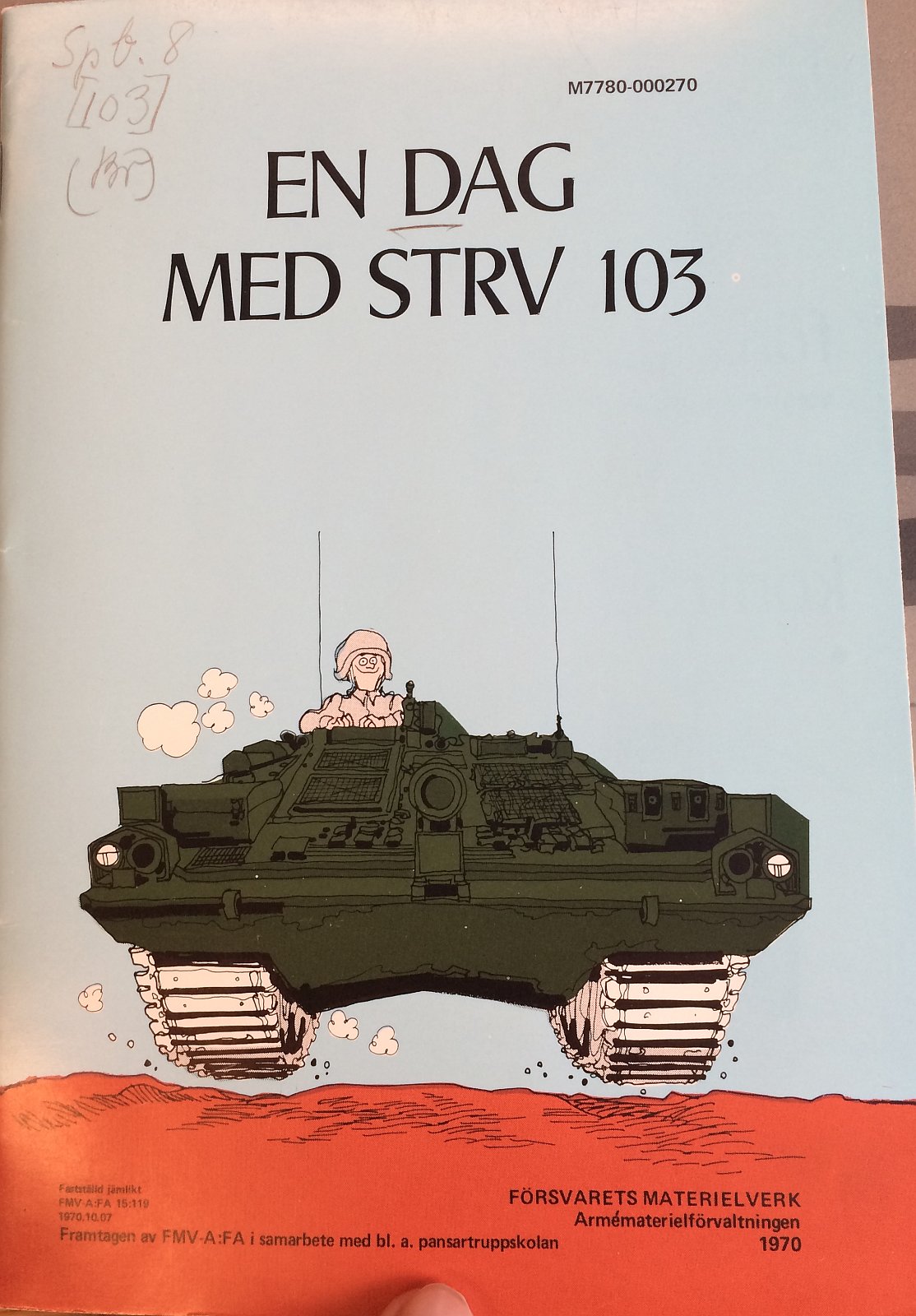 Today we present “A day with the Strv 103” comic book from 1970. Think of this as the “tigerfibel” for the S tank. The text is in Swedish of course, but the pictures are quite entertaining. Thanks to the Swedish Tank Archives for scanning and posting this document.
Panzer wrecks from the Bulgarian Border
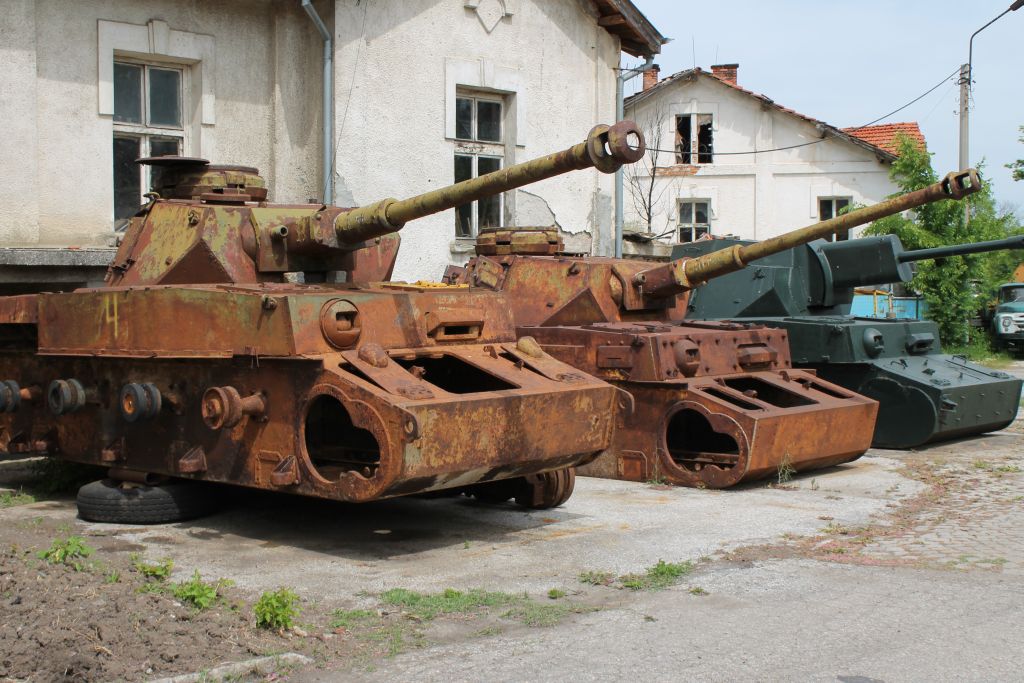
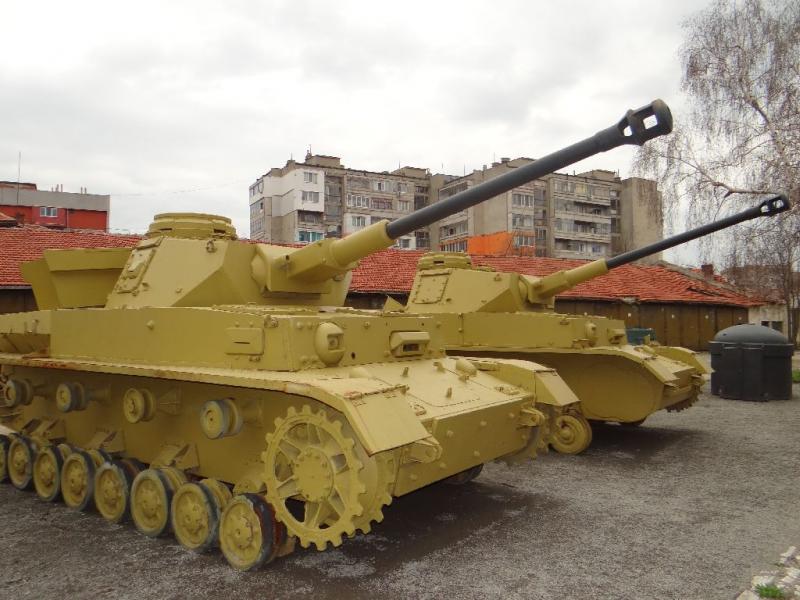 Last month War History Online ran an update to a story that first appeared way back in 2008 about WWII German tank wrecks on the Bulgarian border. The Bulgarian government had buried more than 40 former Nazi tanks on their southern border as stationary pill boxes during the cold war. In 2008 the Bulgarian government announced that they were unearthing the vehicles and selling them at auction. Over the years, many of the vehicles had fallen prey to scrap metal hunters who removed many of the smaller bits off the tanks. The Bulgarian government cancelled the auction before it happened, deciding instead to keep the vehicles. Currently, these vehicles reside at the Museum of the Battle Glory. Several of the tanks have been partially restored, getting sandblasted, primed and repainted. According to the article, 7-8 vehicles are on display with the rest in storage.
The full article from War History Online can be viewed here.
Here is a video showing these vehicles prior to restoration.
One of the stranger vehicles shown in the photos and the video is what appears to be a Panzer IV turret modified to fit the cannon and mantlet from a SU-76m! (the vehicle on the right painted dark green)
From the Vault: Tanks and Industry: The Detroit Arsenal, 1940-1954
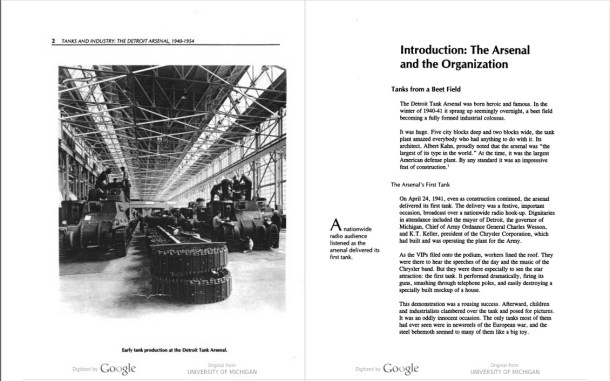
 For those with an interest in U.S. World War II tank production, we would recommend taking a look at the book “Tanks and Industry: The Detroit Arsenal, 1940-1954” by Kevin Thornton. The book gives a nice overview of the history of the Detroit Arsenal, the first manufacturing plant in the US built specifically for the purpose of tank construction. Owned by the US Government and operated by Chrysler Corporation, the Detroit Arsenal was designed by famed architect Albert Kahn on built on an 113 acre site in Warren, a suburb of Detroit. During the course of the war, the Tank Arsenal built about a quarter of the 89,568 tanks produced by the United States.
Published in 1995 by TACOM, this book can be viewed in it’s entirety at the Hathi Trust Digital Library site. Click on the image below to go to the Hathi Trust website and view the book.

 Tank and AFV News