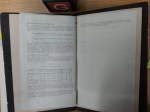
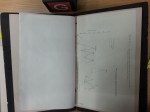
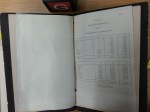
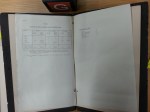
From the Vault: Teledyne Tank Modernization Brochures

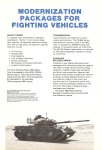
With the recent media attention concerning the Raytheon M60 SLEP program (see the previous post), we thought it a good time to post some M60 modernization brochures from Teledyne Continental Motors from back in the 1980’s.  We posted these a few years ago on our old blog, but figured it was worth posting them here as well.

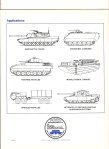
Here is “Modernization Packages for Fighting Vehicles” (available as a PDF here)

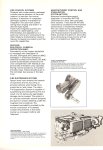
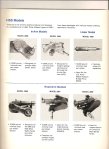
Also from 1984 is Hydropneumatic Suspension System for Tracked/Wheeled Vehicles.”  (available as a PDF here.)

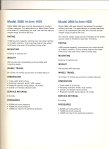
This final two page brochure is from the late 90’s/early 2000’s and comes from General Dynamics Land Systems, who by this time had purchased Teledyne Continental’s armored vehicle product line and facility.

From the Vault: Making Excuses for the Sheridan

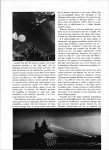
Today we present an article from the July-August 1973 issue of ARMOR magazine titled “The Sheridan: Airborne Cavalryman’s Big Punch.”  This three page article by Lieutenant Colonel Robert E. Helton is interesting not so much for what it tells us about the Sheridan light tank, but rather because it illustrates just how unpopular the vehicle was in US service.  The author does all he can to put the Sheridan in a good light, going so far as to blame the crews that operate the vehicle for any failings the Sheridan may have.  For example, he states “The departure from past practices and the quantum jump forward in technology which the Sheridan exemplifies, coupled with the reluctance of many to accept change were, to a great extent, responsible for its adverse reputation at the outset.”  Seems to us that blaming the troops is a pretty sad way to make excuses for the poor reputation of a vehicle with legitimate issues such as the Sheridan.  You can view the article as individual pages in the gallery below or download a PDF of the July-August 1973 issue of ARMOR here (article starts on page 19)

From the Vault: Swedish IKV91

Today we dig into the vault to retrieve a 1971 article by noted tank expert Richard Ogorkiewicz on the Swedish IKV91 light tank and its associated vehicles.  This article comes from the May-June 1971 issue of Armor.  The individual pages can be viewed in the image gallery below or the entire issue can be downloaded here (article starts on page 150 of the PDF)

From the Vault: The T113 “Kangaroo”

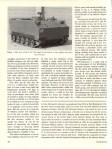
Here is an article from the July-Sept 1958 issues of INFANTRY magazine titled “A New Lift for the Infantryman” by Lt Col Edward H. Simpson.  This article is about the T-113 armored personnel carrier, which was the prototype for the famous M113 APC.  The article gives a pretty good impression of what the Army was expecting out of their new APC, primarily low weight, low cost and better maneuverability.  Interestingly, the author states that the T-113 has been given the unofficial nickname of “The Kangaroo” and refers to it as such several times in the piece.  It’s worth pointing out that the M113 never received an official nickname.

If you would like to download the article in PDF format, the entire July-Sept 1958 issue of INFANTRY can be downloaded here (article starting on page 101 of the PDF)

From the Vault: WO 291-1186 – Comparative performance of German anti-tank weapons in WW2

Today we present some photos of a British report titled “WO 291-1186 – Comparative performance of German anti-tank weapons in WW2.”  The title is somewhat misleading as the report is primarily focused on the effectiveness of German anti-tank mines.  The photos are not of the best quality but are legible.  There are some very nice charts in this report showing British tank losses broken down by enemy weapon type and theater of operation as well as a breakdown of British tank personnel loses by tank type and enemy weapon.  According to the summary of the report:

Tank losses due to mines (22%) were generally less than those due to anti-tank guns (30%) and tanks + SP guns (39%), nevertheless they were appreciable, amounting to between a quarter and one fifth of the total losses.

Also, the report points out that:

It is concluded that nearly 2000 enemy mines were required to cause the loss of one British tank, on the assumption that equal numbers f mines went to each mile of the German front line.

From the Vault: WO 195-15442 – Resistance of armour to attack by HESH

The British have always had a bit of a thing for HESH ammunition.  Here is a British report from 1962 on the effectiveness of HESH projectiles against armor plate.  The basic jist of the report is that they found a wide difference in plate behavior when hit by a squash head (HESH) projectile.

From the Vault: Chieftain Articles and Documents

Today we present our most substantial “From the Vault” post yet, consisting of several articles and archival documents pertaining to the British cold war era Chieftain MBT.

First we have a three page article about the Chieftain from the Jan-Feb 1970 issues of ARMOR written by Staff Sergeant Edmund L. Devereaux III.  The author of the article is a US tanker and is writing out his first hand experience with the then new Chieftain tank during a training exercise with the British.


Next up is an article from International Defense Review from 1970 titled “Chieftain-Main Battle tank for the 1970s.”


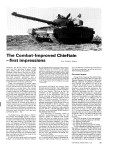
Next is a 1976 IDR article titled “The Combat-Improved Chieftain – First Impressions” by Geneva F. Schreier.


Our final IDR article is one from 1976 titled “Improved Chieftain for Iran.”  This piece describes the improved Chieftain offered to Iran and dubbed the Shir Iran meaning Lion of Iran in Farsi.  This vehicle would lay the groundwork for the later Challenger I tank accepted by the British Army in the 1980’s.


Archival Documents

We also have some archival documents relating to the Chieftain to present.  These contain quite a few more pages than the article posted above so we have posted them on their own separate pages.  The pages may be viewed by clicking on the links below.

WO 194-495 Assessment of Weapon System in Chieftain – 1970 report on the Chieftain fire control system and chances of first round hit with 120mm APDS.

WO 341-108 Automotive Branch Report on Chieftain Modifications – From 1969, a report on modifications to improve the automotive performance of Chieftain.

DEFE 15-1183 – L11 Brochure – A report describing the 120mm L11 gun of the Chieftain.

WO 194-463 – Demonstration of Chieftain Gun –  1962 report on results of test firing of 120mm gun against various targets.

WO 194-1323 – Feasibility study on Burlington Chieftain – 1969 study on equipping Chieftain with early version of Burlington armor.


From the Vault: Letter to Lima Tank Plant

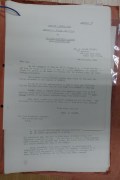
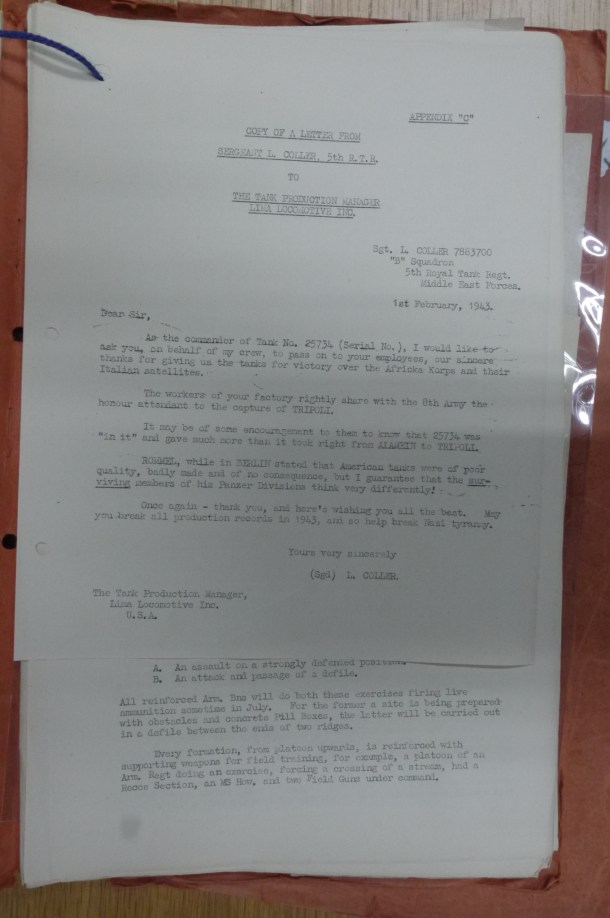
P4190091Typically when one sees statements from WW2 veterans concerning the M4 Sherman tank on TV shows or in books, they often are critical of the armor or firepower of the vehicle.  These quotes typically come from the final year of the war when the Sherman was being compared to the much heavier German adversaries it faced in Western Europe.  While this narrative seems to have defined the Sherman in popular culture, it’s worth pointing out that when the vehicle was introduced in 1942, it was received with much praise by British forces in North Africa.  An example of this was recently provided to us by a friend of the site over in the UK who forwarded this letter that was found in the appendix of 7th Half-Yearly Progress Report of the Royal Armored Corps (1st January to 30th June 1943.)

COPY OF A LETTER FROM

SERGEANT L. COLLER, 5th R.T.R.

TO THE TANK PRODUCTION MANAGER 

LIMA LOCOMOTIVE INC.

Sgt. L Coller 7883700

“B” Squadron

5th Royal Tank Regt.

Middle East Forces.

1st February, 1943.

Dear Sir,

As the Commander of Tank No. 25734 (Serial No.), I would like to ask you, on behalf of my crew, to pass on to your employees, our sincere thanks for giving us the tanks for the victory over the Africka Korps and their Italian satellites.

The workers of your factory rightly share with the 8th Army the honour attendant to the capture of TRIPOLI.

It may be of some encouragement to them to know that 25734 was “in it” and gave much more than it took right from ALAMEIN to TRIPOLI.

ROMMEL, while in BERLIN stated that American tanks were of poor quality, badly made and of no consequence, but i guarantee that the surviving members of this Panzer Division think very differently!

Once again – thank you, and here’s wishing you all the best.  May you break all production records in 1943, and so help break Nazi tyranny.

Yours very sincerely

(Sgd) L. COLLER.

The Tank Production Manager,

Lima Locomotive Inc.

U.S.A.

P4190091

From the Vault: British/Israeli Assessment of T-55

001Today we present a report from the British Archives dating back to 1970 concerning the Soviet T-55 tank.  This particular report was conducted jointly by the British and the Israelis and documents “trials to assess the weapon system and fightability characteristics of the Soviet T-55 tank.”  We have uploaded the entire report onto a separate page which can be viewed here.  The report is quite lengthy and will be of interest for those interested in the T-55 tank, particularly those looking for information as to the crew ergonomics.  We have transcribed the report summary below:

The main points which emerged form the assessment are:

Ballistic dispersion of the 100mm gun – this was found to be comparable with western standards, ie intrinsic dispersion applicable to full bore projectiles – AP or HE.

The Weapon System – it is simple and has the basic components of any AFV system but without any sophistication or complexity.

The Gun Control System – it is crude.  The hand controls do not operate smoothly and in particular elevation and depression is of a low standard due mainly to excessive gun muzzle preponderance.  The power and stabilizer controls leave much to be desired, this applies particularly to attempts at engaging targets on the move with the 100mm gun.

Vision for the Driver and Gunner – it is adequate but, for the commander, the devices provided are, by British standards, inadequate and cupola arrangements are of poor quality.  They do not compare favorably with the equipment provided for the commander in Centurion of the 1958 period.

Fuel Stowage – this constitutes a fire hazard.  The forward or hull front tank surrounds 100mm ammunition and other fuel is carried in “Jerry Can” type containers which are plumbed into the system and situated on the right side track guard and are highly vulnerable to aircraft cannon fire.

Ammunition Stowage – other than the rounds stowed in the forward hull compartment, some rounds – about 6 – are stowed above the turret ring on the turret walls.  the rounds are secured by rather crudely designed clips.  The total carried is 43.  The rounds are heavy.

Armour Protection – for a weight of 6 tons the arrangement of armour is a point in favour of the T-55 tank although it is well known that considerable success against the armour was obtained from attacks with the British 105mm L28 APDS ammunition during the Six Day War.

Silhouette – this is similar to that of the FRG Leopard tank.  However, detection of the tank is enhanced by the external fittings on the turret roof.  It is, however, a compact vehicle.

Vehicle Generated Smoke – this is extremely effective and simple to operate.  A few tanks employed in creating a smoke screen can accomplish a screen of high density, lacking “windows”, in a very short time – a very good feature.

Fightability in General – the vehicle is rugged, the ammunition is heavy and awkward to handle in the cramped crew positions, the gun is loaded from the right side, ie left handed loading, and the result is a very low rate of fire which when combined with the low chance of hit with the first round of an engagement constitutes rather poor fightability characteristics.

Click here to see the entire report.


From the Vault: WW2 tank mobility tests

Today we have a few videos of World War 2 era tanks being put through a series of mobility tests.

First is this video from 1951 from Sweden.  The video compares the mobility of a Sherman Firefly vs a British Churchill tank, a German Panther and the Strv M/42.  The audio is in Swedish but fortunately English subtitles are provided.


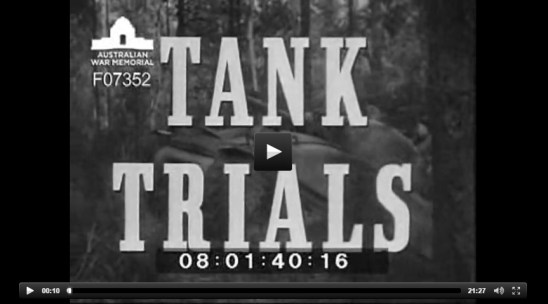
The next video is of an Australian test conducted in January of 1945 comparing the Sherman and Churchill tanks.  This video shows the rather extreme conditions these vehicles were operated in by the Australian forces.  We were not able to embed this video in the post but if you click the image below, it will take you to the page where the video may be watched.


tank trials video


This next video is a short clip from a German propaganda film showing a Panther tank successfully clearing an obstacle which a M3 Lee is unable to clear.


Here is a short clip of a damaged Royal Tiger (“Porsche turret”) being put through a water fording test by Allied solders.


And finally, here is a longer clip showing US soldiers driving around a captured German Panther tank. At the 7:31 mark the footage switches to scenes of a British Archer and Valentine using a Tiger I for target practice. At the 9:18 mark the video shows footage of the hull of the uncompleted E-100 German super heavy tank.