Korean War tanker twins

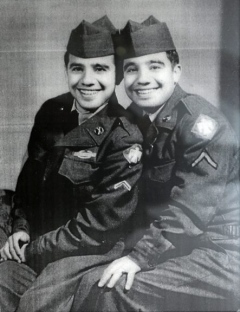
twin tankersThe Times-Tribune.com has posted an article about Joe and Pat Lacertoso, identical twins that served together in a Sherman tank during the Korean war.

Article excerpt:

The identical twin brothers from Dunmore spent 10 months serving together in Korea with the Army’s 1st Calvary, 70th Tank Battalion. Their weapon, transportation and, for all intents and purposes, home, was a Sherman tank that kept them unscathed for the duration of their tour. Many of their friends were not so lucky.

“Those Sherman tanks were the best,” Pat Lacertoso said on a recent afternoon at his twin’s home, where his granddaughter, Carissa Hart, and Joe’s wife, Carmella, listened to them recount their combat experiences.

“Korea was the Forgotten War,” Carmella Lacertoso said. “I don’t care what anyone says.”

Full article here.

“Patton’s Spearheaders” 737th Tank Battalion holds reunion

The 737 Tank Battalion, known as Patton's Spearheaders, gathered for the 68th reunion of the battalion in Faith, NC. Three of the World War II veterans attended the reunion.The Salisbury Post has published an article about the remaining veterans of the 737th tank battalion.  Nicknamed “Patton’s Spearheaders” the 737th participated in five major battles, including Normandy, Northern France, Ardennes-Alsace, Rhineland and Central Europe. Military records show the battalion spent 299 days in actual combat, starting with its landing at Omaha Beach July 12, 1944. It saw some of its fiercest action in the Battle of the Bulge.  The article notes that at the recent reunion for the 737th, only three members were present, all of whom are over 90 years old.

Article excerpt:

In past reunions, the men’s stories touched on living and praying in foxholes, catching glimpses of Patton, being knocked off tanks by exploding shells nearby, wearing handed-down leather helmets from high school and college football teams, driving tanks over pontoon bridges and recuperating in French and English hospitals.

Bob Kluttz, a tank gunner in Co. A., said none of the tanks he was in were ever lost, though he saw a German Tiger, with its 88 mm cannon, take out tanks in front and behind his.

Kluttz said he wore out two 75 mm cannon on his own tanks before freezing his feet and being sent back to an English hospital for three months with frostbite.

Deal had shrapnel rip into his legs when he tripped on a land mine.

Pritchett had to drive a 15-ton Kenworth truck onto the battlefields to tow away disabled tanks. “I’m sure I pulled a tank of Jim’s that got knocked out,” Pritchett said.

He often teamed up on those wrecker missions with his buddy Richey, a tank mechanic who had been trained at Fort Knox. “If I had to have any help, I would use him,” Pritchett said.

Read the full article here.

Italian tankettes in Ethiopia

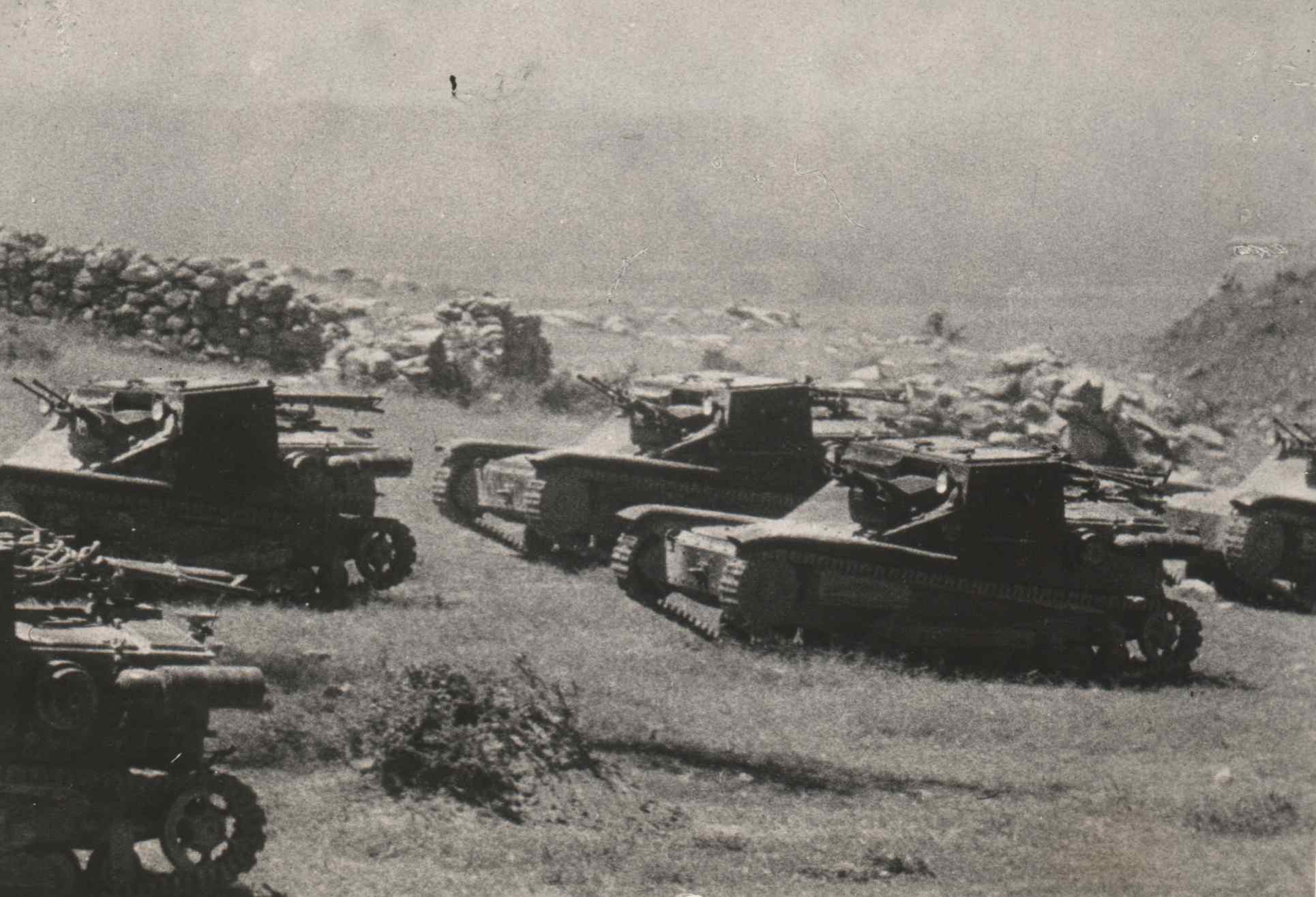
Overlord’s blog has a post titled “Sticks and Stones” about the battle Dembeguina Pass during the Italian invasion of Ethiopia in 1935.  The Italian forces in this particular encounter were armed with the CV-35 tankette.  The article has some interesting examples of how ineffective these little tanks could be:

FaD1LiPOne Ethiopian soldier whom had been one of the lead element was armed with nothing more than a sword. His name was Tashemm. His rank was Balambaras, which has no real equivalent that we might recognise. It essentially means he was a trusted person. Tashemm crawled out of the tankettes line of fire and moved round behind it. Sneaking closer he concocted his plan. He climbed up on the rear of the tank and hammered on the hatch with his sword pommel yelling in Italian “Open! Open!”. Immediately the crew of the CV-35 opened their hatches with fatal results.

You might ask why the Italians opened up their hatches. The answer is these simple machines lacked radio’s and so had to communicate by word of mouth. At another battle later in the war a large number of tankette crews were killed and wounded simply because they had to open their hatches to communicate.

Read the full blog post here.

World of Tanks video on KV-1 recovery from Don river

Wargaming has released a Russian language video about the recovery of a KV-1 tank that was sitting in the Don river for 70 years.  Fortunately, English language subtitles are provided.

Video: WWI tank crushes car

io9.com recently pointed out this British Pathe video of a tank crushing a car in 1918.  While the video identifies this event happening “somewhere in the UK”, it is believed that this video was actually shot in Toronto.

A century of the tank: Mark 1 vs Altay

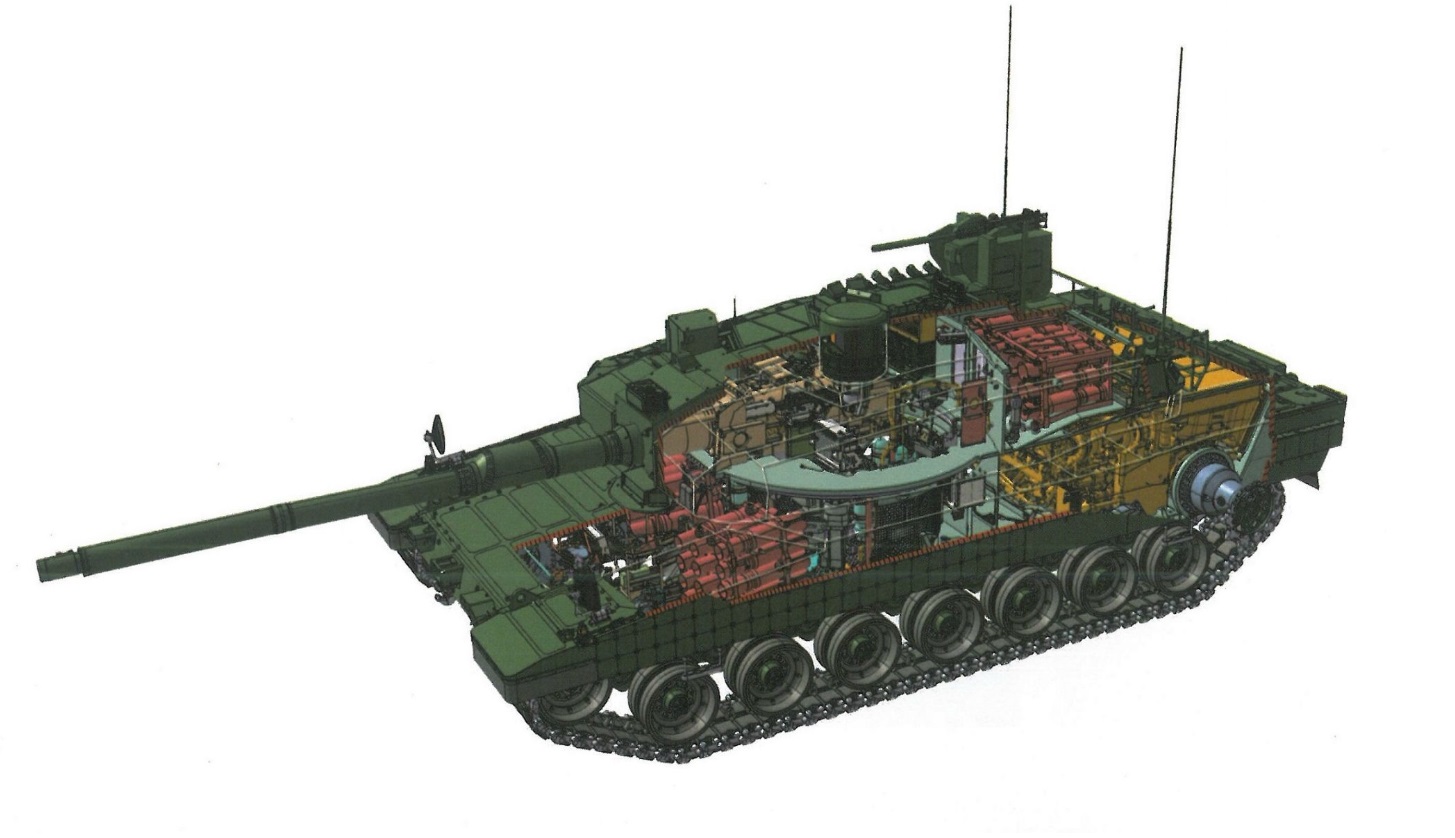
01 - Front CoverTurkish defense contractor Otokar has published a 12 page advertising supplement titled “A century of the tank: Mark 1 vs Altay.”  The article contrasts the Mark 1 tank of a 100 years ago with Otokar’s new Altay main battle tank.  The piece includes a good deal of information about he Altay, including a nice cutaway picture of the vehicle.  The article also includes an essay on the Future of the tank provided by Bovington Tank Museum curator David Willey.  At the end of the piece, David Fletcher of the tank museum is thanked, it’s fair to assume he provided much of the information regarding the Mark 1.

A PDF of the article may be downloaded here.  Also, it can be viewed in an Imgur gallery here.

Altay cutaway

WW2 British tanker returns target model to Bovington

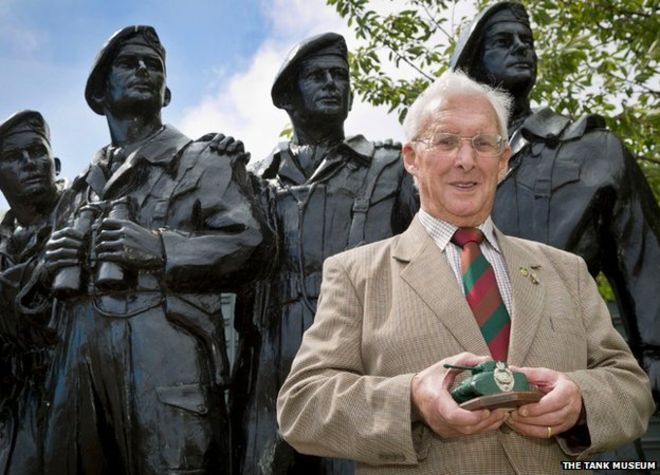
_83448274_83448273The BBC is reporting about a WW2 veteran who has returned a model tank he took from an army camp more than 70 years ago.  According to the article, George Martin, 88, nabbed the small lead Sherman tank used for training from Bovington in Dorset in 1944.  Martin had trained with the 52nd Royal tank Regiment as a gunner for a Sherman tank.  The small lead Sherman tank was part of a training exercise.  Martin kept one of the models as a souvenir, keeping it with him for the rest of his service in Egypt, Japan and Burma until he left the Army in 1953.  The model Sherman then resided on his mantelpiece until he recently decided to donate it to the Tank Museum at Bovington.  According to Martin, “I was worried that if I died it would be thrown away and that its story would be forgotten”.  Commented Tank Museum curator David Willey: “This lead tank is not an item we previously held in the collection and coming to us with such a good story – and the fact it’s been cherished so long by its owner – makes this a very worthy addition to our collections here.”

Tankchats #6 Vickers Light MKVI B

The Tank Museum has released another video in their Tankchats series featuring David Fletcher.  This episode looks at the Vickers Light Tank MKVI B.

Being, in terms of numbers, the most significant British tank at the outbreak of war, the Mark VIB saw service with the British Expeditionary Force in France, the Eighth Army in North Africa and in various subsidiary theatres. As a reconnaissance vehicle it was satisfactory, as a fighting tank quite useless since armour protection was minimal and the armament ineffective against enemy tanks.

From the Editor: Research question for Eastern Front experts

While browsing through old issues of ARMOR, we came across this letter to the editor in the Jan-Feb 1951 issue from Generalmajor H. B. Mueller-Hillebran, former Chief of Staff of Germany’s XXXVI Panzer Corps & Third Panzer Army.  His letter is in response to an article about Soviet tanks (which unfortunately is in an ARMOR issue not available for download) in which he explains German policy on using captured enemy armor.  He also makes the rather startling claim that in the Ukraine from the end of October to the middle of December, his Panzer regiment destroyed 356 Russian tanks while only losing 12 of their own vehicles (a 30 to 1 kill ratio?!)  He states that his regiment was equipped with around 100 tanks, half of which were Pz IV and half of which were Stug III.  Unfortunately he does not specify the name of his Panzer regiment and his claim of a 30 to 1 kill ratio is a bit hard to swallow.  We would be very curious to hear from anyone with access to the Soviet era archives what the Red Army records from this period show in terms of tank losses in Ukraine in late 1943.

German letter to ARMOR

Tank Video: T-34/85 drafted back into service

This interesting video was brought to our attention in a post by Peter Samsonov over in the WoT forum.  Apparently, this video shows a T-34/85 tank being brought back to life by pro-Russian separatists in the Ukrainian city of Antratsyt.  The color scheme of the vehicle is a bit unusual.  Note the attempts to provide protection against shaped charge warheads, including the mesh side panels and dangling chains on the front of the vehicle.