World of Tanks researcher Nicholas “The Chieftain” Moran posted this video interview with World War II veteran Tom Sator as part of a Veteran’s Day tribute. Sator served as a tank crewman in the 4th Armored Division.
The Chieftain also posted a youtube video of the raw, unedited interview footage.


 According to Amazon, the
  When the German army’s first domestically-built tanks rolled into combat in March 1918 at St. Quentin Canal, the armored beasts looked considerably different from British and French designs — and most post-war tanks to follow. The A7V was a monster, stuffed with 18 crew members and brimming with six machine guns and a 57-millimeter cannon. While certainly terrifying to Allied troops, it was expensive, slow, mechanically troubled and too limited in number to affect the outcome of the war. It was not the worst tank ever, but not exactly good, either. There’s a reason why the bulk of Germany’s World War I tank force was comprised of captured — and superior — French and British designs.
 Giving a much-needed boost to the Indian Army’s attack capabilities, Manohar Parrikar-led Defence Acquisition Council (DAC) has cleared a deal for buying upgraded versions of Russia’s powerful T-90 tanks for Rs 13,448 crore. The acquisition of T-90 tanks would not only add a potent weapon in the hands of the Indian Army, but would also send a strong warning to Pakistan. Reports suggest that an initial approval has been given for the procurement of 464 T-90 tanks under the Modi government’s Make in India initiative. The tanks, once the deal with Russia comes through, will be manufactured at the Ordnance Factory Board.
 A lost work from author A. A. Milne was discovered this October, championing the British invention of the tank. As a serviceman who served in the First World War, Milne knew the importance of such a feat of British engineering but he could not have predicted the relevance his words would still hold today. One hundred years ago “those wonderful tanks”, as Milne christened them, were being used in active service for the first time during the Battle of the Somme, a battle in which he was wounded and invalided back to the UK. As a former tank commander with the British Army, these last months have had some poignancy for me – as I’m sure they will for many others.
 A British Army intelligence report offers an alarmist assessment of Russia’s new T-14 Armata main battle tank. Most U.S. defense analysts, however, are much more measured in their analysis of the new Russian machines. While the T-14 will likely be an excellent tank when it becomes operational, it is not quite the “revolution” that the British claim it to be. Moreover, it is far too expensive to produce in mass numbers. “Without hyperbole, Armata represents the most revolutionary step change in tank design in the last half century,” states a British Army intelligence report cited by The Telegraph.
 Most attention regarding China’s recent military modernization and buildup has concentrated on air and naval forces. That’s only natural, since they’re the tip of the spear and the equipment most often seen abroad. It’s easy to forget that China still has the world’s largest army, the 1.6 million strong People’s Liberation Army Ground Forces (PLAGF). The PLAGF has been modernizing at a slower pace than China’s other armed services, but it’s also receiving some brand-new armored vehicles, a number of which were demonstrated at last week’s Zuhai Air Show, including the MBT-300 main battle tank, VN12 infantry fighting vehicle, and a host of smaller, wheeled protected vehicles.
 The Indian Army plans to buy 464 advanced T-90 battle tanks from Russia for deployment on its western borders with Pakistan. The Rs 13,448-crore contract will include a Make-in-India element for integration at the Heavy Vehicles Factory in Avadi near Chennai. The 10 new regiments of T-90MS tanks, equipped with thermal imaging night sights to allow the tank commander to hit at enemy locations even during night battles, will strengthen army’s fire power along the land border stretch with Pakistan-from Jammu in north till the western flank in Gujarat.
 Just how far can you soup up a tank from the 1960s? The M60 Patton was the mainstay of the U.S tank fleet in the 1960s and 1970s, before being replaced by the M1 Abrams tank currently in service. However, more than five thousand Pattons remain in service in the armies of nineteen countries. Earlier this year, Raytheon unveiled its Service-Life Extension Package (SLEP) upgrade featuring a new engine, fire control system and 120-millimeter gun. This M60 SLEP is in competition with a pre-existing three-tier upgrade offered by Israel Military Industries for their M60 Sabra. Sabras in Turkish service, designated the M60T, are active on the battlefield of Northern Syria today, while older-model Pattons are fighting on both sides of the war in Yemen.
 A huge contract to modernize the British Army’s main battle tanks could see much of the work go abroad. The Ministry of Defense is updating its 227 Challenger 2 tanks with the digital capabilities needed to be an effective part of Britain’s military might, as well as extend their service lives. The Daily Telegraph understands military chiefs have now whittled down the bids to just two, who will each be asked to build a prototype vehicle as part of a final assessment phase. One of the groups is a consortium headed by BAE Systems and General Dynamics UK. Also involved are QinetiQ, Leonardo, Moog and Safran. The other joint venture is led by Germany’s Rheinmetall, which is working with Supacat, Thales UK and BMT.
 The Army’s new £3.5billion mini-tanks are ‘death traps’ that are only useful against ‘incompetent enemies’ who cannot hit them with heavy artillery, it is claimed. Hundreds of Ajax mini-tanks are due to be supplied to the Army next year with the full order of 600 delivered to the Ministry of Defense by 2024. Sources have claimed the delivery could be delayed due to complications with a revolutionary weapons system fitted on board each tank, although the MoD has insisted the project will be completed on time and will provide the ‘best’ tanks. Critics claim the ‘lightly armored’ tanks cannot stand up to heavy artillery and say the weaponry on board is not sufficient – with the gun having already ‘stopped working’ during foreign trials.
 China North Industries Corporation (NORINCO) debuted its VT5 lightweight main battle tank (MBT) at Airshow China 2016 in Zhuhai. The VT5 has been developed specifically for the export market and has a combat weight of between 33 and 36 tonnes, depending on the armour package fitted and measures 9.20 m (gun forward) in length, by 3.30 m (with side skirts) in width, and 2.50 m (turret roof) in height. The baseline hull and turret is all-welded steel armour to which a modular protection package can be fitted depending on the end user’s operational requirements. This can include advanced composite armour, explosive reactive armour (ERA), or a mix of the two.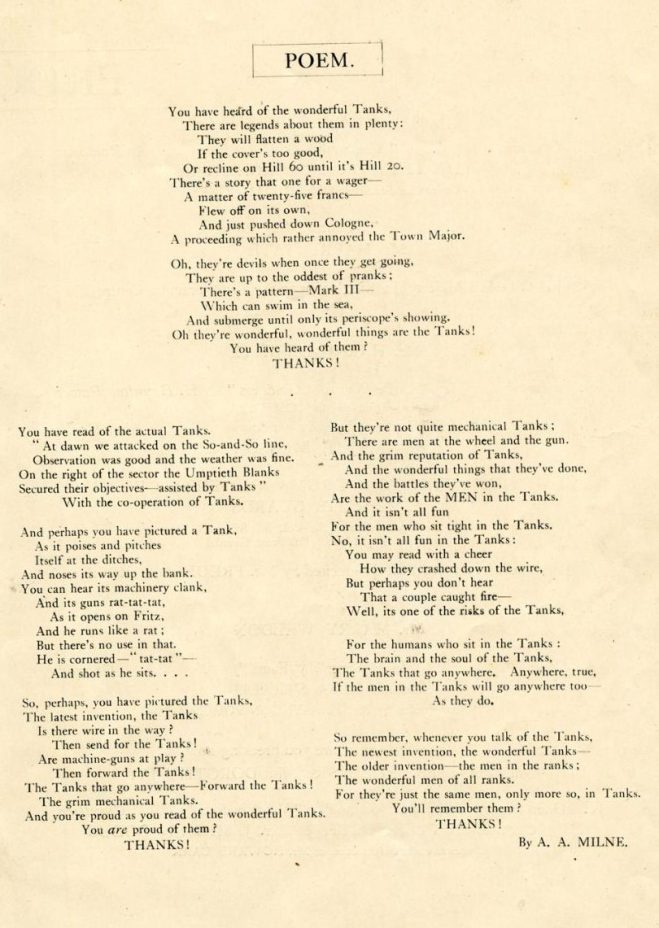

 Tank and AFV News