This clip was posted to youtube today. It shows an Israeli Merkava being driven over a ledge, causing the tank to roll upside down.
Video: Otokar Altay main battle tank
May 13, 2015 by Leave a Comment
Jane’s has released a video of Christopher Foss describing the final prototype of the Turkish Otokar Altay main battle tank at the IDEF 2015 conference.
Victory Day Parade causes 4 million rubles worth of damage to Moscow street
May 13, 2015 by Leave a Comment
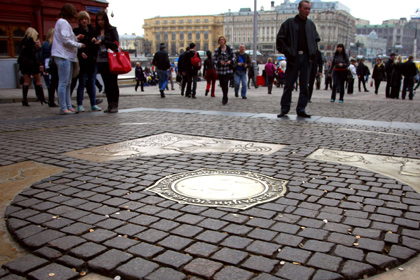 The Moscow Times is reporting that the recent Victory Day parade in Moscow caused up to 4 million rubles of damage to the pavement of the pedestrian square in front of the Kremlin. Known as Manezh Square, this pedestrian thoroughfare saw 194 vehicles, including the new Armata tank, roll over it multiple times during the parade and rehearsals. It should be noted that while 4 million rubles sounds like an impressive figure, it actually comes out to a about $79,000 dollars.
From the Editor: The Importance of the Hyphen
May 13, 2015 by Leave a Comment
A recent article from “Russia Beyond the Headlines” inadvertently illustrates the importance of the hyphen in tank designations. Generally, Soviet/Russian tanks include a hyphen in their designation. Examples of this are MS-1, T-34 or T-80. US designations generally are not written with the hyphen, so they look like M4, M60 or M1. Since US tanks are generally designated with an “M” and Soviet/Russian tanks with a “T”, the hyphen is usually not all that important. However, the tricky part comes with US prototype vehicles, which were often designated with a “T.” For for example, the US prototype heavy tank “T34” is easy to confuse with the much more famous Soviet medium tank “T-34.” The Russia Beyond the Headlines article “Saddling the Iron horse: How Soviet tanks were born and bred” runs right into this common pitfall. In discussing early Soviet tank design, they mention the T-20, a development of the T-18 (MS-1), one of the very first Soviet tank designs. However, the accompanying picture in the article is an American T20 medium tank prototype from the 1940’s. The T20 was the first of a series of designs that would eventually result in the M26 Pershing tank. Very different vehicles indeed!
T20

T-20
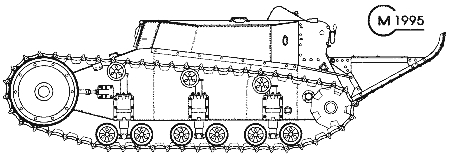
(Credit to Peter Samsonov for finding T-20 picture)
Recent articles from “Armored Warfare” website
May 12, 2015 by Leave a Comment
The website for the video game Armored Warfare has been regularly posting articles about the history of tanks and armored vehicles. Below is a list of some of the recent non-gaming related articles they have posted that may be of interest to tank and AFV enthusiasts.
FRENCH ARMOR HISTORY – RENAULT FT
PIERRE BILLOTTE – HERO OF FRANCE
WORST POST-WAR ARMORED VEHICLES
BMPT a no-show at Victory Day Parade
May 12, 2015 by Leave a Comment
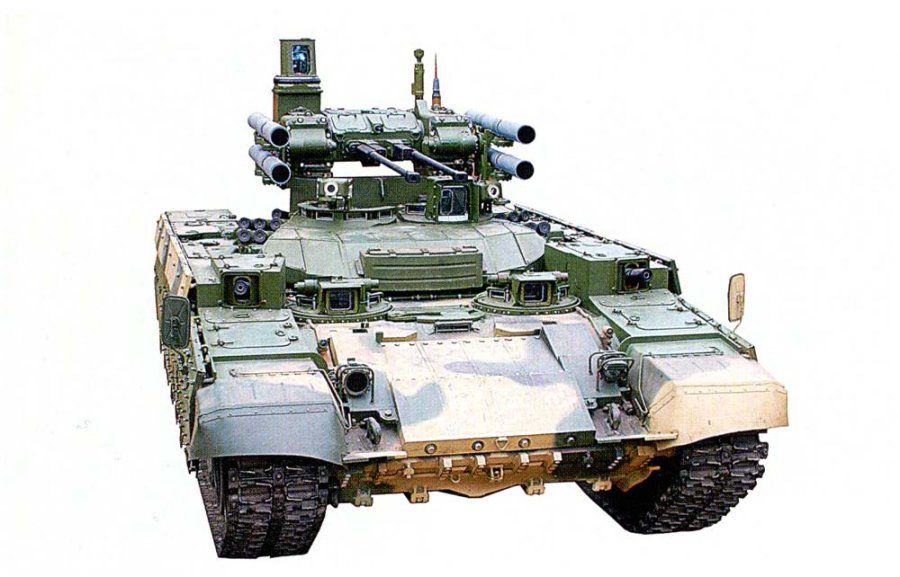 The blog War is Boring has posted a new article asking the question “has the Kremlin fallen out of love with it’s killer BMPT?” The article notes that the BMPT Terminator was absent in the recent military parade, a sign that it may have fallen out of favor with the Russian Military. The article reports that the Terminator may be superseded by the T-15 Armata. The article quotes tank expert Steven Zaloga who makes some interesting comments regarding the new family of vehicles introduced at the Victory Day Parade.
“The Russians are not leaping ahead” with their new armored fleet either, Zaloga noted. “This is an attempt to catch up.” Zaloga said bluntly. “A lot of this stuff is really stale.”
Read the full blog post here.
Book Review: The Tank Factory by William Suttie
May 12, 2015 by Leave a Comment
The Tank Factory: British Military Vehicle Development and the Chobham Establishment by William Suttie
Publishers Description:
Despite being the inventor of the tank and responsible for campaign-winning tactics, by the start of the Second World War the United Kingdom had fallen well behind other nations in the design and build of armoured vehicles. Here, William Suttie uncovers the history of tank design from a government perspective and the decisions and failures that led to that state of affairs, and details the formation of the Fighting Vehicles Research and Development Establishment at Chertsey. Known as the Tank Factory, the Chertsey establishment sought to ensure that the United Kingdom became world-leading in the field of military vehicle research and design, and that the British Army would never be underprotected or outgunned again. Drawing on unpublished sources and photographs, this fascinating book reveals the establishment’s history, its groundbreaking research and its inventions and designs, including first-hand insights from those who worked there.

“The Tank Factory” by William Suttie is best described as a developmental history rather than a combat history of British Armor. Those looking for descriptions of tank battles or tales of tanker daring-do will have to look elsewhere. This book is a history of the institutions and organizations responsible for the design and production of British tanks, not their use in the field. The focus on the developmental aspects of British armor is not surprising given the authors background as a scientist for the UK Ministry of Defense for over 30 years. Mr. Suttie uses his knowledge and access to unpublished materials to good effect, creating a rather detailed and comprehensive study of the topic. While his writing style is clear and understandable, the somewhat dry nature of the topic may deter some readers. The fact that the book is prefaced with a four page glossary of acronyms is a pretty good warning that this book is not light reading!
From the Editor: The Patents of Georges Even
May 11, 2015 by Leave a Comment
A few weeks ago we were looking for interesting patents of armored vehicles for an article on weird and wonderful old time tank patents. While searching we kept coming across patents by someone named Georges Even. All we know about him is that he was French and he was really into the idea of tiny tanks in the 1950’s and 1960’s based on his patents. We thought these were a bit amusing/interesting and so have decided to share them. These designs are somewhat similar in concept to the US M-50 Ontos or the JapaneseType 60 recoilless gun carrier.
Georges Even Armoured Tank 1957


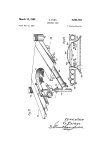

Georges Even Loading device for externally mounted tank guns 1955


Georges Even Armored vehicle 1954
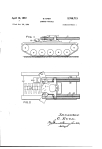
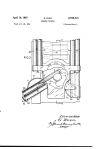

Georges Even diminutive two-men tank vehicle body 1962

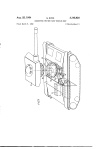
From the Vault: German tanks of World War I
May 11, 2015 by Leave a Comment
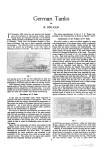
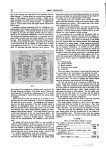
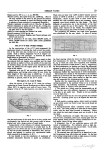
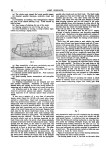
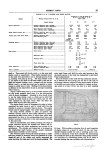
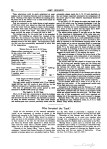
Today we present an article from the 1923 July-August edition of the Journal of the Army Ordnance Association on German Tanks. Authored by R. Kruger, this six page article gives a fairly detailed technical description of the tanks designed by Imperial Germany during the war. In particular, the heavy A7V is examined as well as the A7V -U and the Light LK I and LK II tanks. On the final page of the article is a short piece on “Who invented the tank?” In this piece, it is pointed out that while the British were the first to use tanks in combat, the first patent issued for a tracked fighting machine was given to Gunther Burstyn of Austria in 1912.
Analysis of new Armata and Kurganets vehicles
May 10, 2015 by Leave a Comment
 Defense Update has posted some articles analyzing the new Russian armored vehicles displayed on the May 9 Victory Day Parade. Be advised that these articles are somewhat speculative in nature. Defense Update notes that the analysis will be updated throughout the week as new information comes to light.
New Russian Armor – First Analysis: Armata.
The Russian Ministry of Defense today publicly presented the first members of the Armata family of heavy armored vehicles – the T-14 main battle tank and T-15 armored infantry fighting vehicle. The two vehicles are designated to become the spearhead of the armored formations of the Russian Army – replacing the T-72, BMP-2 and MT-LB-based platforms. In Armata-centered formations, these two combat vehicles will be augmented by additional variants that have not yet been unveiled, which could include a combat engineer and counter-mine vehicle (BREM), support platforms mounting automatic cannons, missiles (Terminator) and thermobaric rockets (TOS), self-propelled guns (Coalitzia), bridge layers (MTU), and armored recovery vehicles (ARV).
New Russian Armor – First Analysis Part II: Kurganets-25
Kurganets-25 family of armored combat vehicles includes two members of a new family of medium- armored vehicles designed to replace the BMP-2 and MT-LB platforms in mechanized formations of the Russian army. Like their predecessors, the new vehicles have amphibious capability, enabling uninterrupted mobility across rivers. The Kurganets is manufactured by Kurganmashzavod, the plant that produced the previous generations of BMP-1, BMP-2 and BMP-3 vehicles.

 Tank and AFV News