Over the past two decades, the Panzerwrecks series of books has become known for quality books showcasing photos of WWII armor. Founded by Lee Archer and Bill Auerbach, Panzerwrecks has became both a book series and a publishing house focusing on armored warfare in WWII. Unfortunately, co-founder BIll Auerbach passed away in 2015, but Panzerwrecks has soldiered on, both with the original Panzerwrecks series and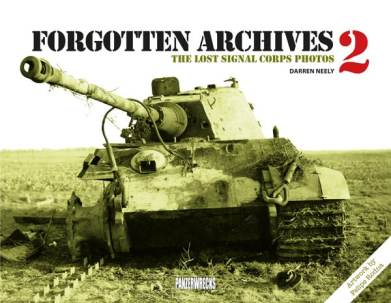 with titles by a new generation of authors. One such writer/researcher is Darren Neely. Last year Panzerwrecks released his book Forgotten Archives 1: The Lost Signal Corps Photos. This month saw the release of the follow-up book, Forgotten Archives 2: The Lost Signal Corps Photos in the UK with release in the US coming this July.
We had a chance to examine a copy of this latest book and it is a very handsome volume indeed. This is a large hardcover volume of 240 pages. Primarily a photo book, the pages are printed on high quality glossy paper and the photo quality is excellent. The black and white photos, of which there are 252, are generally printed one to a page making it very easy to see the details contained in the images. There are also a small number of nicely done color illustrations by artist Felipe Rodna.
The subject matter of the book is, of course, WWII armor, specifically US and German armor in the ETO 1944-45. This ground has been covered extensively over the years by numerous authors and publishers. Probably everyone with an interest in WWII armor has had the experience of getting a new book on WWII tanks and upon cracking it open, finding the same familiar photos that get recycled year after year. Fear not, this is not the case with Forgotten Archives 2. What makes this new book unique is that the author was able to work with the families of eight former US Army Signal Corps photographers, going through the photo collections that these men brought back from the war. Each photo is accompanied by the original caption written by the wartime photographer as well as a caption by the author, noting any errors or discrepancies in the original captions. The book is arraigned by photographer, each chapter dedicated to a particular Signal Corps soldiers’ collection. In organizing the book this way, each chapter tells the story of that particular photographer, marking the places they passed through and the things they saw and experienced. Being presented in this way, the book becomes a tribute not just to the fighting men captured in the images, but also to the men who risked their lives behind the camera.
For those looking for original, never before seen photos of US and German armor in the ETO, we highly recommend this book. Both the content and the presentation are top notch and should prove a valuable reference for both tank historians and model builders. The book is currently available at the Panzerwrecks website.
pages samples and images below:
 This past weekend saw the Strong Europe Tank Challenge event take place in Grafenwoehr, Germany. Tank crews from six NATO or NATO-allied countries competed in a series of tests to prove which crew (and vehicles) were the best. The competing nations included the USA, France, Germany, Poland, Austria and Ukraine, each country entering a platoon of four tanks and crews. The inclusion of Ukraine marked a first time for that country in the competition, as well as for their T-64BV tank. The competition was won by Austria, whose crews were operating Leopard 2A4 tanks. Second place was taken by German tankers in Leopard 2A6 tanks. Third place was awarded to the US platoon and their Abrams M1A2 SEP tanks. Poland operated Leopard 2A5 tanks and France had their LeClerc MBT. Stars and Stripes noted that Poland, France and Ukraine all scored close to the top three countries, making for a tough competition.
 China’s People’s Liberation Army (PLA) is likely to be equipping its ground units with new light tanks, according to the photos published on Chinese online forums. Posted on 31 December on the CJDBY and FYJS websites, the images disabout 10 tanks on railway flatbed cars, resembling the Guilin railway station in China’s southern Guangxi Province. The tanks were first seen in 2011. The tanks’ transit through Guilin could indicate their initial delivery to units assigned to the PLA’s new Southern Theatre Command,
  Britain declined the opportunity to buy a fleet of German tanks due to “worry about negative press headlines,” a defence source has claimed. German manufacturer Krauss-Maffei Wegmann offered to sell between 100 and 400 second-hand Leopard 2 tanks to the Ministry of Defence in 2015, but despite it being allegedly the best deal, the offer was turned down. The German proposal was one of several being considered for a £700 million contract to upgrade Britain’s Challenger 2 battle tank fleet.
 Army M1 tanks and trucks will begin arriving in Europe on Jan. 8, marking the beginning of a nine-month rotation of a U.S. armored brigade designed to strengthen deterrence against Russian aggression. The planned arrival of the 3rd Armored Brigade Combat Team, 4th Infantry Division, out of Fort Carson, Colorado, is part of the effort to support Operation Atlantic Resolve. “The United States is demonstrating its continued commitment to collective security through a series of actions designed to reassure NATO allies and partners of America’s dedication to enduring peace and stability in the region in light of the Russian intervention in Ukraine,” Pentagon spokesman Peter Cook said Thursday.
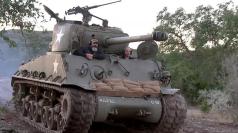 UVALDE, TX (KTRK) — In Uvlade, Texas on a sprawling 18,000 acre hunting ranch, sits the home of a living military museum. A portion of the land has been turned into a simulated battlefield where World War II-era and newer tanks, more often than not, are driven by those who have never spent a day in the service. Opened six months ago, DriveTanks co-founder Todd DeGidio says it’s the only place in the world where you can drive a tank and blow things up without ever enlisting. “I think it’s important for us to keep this part of our history alive,” said DeGidio.
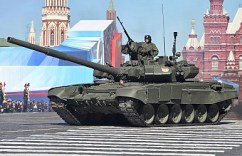 The Russian Ground Forces are reportedly slated to upgrade an unknown number of T-72 and T-90 main battle tanks (MBT) with a new automatic target tracker and fire control computer also found on the third-generation T-14 MBT, according to local media reports in December. The T-14 is Russia’s most advanced armored fighting vehicle, based on the “Armata” universal chassis system The Russian Ministry of Defense intends to field the first upgraded T-72s and T-90s in two to three years, the Izvestia daily newspaper revealed. Russia’s operates around 300 T-72B3s, an upgraded variant of the original Soviet-era T-72 MBT, out of a total T-72 force of roughly 1,900, and around 350 advanced T-90A, and T-90SM, (other designations T-90AM or T-90MS), the latest and most modern version of the T-90, specifically designed for export.
 When the German army’s first domestically-built tanks rolled into combat in March 1918 at St. Quentin Canal, the armored beasts looked considerably different from British and French designs — and most post-war tanks to follow. The A7V was a monster, stuffed with 18 crew members and brimming with six machine guns and a 57-millimeter cannon. While certainly terrifying to Allied troops, it was expensive, slow, mechanically troubled and too limited in number to affect the outcome of the war. It was not the worst tank ever, but not exactly good, either. There’s a reason why the bulk of Germany’s World War I tank force was comprised of captured — and superior — French and British designs.
 Giving a much-needed boost to the Indian Army’s attack capabilities, Manohar Parrikar-led Defence Acquisition Council (DAC) has cleared a deal for buying upgraded versions of Russia’s powerful T-90 tanks for Rs 13,448 crore. The acquisition of T-90 tanks would not only add a potent weapon in the hands of the Indian Army, but would also send a strong warning to Pakistan. Reports suggest that an initial approval has been given for the procurement of 464 T-90 tanks under the Modi government’s Make in India initiative. The tanks, once the deal with Russia comes through, will be manufactured at the Ordnance Factory Board.
 A lost work from author A. A. Milne was discovered this October, championing the British invention of the tank. As a serviceman who served in the First World War, Milne knew the importance of such a feat of British engineering but he could not have predicted the relevance his words would still hold today. One hundred years ago “those wonderful tanks”, as Milne christened them, were being used in active service for the first time during the Battle of the Somme, a battle in which he was wounded and invalided back to the UK. As a former tank commander with the British Army, these last months have had some poignancy for me – as I’m sure they will for many others.
 A British Army intelligence report offers an alarmist assessment of Russia’s new T-14 Armata main battle tank. Most U.S. defense analysts, however, are much more measured in their analysis of the new Russian machines. While the T-14 will likely be an excellent tank when it becomes operational, it is not quite the “revolution” that the British claim it to be. Moreover, it is far too expensive to produce in mass numbers. “Without hyperbole, Armata represents the most revolutionary step change in tank design in the last half century,” states a British Army intelligence report cited by The Telegraph.
 Most attention regarding China’s recent military modernization and buildup has concentrated on air and naval forces. That’s only natural, since they’re the tip of the spear and the equipment most often seen abroad. It’s easy to forget that China still has the world’s largest army, the 1.6 million strong People’s Liberation Army Ground Forces (PLAGF). The PLAGF has been modernizing at a slower pace than China’s other armed services, but it’s also receiving some brand-new armored vehicles, a number of which were demonstrated at last week’s Zuhai Air Show, including the MBT-300 main battle tank, VN12 infantry fighting vehicle, and a host of smaller, wheeled protected vehicles.
 Tank and AFV News