From the Vault: Uncle Sam Grooms his Hell Buggies

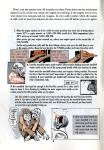
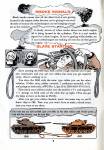
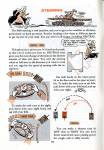
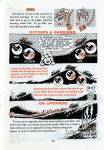
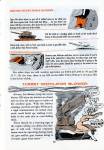
Today in the mail we got an article we bought off of ebay from the April 1940 issues of Popular Science.  The article is titled “Uncle Same Grooms his Hell Buggies: A Close up View of our Hard Hitting Tank Force.”  This article, written just before the fall of France, paints a rather optimistic picture of the quality of US tanks at the time:

While the US Army can’t compare with European mechanized forces in number of tanks, American officers are confident that we are away ahead of them in quality–that in the M2A4 model tank now being built we have the best light tank in the world.

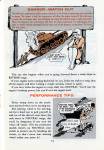
The article goes on to describe a powerful new medium tank being developed with four machine guns and a 37mm gun.  Of course, the events of the summer of 1940 would show these American officers just how wrong they were in this article (assuming they were not just talking up US equipment for the sake of public morale.)  The article has a few interesting pictures and tells of how the armor force used a remotely controlled FT-17 as a moving target.

From the Vault: M85 .50 Caliber Machine Gun

In honor of being declared the “blog of the month” over at The Firearms Blog (TFB), we will be posting about tank and afv related small arms this month.  A few days ago we posted about the not so successful M73/M219 7.62mm coax machine gun.  Today we will be taking a look at it’s larger cousin, the M85 .50 cal machine gun.  Much like the M73, the M85 had a very mixed reputation among US tankers.  It was intended to replace the venerable M2 .50 cal machine gun which had acquired an excellent reputation throughout WW2 and into the post war era.  However, the M2 was considered rather heavy and bulky for use inside the enclosed commander cupolas common on US postwar tanks.  By the time the M60 MBT was introduced, the M85 went into service, mounted in the commanders cupola/turret.  The M85 was also used by the Marine Corps in the LTVP7.  The M85 was almost 11 inches shorter and 20 pounds lighter than the M2 and featured a quick barrel change option and two different rates of fire.  The M85  could be configured for either left or right hand feeding and in its tank gun configuration was fired by means of a solenoid.  The M85 gun suffered from a history of reliability problems which it was never able to shake.  By the time the US adopted the M1 Abrams MBT in  the 1980’s, the M85 was replaced by the gun it was originally designed to supersede, the M2 .50 cal.  Oddly enough, while the M85 and M2 both fire the same .50 cal round, ammunition for the two weapons is not interchangeable due to the use of different style belt links.   According to globalsecurity.org, the USMC has in storage 3 million .50 caliber cartridges loaded in belts designed for the M85, despite the fact that they removed the gun from their inventory, replacing it on the LTVP7 series (now designated AAV-P7)with the M2.
PS Magazine article on the M85 (Issue #146 1965)

PS Magazine article on the M2 .50 cal (Issue #168 1966

From the Vault: ARMOR article on Soviet Heavy Tanks

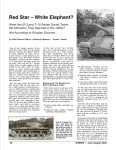
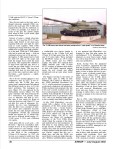
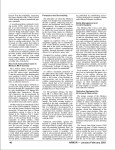
IS-3Today we present an article from the July-August 2002 issue of ARMOR magazine titled “Red Star – White Elephant?”  This article, written by Stephen “Cookie” Sewell, casts a critical eye on post WW2 Soviet heavy tank design, in particular the IS-3 and T-10.  Sewell notes that much of the information he is basing his conclusions on comes from research done after the collapse of the Soviet Union.  In the 1990s, access to the Soviet era archives opened up, allowing a new generation of Soviet armor authors to research and write.  Many of these names show up in the bibliography of this article, including Svirin, Baryatinskiy, and Kolomiets.  Unfortunately for western audiences, these Russian author’s works have not, for the most part,  been published in English.

From the Vault: British Report on Soviet V-2 Diesel Engine

Today we present one more English 1944 report on Soviet equipment posted on Scribd.  This report examines the V-2 12 cylinder diesel tank engine used in both the T-34 and the KV-1.  This is a very thorough report, being almost as long as the similar reports on the vehicles themselves (posted here and here.) Detailed information on the V-2 engine is not all that easy to find in English, so this report should prove quite useful to those with a particular interest in the V-2 diesel.  Click on the image below to view the report at Scribd.

V-2 cover

From the Vault: 1944 British Report on T-34 and KV-1

At Scribd there are posted two British 1944 reports examining a Soviet T-34 and a KV-1 tank.  There are several interesting aspects to these reports.  The British report writers seem relatively impressed with the Russian vehicles, stating that:

The design shows a clear-headed appreciation of the essential of the an effective tank and the requirements of war, duly adjusted to the particular characteristics of the Russian soldier, the terrain and the manufacturing facilities available.  When it is considered how recently Russia has become industrialized and how great a proportion of the industrialized regions have been over-run by the enemy, with consequent loss of hurried evacuation of plant and workers, the design and production of such useful tanks in such great numbers stands out as an engineering achievement of the first magnitude.

For those that like to obsess over armor, the reports include fairly detailed diagrams noting the thickness of armor for each vehicle, including Brinell hardness figures.  Click on cover image to go to the Scribd page.

T-34 cover kv cover

From the Vault: ARMOR Magazine article on Merkava 4

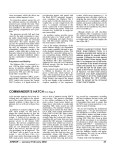
Today we present an article by Lt. Col David Eshel from the Jan-Feb 2003 issue of ARMOR on the Merkava 4.
From the Vault: Ground-crawling machine-gun car

Today we present this short news-reel clip from 1938 of the rather ridiculous Howie-Wiley “Belly Flopper” Machine Gun Carrier.   This vehicle, Captain Robert G. Howie and Master Sergeant M. Wiley of Ft.Benning Georgia, used a rather unusual rear engine/front drive layout.  The chassis and drivetrain were from an old American Austin, the driver steered with a small lever-arm and operated the clutch and brake with his feet.  It had a 13-14 HP engine and no suspension to speak of other than the relatively fat tires.  More information on this vehicle is available at Foxtrot Alpha for those that are interested.  Special thanks to our friend Volketten for alerting us to this clip.  .

Munster Panzer Museum Video

Earlier this summer this video appeared on youtube showing some of the restored vehicles on display at the Panzer Museum in Munster Germany.

From the Vault: Edwin M. Wheelock and the Skeleton Tank

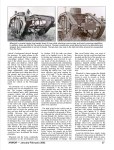
Today we present a four page article from the Jan-Feb 2002 issue of ARMOR on “Edwin M. Wheelock and the Skeleton Tank” by Major Dennis Gaare.  Readers with an interest in early tank development history may find this article worthwhile.  The Skeleton tank was an experimental prototype tank built in 1918 by the Pioneer Tractor Company of Winona Minnesota.  Only one prototype was built, and for many years it was housed at Aberdeen Proving Ground.

From the Vault: PS Magazine articles on M60 Tank

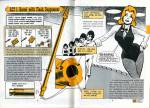
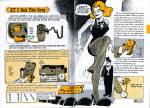
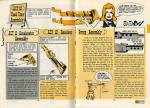
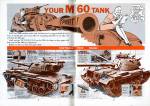
Today we present a couple articles from PS Magazine detailing the maintenance and operation of the M60 MBT.  The first article is a three part series called “Your M60” which ran in 1961.  The second article is a two part “Be Your Own Inspector” article which appeared in 1966.  PS Magazine is an illustrated “comic” style magazine put out by the US Army since 1951 to teach soldiers best practices in preventative maintenance.  These articles might be a trip down memory lane for any retired tankers that frequent this site.  For others, these articles may impress upon them the complexity and work required to properly maintain a cold war era MBT.

Your M60 Tank Part 1 (1961)

[Read more…]