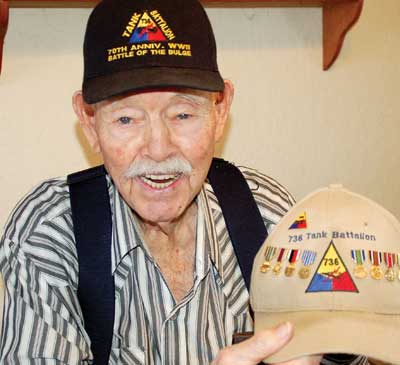
 The Arizona Daily Courier has posted a human interest piece about a former US tanker named Jesse “Pete” Henson, a veteran of the 736th tank battalion. The 736th battalion is notable for being one of the units equipped with the Canal Defense Light, a powerful searchlight mounted on an M3 medium tank intended for use in nighttime operations. The article recounts Henson’s personal history, noting that in 1943 he received orders to the 736th Tank Battalion. Originally based at Camp Rucker, Alabama, Henson’s unit started tank training at Fort Knox, Kentucky. “We were introduced to these strange machines,” Henson said, describing the Canal Defense Light, a British invention that mounted a 13 million candlepower search light and machine gun turret on an M3 tank. The machine was so odd-looking, Henson said, that the men started calling them “Gizmos.” “We were top secret,” he said.
Veteran of 736th “Canal Defense Light” Battalion turns 92
WoT’s Chieftain posts new article: US Centurion Part 3
 World of Tanks researcher Nicholas Moran, aka “The Chieftain” has published part 3 of his article on US testing of the Centurion III tank. Part one dealt with the US assessment of the Centurion III’s fighting compartment. Part 2 dealt with automotive tests. Part three covers the gun control systems. The Chieftain summaries the report saying: “So, overall, the US generally liked Centurion. They appear to have considered it to be inferior to the new generation of tanks they were designing, but quite competent for an already-extant vehicle. Some features, like the tracks and transmission, they didn’t like. Some, like the stabilisation system and general capability, they did. The engine power they deemed insufficient for the future tank. The entire evaluation process was more of a learning experience, learning some lessons, both good and bad, from the tank the British had built, it was never an attempt to comparatively rate the tank in order of preference.”
Read the entire post at the Chieftain’s Hatch
Tanks in the Antarctic: Unidentified US light tank?
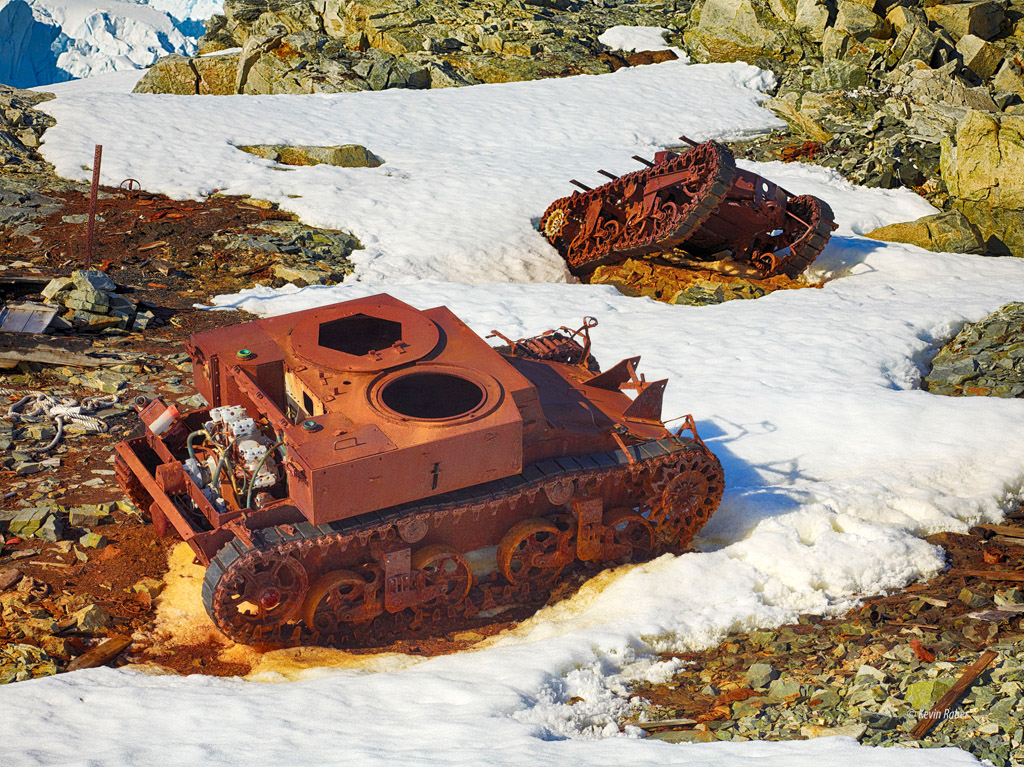 Status Report has an interesting article about three M2A2 light tanks sent to the Antarctic in 1939 as part of an expedition. Russian tank researcher Yuri Pasholok was able to find a Soviet report about the expedition in the Russian archives detailing some of the technical issues encountered with the light tanks in the rather harsh climate of the Antarctic. These details are translated and available over at the Archive Awareness blog for those that are interested. The Status Report article can be read here. Pictures of the rusting M2A2 tanks can be found on the photography websites of Kevin Raber and Martin Grace.
Kevin Raber Pictures: Tanks in Snow, Antarctica ,Tanks and Ice , Rusty Tank treads and gears, Antarctica
Martin Grace Picture Gallery here
The photos by Martin Grace reveal that while one of the vehicles is an M2A2 as stated in the Status Report article, the other vehicle is not. [Read more…]
Painful Birth of the BMP-2
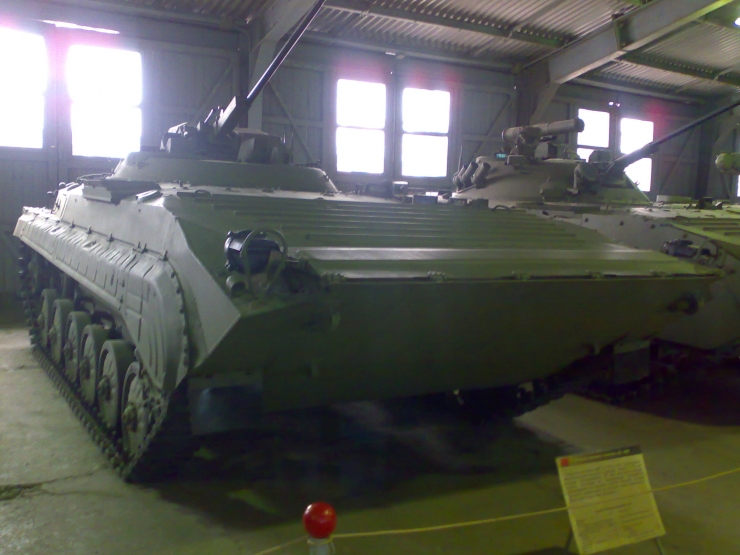 Over at Armored Warfare, they have published a two-part article on the history of the BMP-2 IFV.
“The concept of an infantry fighting vehicle (also known as the IFV) is not a new one. It evolved from the original armored personnel carriers that in turn appeared – in some cases – even before WW2. It was however only much later before this class of vehicles became prominent on the battlefield, thanks to its massive use by NATO and Warsaw Pact forces. There are many vehicles of this class both in and outside of NATO and the former Warsaw Pact countries, but there are two vehicles representing the teething issues of this vehicle class very well – and those are the Bradley IFV and the Soviet BMP.”
To read the complete article, please click on Part 1 and Part 2.
Article on Russian Object 477, 775, and 640 experimental tanks
 Russia & India Report has published an article giving brief descriptions of three experimental Russian tanks that never went into production. The article frames these three vehicles as unique innovations that formed the basis for development of the new Russian Armata universal combat platform. The three vehicles described in the article are the Object 477 Molot (Hammer), the Object 775 and the Object 640 Chyorhiy Orel (Black Eagle.) The Object 775 is the oldest of the three, having been developed in the 1960s as missile tank. Object 477 was developed in the 1980s and featured a large 152mm cannon mounted in an unmanned turret. Object 640 was developed in the 1990s and featured a bustle mounted auto-loader and new generation Kaktus ERA. Full article here.
The T124E2 anti-tank gun
 While this website is dedicated to tanks and AFVs, we will occasionally look at anti-tank weapons as well. Recently, the TFB (thefirearmsblog.com) posted an article written by friend of Tank and AFV News Nathaniel F about the US T124E2 anti-tank gun. This gun has an interesting history, being one of the last towed anti-tank guns issued by the US Army. It was issued in the early 1950’s but under a 100 were built before the army decided to stop production and focus on recoil-less rifles instead. The T124E3 was a 76mm weapon, based on the 76mm gun used in the M41 Walker Bulldog tank. It was intended to be a very light weight weapon, suitable for use by airborne forces. On paper is appears to be a much better weapon than the heavy and cumbersome towed 3 inch gun issued to US tank destroyer units in WW2. Despite its very limited production run, quite a few of these guns survive to this day as monuments in front of veterans halls and public parks. Read the TFV article here. We have included a small gallery of pictures of a T124E3 gun on display outside the VFW post in Muskegon MI on Getty Street taken a couple years ago by the editor.
Anthony Seward’s Photobucket Gallery
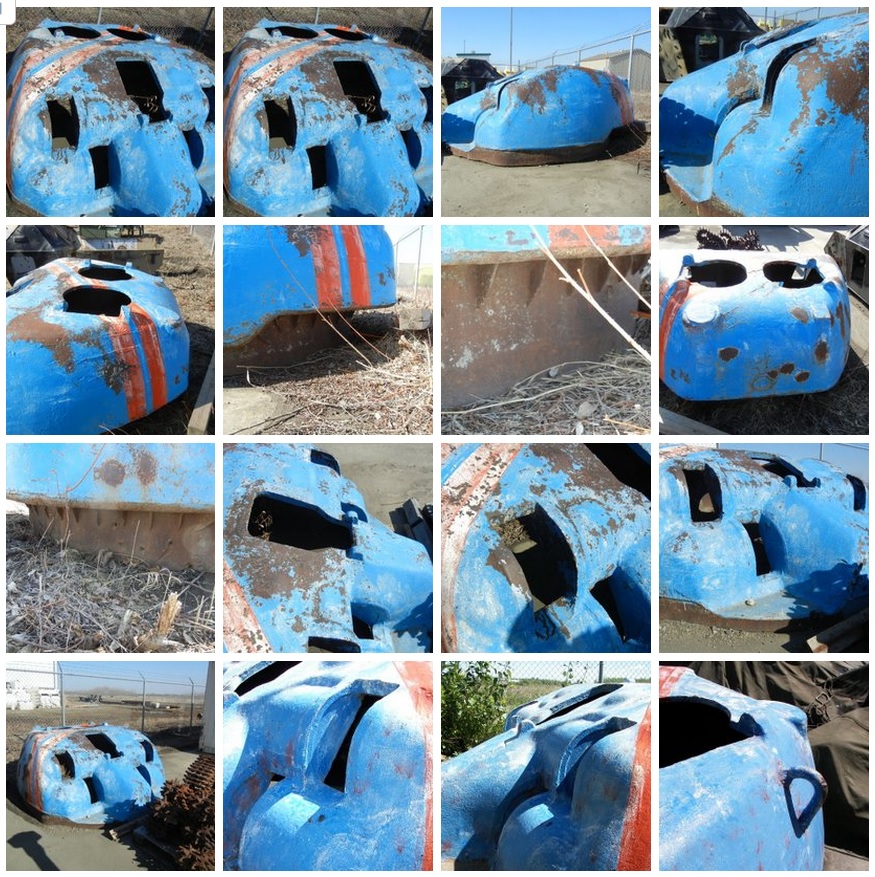 We recently stumbled across a rather impressive photobucket gallery of various armored fighting vehicles that we felt was worth posting about. This gallery belongs to Anthony Seward (ldshrecceboy) and contains a great many photos organized by vehicle. These photos will be of particular interest to model builders as they contain quite a few close up shots of various components of the subject vehicles. One of the most interesting photo sets in the gallery is of the turret to a “Skink” anti-aircraft gun turret. The skink was a Canadian AA tank based on the chassis of the Grizzly tank (Canadian Sherman) and only eight turrets for the vehicle were ever completed. According to Wikipedia, only some unfinished turret castings salvaged from the firing range survive. The photo gallery may be viewed here.
Inside the Tanks: The T-72 – AU Armour & Artillery Museum
Wargaming Europe has released a new installment of their video series featuring “The Challenger” Richard Cutland. This episode focuses on the Soviet T-72 although it also includes some quick footage of the Australian Armor and Artillery Museum. The blog “Status Report” has made a post critical of the video, claiming that it includes several errors.
History of the AMX-40
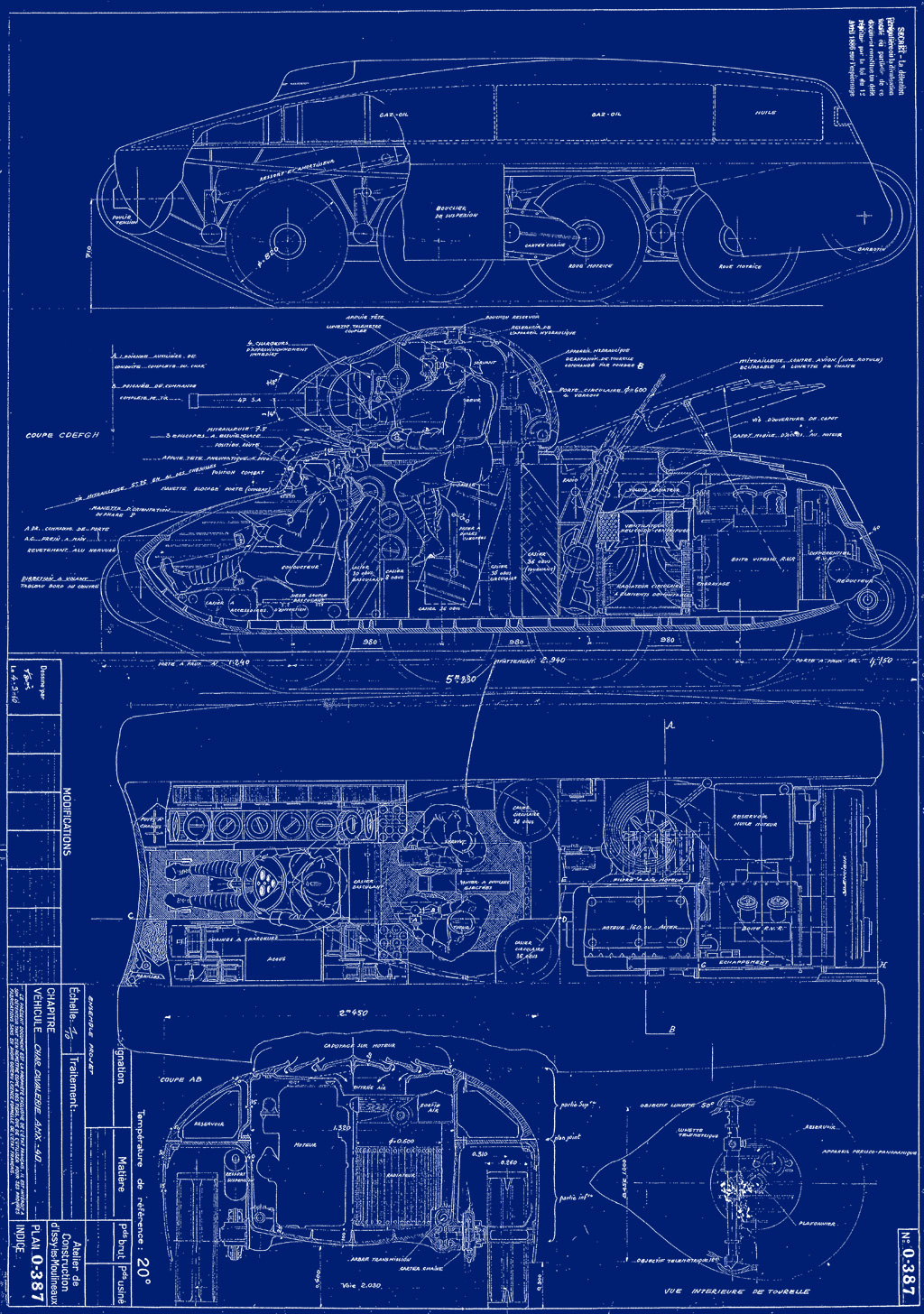 The blog Status Report has posted an English language translation of an article by Russian researcher Yuri Pasholok on the history of the French AMX 40 tank. The original piece is available on Pasholok’s live journal page here. The translated version on the Status Report can be read here.
Excerpt:
By the time the first Somua S35 tanks were rolling from the assembly lines, the French high military staff already started thinking about their replacements. By the end of 1936, French army issued new demands for the future cavalry tank – these demands included:
– weight of no more than 20 tons
– 3 man crew
– armor of no less than 50mm
– operational range of no less than 200km
– one 47mm gun and two 7,5mm machineguns as armament
– radio and intercom systems
Even if they wanted to, there was no way the designers could rework the Somua S35 to fit those requirements. Even the Somua S40 had 5 km/h lower speed with only 40mm of armor. And so these requirements were ignored for three long years.
Read the full article here.
WWII tank wrecks gallery
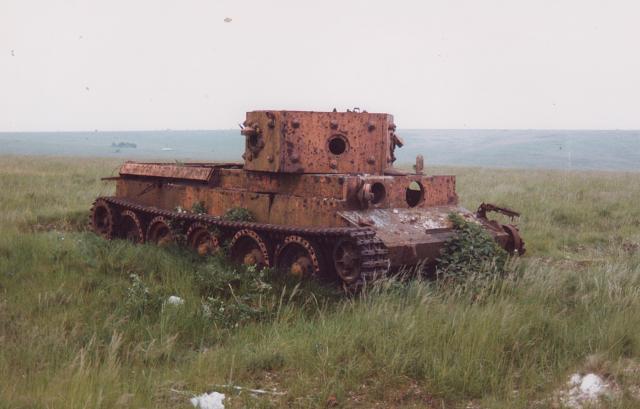 War History Online has posted an gallery of 46 WWII tank wrecks from around the world. These pictures come from the member base of the HMVF (Historic Military Vehicle Forum.) The gallery can be viewed here. You can follow the thread over on HMVF where the full details of each wreck are given www.HMVF.co.uk

 Tank and AFV News