This video showed up last month on Youtube showing a small boy running around a military museum under construction. According to the description, the boy is the son of the museum architect. Little other information is given in the video description, although it would appear that this facility will house quite a few tanks and armored vehicles. The location of this museum is not provided. Obviously, it’s somewhere in the Middle East (perhaps Egypt?) If anyone knows the answer, please say so in the comments. Also, beware the bad pop-music soundtrack to the video.
Video: Chi-Ri & Chi-To Tanks Scrapped at Aberdeen
August 8, 2017 by Leave a Comment
This rather intriguing video showed up on Youtube yesterday and appears to answer the question of what ever happened to the Japanese Type 5 Chi-Ri Heavy tank prototype. Sources generally state that the vehicle was either scrapped at Aberdeen Proving Grounds or lost at sea during shipment. If this video is what it says, we may have proof that it did indeed make it to Aberdeen where it was scrapped. The video is said to be from October 4, 1952 and shows a number of vehicles, including several Japanese tanks. Both a Type 4 Chi-To and the Type 5 Chi-Ri are visible. That these vehicles were scrapped rather than preserved is a rather depressing thought.
Here is a screen capture of the Chi-Ri.

Translated Articles from TankArchives.blogspot.com
August 5, 2017 by Leave a Comment
It’s time to pay a visit to the Tank Archives blog to see what Russian language articles they have translated to English. Highlights from the July assortment of articles includes several pieces chronicling the history of the German Panzer I and II as well as a couple Lend Lease tanks in Soviet service, and the German Maus super-heavy tank . Article previews are posted below, click on the headline to see the full piece.
Pz.Kpfw.II Ausf. c-C: At the Spearhead of Blitzkrieg
 The story of the PzII tank was an unusual one. In many ways, it owes its “accidental” existence to the attempts of mounting a 20 mm autocannon in the Kleintraktor (future PzI). Due to issues with production of the Z.W. tank (future PzIII), the PzII was the most numerous front line tank for the first two years of WWII. Germany’s most common tank was not even originally included in the armament plans.
Pz.Kpfw.II Ausf.a through b: An Unplanned Tank
 The light PzII tank played an important role in the structure of the German tank forces. Despite the opinion born of German generals’ memoirs, this was not a training tank. On the contrary: at the time of its inception, the PzII was one of the best light tanks in the world. It appeared almost by accident, but occupied a significant part of the Wehrmacht’s order of battle. The PzII remained in production for five years, with some small breaks. What is the history of the PzII, and what did its first versions look like?
M4A2(76)W: Emcha With a Long Hand
 The Americans considered improving the firepower of the Medium Tank M4 back in September of 1941. A year later, experiments with installing the 76 mm T1 gun into the stock turret commenced. Even though the gun fit, the military was unsatisfied with this rearmament. A decision was made to equip the M4 with the turret from the Medium Tank T23, which did not enter production. This was not hard, since the turret ring diameter was the same.
M24 Chaffee: Test Drive at the End of Lend Lease
 Starting in the second half of 1943, the approach to sending British and American Lend Lease armoured vehicles to the USSR changed. Instead of immediate large scale shipments, the Western Allies sent a few samples of new vehicles. If the tank or SPG was satisfactory for the Soviet side, full scale shipments followed. The first vehicle to arrive on this trial basis was the Light Tank M5A1. By that point, production of light tanks in the USSR was wrapping up, so the American novelty never made it into service.
SG-122: Assault Gun on a Foreign Chassis
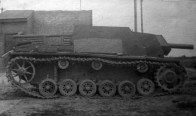 Work on SPGs, especially heavy ones, stopped in the USSR after the start of the Great Patriotic War. This was largely caused by the fact that the factories were busy with other orders. In addition, many factories were evacuated eastward. Only light SPGs were put into production at the start of the war, and these were largely improvised. Meanwhile, due to the number of factories that switched from making artillery tractors to tanks, the artillery branch was forced to revisit SPGs towards the end of 1941.
Superheavy Trophy
 The German superheavy Maus tank left a mark in the history of tank building. This was the heaviest tank in the world, developed as an assault tank, practically invincible to enemy fire. In many ways, its fate was the same as the fate of another giant, the French FCM 2C, which holds the title of the world’s largest tank to this day. Like the French heavyweight, the German tank never saw combat. In both cases, the tanks were blown up by their own crews. Another similarity was that the tanks became the subject of a careful study.
Small, But Fierce
 One of the distinguishing characteristics of German tank building in WWII was an aim to use up obsolete vehicles, including those which used to be the backbone of the German tank force. If a German tank became obsolete, that didn’t mean that it would be scrapped. Some tanks were sent to training units, other were modernized. Obsolete tanks, especially light ones, were often converted to SPGs or engineering vehicles. This was the fate that awaited the PzI, Germany’s first mass produced tank, which was already obsolete at the start of WWII.
Pz.Kpfw.I Ausf. F: Pocket Tiger
 Coming up with tank ratings is a hobby of many tank experts, as well as people who consider themselves as such. As a rule, the creators try to determine the best tank. While some kind of systematic approach was developed over the years, picking out the worst tanks is usually more complicated. Often, creators of lists of the worst tanks make their choices according to no set system and end up naming a number of tanks that didn’t earn such a shameful label.
Pz.Kpfw.I Ausf. C: Kniepkamp’s Latecomer
 Putting the PzI Ausf. B into production was the correct decision, albeit a late one. The problem wasn’t only that the concept of a light tank with machineguns for armament was obsolete. The 6th Department of the Armament Directorate was disappointed in the chassis developed by Krupp’s engineers overall. Even though the power to weight ratio of the PzI grew from 11.1 to 17.2 hp/ton after modernization, there was no drastic improvement in mobility. 40 kph is not what was expected with such a boost.
Pz.Kpfw.I Ausf. B: All Grown Up
 The creation of the PzI light tank did not come easily for German tank building. The tank was redesigned several times while still in the development stage, starting out as a 3 ton tank with a 20 mm autocannon, and ending up as a 5 ton tank, where nothing larger than a pair of MG-13 machineguns could fit into the turret. Even though the PzI entered production and became a mass produced tank, easily numbering over 1000 units, the German tank forces were not completely satisfied with its characteristics even before production began. Modernization was only a matter of time. What results did it bring?
Ropkey Museum shuts down
August 5, 2017 by 5 Comments
 As of the end of July, 2017, the Ropkey Museum in Crawfordsville Indiana has permanently closed its doors. Housing one of the largest collections of military vehicles in the country, the museum was the work of Frederick Noble Ropkey Jr. Mr. Ropkey, a tank platoon commander during the Korean War, passed away in November 2013, leaving the museum to his wife Lani. After keeping the museum open for four years following his death, Mrs. Ropkey has decided it is time to close the museum. According to an article from the Crawfordsville Journal Review, the contents of the museum are being shipped to other museums across the country.
Journal Review article excerpt:
Fred Ropkey’s favorite World War II-era Sherman tank will soon roll out of the building housing his renown collection of restored military vehicles, but a “for sale” sign doesn’t tell the entire story of closing the Ropkey Armor Museum.
It’s the story of a Marine who took a single scout car and built the world’s largest private collection of military tactical vehicles. And it’s the tale of a city girl who followed her husband to the countryside, taking on his passion for preserving Armed Forces heritage.
Now almost four years after Fred’s death, his widow, Lani, feels she has honored his commitment.
The museum hosted its final visitors last weekend and Lani is moving home to Indianapolis, where she’s ready to find her own life’s passion.
To view photos of the Ropkey Museum collection, check out this SmugMug gallery by photographer Paul Hannah.
Collings Foundation gets approval for new museum
August 5, 2017 by Leave a Comment
 MetroWest Daily News is reporting that the Planning Board of Stow, Massachusetts and the Collings Foundation have reached a settlement that will allow construction of a new museum to move forward. In 2014 the Collings Foundation came into possession of much of the AFV collection from the Military Vehicle Technology Foundation. The MVTF collection was the largest privately owned collection of tanks and armored vehicles in the world, and was the work of Jacques Littlefield, who died in 2009. While some of the collection has been auctioned off, the most interesting and valuable items have been retained by the Collings Foundation. Construction of a museum to house many of these rare and unique vehicles has been delayed as the Collings Foundation and the town of Stow have worked out an agreement. According to the MetroWest Daily News article, the Collins Foundation says they hope the new museum will open this time next year.
Article excerpt:
STOW — With a new road being built off Main Street in Hudson, the Collings Foundation hopes its new museum will open this time next year.
The project is allowed to proceed after the Stow Planning Board and the foundation reached a settlement in Middlesex Superior Court earlier this month. The roadwork is being done under a temporary building permit, which expires Sept. 1.
This weekend’s Race of the Century event will be the last event where traffic comes in off Barton Road in Stow, a tiny lakeside street the many neighbors say is too narrow for increased traffic.
Bob Collings, co-founder of the foundation, said the road from Hudson is only major change to the plans. For several years, neighbors resisted the nonprofit’s plan to expand its collection of tanks and warplanes into a full-scale museum about American combat.
The Planning Board unanimously signed the settlement after receiving guidance from town counsel, said Planning Board Chairwoman Lori Clark during a public hearing last week.
Video: Inside The Chieftain’s Hatch R35
August 4, 2017 by 2 Comments
In this new installment of Inside the Hatch, Nicholas Moran examines the French R35 tank. Long story short, he is not impressed with this little French vehicle. The video shows him exploring the exterior of the vehicle and the interior of the turret. While it is not labeled as “part 1”, we assume there will be a follow-up video showing the drivers compartment.
Video: Second World War Tiger Veterans At The Tank Museum
August 4, 2017 by Leave a Comment
The Tank Museum at Bovington recently posted this video featuring WWII veterans from both the UK and Germany as part of their Tiger Exhibition.
Tank Chats #41 Sherman Firefly
July 28, 2017 by Leave a Comment
David Fletcher of the Tank Museum at Bovington takes a look at the British Sherman Firefly.
The Matilda Diaries Part 14
July 18, 2017 by Leave a Comment
The Tank Museum presents the 14th installment in their series documenting the restoration of a Matilda infantry tank.
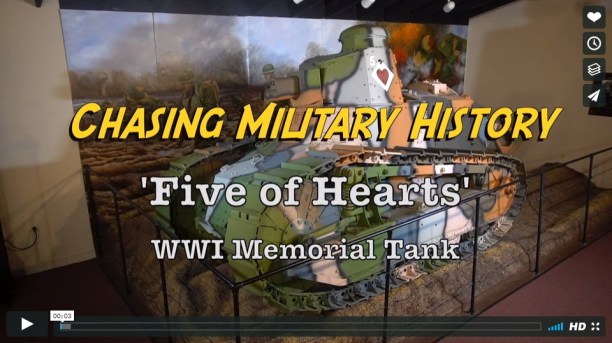
Video: Steve Zaloga on the “Five of Hearts”
July 13, 2017 by Leave a Comment
Here is a new video from the War Stories facebook page featuring Steve Zaloga discussing the story of the WWI era tank “Five of Hearts.” Click on the image below to view the video.
Edit: Sorry, I forgot to imbed the link into the image. It is fixed now.

 Tank and AFV News