Last week we made a post about a video of an Iraqi Army M1 Abrams tank being struck by an ISIS anti-tank missile. The video is rather dramatic, showing a huge stream of fire erupting from the tank following the missile impact. As can be expected, the video has resulted in a number of news stories, some better than others. Most of the articles seem to based off a National Interest piece by Dan Goure titled “Are Tanks Obsolete? : YouTube Video Makes the Case for Active Protection Systems.” Aside from the rather cliche question in the beginning of the article title (we say the answer is “no”), the article is well written and makes a good case for the authors central argument; that the US Army needs to speed up development and/or acquisition of active defense systems for its armored vehicle fleet. Of course, as Mr. Goure’s article gets re-interpreted by various media entities, the hyperbole starts to increase. Business Insider picks up the story in an article that casts the video in far more ominous terms, declaring that:
Such an attack represents a big win for ISIS, a loss for the Iraqi people trying to reclaim the city of Mosul, and a glaring warning to US soldiers and Marines: Next time it could be you.
But the true champions of hype are across the pond at the Daily Mail. In this stunning piece of overstatement, they declare that “US made tanks are all but obsolete” and that this is “the video that will chill the blood of every American Tank Crew” as “ISIS obliterates M1 Abrams tank with handheld Russian missile.” Nothing like a little bit of hyperbole to sell some extra copies (or get a few extra clicks.)
One thing we have not seen any article mention is that part of the reason for the dramatic fire coming from the Abrams tank is due to the location of the missile hit. The missile strikes the turret rear where the ammunition is stowed. That part of the vehicle is equipped with blow-out panels that are intended to direct the blast upward and away from the crew in the event of a detonation. How effective were the blow-out panels in protecting the crew in this particular instance? We can’t really say without more evidence, but we certainly do not envy any crewman who happened to be in that tank. What we can say though, is that if the ISIS missile crew were looking for the most sensational video possible, they hit the Abrams in the exact perfect spot to achieve their goal.
One other question not addressed in the articles concerns tactics and training. While these articles treat the question of tank vs missile as primarily a technical one, how much of the fault for the destruction of this tank rests on the training and tactics of the Iraqi soldiers? Certainly, we don’t see any fire being directed toward the launchers of the missile after the Iraqi tank is stuck, which does not seem to speak well of the other soldiers accompanying the targeted tank. While we don’t know much about the exact tactical situation in this particular incident, it seems that it does merit some serious questions regarding how the Iraqi Army is conducting its operations if their valuable Main Battle Tanks are being left easy targets to enemy ATGMs.
 Last Friday we make a photo of the day post titled “
 It seems both articles are based in part on an old ARMOR magazine article by Stephen “Cookie” Sewell titled
  and
and  , as well as a variety of other topics, including Soviet tank development, the 1940 Campaign in France and the tank book publishing business.
 Steven Zaloga is an author and defense analyst known worldwide for his articles and publications on military technology. He has written over a hundred books on military technology and military history, including “Armored Thunderbolt: The US Army Sherman in World War II”, one of the most highly regarded histories of the Sherman Tank. His books have been translated into Japanese, German, Polish, Czech, Romanian, and Russian. He was a special correspondent for Jane’s Intelligence Review and is on the executive board of the Journal of Slavic Military Studies and the New York Military Affairs Symposium. From 1987 through 1992, he was the writer/producer for Video Ordnance Inc., preparing their TV series Firepower. He holds a BA in history from Union College and an MA in history from Columbia University.
 ).
).
 Want to follow Tank and AFV News.com on Facebook? Now you can! For the past couple weeks, we have been posting our website updates onto the
  This past Sunday we had the opportunity to spend a few hours at the
 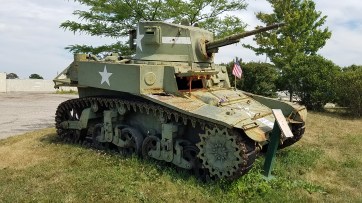 If not for the light tank sitting out front and the sign on the building, a passer-by might be forgiven for mistaking the museum for a salvage yard. Those expecting a highly polished, big budget affair such as the (relatively) nearby First Division Museum at Cantigny Park will be disappointed. The Russell Museum is a “mom and pop” style museum, a labor of love by owner Mark Sonday and his family, who double as the museum staff. While the museum may lack a certain amount of polish, it more than makes up for it in the amazing array of military hardware present in the collection.
 This past weekend we had the good fortune to spend a long weekend in the Chicago area. While there we were able to check out a couple museums housing tanks and armored vehicles. This review examines the tank collection at the
 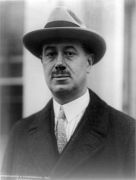 McCormick had served as a Colonel in the First Division in WW1, hence his interest in preserving the history of the unit. The museum is not large but is well worth the hour or so it takes to walk through the displays. Walking through the museum, the first thing encountered is a series of mannequins dressed in the various uniforms of the First Division from each major US war. This section then leads to a winding path in which the viewer progresses through each US war in chronological order. The WW1 section is the most impressive, designed to emulate the trenches of WW1, including a replica French Schneider tank.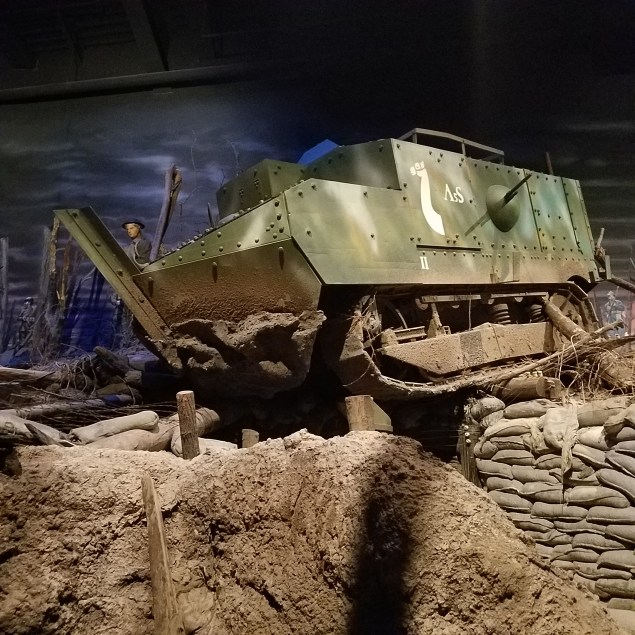


 , hit the bookstores this past week. We had the opportunity to do a Q&A with author Robert Forczyk, both about his experiences as a US Armor officer and his research on the WWII Eastern front. Mr Forczyk is a prolific author, having penned 26 historical volumes for publishers such as Osprey and Pen & Sword. His primary interests are Eastern Front WW2, Napoleonic era, the American Revolution and Roman warfare. He is a graduate of the University of Notre Dame, University of Virginia and University of Maryland. He retired after a 20 year career as an armor and military intelligence officer in the US Army, having served in the 2nd ID, 4th ID and 29th ID(L) and currently works as a consultant in the Washington D.C. area. He is also a highly rated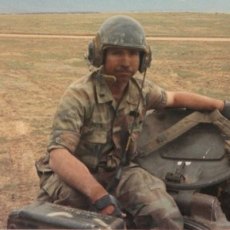

 Tank and AFV News